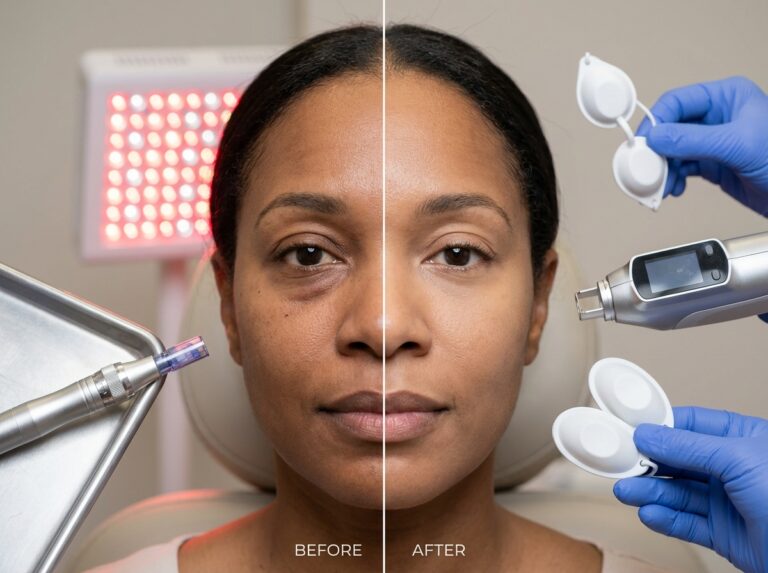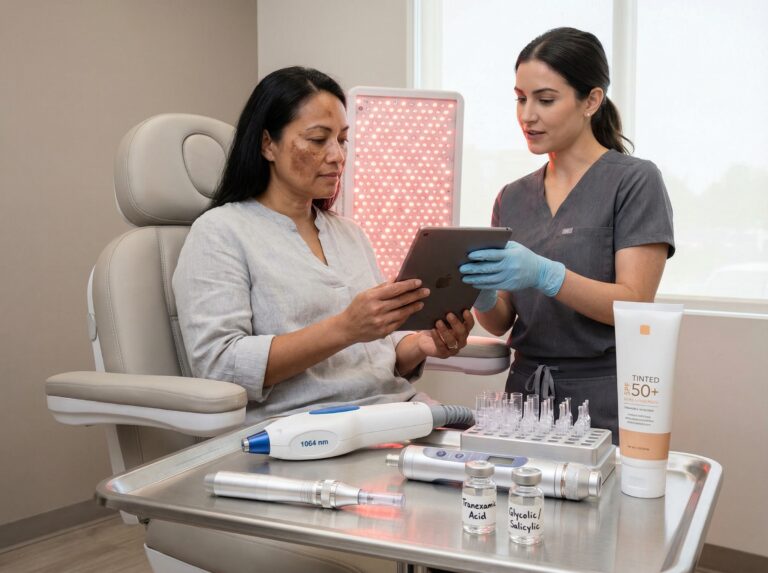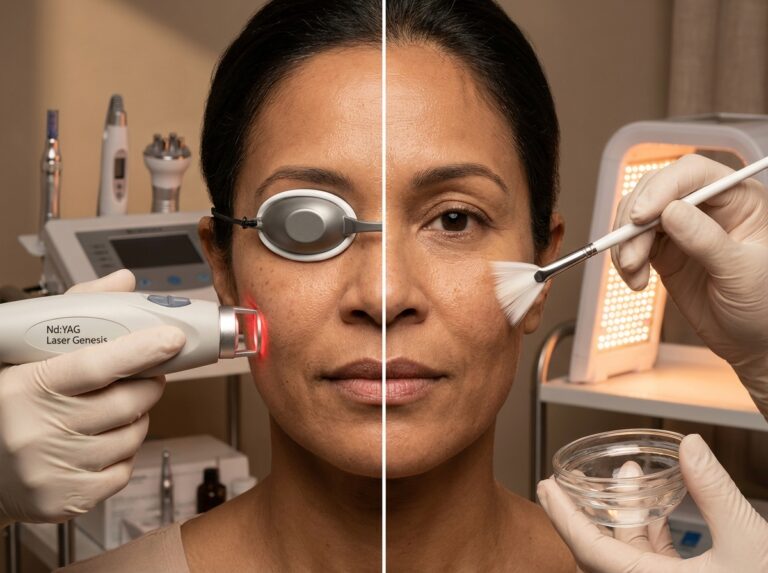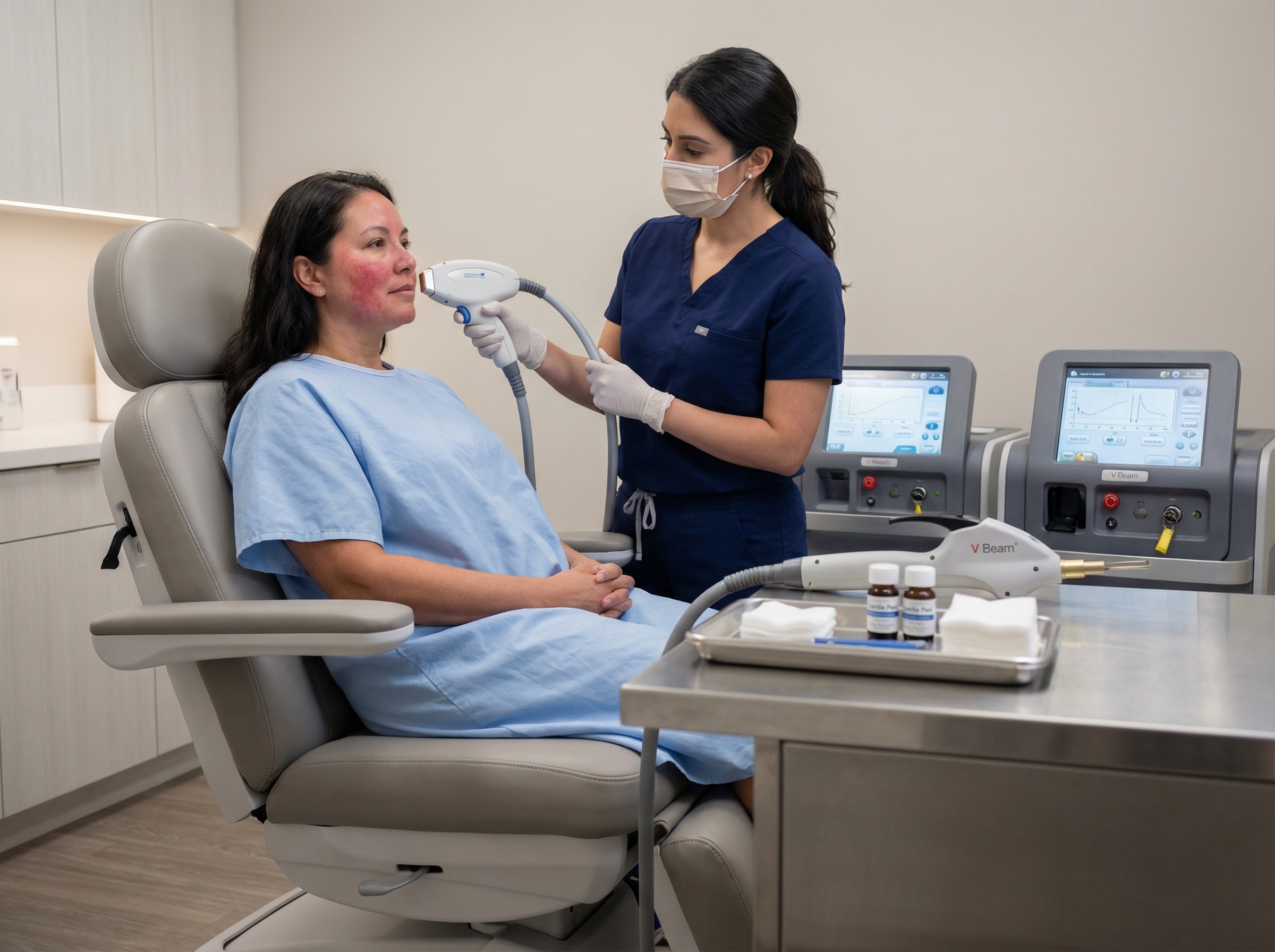
Rosacea is a chronic facial condition characterized by redness, telangiectasia, and flare-prone skin. This article explains how IPL, pulsed dye laser (V-Beam), and gentle chemical peels fit into modern non-invasive rosacea care, and how microneedling, RF, and LED therapies complement them. Expect clear guidance on indications, downtime, expected results, safety precautions, and patient selection.
Understanding Rosacea and Treatment Goals
Effective management begins with accurate identification. You cannot treat a thickened nose the same way you treat transient flushing. We see four distinct clinical patterns in patients seeking rosacea treatments. Most individuals present with overlapping features, but the dominant subtype dictates the primary device or peel selection.
Identifying the Clinical Subtype
The first step is categorizing the presentation. This ensures we match the pathology to the correct wavelength or chemical agent.
Erythematotelangiectatic Rosacea (ETR)
This is the most common form we see in aesthetic practice. Patients complain of flushing and persistent central facial erythema. You will often see visible broken blood vessels, known as telangiectasia. The skin often feels stinging or burning. For these patients, vascular lasers like V-Beam and light-based devices like IPL are the gold standard. The goal is targeting the hemoglobin.
Papulopustular Rosacea (PPR)
This subtype looks like acne but lacks comedones. Patients have redness combined with transient papules and pustules. It is inflammatory. While medical management is often the first line, V-Beam can help reduce the background redness that persists after the bumps clear. Gentle chemical peels for sensitive skin also play a role here by reducing inflammation and turning over cells without aggressive exfoliation.
Phymatous Rosacea
This involves skin thickening and irregular surface nodularities. It most commonly affects the nose, known as rhinophyma. Early intervention is key. Once fibrosis sets in, non-invasive lights like IPL have limited utility. Ablative lasers or surgical intervention become necessary. We focus on prevention here.
Ocular Rosacea
Many patients with cutaneous symptoms also have eye involvement. They report gritty, dry, or irritated eyes. While we treat the skin, we must refer these patients to ophthalmology. Treating the skin near the eyes with IPL can sometimes improve ocular symptoms by reducing inflammation of the eyelid margins, but this requires specialized eye shields and training.
Primary Treatment Goals
We establish clear objectives before touching the patient with a device. Randomly firing a laser leads to poor outcomes.
Reduce Persistent Erythema
Background redness is stubborn. It results from a dense network of microscopic vessels. We aim to coagulate these vessels to reduce the overall pink hue of the face.
Eliminate Visible Telangiectasia
These are the distinct red lines usually found on the cheeks and nose. Telangiectasia removal requires a device that can trace the vessel and deliver enough energy to collapse the wall without damaging surrounding tissue.
Control Inflammation
For papulopustular types, we want to reduce the inflammatory load. This minimizes the frequency of breakouts.
Strengthen the Skin Barrier
Rosacea skin is inherently compromised. It loses water easily and lets irritants in. Treatments must not strip the barrier further. This is why we choose gentle peels over aggressive resurfacing.
Assessment and Patient History
A thorough intake prevents adverse events. We need to know what sets the skin off. Common triggers include ultraviolet light, spicy food, alcohol, and temperature changes. If a patient cannot manage their triggers, the results from laser therapy will be short-lived.
We also assess skin sensitivity. Patients who react to almost every topical product need a patch test before a full chemical peel.
Fitzpatrick Skin Typing
This is the most critical safety factor.
- Fitzpatrick I-III: Generally good candidates for IPL and V-Beam with standard settings.
- Fitzpatrick IV-VI: Higher risk of hyperpigmentation. IPL carries significant risk here because melanin competes with hemoglobin for the light energy. V-Beam is safer but requires cautious settings. Chemical peels must be modified to prevent post-inflammatory hyperpigmentation.
Clinical photography is mandatory. We take photos with cross-polarized light to see the vascular network clearly. This helps in staging the severity and tracking progress, as patients often forget their baseline redness after three months.
Contraindications and Safety
We screen for specific red flags during the consultation or telephone triage.
- Recent Sun Exposure: We cannot treat tanned skin with IPL or lasers targeting pigment. The risk of burns is too high. We require patients to be at their baseline skin tone.
- Isotretinoin Use: Patients typically need to wait after completing a course of oral isotretinoin. While historical guidelines demanded a 6-12 month wait, recent consensus suggests some non-ablative procedures (like V-Beam) may be performed sooner with caution, though mechanical resurfacing still requires the full waiting period.
- Active Infection: Herpes simplex or active bacterial infections in the treatment area are absolute contraindications.
- Photosensitizing Medications: Certain antibiotics (e.g., doxycycline) or diuretics increase light sensitivity.
Setting Realistic Expectations
Managing patient expectations is as important as the settings on the machine. Rosacea is a chronic condition. There is no cure. We offer control and remission, not permanent eradication.
Number of Sessions
One treatment is rarely enough. We typically plan for a series of 3 to 6 sessions spaced 4 weeks apart. Improvement is incremental. Patients might see a 10 to 20 percent reduction in redness after the first visit.
Maintenance
After the initial series, maintenance is required. Most patients return every 6 to 12 months for a touch-up session. The underlying tendency to form new vessels remains.
Downtime
Modern treatments are low downtime, but not zero downtime.
- IPL for rosacea: Usually involves mild redness and swelling for 24 hours. Pigment may darken and flake off.
- V-Beam for rosacea: Can cause bruising (purpura) if aggressive settings are used. Non-purpuric settings result in swelling and redness for 2 to 4 days.
- Gentle Peels: Mild flaking for 3 to 5 days.
Cost Considerations
In the United States, these are elective aesthetic procedures. Insurance rarely covers them unless there is significant phymatous change or medical necessity, which is hard to prove. Costs vary by region but typically range from $400 to $800 per session. A full series represents a significant investment.
Modern Approaches to Treating Rosacea in 2025 emphasize a multimodal strategy. We often combine modalities. We might use V-Beam for the nose vessels and IPL for the cheeks in the same session, followed by a maintenance peel months later. This tailored approach yields the highest satisfaction.
By understanding the subtype and setting strict safety parameters, we prepare the skin for the specific mechanisms of action found in IPL, pulsed dye lasers, and chemical agents.
How IPL V-Beam and Gentle Peels Work and What to Expect
Once we understand the specific subtype of rosacea and the patient’s triggers, we move from theory to physical intervention. The goal here is structural change. We want to collapse dilated vessels, reduce background flushing, and smooth the texture that chronic inflammation leaves behind. The three workhorses for this are Intense Pulsed Light (IPL), Pulsed Dye Laser (V-Beam), and specific superficial chemical peels. Each has a distinct mechanism and ideal patient profile.
Intense Pulsed Light (IPL)
IPL is often the first line of defense for general redness and flushing. It is not technically a laser. Lasers use a single wavelength of light. IPL uses a broad spectrum of light, typically ranging from 500 to 1200 nm. We use cutoff filters to block lower wavelengths and target specific chromophores. For rosacea, we target hemoglobin (red) and often melanin (brown) if sun damage is present.
The principle is selective photothermolysis. The light energy converts to heat when it hits the red blood cells in the vessels. This heat damages the vessel wall, causing the body to reabsorb it over time. Because IPL covers a broad area, it treats diffuse erythema (background redness) very well.
What to Expect During Treatment
A typical protocol involves 3 to 6 sessions spaced 4 to 6 weeks apart. The sensation is often described as a rubber band snapping against the skin. We apply a cooling gel first to protect the epidermis. Technical precision matters here. We adjust the pulse duration (how long the light stays on) and fluence (energy level) based on skin reaction. A test spot is mandatory, especially for new patients.
Downtime and Side Effects
Recovery is generally quick. You can expect:
- Mild to moderate redness (erythema) lasting 24 to 48 hours.
- Swelling (edema), particularly under the eyes, which can last 2 to 3 days.
- Darkening of pigmented spots. These look like coffee grounds and flake off over 5 to 7 days.
Risks increase with darker skin types (Fitzpatrick IV-VI). The melanin in the skin competes with the hemoglobin for the light energy. This can lead to burns or post-inflammatory hyperpigmentation (PIH). We use longer pulse durations and lower fluences to mitigate this. A rare but notable side effect is paradoxical hypertrichosis, where hair growth is stimulated in the treated area.
V-Beam (Pulsed Dye Laser)
When distinct, visible vessels (telangiectasias) are the main complaint, the Pulsed Dye Laser (PDL) is the gold standard. The V-Beam operates at a specific wavelength, usually 595 nm. This wavelength is perfectly absorbed by oxyhemoglobin in the blood. It is more targeted than IPL.
We use V-Beam for stubborn, localized vessels on the nose and cheeks, or for thick, hypertrophic capillaries that IPL cannot clear. It is also safer for slightly darker skin tones compared to standard IPL because the longer wavelength penetrates deeper with less surface absorption.
Purpuric vs. Non-Purpuric Settings
The effectiveness of V-Beam often depends on the settings. We have two main approaches:
- Sub-purpuric: This heats the vessel slowly to collapse it without rupturing. It causes redness and swelling but no bruising. It requires more sessions, typically 3 to 5.
- Purpuric: This delivers energy fast enough to rupture the vessel wall immediately. It causes a purple bruise (purpura). This is more effective for thick vessels but requires social downtime. The bruise lasts 7 to 14 days.
Most patients prefer non-purpuric settings for cosmetic reasons, even if it means an extra session. Sessions are spaced 4 to 8 weeks apart.
Gentle Chemical Peels
Chemical peels for rosacea might sound counterintuitive. The skin is already inflamed, so why add acid? The key is the molecule size and the anti-inflammatory properties of specific acids. We avoid deep peels. We use superficial peels that exfoliate without penetrating deeply enough to cause a flare.
Safe Acids for Rosacea
- Mandelic Acid: A large molecule derived from bitter almonds. It penetrates slowly and causes minimal irritation. It is excellent for redness and sensitive skin.
- Azelaic Acid: Often used in peel formulations for its ability to kill bacteria and reduce inflammation.
- Lactic Acid: A humectant that exfoliates while pulling moisture into the skin.
- Salicylic Acid (Low Strength): Useful for papulopustular rosacea to clear pores, but must be used cautiously to avoid over-drying.
Peels improve skin texture, reduce scaling, and help with the “bumps” associated with subtype 2 rosacea. A series of 4 to 6 peels spaced 2 to 4 weeks apart is standard. Downtime is minimal, usually consisting of mild flaking for 2 to 5 days. We avoid peels if there are open lesions or active, weeping inflammation.
Patient Selection and Outcomes
Choosing the right tool depends on the primary symptom. We often combine modalities over a long-term plan. For instance, we might start with medical therapy to calm the skin, then use V-Beam for vessels, followed by peels for texture.
| Primary Symptom | Preferred Modality | Expected Outcome |
|---|---|---|
| Diffuse background redness (flushing) | IPL | 20-50% reduction in overall redness after series. |
| Distinct, visible vessels (Telangiectasia) | V-Beam (PDL) | 75-100% clearance of targeted vessels. |
| Rough texture / Papules | Gentle Peels (Mandelic/Azelaic) | Smoother texture, reduced scaling, faster papule resolution. |
| Mixed redness and sun spots | IPL | Clearance of brown pigment and reduction of vascular redness. |
Tracking progress is vital because changes are incremental. Standardized photography is necessary. We take photos with the same lighting and background at every visit. Patients often forget how red they were three months ago. Seeing the side-by-side comparison validates the investment.
Safety and Risk Mitigation
Safety in rosacea treatment relies on respecting the compromised skin barrier. We never treat tanned skin. The risk of burns is too high. Patients must avoid sun exposure for 4 weeks prior to laser or IPL. Modern approaches to treating rosacea in 2025 emphasize the importance of combining these physical modalities with strict sun protection and barrier repair.
Cooling is non-negotiable. We use chilled air or contact cooling tips during laser procedures to protect the epidermis. For patients with a history of herpes simplex (cold sores), we prescribe prophylactic antivirals, as heat can trigger an outbreak.
Test Spots and Darker Skin: Mandatory for new patients and darker skin types (Fitzpatrick IV-VI). We treat a small area near the jawline and wait 15 to 30 minutes (or 48 hours for darker skin) to check for adverse reactions before proceeding with a full face treatment.
Complementary Non Invasive Therapies and Practical Treatment Plans
Lasers and lights do the heavy lifting for vascular clearance, but they rarely work in isolation. Managing rosacea requires a broader toolkit to address texture, barrier health, and background inflammation. We integrate microneedling, radiofrequency, and LED therapy to support the primary vascular work. This approach targets the structural integrity of the dermis. A thicker, healthier dermis hides vessels better and reacts less violently to triggers.
Microneedling and Mechanical Remodeling
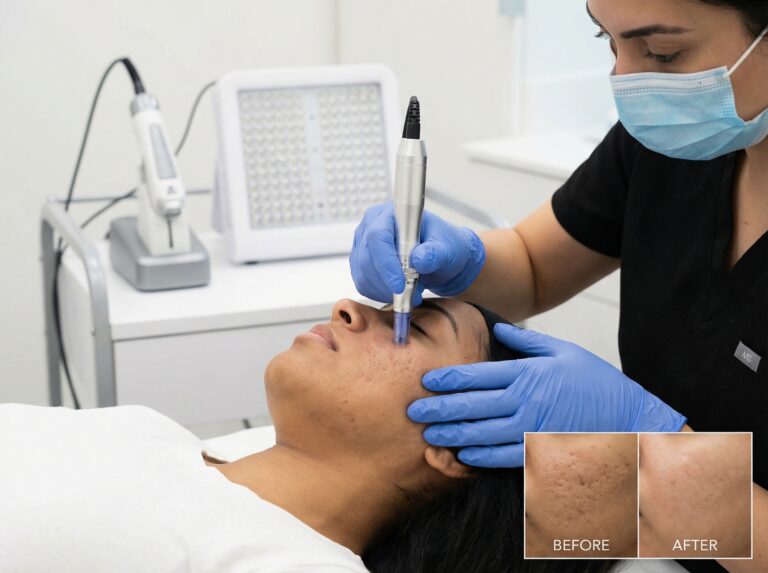
Microneedling creates controlled micro-injuries to stimulate collagen production. For rosacea patients, this helps thicken the epidermis and upper dermis. A stronger skin barrier reduces flushing triggers. However, this treatment carries risks. You cannot perform microneedling on active, inflamed rosacea. The mechanical trauma will trigger a flare. We only introduce this modality once the vascular component is controlled with V-Beam or IPL.
Safety Note on Isotretinoin: Unlike non-ablative lasers which may be safe 1-3 months post-isotretinoin, mechanical remodeling like microneedling requires a conservative 6 to 12-month waiting period. The drug alters wound healing and increases the risk of scarring.
We use conservative settings. Needle depth stays shallow, typically between 0.5mm and 1.0mm. We avoid deeper passes that generate excessive heat or bleeding. The goal is barrier repair, not deep resurfacing. Spacing is critical. We wait at least 4 weeks after a laser session before microneedling. This allows the inflammation from the laser to resolve completely. If we are alternating treatments, the cycle might look like this: Laser, wait 4 weeks, Microneedling, wait 4 to 6 weeks, Laser.
Radiofrequency (RF) for Texture and Erythema
Radiofrequency offers a non-optical way to heat the dermis. Since it relies on electrical resistance rather than light absorption, it is color-blind. This makes RF a safer option for Fitzpatrick skin types IV-VI where IPL carries a high risk of hyperpigmentation. We use non-ablative monopolar or bipolar RF to gently heat the tissue. This heat stimulates collagen remodeling and can reduce the appearance of persistent erythema.
Fractional RF is useful for patients with phymatous changes or acne scarring overlapping with rosacea. The needles deliver heat directly into the dermis. This coagulates tissue and tightens the skin structure. Evidence suggests that improving the density of the connective tissue supports the vascular network. This reduces the visibility of telangiectasias over time.
Safety remains the priority. While RF is safer for darker skin, heat accumulation can still trigger rosacea flushing. We use lower energy settings and more passes. We also employ active cooling during the treatment. For patients with melasma overlap, we are extremely cautious with heat to avoid stimulating pigment.
LED Phototherapy as an Adjunct
Light Emitting Diode (LED) therapy is the standard for reducing procedure-related downtime. We utilize red (633 nm) and near-infrared (830 nm) wavelengths. These wavelengths do not generate heat. They work photobiomodulatively to reduce inflammation and accelerate healing. Red light targets fibroblast activity and reduces cytokines that cause redness.
We use LED immediately after IPL, V-Beam, or microneedling. A 10 to 20-minute session calms the immediate post-procedure erythema. It significantly reduces the “social downtime” for the patient. For maintenance, standalone sessions once or twice a week help keep background inflammation low. This is particularly helpful for patients who cannot tolerate stronger modalities during a flare.
Optimizing Topical Regimens
Procedures fail if the daily skincare destroys the barrier. The peri-procedure regimen focuses on hydration and protection. We stop all potential irritants 5 to 7 days before any energy device treatment. This includes retinoids, glycolic acid, and high-strength salicylic acid.
Pre-Procedure Care:
- Use a gentle, non-foaming cleanser.
- Apply a lipid-rich moisturizer to fortify the barrier.
- Strict sun protection with a mineral SPF 30 or higher containing zinc oxide or titanium dioxide.
Post-Procedure Care:
- Continue the gentle cleanser.
- Use barrier repair emollients containing ceramides or hyaluronic acid.
- Resume prescription topicals like azelaic acid or ivermectin only after the skin fully heals, usually 5 to 7 days later.
- Avoid chemical sunscreens on broken or sensitized skin.
For transient redness management, vasoconstrictors like brimonidine can be useful for special events but do not treat the underlying disease. We advise patients to use them sparingly due to the risk of rebound redness.
Combined Treatment Protocols
We tailor plans based on the clinical presentation and skin phototype. A one-size-fits-all approach leads to adverse events in rosacea management. Modern approaches to treating rosacea in 2025 emphasize this customization.
| Rosacea Subtype | Fitzpatrick I-III | Fitzpatrick IV-VI |
|---|---|---|
| Erythematotelangiectatic (ETR) Persistent redness, flushing |
Phase 1: LED + Barrier Repair Phase 2: IPL (560-590nm) for diffuse redness Phase 3: V-Beam for resistant vessels |
Phase 1: LED + Azelaic Acid Phase 2: V-Beam (Long pulse, low fluence) Phase 3: Gentle Mandelic Peels |
| Papulopustular Bumps, pimples, redness |
Phase 1: Medical therapy (Topical/Oral) to clear lesions Phase 2: V-Beam for background erythema Phase 3: Salicylic/Mandelic Peels for texture |
Phase 1: Medical therapy Phase 2: Nd:YAG (1064nm) or V-Beam (Purpura-free) Phase 3: Very superficial chemical peels |
| Phymatous / Textural Thickened skin, pores |
Phase 1: Ablative Laser or Fractional RF Phase 2: V-Beam for vascularity |
Phase 1: Non-ablative Fractional RF (Microneedling RF) Phase 2: Conservative V-Beam |
Frequently Asked Questions
Which treatment targets redness versus visible blood vessels better?
The distinction usually comes down to the size and depth of the target. For general background redness or flushing that covers a large area, Intense Pulsed Light (IPL) is often the primary choice. It uses a broad spectrum of light to heat up the tiny, diffuse capillaries causing that pink hue. If you can trace individual squiggly lines or spider veins with your finger, the V-Beam (Pulsed Dye Laser) is generally superior. This laser uses a specific wavelength that targets hemoglobin directly to collapse the vessel wall without damaging surrounding skin.
Action Step: Stand in front of a mirror with good lighting. If you see a web of distinct lines, ask your provider specifically about V-Beam or vascular lasers. If it is just a general flush, inquire about IPL.
How do I choose between IPL and V-Beam if I have both redness and pigment?
This is a common scenario. IPL is considered a multitasking device. It targets the red pigment in blood and the brown pigment in sun spots simultaneously. If your rosacea comes with sun damage, IPL might give you better overall complexion clearing. V-Beam is a specialist. It is powerful for vascular issues but does not address brown pigment as effectively. Many clinicians in 2025 use a hybrid approach. They might start with IPL to clear the background noise and finish with V-Beam to zap stubborn vessels.
Action Step: Ask if your clinic offers “combination therapy” in the same session. This often involves a full-face pass with IPL followed by targeted V-Beam pulses on the nose or cheeks.
How many sessions will I need and how soon will I see results?
Patience is necessary for vascular treatments. Most patients require a series of 3 to 5 sessions spaced 4 weeks apart to see significant clearance. You might notice a reduction in flushing after the first session, but visible vessels often require multiple hits to fully collapse and reabsorb. Gentle chemical peels are often done in a series of 4 to 6. Results are cumulative. The skin looks calmer and smoother with each visit.
Action Step: Do not judge the success of the treatment until one month after your third session. Book your appointments in advance to stay on schedule.
What is the typical downtime after these procedures?
Downtime varies by device and intensity. IPL usually causes redness for a few hours. Brown spots may darken and look like coffee grounds before flaking off over a week. V-Beam can cause more significant swelling. This is especially true if treated near the eyes or on the upper cheeks. Some patients experience bruising (purpura) if the settings are high, which can last 7 to 10 days. Gentle peels typically result in mild dryness or invisible micro-exfoliation rather than sheets of peeling skin.
Action Step: Schedule V-Beam treatments on a Friday if you work in an office. Have ice packs and an extra pillow ready to sleep elevated for the first two nights to reduce swelling.
Are these treatments safe for darker skin types?
Safety is the priority here. IPL carries a higher risk for Fitzpatrick skin types IV-VI because the melanin in the skin competes with the target redness for the light’s energy. This can lead to burns or hyperpigmentation. V-Beam is generally safer than IPL for medium skin tones but still requires caution and lower energy settings. For darker skin, many dermatologists prefer using a long-pulsed Nd:YAG laser instead. It bypasses the surface pigment to target deep vessels safely.
Action Step: If you have tan or dark skin, explicitly ask for a “test spot” behind the ear or on the jawline 48 hours before a full treatment. Request that they use settings appropriate for your specific Fitzpatrick type.
Can treatments make rosacea worse or trigger flares?
Heat is a known trigger for rosacea. Consequently, light-based devices can sometimes provoke a temporary flare. This usually manifests as increased redness or a breakout of papules a few days post-treatment. This is often a reaction to the thermal energy. It does not mean the treatment failed, but it does mean your skin is reactive. Gentle peels rarely trigger flares unless the acid concentration is too high or the pH is too low for a compromised barrier.
Action Step: Tell your provider immediately if you feel intense burning rather than just heat during the procedure. Apply a cool compress immediately after the session to dissipate heat.
What should I avoid before and after treatment?
Sun exposure is the biggest contraindication. You cannot have laser or IPL on tanned skin. Avoid direct sun for 4 weeks prior. Stop using retinoids, glycolic acid, and salicylic acid 3 to 5 days before your appointment to reduce sensitivity. After treatment, pause these active ingredients for another 5 to 7 days until the skin barrier heals. Avoid heavy exercise, hot yoga, and saunas for 48 hours. The goal is to keep the skin cool.
Action Step: Switch to a bland, fragrance-free cleanser and a simple moisturizer for the week surrounding your appointment. Use a mineral-based sunscreen daily.
Will insurance cover these treatments for rosacea?
Most insurance plans classify IPL and V-Beam as cosmetic procedures. They typically deny coverage for redness or telangiectasias. Exceptions sometimes exist for severe cases of rhinophyma (tissue overgrowth on the nose) or ocular rosacea where vision is impaired. The impact of rosacea on mental health is significant, yet coverage remains rare. You should expect to pay out of pocket for these sessions.
Action Step: Ask the clinic for a breakdown of costs upfront. Some practices offer package pricing if you purchase a series of 3 or 4 treatments at once.
Summary of Device Selection
| Concern | Primary Option | Secondary Option |
|---|---|---|
| Diffuse Redness / Flushing | IPL | V-Beam (diffuse setting) |
| Visible Vessels (Spider Veins) | V-Beam (PDL) | Nd:YAG Laser |
| Rough Texture / Pustules | Gentle Chemical Peels | Fractional Resurfacing (cautious) |
| Pigment + Redness Mix | IPL | Combination Therapy |
Conclusions Results and Next Steps
Managing rosacea requires a long-term perspective rather than looking for a quick fix. We have covered the technical differences between IPL and V-Beam and discussed how gentle chemical peels can support skin texture. The goal now is to bring these elements together into a cohesive plan that works for your specific skin type. Treating facial redness and broken vessels is not about choosing one “best” device. It is about understanding how different tools work together over time.
Integrating Treatments for Better Results
Vascular lasers and light devices remain the gold standard for clearing visible vessels and background erythema. V-Beam targets the deeper red vessels that look like spider webs. IPL handles the diffuse background redness and brown pigment often seen in sun-damaged skin. Chemical peels play a supportive role by exfoliating the top layer to improve texture and reduce papules.
You might hear about other treatments like microneedling or radiofrequency. These can be useful but require caution. Microneedling can stimulate collagen which strengthens the skin barrier. However, the mechanical trauma can trigger a flare in sensitive rosacea patients. It is usually reserved for those with stable skin who want to address texture or scarring. Radiofrequency (RF) uses heat to tighten skin. Since heat is a major trigger for rosacea, RF must be performed with specific settings to avoid worsening redness. LED light therapy is the safest add-on. Blue light kills bacteria while red light reduces inflammation. It is gentle enough for almost everyone but works slowly compared to lasers.
The Importance of a Holistic Plan
Lasers do not replace medical therapy. They work best when paired with the right prescriptions and skincare. A board-certified dermatologist will often prescribe topical ivermectin, metronidazole, or azelaic acid to control inflammation before starting laser sessions. This calms the skin and makes the laser treatment safer and more effective. Treating active pustules with medication first allows the laser to focus on the remaining redness without battling active infection.
Current clinical guidance emphasizes this multi-pronged strategy. Modern approaches to treating rosacea in 2025 suggest that successful management is built on three pillars which are general skin care, physical modalities, and pharmaceutical agents. Neglecting one pillar often leads to subpar results.
Realistic Timelines and Maintenance
Patience is essential when treating vascular issues. Blood vessels do not disappear overnight. They collapse and are slowly reabsorbed by the body. You might look worse before you look better. Post-treatment swelling and bruising are common and can last from a few days to a week. The table below outlines what a typical treatment journey looks like for a patient with moderate rosacea.
| Phase | Typical Timeframe | What to Expect |
|---|---|---|
| Initial Clearing | Months 1 to 4 | 3 to 5 sessions spaced 4 weeks apart. Gradual reduction in flushing and visible vessels. |
| Healing & Observation | Months 5 to 6 | Skin barrier strengthens. Full results from collagen stimulation become visible. |
| Maintenance | Every 6 to 12 months | Single touch-up sessions to address new vessels or recurring redness. |
Rosacea is a chronic condition. Lasers clear the current symptoms but they do not cure the underlying disease. New blood vessels will likely form over time. Annual maintenance treatments are standard to keep the skin clear.
Preparing for Your Consultation
Finding the right provider is the most critical step. You need a clinician who understands the medical pathology of rosacea, not just someone who knows how to operate a machine. When you book a consultation, come prepared to discuss your history and goals. Bring a list of the skincare products you currently use. Note any triggers that make your flushing worse. Be ready to remove your makeup so the provider can see your baseline redness.
Questions to Ask Your Provider
Ask specific questions to gauge the expertise of the clinician. You want to ensure they have experience treating rosacea specifically. Here are key questions to ask during your visit.
- What specific laser or light device do you recommend for my skin type and why?
- How do you adjust the settings for someone with my specific rosacea subtype?
- Do you perform test spots to check for adverse reactions?
- Who handles complications if I have a burn or unexpected swelling after hours?
- How many patients with my skin tone have you treated with this device?
- Can you show me before and after photos of your own patients with similar skin conditions?
When to Seek a Board-Certified Dermatologist
Medical spas can be great for maintenance, but initial diagnosis and complex cases require a dermatologist. If you have painful flushing, eye involvement (ocular rosacea), or thickened skin on the nose (rhinophyma), you need medical supervision. A board-certified dermatologist can prescribe the necessary oral or topical medications to stabilize your condition before introducing lasers. They can also differentiate rosacea from other conditions that look similar, such as lupus or seborrheic dermatitis.
Taking control of rosacea involves a partnership between you and your provider. By combining medical management with targeted procedures like V-Beam or IPL, you can achieve significant and lasting improvements in your skin tone and texture. Start with a clear diagnosis, ask the right questions, and commit to the maintenance required for long-term skin health.
Sources
- The United States Rosacea Treatment Market Size & Outlook, 2030 — A compound annual growth rate of 6.7% is expected of the United States rosacea treatment market from 2025 to 2030. Overview · Dashboard · Statistics · Reports …
- Rosacea Treatment Market Size to Surpass USD 4.23 Billion by 2034 — The U.S. rosacea treatment market size was evaluated at USD 620 million in 2025 and is expected to be worth around USD 1,180 million by 2034, …
- Rosacea Treatment Market Size and YoY Growth Rate, 2025-2032 — Rosacea Treatment Market size is expected to reach USD 3.36 Bn by 2032, from USD 2.16 Bn in the 2025,exhibiting a CAGR of 6.5% during the forecast period.
- Therapeutic Landscape of Rosacea: From Clinical Trials to Future … — Between 2002 and 2024, 186 rosacea‐related trials were registered across all phases (Figure 1). Of these, 42 trials did not specify a phase, …
- What's Changed (Rosacea Awareness Month) – Guideline Central — This statement offers guidance on the diagnosis, treatment, and management of rosacea, and is considered a key resource for healthcare providers.
- Modern Approaches to Treating Rosacea in 2025 – Next Steps in Derm — Rosacea treatment is built on three pillars: general skin care, physical modalities, and pharmaceutical agents.
- Spring 2025 | Rosacea.org — Of the 703 patients who responded, 91% said rosacea affected their mental health, with 20% reporting the disease affected their mental well-being all the time, …
- Celebrating Rosacea Awareness Month 2025 with Dermatology Times — Explore the latest insights, strategies, and treatments for patients with rosacea as Dermatology Times looks back on Rosacea Awareness …
- Acne, Rosacea Trends in 2025, with Shanna Miranti, PA-C | HCPLive — Miranti shared 2025 acne and rosacea trends, as well as an overlapping treatment option for patients with both conditions, at New Wave Dermatology.
Legal Disclaimers & Brand Notices
The information provided in this article is for informational and educational purposes only and does not constitute professional medical advice, diagnosis, or treatment. The discussion of clinical procedures, including laser treatments, chemical peels, and microneedling, involves inherent medical risks. Always seek the advice of a board-certified dermatologist or other qualified health provider with any questions you may have regarding a medical condition or specific aesthetic procedure. Never disregard professional medical advice or delay in seeking it because of something you have read in this content.
All product names, logos, and brands are the property of their respective owners. All company, product, and service names used in this article are for identification purposes only. Use of these names, logos, and brands does not imply endorsement or affiliation.