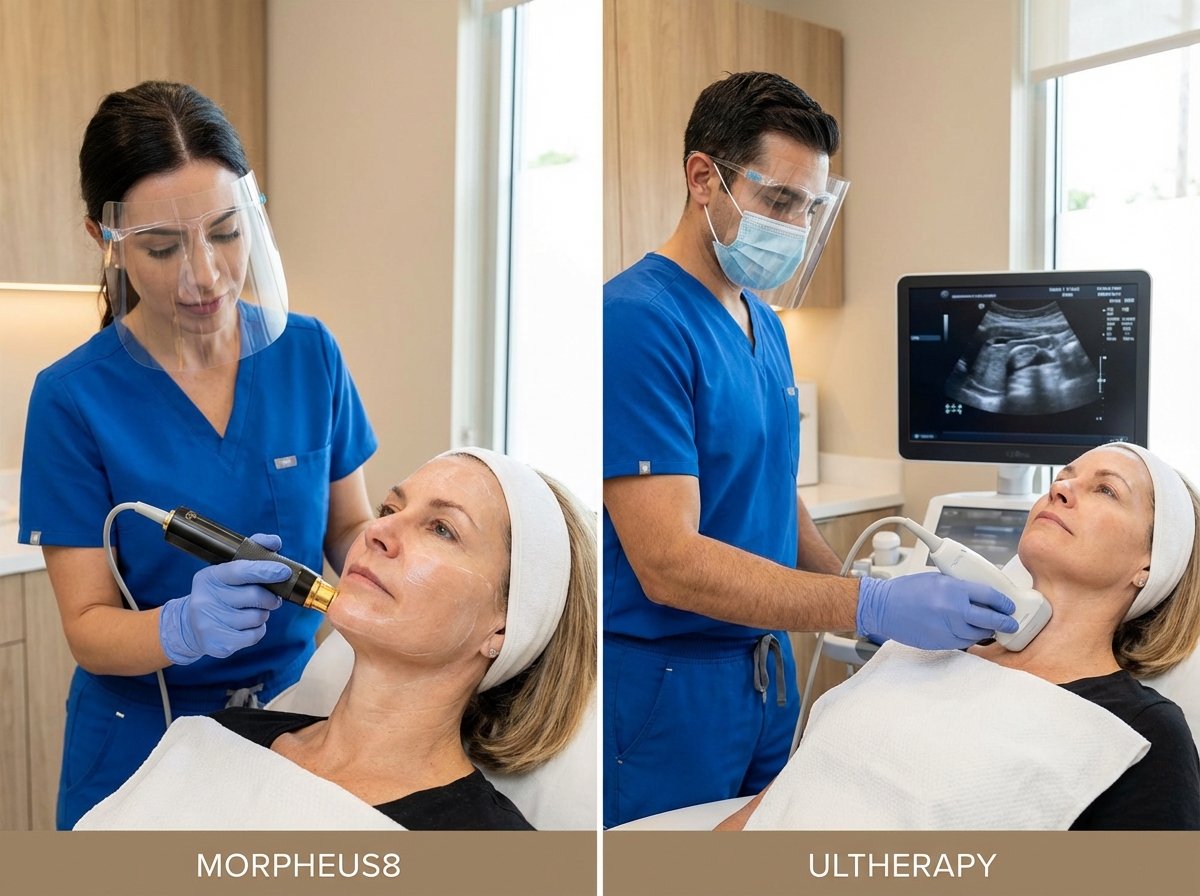
Explore non-invasive options for tightening the neck and jawline, focusing on Morpheus8 and Ultherapy within the broader field of microneedling, laser facials, chemical peels, radiofrequency and LED therapies. This article explains how each treatment works, indications, downtime, clinical evidence, safety tips, and realistic expectations.
Understanding non-invasive skin rejuvenation technologies
When it comes to achieving a sharper, more defined neck and jawline without surgery, two names consistently dominate the conversation: Morpheus8 and Ultherapy. While both promise a tighter, more youthful contour, they are fundamentally different technologies that address skin aging from distinct angles. Understanding this distinction is the key to choosing the right path for your specific goals. Think of it not as a competition, but as selecting the right tool for a very specific job.
At its core, the difference lies in the energy source and the depth of treatment. Morpheus8 is a form of fractional radiofrequency (RF) microneedling. It uses a handheld device with ultra-fine needles to create micro-injuries in the skin while simultaneously delivering controlled RF heat into the dermis and the underlying fat layer. This dual action triggers a powerful collagen and elastin production response, leading to significant improvements in skin texture, firmness, and thickness. It excels at remodeling tissue from the inside out, addressing concerns like crepey skin, fine lines, acne scars, and mild to moderate skin laxity. Because it can target the subdermal fat, it’s also effective for contouring areas with a bit of excess fullness, like under the chin.
Ultherapy, on the other hand, uses microfocused ultrasound with visualization (MFU-V). It bypasses the skin’s surface entirely, delivering precise ultrasound energy to deeper layers than most other non-invasive treatments. Its primary target is the SMAS (Superficial Musculoaponeurotic System), the same foundational layer of tissue that surgeons manipulate during a surgical facelift. By creating tiny thermal coagulation points in this layer, Ultherapy initiates a healing response that results in a gradual lifting and tightening of the tissue. It is the only non-invasive procedure FDA-cleared to actually lift the skin on the neck, chin, and brow. Its strength is in addressing structural sagging and providing a noticeable jawline lift for those with moderate skin laxity.
The patient experience and results timeline also differ significantly. A Morpheus8 treatment typically involves a topical numbing cream to manage the sensation of the microneedles and heat. Afterward, you can expect a few days of social downtime with redness, swelling, and tiny pinpoint marks, similar to a sunburn. While some initial tightening is often visible, the full benefits of collagen remodeling appear over three to six months, usually after a series of one to three sessions.
Ultherapy requires no topical anesthetic and has no visible downtime; you can return to your daily activities immediately. The sensation during treatment is often described as deep, intermittent heat or tingling. The results are not immediate. The lifting and tightening process unfolds gradually over two to three months, with peak results visible around the six-month mark. For most patients, a single Ultherapy session is sufficient, with results lasting a year or more.
So, which one is right for you?
- Choose Morpheus8 if your primary concerns are: Skin texture, crepey skin on the neck, fine lines, acne scarring, and mild sagging. It is an excellent choice for overall skin rejuvenation combined with tightening.
- Choose Ultherapy if your primary concern is: Structural sagging, jowls, and a loss of definition along the jawline. It is the go-to for a non-surgical lift.
Increasingly, practitioners are moving beyond an “either/or” approach. The most advanced strategies for a non-invasive facelift often involve combining these two powerhouse treatments. A provider might use Ultherapy to create the deep foundational lift and then follow up with a series of Morpheus8 treatments to address the superficial skin quality, tighten the dermis, and refine the final contour. This layered approach, as detailed in expert comparisons, targets aging at multiple levels for a truly comprehensive and natural-looking result. Ultimately, the decision depends on a thorough consultation with a board-certified dermatologist or plastic surgeon who can assess your unique anatomy and aesthetic goals.
How Morpheus8 works and what to expect
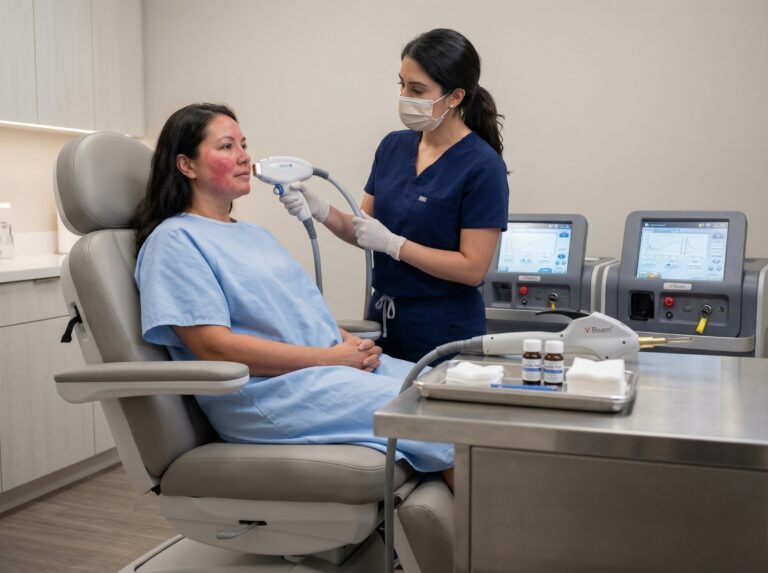
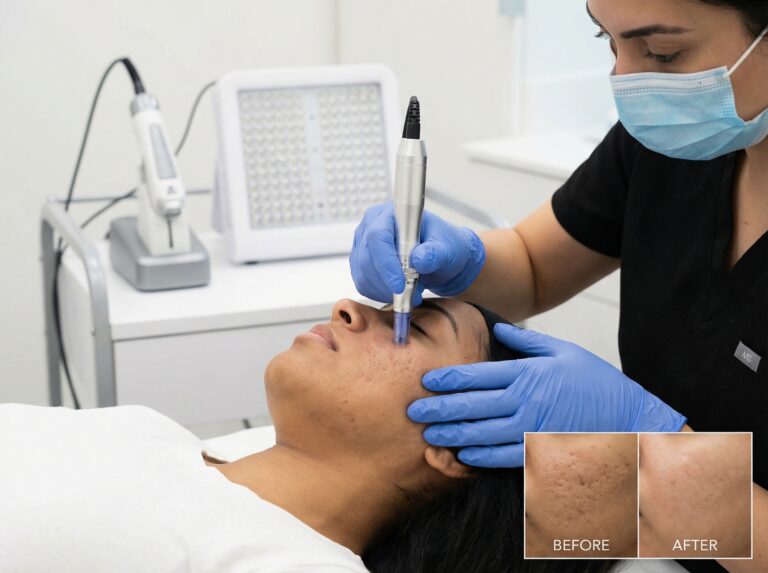
Morpheus8 stands out in the world of non-invasive skin rejuvenation by combining two proven technologies: microneedling and radiofrequency (RF) energy. It’s designed to remodel and contour the face and body for a smoother, sleeker appearance. For the neck and jawline, this means addressing skin laxity, textural irregularities, and even small pockets of submental fat. The device uses a handpiece with a tip containing an array of ultra-fine needles. These needles penetrate the skin at pre-selected depths, creating micro-channels that trigger the body’s natural healing response.
The real innovation lies in what happens as the needles reach their target depth. They deliver controlled bursts of fractional radiofrequency energy directly into the dermis and subdermal tissue. The needles are often insulated, except for their very tips, which protects the epidermis (the top layer of skin) from heat. This minimizes surface damage and reduces the risk of post-inflammatory hyperpigmentation, making the treatment safe for a wider range of skin types, including darker Fitzpatrick skin tones. The depth is adjustable, typically ranging from 1mm to 4mm for the face and neck. For tightening the jawline and addressing jowls or submental fullness, practitioners often use deeper settings of 3mm to 4mm to target the fibro-septal network and coagulate adipose tissue. The energy delivered causes an immediate contraction of existing collagen fibers, providing a subtle initial tightening effect. More importantly, this thermal stimulus kicks off a powerful process of neocollagenesis and elastin production over the following weeks and months.
Clinical evidence supports its efficacy. A 2023 study in the Journal of Cosmetic Dermatology demonstrated statistically significant improvements in skin laxity and texture after a series of RF microneedling treatments. Patients often notice some immediate tightening, but the most significant results unfold progressively over three to six months as new collagen is formed. While individual results vary, studies often report high patient satisfaction rates, with visible improvements in jawline definition and neck smoothness.
Before the procedure, a strong topical anesthetic is applied for 45 to 60 minutes to manage discomfort. During the treatment, patients typically feel a combination of pressure and a deep heating sensation. To prepare, patients should avoid blood-thinning medications, alcohol, and sun exposure for a week prior and arrive with clean, makeup-free skin.
Afterward, the skin will be red, swollen, and may have pinpoint bleeding, similar to a sunburn. This downtime is usually short, with most redness and swelling subsiding within one to three days. Common side effects include temporary grid marks from the needles, minor bruising, and occasional transient numbness. More serious risks are rare but include infection, scarring, and changes in pigmentation. Following proper aftercare is critical: use a gentle cleanser and moisturizer, apply broad-spectrum SPF 30+ daily, and avoid makeup, exfoliants, and intense exercise for at least 48-72 hours. Your provider will advise when it’s safe to resume active skincare like retinoids, usually after about one week.
The ideal candidate for Morpheus8 has mild to moderate skin laxity, fine lines, or textural concerns along the neck and jawline. It is less effective for those with significant sagging, who may be better candidates for surgery.
- Good Candidates: Individuals in their 30s to 50s with early signs of jowling, “tech neck” lines, or loss of jawline definition.
- Poor Candidates: Those with severe skin sagging, active skin infections or acne in the treatment area, or individuals with pacemakers or metal implants in the face (dental implants are generally okay).
If you have dermal fillers, it’s important to wait several weeks after injection before undergoing Morpheus8, as the RF heat can potentially degrade the filler material. A typical treatment plan involves a series of one to three sessions spaced four to six weeks apart. Maintenance treatments are often recommended annually to preserve the results.
When considering this procedure, it’s vital to choose a qualified provider. Look for a board-certified dermatologist or plastic surgeon with extensive training and experience specifically with the Morpheus8 device. In the U.S. market as of late 2025, the cost for a single Morpheus8 session for the neck and jawline typically ranges from $1,000 to $1,800, depending on the provider’s location and expertise. A full treatment course can therefore cost between $3,000 and $5,400. You can learn more about how it compares to other technologies like Ultherapy in this Morpheus8 vs Ultherapy comparison.
How Ultherapy works and what to expect
While Morpheus8 remodels the skin from within using radiofrequency energy, Ultherapy takes a different approach, using sound waves to create a lift from deep beneath the surface. It is the only non-invasive procedure cleared by the FDA to actually lift skin on the neck, under the chin, and on the eyebrow. The technology behind it is called microfocused ultrasound with visualization (MFU-V). Think of it like using a magnifying glass to focus sunlight on a single point. Ultherapy delivers focused ultrasound energy past the skin’s surface, heating tiny, precise points in the deeper layers of tissue without disrupting the outer skin.
This targeted heat creates what are known as thermal coagulation points. The body’s natural response to this controlled thermal injury is to initiate a healing process, which involves producing fresh, new collagen. This process, called neocollagenesis, gradually tightens and lifts the skin over time. A key feature of Ultherapy is its real-time ultrasound imaging. This allows the practitioner to see the layers of tissue they are treating, ensuring the energy is delivered to the exact depths where it will be most effective and safe.
For the neck and jawline, practitioners typically use several transducers to deliver energy at different depths:
- 4.5 mm depth. This targets the Superficial Musculoaponeurotic System, or SMAS. This is the same foundational layer of tissue that surgeons tighten during a surgical facelift. Targeting the SMAS is crucial for achieving a noticeable lift.
- 3.0 mm depth. This reaches the deep dermis, stimulating collagen production to help firm the skin.
- 1.5 mm depth. This targets the superficial dermis to improve the appearance of fine lines and wrinkles.
Clinical evidence supports its effectiveness. A landmark study published in Aesthetic Surgery Journal in 2022 confirmed significant improvement in skin laxity of the lower face and neck, with high patient satisfaction rates. Generally, responder rates are high, with most patients seeing a measurable lift. The results are not immediate. The collagen-building process takes time, with initial changes visible around three months and peak results appearing at six months. These results can last for one to two years, though some studies suggest durability beyond 24 months, depending on the individual’s aging process.
During the treatment, patients feel distinct moments of deep heat or tingling as the ultrasound energy is delivered. Comfort levels vary, and pain management is an important consideration. Most clinics recommend taking over-the-counter pain relievers like ibuprofen an hour before the session. Some may offer stronger prescription medications or options like Pro-Nox (inhaled nitrous oxide) to enhance comfort.
There is typically no downtime after Ultherapy. You can return to your daily activities right away. Common side effects are mild and temporary, including slight redness, swelling, tenderness to the touch, or tingling. Bruising can occur but is less common. A rarer side effect is temporary numbness or muscle weakness in a small area, which usually resolves on its own. This risk underscores the importance of treatment by a highly skilled provider who uses the device’s visualization capabilities correctly. The procedure is contraindicated for patients with open wounds or lesions in the treatment area, severe or cystic acne, and active implants like pacemakers.
Pre-treatment care is minimal. Your provider may advise you to discontinue supplements that can thin the blood, like fish oil or vitamin E, for a week prior to reduce the risk of bruising. Post-treatment care is also simple. You can resume your normal skincare routine, though it is always wise to be diligent with sun protection.
Most patients only need a single Ultherapy session to achieve their desired results. Maintenance treatments can be performed every 18 to 24 months to keep pace with the natural aging process. The ideal candidate has mild to moderate skin laxity. They see the skin on their neck and under their chin becoming less firm but are not yet ready for surgery.
Red Flag for Surgical Referral: Patients with significant skin sagging or thicker layers of subcutaneous fat may not see as dramatic results. If you can pinch a significant amount of loose skin on your neck or jawline, or if you have very visible muscle bands (platysmal bands), a non-invasive treatment will likely be disappointing. In these cases, a consultation with a board-certified plastic surgeon is the most appropriate step.
As of late 2025, the cost for an Ultherapy treatment on the lower face and neck in the United States typically ranges from $3,500 to $5,500. It is critical to seek treatment from a board-certified dermatologist or plastic surgeon with extensive experience performing Ultherapy. Ensure they are certified by the manufacturer, Merz Aesthetics, and can demonstrate their expertise with the device’s unique imaging technology.
Comparing Morpheus8 and Ultherapy for neck and jawline tightening
When deciding between Morpheus8 and Ultherapy for the neck and jawline, it’s less about which is “better” and more about which is right for your specific anatomy and goals. These two technologies are often seen as competitors, but they work in fundamentally different ways and target different layers of tissue, making them powerful tools for distinct concerns.
Mechanism and Analogy
Think of Morpheus8 as renovating the house’s structure and walls, while Ultherapy focuses on lifting the foundation. Morpheus8 uses microneedles to physically penetrate the skin and deliver RF energy, remodeling tissue from the inside out to improve texture, thickness, and laxity. Ultherapy bypasses the surface to heat the SMAS layer, inducing a lift from deep within.
Efficacy, Onset, and Durability of Results
Your degree of skin laxity is a primary factor in choosing a treatment.
- Mild Laxity: For patients with early signs of sagging, crepiness, or poor skin texture, Morpheus8 is often the preferred choice. It provides excellent skin quality improvement with a noticeable tightening effect.
- Moderate Laxity: This is where the decision becomes more nuanced. If the main issue is sagging and jowling with decent skin quality, Ultherapy’s ability to target the SMAS makes it a strong contender for a more defined lift. If moderate laxity is combined with textural issues, a series of Morpheus8 treatments or a combination approach may be better.
- Severe Laxity: It is critical to understand that neither technology can replicate the results of a surgical neck lift. Patients with significant excess skin or platysmal banding are best referred for a surgical consultation.
With Morpheus8, some initial tightening from collagen contraction can be seen within days, but the full results build over three to six months as new collagen forms. Ultherapy’s results are more gradual, typically becoming visible at two to three months and peaking around six months. Studies and clinical experience suggest results from both can last one to two years, though maintenance treatments are recommended.
Clinical Decision-Making and Combination Therapy
A simple algorithm can help guide the decision:
- Primary Goal is Texture & Superficial Tightening: Choose Morpheus8.
- Primary Goal is Lifting Deeper Sagging Tissue: Choose Ultherapy.
- Both Texture and Sagging are Concerns: Consider combination therapy.
Combining treatments often yields the most comprehensive results. A popular and effective protocol is to perform Ultherapy first to create the foundational lift by tightening the SMAS. Three to six months later, a series of Morpheus8 treatments can be performed to address the dermal and subdermal layers, improving skin quality, smoothing texture, and providing additional tightening. This “stacking” approach addresses aging at multiple levels.
Case Vignette 1: Sarah, 44, presented with mild jowling but was most bothered by the “crepey” texture and fine horizontal lines on her neck. Her skin quality was her main concern. She underwent a series of three Morpheus8 treatments, which significantly smoothed her neck skin and provided a noticeable improvement in jawline definition.
Case Vignette 2: David, 52, had good skin texture but was concerned about a loss of definition along his jaw and sagging under his chin. He was an ideal candidate for a single Ultherapy session, which lifted and tightened the underlying structures, restoring a sharper jawline over six months.
Setting Realistic Expectations
When counseling patients, it’s important to be clear. “These treatments are designed to produce natural-looking rejuvenation, not surgical transformation. Think of it as a refresh that can turn back the clock a few years. You will look like a more rested and defined version of yourself. To maintain your results, plan on a maintenance treatment every 18 to 24 months and adhere to a good skincare regimen.” The cost for a full Morpheus8 series (around $3,000-$5,400) and a single Ultherapy treatment ($3,500-$5,500) can be comparable, so the decision should be based on clinical need, not price alone.
Final thoughts and practical recommendations
Navigating the world of non-invasive treatments can feel overwhelming, but making an informed decision comes down to understanding your specific goals and the technology best suited to meet them. We’ve explored the science behind Morpheus8’s radiofrequency microneedling and Ultherapy’s microfocused ultrasound, and the choice between them is rarely about which is “better” overall, but which is better for you.
To put it simply, Morpheus8 excels at addressing concerns like fine lines, textural irregularities, acne scarring, and mild skin laxity. Because it treats from the outside in, it’s a powerful tool for overall skin rejuvenation and remodeling. Ultherapy, on the other hand, reinforces the foundational beams of the face. It bypasses the surface entirely to deliver focused energy deep into the skin’s structural support layer, the SMAS, creating a noticeable lift. It is the preferred choice for individuals with moderate skin laxity who need a foundational lift along the jawline and beneath the chin but may not have significant surface texture issues.
Choosing the right technology is only half the battle; selecting the right provider is paramount. Your results and safety depend entirely on their expertise. Before committing to a treatment, use this checklist during your evaluation process.
- Credentials and Experience: Is the provider a board-certified dermatologist or plastic surgeon? Ask how many Morpheus8 or Ultherapy treatments they perform each month. Experience with your specific skin type and concerns is critical.
- The Consultation: A thorough consultation should be mandatory. The provider should assess your skin quality, degree of laxity, and listen to your goals. For Ultherapy, they should use the device’s ultrasound imaging to map your unique anatomy before treatment.
- Key Questions to Ask:
- Based on my skin, why are you recommending this specific device?
- What energy levels and depths do you plan to use, and why?
- Can I see a portfolio of before-and-after photos of your own patients who have a similar starting point to me?
- What are the most common side effects you see with this procedure in your practice?
- What is your full protocol for pain management and handling any potential complications?
- What is the all-inclusive price for the recommended treatment plan?
- Informed Consent: The consent form should be reviewed with you in detail, not just handed to you. It must clearly outline the potential risks, benefits, and alternatives, including the option of no treatment.
Your safety is the top priority. For those with darker skin tones (Fitzpatrick types IV-VI), a patch test is a wise precaution before a full Morpheus8 treatment to rule out any potential for post-inflammatory hyperpigmentation. If you’re considering combining treatments for a more comprehensive result, proper spacing is essential. A common protocol is to perform Ultherapy first to create the deep lift, followed by Morpheus8 three to six months later to refine the surface. Remember that results are not instant. While you may see some initial tightening, the full effect from collagen remodeling will gradually appear over three to six months. It’s also important to have realistic expectations. For significant skin excess or prominent vertical neck bands (platysmal bands), a surgical neck lift remains the gold standard, as recommended by the American Society of Plastic Surgeons.
Finally, consider the financial and long-term commitment. These treatments are an investment, with costs for a full neck and jawline treatment in 2025 typically ranging from $3,000 to $5,500 depending on the technology and location. To protect that investment, plan for maintenance. A single touch-up session every 12 to 24 months can help sustain your results for years to come.
The best first step is always a personal consultation. We strongly encourage you to schedule an appointment with a board-certified dermatologist or plastic surgeon. They can provide a professional assessment and help you build a safe, effective treatment plan tailored specifically to your anatomy and aesthetic goals.
Sources
- Morpheus8 vs Ultherapy: An Overview of the Treatments — Morpheus8 reduces wrinkles, tightens skin and improves tone. Ultherapy lifts and firms sagging skin of the face and neck. Using these treatments together …
- Which is Better for Skin Tightening: Morpheus8 vs Ultherapy? — Morpheus8 uses radiofrequency microneedling to target deeper layers of skin, improving texture, tone, and firmness. On the other hand, Ultherapy …
- Morpheus8 vs Ultherapy: Which Is Better? – Syra Aesthetics — Morpheus8 is effective for skin tightening and texture improvement, while Ultherapy primarily focuses on lifting and firming. Combination treatments may offer …
- Ultherapy vs. Morpheus8: Which Skin Tightening Treatment is Right … — What Ultherapy treats best: Lifting a sagging brow; Tightening loose skin under the chin; Smoothing neck lines and laxity; Defining the jawline …
- Morpheus8 vs. Ultherapy: The Best Skin Tightening Treatment for You — Both treatments work toward the same goal—tighter, more youthful-looking skin—but they achieve it in different ways …
- Morpheus8 vs Ultherapy, Thermage, Renuvion, Endolift & More — Compare Morpheus8 with Ultherapy, Thermage, Renuvion, and more. Learn which is most effective, safest, and what results to expect.
- Skin Tightening Without Surgery: The Most Effective Options in 2025 — Treatments like Ultherapy are FDA-cleared for lifting the brow and jawline, primarily targeting moderate skin laxity. Laser skin tightening, …
- Morpheus8 vs Profound RF vs Ultherapy: Which Treatment Is Right … — For example, Morpheus8 might be used to improve texture, while Ultherapy helps lift the jawline. Layering technologies under professional …
- Ultimate Guide to Skin Tightening: Comparing Top Technologies in … — Discover which skin rejuvenation device delivers the best results in 2025. Compare Morpheus8, Profound RF, NeoGen Plasma,
Legal Disclaimers & Brand Notices
The information provided in this article is for informational purposes only and does not constitute professional medical advice, diagnosis, or treatment. Always seek the advice of a board-certified dermatologist, plastic surgeon, or other qualified healthcare provider with any questions you may have regarding a medical condition or specific aesthetic procedure. Never disregard professional medical advice or delay in seeking it because of something you have read in this content.
All product names, logos, and brands mentioned in this article are the property of their respective owners. All company, product, and service names used are for identification purposes only. Use of these names, trademarks, and brands does not imply endorsement or affiliation.