Vampire facials (PRP microneedling) are a popular non-invasive treatment promising improved texture, tone, and collagen rebuilding. This article explores how PRP microneedling works, procedure steps, downtime, safety, expected results, and how it compares to microneedling alone, laser facials, chemical peels, RF, and LED therapies to help U.S. readers make an informed choice.
What PRP Microneedling Is and Why It’s Popular
PRP microneedling is a skin treatment that pairs mechanical stimulation with the healing properties of your own blood. In clinical settings, professionals often call this autologous skin rejuvenation. Most people know it by the popular name Vampire Facial. This procedure has moved from a celebrity trend to a standard offering in U.S. medical spas, representing a significant part of the non-invasive skin rejuvenation market in 2025.
Microneedling involves using a device with fine needles to create controlled micro-injuries in the skin surface. These tiny punctures trigger a natural wound-healing response. Platelet-rich plasma, or PRP, is a concentrated source of platelets taken from a small sample of your blood. When providers combine these two, the microneedling creates channels that allow the PRP to reach deeper layers of the dermis. This synergy leads to faster healing and often results in more significant collagen production than using either method alone. Crucially, this is an autologous treatment, meaning it uses only your own biological material with no foreign chemicals or synthetic fillers added to the plasma. According to Wikipedia, the medical devices used to prepare PRP are subject to FDA clearance, though the specific cosmetic application is often an off-label use of those tools.
Cosmetic Goals and Indications
Patients seek this treatment to address several specific skin concerns. It is effective for smoothing fine lines, improving overall skin texture, and reducing the appearance of acne scars. It can also help with enlarged pores and uneven skin tone. The treatment is versatile, working for various skin types, and is particularly useful for those who want to avoid the longer downtime associated with aggressive lasers.
| Indication | Expected Improvement | Typical Sessions |
|---|---|---|
| Fine Lines | 20 to 30 percent | 3 sessions |
| Acne Scars | 40 to 50 percent | 4 to 6 sessions |
| Pore Size | 25 percent reduction | 3 sessions |
| Skin Tone | 30 percent more even | 3 sessions |
Patient Profiles in the U.S. Market
The typical patient in the U.S. market is between 30 and 55 years old. These individuals often prefer treatments that use their own biological material and may be wary of synthetic fillers or neurotoxins. There is a strong demand for natural results where improvements do not involve significant surgery. Patients look for options with manageable recovery times; many in this demographic are professionals who cannot afford weeks of downtime. They value the autologous nature of the treatment, as using one’s own blood feels safer to many people than injecting foreign substances.
Drivers of Popularity
Social media has played a massive role in the rise of this facial. A 2013 post by Kim Kardashian remains a major reference point for the treatment. By late 2025, the hashtag #VampireFacial has surpassed 550,000 posts on Instagram. Celebrity endorsements from figures like Jennifer Aniston have kept the procedure in the public eye. The perception of the treatment as a natural or organic option appeals to modern consumers who view it as a way to “bio-hack” their skin health.
The Selphyl documentation notes that while the term is popular, the procedure is not a single FDA-approved drug. Instead, it uses cleared devices to prepare the plasma. This distinction is important for setting realistic expectations. Patients should understand they are receiving a procedure that uses cleared technology in a specific, combined way.
Market Trends Through 2025
The U.S. market for aesthetic PRP procedures grew by about 15 percent year-over-year leading into 2025. Data shows that about 40 percent of medical spas now offer this combination. The FDA has authorized certain microneedling devices for facial wrinkles and cleared them for acne scars in patients aged 22 and older. The uptake remains high because the treatment bridges the gap between basic facials and invasive surgery.
Safety remains a critical topic for providers. A 2024 report from the CDC highlighted the risks of unsterile blood handling at a facility in New Mexico. This incident reminded the industry that sterile technique is non-negotiable. Professional oversight is essential. Most reputable clinics now emphasize their sterile protocols to reassure patients, focusing on using single-use kits and ensuring board-certified professionals perform the blood draw as well as the microneedling. This focus on safety has helped maintain steady demand despite past headlines.
Mechanisms: Science and Efficacy Evidence
The biological foundation of the Vampire Facial rests on the body’s innate ability to repair tissue through a controlled wound-healing response. When a microneedling device moves across the skin, it creates thousands of microscopic punctures in the epidermis and the dermis. These micro-injuries trigger a three-stage repair process known as collagen induction therapy. The first stage is the inflammatory phase where platelets at the injury site release essential growth factors. These proteins act as chemical messengers that signal the skin to begin repairs. During the second stage, fibroblasts migrate to the area to produce new collagen and elastin. The final remodeling stage can last for several months as the skin replaces temporary tissue with stronger Type I collagen. This process improves skin density and structural integrity over time.
The preparation of Platelet-Rich Plasma is a technical process that requires precision to be effective. A clinician draws between 10 to 30 milliliters of the patient’s blood into a specialized tube. This tube is placed in a centrifuge for a two-step spinning process. The first spin separates the red blood cells from the plasma. The second spin concentrates the platelets to a target level of four to six times the baseline concentration found in normal blood. For aesthetic purposes, many providers prefer leukocyte-poor PRP. This version minimizes the number of white blood cells to reduce the risk of excessive inflammation and post-procedure swelling. Some protocols involve adding calcium chloride to activate the platelets. This step triggers the immediate release of growth factors so they are ready to work the moment they touch the skin. There are numerous PRP preparation systems on the market with FDA clearance for safety, though their use in facials remains an off-label application of the technology.
Adding PRP to microneedling provides a concentrated biological boost that needles alone cannot provide. While microneedling creates the physical channels, the PRP acts as a potent serum that fills these pathways. It delivers a high density of Platelet-Derived Growth Factor and Transforming Growth Factor-beta directly into the deeper layers of the skin. Research indicates that this combination can increase collagen production by roughly 15 to 20 percent compared to standard microneedling. The growth factors in the plasma also speed up the initial healing phase. This often results in less downtime and a faster resolution of the redness that follows the procedure. The liquid also serves as a natural lubricant during the treatment which helps the needles glide more smoothly across the skin surface.
Clinical evidence for the efficacy of this combination has become more robust by late 2025. A 2020 meta-analysis in the Journal of Cosmetic Dermatology confirmed that PRP plus microneedling is significantly more effective for treating acne scars than microneedling by itself. The researchers noted an effect size of 1.2 for scar reduction which is considered a substantial clinical improvement. A systematic review from 2023 analyzed 12 randomized trials and found that patients experienced a 25 to 40 percent reduction in facial wrinkles after a series of three treatments. The evidence for treating pigmentation is less consistent. Most studies show about a 20 percent improvement in skin tone. This suggests that while the treatment helps, it may not be the primary choice for deep sun damage or melasma compared to specialized chemical peels.
| Indication | Quality of Evidence | Observed Effect Size |
|---|---|---|
| Acne Scarring | High | 40-50% improvement |
| Facial Wrinkles | Moderate | 25-35% reduction |
| Skin Texture | Moderate | Significant smoothing |
| Pigmentation | Low | 15-25% lightening |
Despite the growing body of research, several limitations remain in the current evidence. Many clinical trials involve small sample sizes of 20 to 50 participants. There is also significant heterogeneity in how different clinics prepare their PRP. One provider might use a single spin while another uses a double spin. This leads to variations in platelet concentration that make it hard to standardize results. We still lack large Phase III trials that follow patients for more than two years. Most research focuses on short-term outcomes rather than long-term maintenance. Patients should also remember that while microneedling devices have specific clearances for scars and wrinkles, the addition of PRP is a provider-led protocol based on clinical experience and smaller-scale studies.
The Procedure: Preparation, Aftercare, Downtime, and Expected Results
Before you book a session for PRP microneedling, a thorough medical screening is the first requirement. You need to share your full health history with the provider. This includes any history of keloid scarring or active skin infections like herpes simplex. If you have a flare-up, you must postpone the treatment. Certain conditions like pregnancy, breastfeeding, or blood disorders (such as low platelet count) make you an unsuitable candidate. You should also mention if you have used isotretinoin in the last six to twelve months. Most clinics require a waiting period after finishing that medication to ensure the skin heals correctly. You must stop taking anticoagulants or anti-inflammatory drugs like aspirin seven days before your appointment. These medications increase the risk of bruising and can interfere with platelet function.
Choosing the Right Clinic
Selecting a qualified clinician is the most important safety step. You should look for a board-certified dermatologist or plastic surgeon. Verify their credentials through the American Board of Medical Specialties website. Ask the staff about their sterile techniques and the specific PRP kits they use. In 2024, a major safety incident in New Mexico highlighted the dangers of unsterile blood handling where clients contracted HIV at a spa that reused syringes. To avoid this, ensure your provider uses single-use, FDA-cleared kits and opens the sterile packaging in your presence. You can find more information about microneedling devices on the official FDA website. Always ask to see before and after photos of previous patients with your specific skin type.
The Step-by-Step Procedure
The appointment usually lasts about sixty minutes. It begins with a blood draw of roughly twenty to thirty milliliters. This blood goes into a centrifuge. The machine spins the blood to separate the platelets from the red cells. Most modern protocols use a double-spin method to reach a platelet concentration that is four to six times higher than your baseline. While the blood processes, the clinician applies a topical numbing cream. This cream usually contains five percent lidocaine. It stays on your skin for thirty minutes to ensure you stay comfortable.
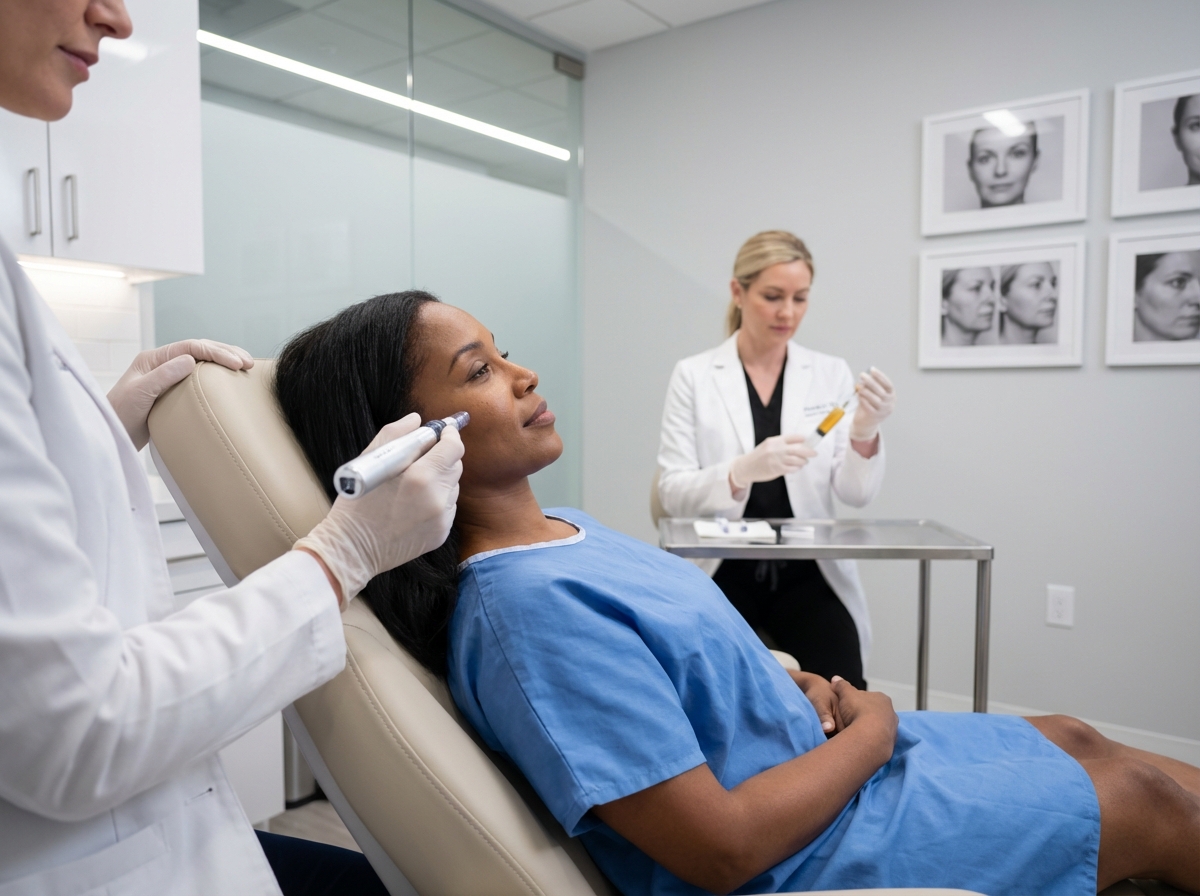
Once your skin is numb, the microneedling begins. The provider moves a motorized device across your face. This device creates thousands of tiny channels. The needle depth depends on your goals. For general skin texture, the depth stays between 0.5 and 1.0 millimeters. If you are treating deep acne scars, the needles may reach 1.5 to 2.5 millimeters. The clinician applies the prepared PRP topically during the needling. This allows the growth factors to penetrate deep into the dermis. Some providers might inject small amounts of PRP into specific areas like the under-eye region for extra rejuvenation.
Pain and Immediate Reactions
Most patients describe the sensation as a rough sandpaper moving across the skin. On a pain scale of one to ten, the pain usually sits at a four, though it may feel like a scratchy vibration over bony areas like the forehead. You will experience immediate redness. This looks like a moderate sunburn. Pinpoint bleeding is common but it stops within a few hours. Swelling often peaks on the second day. You might feel some tightness or see minor bruising. These reactions are normal signs that the healing cascade has started.
Downtime and Expected Results
The recovery period is relatively short. Most people see the redness fade within twenty-four to seventy-two hours. If the treatment was aggressive for deep scarring, the downtime might last a full three days. You will notice a healthy glow within the first week. However, the real work happens beneath the surface. Collagen remodeling takes time. You will see the peak results for wrinkles and scars after three to six months. A typical schedule involves three or four sessions. These appointments happen every four to six weeks. For maintenance, one or two sessions per year are usually enough to keep the skin firm.
Aftercare and Safety Tips
Proper aftercare prevents complications like infection or hyperpigmentation. You must avoid direct sun exposure for at least three days. Do not apply makeup for twenty-four hours to keep the micro-channels clean. Use a gentle cleanser and a basic moisturizer. You should skip retinoids and exfoliating acids for seven days. Some providers may suggest using a brightening cream for a few weeks prior to the appointment if you have a darker skin tone to prevent post-inflammatory hyperpigmentation. If you notice signs of infection such as yellow crusting or increasing pain, contact your doctor immediately. Staying hydrated and avoiding alcohol for forty-eight hours helps the healing process.
Typical Costs in the United States
The price for PRP microneedling varies by location and provider expertise. On average, a single session costs about 750 dollars. In major cities like New York or Los Angeles, you might pay 1,200 dollars or more. Factors like the depth of treatment and the volume of PRP used will influence the final bill. Since this is a cosmetic procedure, health insurance does not cover the cost. Many clinics offer package deals if you prepay for a series of three treatments.
Comparing PRP Microneedling With Other Non-Invasive Options
Choosing between a vampire facial and other treatments depends on your specific goals. If you want to fix deep acne scars, PRP microneedling is a strong contender. It offers a 40 to 50 percent improvement in scar depth according to recent meta-analyses. This is much higher than microneedling alone. Standard microneedling usually reaches about 30 percent improvement. The addition of growth factors from your own blood makes a measurable difference in how the skin repairs itself.
PRP Versus Standard Microneedling
Microneedling alone is a reliable way to improve skin texture. It is the most affordable option in the United States. A session usually costs around 300 dollars. It requires very little recovery time. Most people see redness for only 24 hours. However, adding PRP increases the efficacy for wrinkles by about 15 percent. The growth factors speed up the healing process. While the upfront cost of a vampire facial is higher, you often need fewer sessions to see the same results. Patients looking for a natural boost without synthetic ingredients prefer this method.
Lasers and Energy Devices
Ablative lasers like CO2 are the gold standard for deep wrinkles. They offer up to 60 percent improvement in a single session. But the recovery is intense. You can expect 14 days of downtime. Most patients in cities like New York prefer the vampire facial because they can return to work in three days. It is a balance between intensity and lifestyle. Non-ablative lasers like Fraxel are better for sun spots. They improve pigmentation by 50 percent. PRP is better for overall texture without the heat risk associated with lasers.
Radiofrequency devices like Morpheus8 are better for skin tightening. They reach deeper layers than standard needles. If your main concern is sagging skin, RF is the better choice. Many providers now offer hybrid sessions. They use RF for tightening. They apply PRP to the surface immediately after. This combination improves both the structure and the glow of the skin.
Chemical Peels and Pigmentation
Chemical peels remain the best option for stubborn pigmentation. A medium depth TCA peel targets sun damage more effectively than PRP. PRP only improves pigmentation by about 20 percent. Peels can reach 40 percent or more. But peels do not stimulate as much collagen as the vampire facial. Peels also involve significant peeling for a week. PRP microneedling leaves the skin intact. It is a better choice for someone who cannot hide at home for seven days.
Comparison of Rejuvenation Options
| Modality | Primary Indication | Downtime | Average Cost |
|---|---|---|---|
| PRP Microneedling | Texture and Acne Scars | 1 to 3 Days | 750 Dollars |
| Microneedling Alone | Fine Lines | 1 to 2 Days | 300 Dollars |
| CO2 Laser | Deep Wrinkles | 7 to 14 Days | 2500 Dollars |
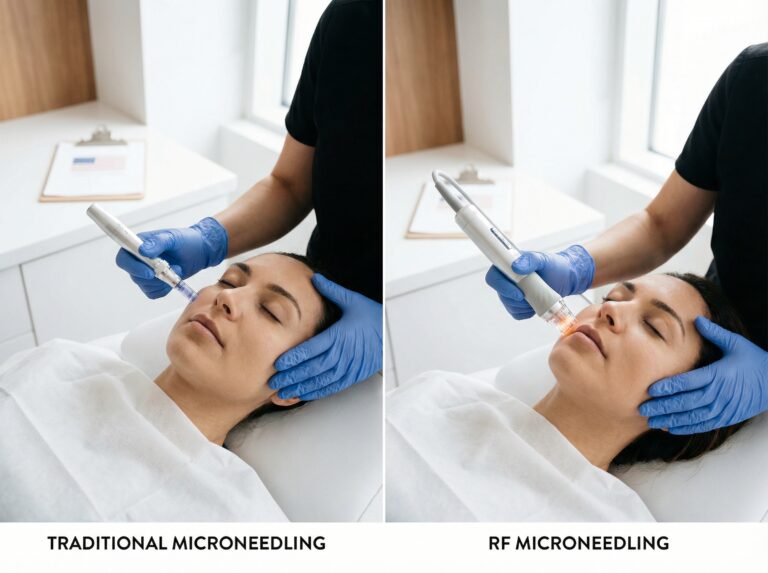
| RF Microneedling | Skin Laxity | 2 to 4 Days | 1200 Dollars |
| TCA Chemical Peel | Pigmentation | 5 to 7 Days | 500 Dollars |
| LED Therapy | Inflammation | 0 Days | 200 Dollars |
Safety and Candidate Selection
The safety profile of PRP is excellent because it uses your own cells. This eliminates the risk of allergic reactions. Lasers and peels carry a higher risk of hyperpigmentation in darker skin tones. Microneedling is generally safer for Fitzpatrick skin types IV through VI. The microneedling devices used must be cleared by the FDA to ensure they do not pull or tear the skin.
Ideal candidates for PRP are those with early signs of aging or acne scarring. It is not the right choice for someone with active skin infections or blood disorders. If you have significant sagging, a surgical consult or RF treatment is more appropriate.
Hybrid Approaches and Sequencing
Combining treatments is common in 2025. LED therapy after PRP reduces redness. Using PRP after a laser treatment can cut downtime by two days. Clinicians often recommend a series of three vampire facials followed by a maintenance laser session once a year. This approach addresses both the surface texture and the deeper pigment issues. However, sequencing is vital to avoid damage. You should wait at least two weeks after a vampire facial before getting Botox injections. For dermal fillers, a four-week waiting period is standard to ensure all swelling has subsided. If you are planning to get a laser treatment or a chemical peel, you should wait four to six weeks. Always verify that your provider uses sterile kits for blood processing to avoid any risk of infection.
Final Takeaways and Practical Recommendations
Patient Checklist Before Booking
You should prepare a list of points to verify before you commit to a session. This helps ensure your safety and the quality of the results. Use the following points to evaluate your potential provider.
- Verify that the provider is a board-certified dermatologist or plastic surgeon.
- Ask if the centrifuge and PRP kits have FDA 510k clearance.
- Confirm the clinic uses a double-spin protocol to reach a platelet concentration of 4 to 6 times your baseline.
- Check if the microneedling device is FDA authorized for your specific skin concern.
- Disclose your full medical history including any history of keloid scarring or cold sores.
- Stop taking aspirin or other blood thinners seven to ten days before the appointment to minimize bruising.
Resources and Medical Consultation
For those who want to read the technical data, professional societies offer detailed guidance. You can find information on microneedling devices through the FDA website. This resource explains which tools are authorized for specific uses like acne scars or wrinkles. You may also find helpful patient perspectives on the Selphyl website regarding who can benefit most from the procedure. If you notice unusual symptoms like extreme pain or signs of infection after your treatment, seek medical advice immediately. A consultation with a specialist is the only way to determine if your skin is ready for this level of stimulation.
References
- What Is a Vampire Facial, and Who Can Benefit From It? – Selphyl — Historical Sentiments Around PRP Treatments and the Vampire Facial … vampire facial is not an FDA-approved procedure. The U.S. Food and …
- New FDA-Approved Drug for TSC Emerged from Early CDMRP … — PRP · PRORP · RTRP · SRP · SCIRP · TBDRP · TBIPHRP · TSCRP · VRP · Other Defense … This is the first FDA-approved treatment for facial …
- PRP & FDA – Stem Cell Therapies – Vampire Facelift — There are numerous PRP preparation systems on the market with FDA clearance. … Vampire Facial®. The Difference Between the Two Procedures …
- Microneedling Devices – FDA — … (PRP)) into the skin. Be aware that you may need more than one procedure to get the desired aesthetic improvement. Ask your health care …
- [PDF] Minimal Manipulation and Homologous Use – FDA — Accordingly, FDA does not apply the criteria in 21 CFR. 1271.10(a) to PRP, and PRP is outside the scope of this guidance. B. Compliance and Enforcement …
- Platelet-rich plasma – Wikipedia — The medical devices used to prepare PRP, however, are subject to FDA clearance. … "What is a vampire facial?". Newsweek. Retrieved 29 March 2019. ^ "What …