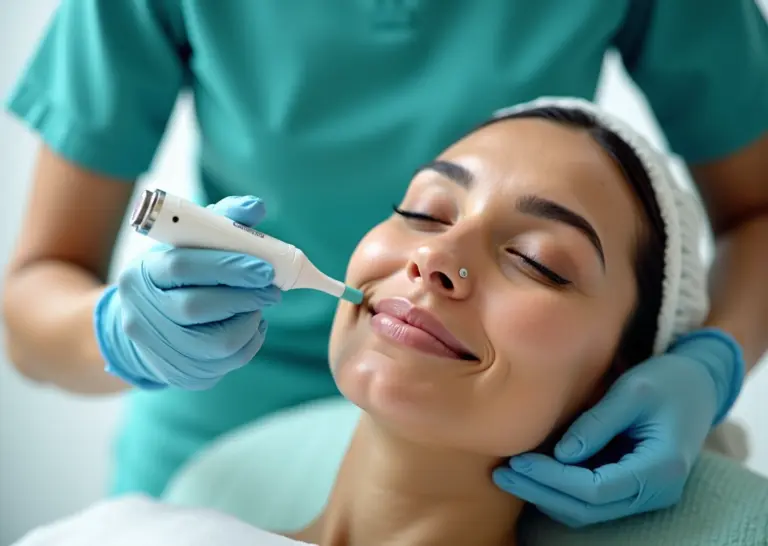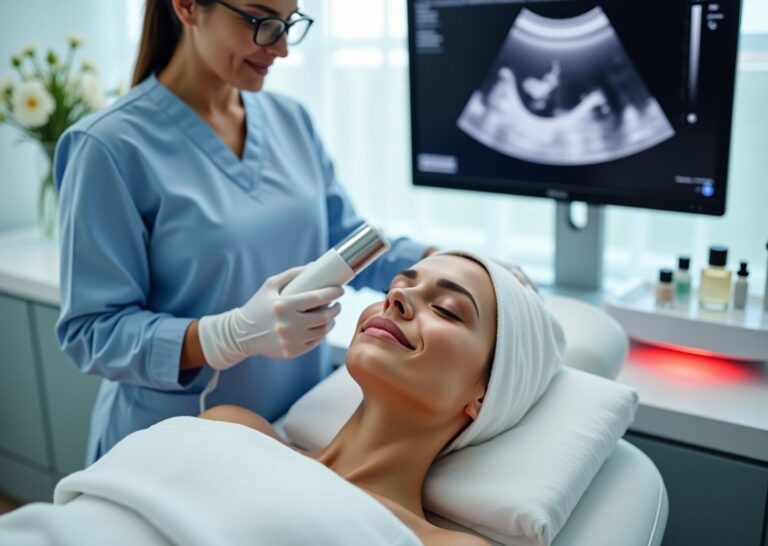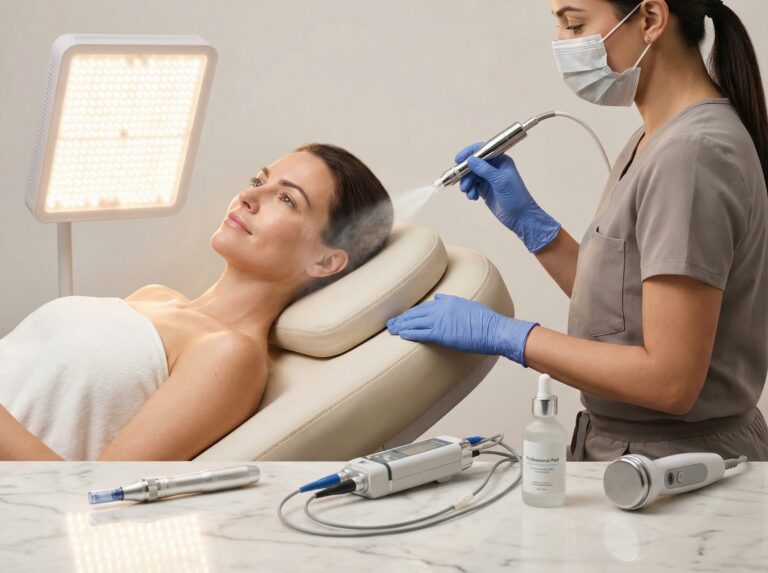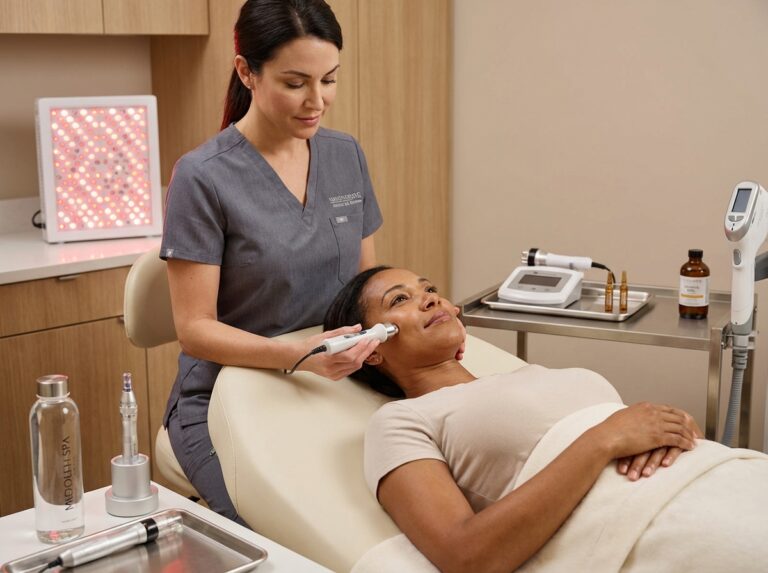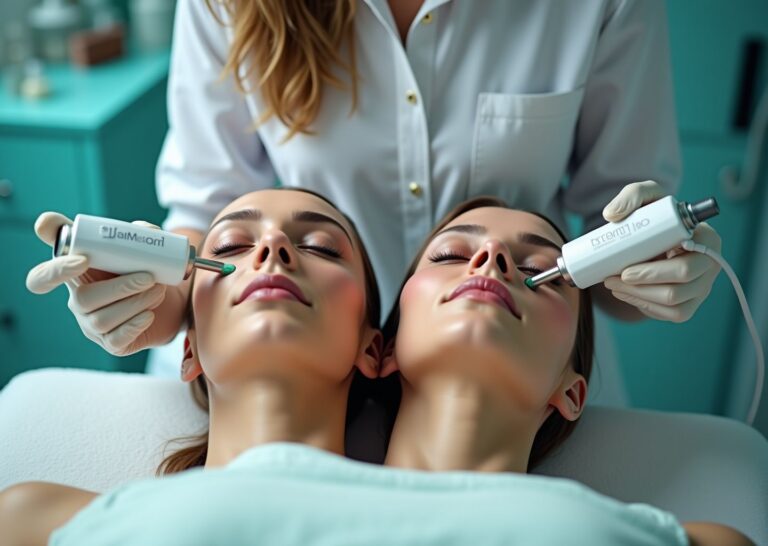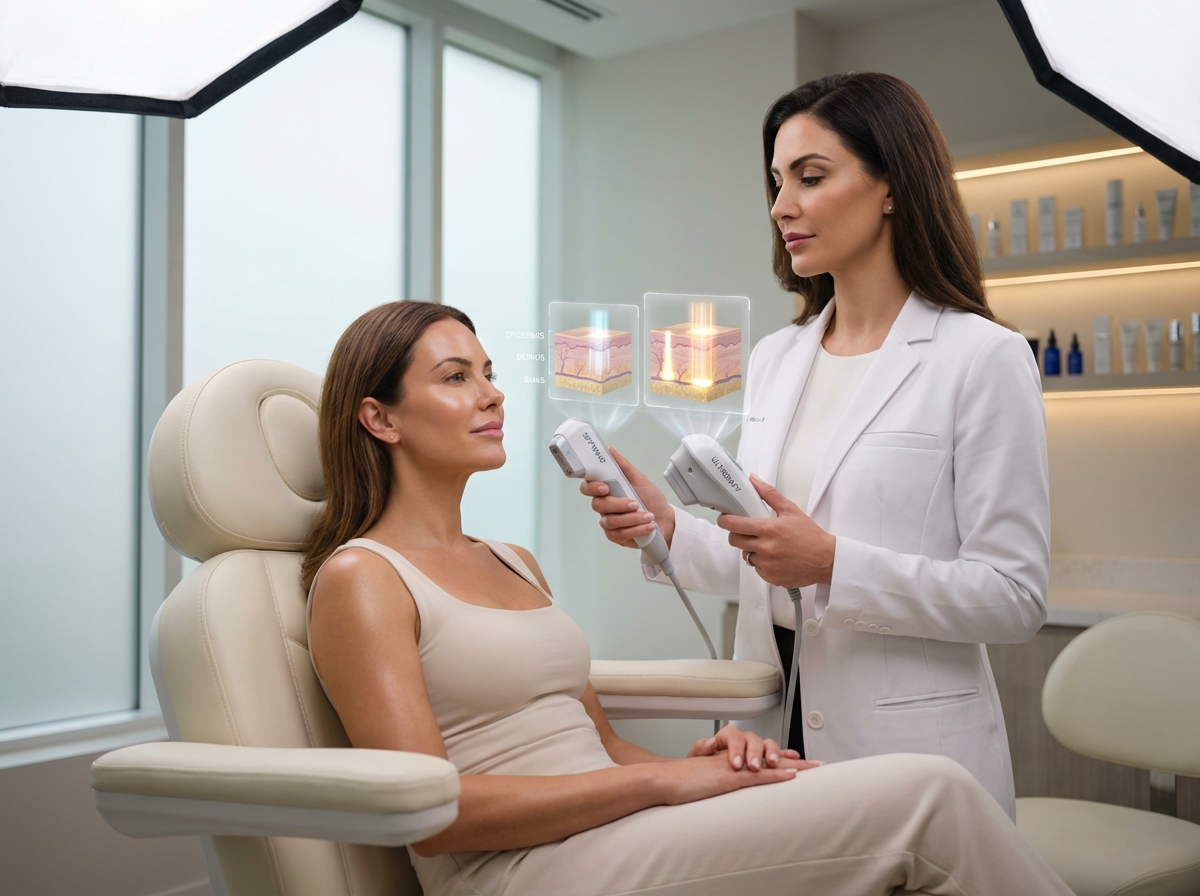
Non‑invasive skin rejuvenation now spans focused ultrasound, microneedling, lasers, chemical peels, radiofrequency, and LED therapy. This article compares Sofwave and Ultherapy head‑to‑head, explains how ultrasound stacks against other popular modalities, and gives practical guidance on indications, downtime, results, and safety so readers can choose the best option for their goals.
How Non‑Invasive Skin Rejuvenation Works and How to Choose
The landscape of non-invasive skin tightening has evolved rapidly as of late 2025. We now have two primary titans using ultrasound energy to fight gravity: Ultherapy and Sofwave. While both utilize sound waves to trigger collagen remodeling, they operate through fundamentally different mechanisms. Understanding these distinctions is the only way to choose the right treatment for your specific anatomy and aesthetic goals.
The Mechanics of Ultherapy
Ultherapy utilizes Microfocused Ultrasound with Visualization (MFU-V) and is widely regarded as the gold standard for deep structural lifting. The device delivers heat to precise thermal coagulation points deep within the tissue. Uniquely, Ultherapy targets the superficial musculoaponeurotic system (SMAS)—the same fibrous layer plastic surgeons tighten during a traditional facelift. By delivering energy at depths of 4.5mm, 3.0mm, and 1.5mm, it creates a multi-layered lifting effect. This heat causes immediate contraction of existing collagen and triggers the body to produce new, stronger collagen over several months. Crucially, the “visualization” component allows the practitioner to see tissue layers in real-time, ensuring energy is deposited precisely where needed while avoiding bone or blood vessels.
The Mechanics of Sofwave
Sofwave employs a distinct approach known as Synchronous Ultrasound Parallel Beam (SUPERB™) technology. Rather than focusing on deep, singular points, it emits seven cylindrical beams of energy into the mid-dermis at a fixed depth of 1.5mm. This depth targets the zone where collagen and elastin concentrations are highest. Sofwave does not attempt to reach the SMAS layer; instead, it generates a high volume of heat in the middle layer of the skin to trigger a robust healing response. The handpiece features an integrated cooling mechanism, SofCool™, which protects the epidermis while the ultrasound energy remodels the dermis. This design maximizes the surface area of treatment without affecting underlying fat or nerves.
Clinical Indications and Patient Profiles
Choosing between these devices often depends on the specific signs of aging visible in the mirror. Ultherapy is typically the superior choice for patients with moderate skin laxity, a heavy jawline, or a sagging neck, as it provides the deep structural support necessary for a non-surgical brow or neck lift. Sofwave is often preferred for patients with mild to moderate sagging who are prioritizing skin quality and texture. It is highly effective for smoothing fine lines, treating “crepey” skin, and “pre-juvenation” in younger patients looking to maintain collagen levels before significant sagging occurs.
Treatment Depth and Target Tissue
Depth is the primary technical differentiator. Ultherapy is a deep-reaching tool, targeting the 4.5mm structural foundation, the 3.0mm deep dermis, and the 1.5mm superficial dermis for a comprehensive 3D lift. Sofwave concentrates strictly on the 1.5mm mid-dermal zone. This focus makes Sofwave an exceptionally safe option for areas with thin skin and eliminates the risk of accidental facial fat volume loss, a concern some patients have regarding deep ultrasound, though rare with proper Ultherapy technique.
Pain and Comfort Levels
Patient experience varies significantly. Ultherapy has a historical reputation for being uncomfortable, with deep pulses often described as sharp stings or intense heat. However, modern protocols and the updated Ultherapy Prime system have improved comfort. Most providers utilize numbing cream, oral medications, or Pro-Nox (laughing gas) to manage sensation. Sofwave is generally considered more comfortable due to its integrated cooling plate and shallower depth. Most patients find it tolerable with only topical numbing cream, making it an attractive option for those with lower pain tolerance.
Number of Sessions and Results Timeline
Both treatments are primarily marketed as single-session procedures—a major advantage for busy schedules. While a temporary “glow” or tightness from mild swelling may be visible immediately, true biological results take time. New collagen becomes structural around the one-month mark, with visible lifting typically appearing by month three. Peak results manifest between six and nine months. While Ultherapy is usually a “one-and-done” annual treatment, some patients with advanced aging may opt for a second Sofwave session after six months to compound the results.
Longevity and Maintenance
Results from ultrasound treatments are long-lasting but not permanent, as the natural aging process continues. Most patients enjoy benefits for 12 to 18 months, with some Ultherapy results persisting up to two years. Maintenance is essential; many patients schedule a “touch-up” every 18 months. Lifestyle factors such as smoking, sun exposure, and nutrition will significantly influence how long the new collagen lasts.
Downtime and Side Effects
A significant benefit of focused ultrasound is the lack of social downtime. Patients can typically return to work immediately. Side effects may include temporary redness, mild swelling (more common with Ultherapy), and tenderness along the jawline for a week or two. Bruising is possible but infrequent. A specific, though rare, risk with Ultherapy is temporary nerve inflammation, causing tingling or numbness that resolves spontaneously. Sofwave boasts a very low risk profile due to its superficial focus. Serious complications are extremely rare for either device when performed by a qualified expert.
Safety Considerations and Contraindications
Both treatments are safe for all skin types (Fitzpatrick I-VI). Unlike lasers, ultrasound bypasses melanin, eliminating the risk of hyperpigmentation in darker skin tones. Contraindications include pregnancy, breastfeeding, active cystic acne, or infections in the treatment area. Patients with permanent facial implants or electronic devices like pacemakers must consult their physician. Additionally, those who have recently received dermal fillers should wait at least four weeks before ultrasound treatment to prevent heat from potentially degrading the filler.
Typical Price Ranges
Costs reflect the medical-grade technology and provider expertise. In the United States, a full face and neck Ultherapy treatment typically ranges from $3,000 to $5,000. Smaller areas, such as a brow lift, may cost around $1,000 to $1,500. Sofwave is often slightly more affordable, with full-face sessions ranging between $2,000 and $4,000. Prices vary by region and practice; be wary of significantly lower prices, which may indicate counterfeit devices or inexperienced operators.
Evidence and Satisfaction
Clinical data supports the efficacy of both devices. Randomized controlled trials and observational studies consistently show high patient satisfaction. Ultherapy research often highlights measurable lifting in the brow and submental (under-chin) areas, while Sofwave studies emphasize the reduction of fine lines and improvement in skin laxity. For a visual understanding of efficacy, reviewing a head-to-head lift comparison can be helpful. The consensus among dermatologists is that both tools are highly effective when matched to the right candidate.
The Practical Decision Guide
Select Ultherapy if you have significant sagging under the chin, a heavy brow, or require deep structural lifting. Select Sofwave if your skin feels thin and “crepey,” if you wish to smooth fine lines, or if you prioritize a more comfortable experience with zero risk to facial fat. Many providers now combine these modalities—using Ultherapy for the deep foundation and Sofwave or RF microneedling for surface texture. Always consult a board-certified professional to determine the correct protocol for your anatomy.
Complementary and Alternative Treatments: Microneedling, Laser, Peels, RF, and LED
Expanding the Rejuvenation Toolkit
Ultrasound technologies like Sofwave and Ultherapy provide a strong foundation for lifting and tightening. However, achieving a truly refreshed appearance often requires addressing the skin surface as well. While ultrasound works deep within the dermis or at the SMAS layer, other modalities focus on texture, pigment, and fine lines. Understanding how to layer these treatments is the key to a successful aesthetic plan in 2025. This chapter explores the most effective alternatives and partners for ultrasound beams.
Microneedling and RF Microneedling
Mechanism of Action
Standard microneedling uses fine needles to create thousands of tiny physical injuries in the skin, triggering a natural wound-healing response that produces new collagen and elastin. Radiofrequency (RF) microneedling advances this by delivering thermal energy through the needle tips directly into the dermis. This creates controlled heat zones that remodel structural proteins and provide more significant tightening than needling alone.
Indications and Suitability
These treatments are excellent for acne scarring, enlarged pores, and fine texture issues. RF microneedling is particularly effective for mild skin laxity around the jawline and neck. A major advantage is safety across all Fitzpatrick skin types; because energy is delivered beneath the surface, the risk of post-inflammatory hyperpigmentation is low. Most patients require three to five sessions spaced four weeks apart. Results typically last 12 to 18 months with annual maintenance.
Downtime and Side Effects
Standard microneedling usually involves two days of redness similar to a mild sunburn. RF microneedling may cause swelling and tiny crusts (micro-scabs) that last three to five days. Common side effects include temporary dryness and minor bruising. Safety tip: Avoid active skincare ingredients like retinol for several days before and after the procedure to prevent irritation.
Laser Facials and Chemical Peels
Laser Facial Technology
A laser facial can be ablative or non-ablative. Non-ablative lasers heat tissue without damaging the surface, treating redness and minor sun damage with almost no downtime. Ablative lasers remove outer skin layers to treat deep wrinkles and significant texture issues; these require more recovery time (often 7–10 days) but offer dramatic results in fewer sessions. Lasers are highly effective for pigmentation but require caution on darker skin tones to avoid scarring or pigment changes.
Chemical Peel Variations
A chemical peel uses acidic solutions to exfoliate the skin. Superficial peels use alpha-hydroxy acids (AHAs) to brighten the complexion with minimal downtime. Medium to deep peels use TCA or phenol to reach deeper layers, serving as the gold standard for correcting chronic sun damage and actinic keratosis. A series of light peels can maintain a glow, while a deep peel is often a once-in-a-decade event. Side effects include redness, peeling, and temporary sun sensitivity.
Radiofrequency and LED Therapy
Radiofrequency Procedures
Non-invasive radiofrequency devices use bulk heating to tighten skin. Unlike the focused beams of ultrasound, RF energy spreads through the tissue to stimulate collagen. It is a comfortable option for patients maintaining results between intensive treatments, often used for “pre-juvenation” in younger patients or as a finishing touch after a lifting procedure.
LED Therapy
LED therapy uses specific light wavelengths to influence cellular behavior. Red light stimulates collagen and reduces inflammation, while blue light targets acne-causing bacteria. This is a painless treatment with zero downtime, most effective when used frequently for maintenance or immediately following aggressive procedures to accelerate healing.
Combining Modalities with Ultrasound
Combination treatments allow providers to address multiple layers of aging simultaneously. Ultrasound treatments act as the “scaffolding” by lifting deep structures, while surface treatments like lasers or peels act as the “paint and polish.” For further reading on device differences, see Ultherapy vs Sofwave: Key differences to consider in 2025.
Safe Sequencing
It is generally best to perform ultrasound treatments first, as they target deep layers without compromising the skin surface. Wait at least two to four weeks after an ultrasound session before undergoing a laser facial or microneedling to allow internal swelling to subside. If planning a deep chemical peel or ablative laser, a six-week wait post-ultrasound is often recommended to minimize inflammation risks.
Sample Treatment Plans
The 30s Profile
Patients in their 30s often deal with early laxity and initial sun damage. A plan might include one Sofwave session to boost collagen, followed by a series of three light chemical peels. Monthly LED therapy helps maintain skin health. This approach focuses on prevention and brightness with minimal downtime.
The 40s to 50s Profile
This group often presents with moderate laxity and pronounced pigmentation. A common strategy is one Ultherapy session for structural lift, followed four weeks later by three sessions of RF microneedling to improve skin density. A non-ablative laser can be added to target specific sun spots.
The 60s Profile
Patients with advanced laxity wishing to avoid surgery often choose a multi-layered approach. This might involve an Ultherapy Prime treatment for the jawline and neck. Six weeks later, a medium-depth chemical peel or fractional CO2 laser addresses deep-set wrinkles. This combination provides a significant refresh without the risks of a surgical facelift.
Pre and Post Procedure Care
Safety Tips and Preparation
Success depends on preparation. Discontinue topical retinoids and acids five days before treatment. If you have a history of cold sores, request antiviral medication before lasers or microneedling. Avoid anticoagulants like aspirin or fish oil for one week to reduce bruising, unless medically necessary. Post-procedure care must include high-quality SPF 50 sunscreen; protecting new collagen from UV damage is vital for longevity. Avoid intense exercise and saunas for at least 48 hours after heat-based treatments to prevent excessive swelling.
Frequently Asked Questions: Practical Answers and Safety Tips
How much pain should I expect during these ultrasound treatments?
Ultherapy is historically more intense because the energy targets deep muscle layers, often causing a sharp or hot sensation. However, newer protocols and the Ultherapy Prime device have improved comfort. Sofwave is generally milder, feeling like a warm prickle, thanks to its integrated cooling.
Safety Tip: Ask your provider about Pro-Nox (laughing gas) or a nerve block if you have a low pain threshold.
Why would I pick Sofwave instead of Ultherapy?
Choose Sofwave if your primary concerns are fine lines, “crepey” texture, or if you have thinner skin that doesn’t require deep structural lifting. It is also preferred for those seeking a faster session with a lower pain profile. Ultherapy remains the superior choice for heavy brows and defining the jawline via the SMAS layer.
Safety Tip: Review Ultherapy vs Sofwave: Key differences to consider in 2025 to match the depth to your specific aging concerns.
When will the results become visible and how long do they stay?
While some immediate tightening may occur due to inflammation, true results appear as new collagen matures between three and six months. Results typically last 12 to 18 months.
Safety Tip: Take high-quality baseline photos before your session to track the gradual changes that are often missed day-to-day.
What is the recovery period and when can I go back to the gym?
There is virtually no downtime. You may experience slight redness or minor swelling for a few hours to a few days. Most patients return to normal activities immediately.
Safety Tip: Avoid extremely hot showers, saunas, or heavy cardio for 24 hours to prevent exacerbating any localized swelling.
Who should avoid these non-invasive ultrasound procedures?
Contraindications include pregnancy, active skin infections, and open wounds. Patients with metallic implants in the treatment area (excluding dental work) or pacemakers should consult their doctor.
Safety Tip: Disclose all medical implants, recent fillers, and history of keloid scarring to your technician during the consultation.
Are multiple sessions necessary to see a significant difference?
Ultherapy is typically a single-session treatment. Sofwave protocols often suggest two treatments spaced 4–8 weeks apart for optimal results, though one session can be effective.
Safety Tip: Schedule a follow-up appointment at the three-month mark to evaluate if a second “booster” session is required.
Can I safely combine ultrasound with other rejuvenation options?
Yes. Ultrasound pairs well with neuromodulators (Botox) and fillers, though sequencing matters. It is generally safer to do ultrasound *before* fillers or wait 4 weeks after fillers.
Safety Tip: Always inform your provider about recent injectables to avoid the ultrasound energy potentially displacing or degrading the product.
What are the primary risks associated with these devices?
Common side effects are temporary redness, swelling, or tenderness. Rare complications include temporary nerve inflammation (numbness) or small surface blisters if the handpiece loses contact.
Safety Tip: Ensure the provider uses real-time ultrasound imaging (standard with Ultherapy) to visualize tissue layers and avoid hitting bone or nerves.
Which medications or skincare products should I pause before my appointment?
Pause topical retinoids/retinols 3–5 days prior to prevent sensitivity. Avoid blood thinners (aspirin, NSAIDs, fish oil, Vitamin E) for one week to minimize bruising, if medically safe.
Safety Tip: Bring a full list of your current supplements to the clinic, as some herbal supplements can increase bleeding risks.
What is the typical price range for these ultrasound treatments in 2025?
Full face and neck treatments generally range from $2,000 to $5,000, depending on the device and location. Ultherapy is often at the higher end of this spectrum.
Safety Tip: Be wary of prices that seem too low; they may indicate the use of counterfeit machines or untrained staff, which carries a high risk of burns.
Do results vary significantly based on different skin types?
Ultrasound energy is “color blind” and bypasses melanin, making it safe and effective for all Fitzpatrick skin types without increased risk of hyperpigmentation.
Safety Tip: Confirm that your provider has experience treating your specific skin thickness, as energy delivery must be adjusted for thin vs. thick tissue.
How do I find a qualified provider for these procedures?
Seek board-certified dermatologists or plastic surgeons. Verify the clinic is an authorized provider on the manufacturer’s website to ensure authentic equipment.
Safety Tip: Ask specifically if the person performing the treatment has received advanced certification for that particular device.
What are the most realistic expectations for a non-surgical lift?
Expect a natural, refreshed appearance—a “better version of yourself”—rather than the dramatic structural changes of surgery. It is ideal for mild-to-moderate laxity.
Safety Tip: Discuss your specific goals clearly; if you have excessive loose skin, surgery might be the only path to your desired result.
How can I maintain my results for the longest possible time?
Sun protection is critical. UV exposure degrades the new collagen you just paid to create. A consistent medical-grade skincare routine including Vitamin C and retinoids helps extend results.
Safety Tip: Incorporate a collagen-supporting supplement or serum into your daily regimen to fuel the remodeling process.
Is there a difference in comfort between the newer and older devices?
Yes. Newer iterations like Ultherapy Prime and the latest Sofwave software offer improved energy delivery and cooling, resulting in faster and more comfortable treatments.
Safety Tip: Ask if the clinic uses the most recent software updates or device generations.
Takeaways: How to Decide Next Steps
Step 1. Conduct a personal skin and lifestyle assessment
Start by examining your skin in natural light. Gently push the skin on your cheek upward toward your ear. If the skin moves easily and creates many small, crepey folds, you likely have surface-level laxity that responds well to the mid-dermal heating of Sofwave. If the skin feels heavy and the jawline looks blurred or jowly, you likely require the deep structural reach of Ultherapy. Consider your pain tolerance honestly; Ultherapy is deeper and more intense, while Sofwave is generally milder. Finally, review your budget: Ultherapy sessions typically cost between $3,000 and $5,000, while Sofwave ranges from $2,000 to $4,000. For a deeper look at lifting capabilities, see this Ultherapy Prime vs. Sofwave: A Head-to-Head Lift Comparison.
Step 2. Ask the right questions during your consultation
Inquire about the specific device version. Many offices have upgraded to Ultherapy Prime by late 2025, which offers faster treatment times. For Sofwave, ask if they use the latest handpieces designed for precision areas. Crucially, ask about the provider’s training—you want a technician who understands facial anatomy to avoid nerves. Request before-and-after photos of patients with your specific skin type and age. Confirm pain management options (topical vs. Pro-Nox) and the planned number of “passes” or “lines” of energy; a lower number may result in a cheaper but less effective treatment. You can learn more about consultation expectations in this article on Sofwave™ or Ultherapy? Ultrasound Skin Tightening Treatments.
Step 3. Create a post-treatment and maintenance plan
Commit to daily SPF 30+ immediately. UV rays break down the new collagen your body is building. Avoid anti-inflammatory medications (like ibuprofen) for 48 hours post-treatment if medically safe, as the treatment relies on a controlled inflammatory response. Schedule a three-month follow-up to assess visible changes and decide if a second session (common with Sofwave) is needed. Plan for long-term maintenance, typically a touch-up every 12 to 18 months. Discuss combining treatments; adding microneedling or light peels between ultrasound sessions often yields superior results by addressing both structure and surface texture.
Prioritize safety and professional oversight
Only visit clinics accredited by recognized medical boards. Do not choose a provider based solely on the lowest price, as this often signals cut corners or uncertified staff. Look for the official seal of authenticity on the device; counterfeit machines carry high risks of burns and scarring. If you experience extreme pain during the procedure, inform the provider immediately—it should be uncomfortable but manageable. Trust your instincts and ensure you follow all pre-treatment instructions, such as pausing retinoids, to ensure a safe and effective outcome.
Sources
- Ultherapy vs Sofwave: Key differences to consider in 2025 — While both are non-invasive procedures that use ultrasound, the difference between these treatments is how they stimulate your skin.
- Ultherapy Prime vs. Sofwave: A Head-to-Head Lift Comparison — Comparative information is based on publicly available clinical data, manufacturer websites, and peer-reviewed studies as of 2025. This post …
- Sofwave™ or Ultherapy? Ultrasound Skin Tightening Treatments — As we head deeper into 2025, non-invasive methods like Sofwave™ and Ultherapy remain at the forefront of skin tightening technology. Both harness the power of …
- Sofwave vs. Ultherapy: Which Ultrasound Treatment Is Better for You? — Sofwave treatment's clinical trials have demonstrated results after only one treatment. Ultherapy results tend to develop more gradually, with initial …
- Sofwave vs. Ultherapy: Which Skin Tightening Treatment Is Right for … — Sofwave is FDA-cleared for skin tightening and lifting, with clinical studies demonstrating its effectiveness in improving fine lines, wrinkles, …
- Sofwave vs Ultherapy for Loose Skin – withpower.com — Sofwave is usually well-tolerated, and clinical studies have found no major safety issues. Studies have also shown that Ultherapy is FDA-approved for …
- Sofwave vs. Ultherapy: A Comprehensive Comparison | NJPS | Blog — In this New Jersey Plastic Surgery blog article, we compare Sofwave and Ultherapy non-surgical skin tightening procedures. Find out more here!
- Comparing Nonsurgical Skin Tightening Options: Is Sofwave Right … — Results: Both technologies can improve skin firmness, but we've found Sofwave delivers its results more comfortably and consistently. Its excellent safety …
- Ultherapy vs. Sofwave: Skin Tightening Treatment? — Ultherapy and Sofwave both use high-intensity, micro-focused ultrasound energy to create controlled injuries in the skin to produce a healing response.
- Skin Tightening Without Surgery: The Most Effective Options in 2025 — Treatments like Ultherapy are FDA-cleared for lifting the brow and jawline, primarily targeting moderate skin laxity. Laser skin tightening, …
Legal Disclaimers & Brand Notices
The content provided in this article is for informational purposes only and does not constitute professional medical advice, diagnosis, or treatment. Always seek the advice of a board-certified physician or other qualified health provider with any questions you may have regarding a medical condition or specific aesthetic procedure. Never disregard professional medical advice or delay in seeking it because of something you have read in this article.
All product names, logos, and brands are property of their respective owners. All company, product, and service names used in this text are for identification purposes only. Use of these names, trademarks, and brands—including but not limited to Botox, Ultherapy, and Sofwave—does not imply endorsement, affiliation, or certification by the trademark holders.