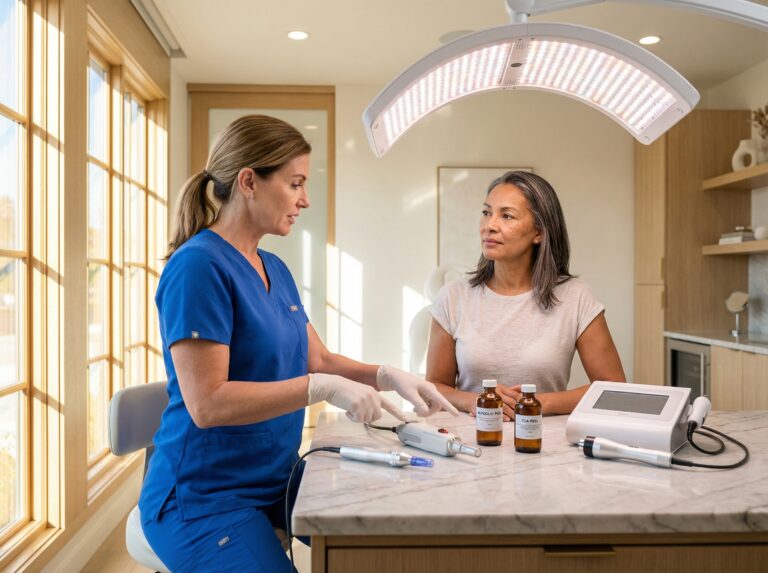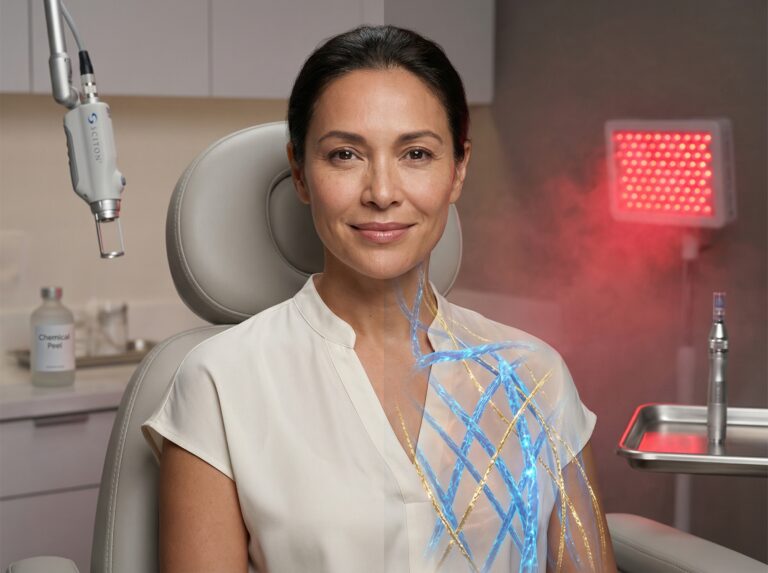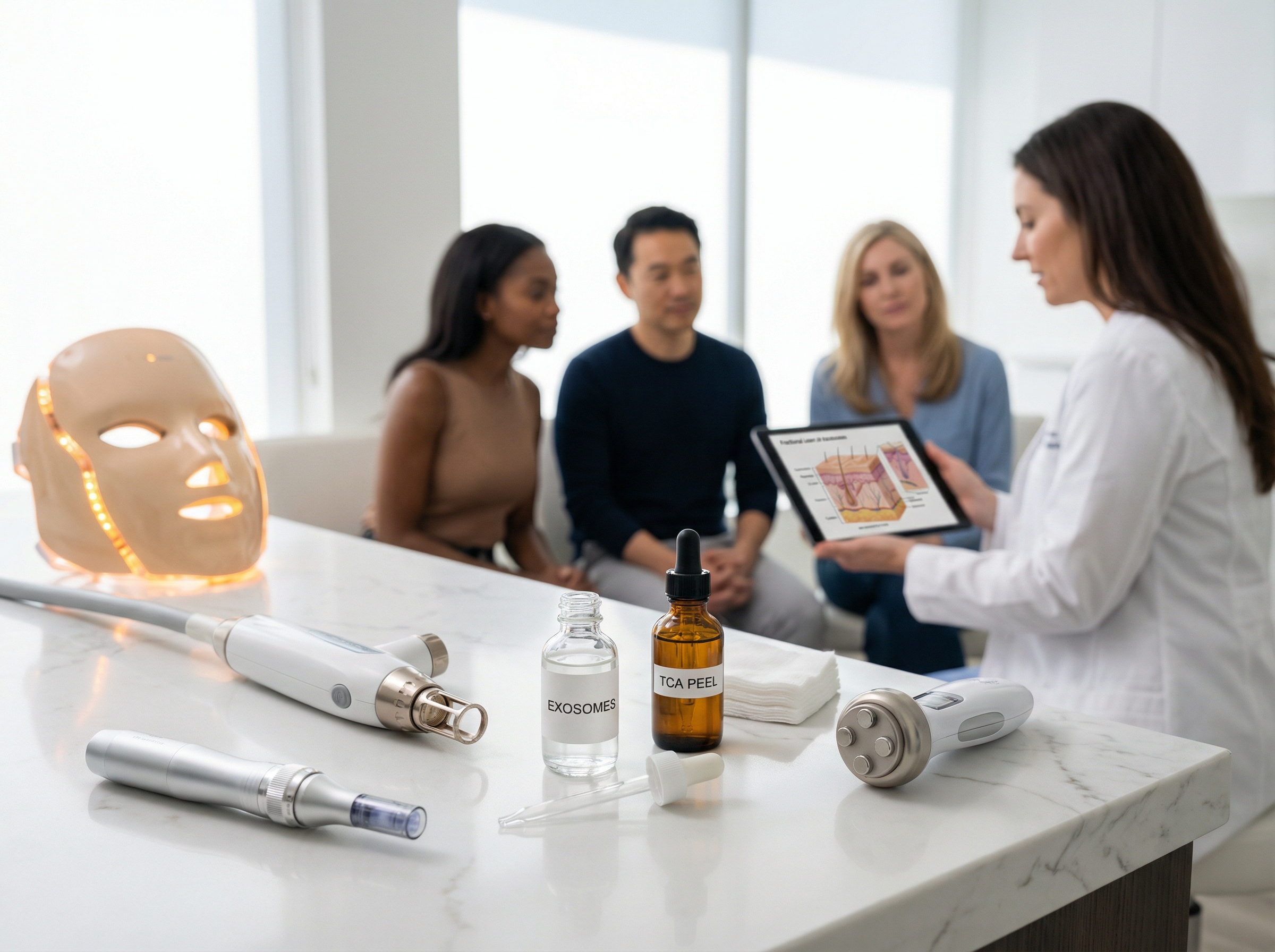
Exosomes are emerging as a promising adjunct in non-invasive skin rejuvenation. This article examines exosomes alongside established treatments—microneedling, lasers, chemical peels, radiofrequency, and LED—to compare indications, expected results, downtime, and safety. Learn how exosome science fits into current protocols, what the evidence says through 2025, and practical guidance for safe, effective treatment choices.
Microneedling and Exosome Enhanced Protocols
Microneedling stands as the practical workhorse of collagen induction therapy. While lasers rely on heat and chemical peels rely on acid, microneedling uses mechanical precision to trigger the body’s wound-healing cascade. It works by creating thousands of microscopic channels in the dermis without coagulating tissue. These controlled injuries force the skin to repair itself, stimulating the production of collagen III and eventually collagen I, which provides structural integrity. This mechanical nature makes it safe for almost all skin types, including darker tones that might risk hyperpigmentation with heat-based devices.
Device Selection and Depth Strategy
The tool matters. Manual dermarollers, often sold for home use, enter the skin at an angle and exit at an angle. This “paddling” motion can cause unnecessary tearing rather than clean punctures. In a clinical setting, automated pens are the standard in 2025. They use vertical oscillation to insert and withdraw needles rapidly, ensuring precise vertical channels and reducing epidermal trauma.
Depth selection is not arbitrary; it depends entirely on the clinical goal:
- 0.25mm to 0.5mm: This targets the epidermis. It does not induce significant collagen remodeling but is excellent for increasing the absorption of topical products. This is the “transepidermal drug delivery” zone.
- 1.0mm to 1.5mm: This reaches the papillary dermis. It is the standard depth for treating fine lines, mild acne scarring, and general texture improvement. Pinpoint bleeding is the clinical endpoint here.
- 2.0mm to 2.5mm: This depth is reserved for deep reticular dermis work, specifically for severe acne scarring, stretch marks, or body treatments. It carries a higher risk of trauma and is typically performed only by medical providers with significant pain management.
Most patients require a series of 3 to 6 sessions spaced 4 to 6 weeks apart to see structural changes. Collagen synthesis is slow; the visual payoff often peaks three months after the final session.
The Biologic Shift: From PRP to Exosomes
For years, Platelet-Rich Plasma (PRP) was the primary adjunct to microneedling. This involves drawing the patient’s blood, spinning it to concentrate platelets, and applying the plasma to the skin. While effective, PRP has limitations. The quality of the plasma depends on the patient’s age, health, and hydration levels. Older patients often have less potent growth factors.
Exosomes represent the shift from autologous (your own cells) to allogeneic (lab-derived) biotechnology. In 2025, the demand for consistency has pushed exosomes to the forefront. Unlike PRP, which varies by patient, exosome products are manufactured to contain a specific concentration of growth factors, cytokines, and mRNA.
The biological rationale for combining them is simple. Exosomes are large lipid vesicles that cannot easily penetrate intact skin. Microneedling creates the physical entry route. Once inside the dermis, exosomes signal resident cells to downregulate inflammation and upregulate repair processes, shifting the skin from a prolonged inflammatory phase directly into proliferation and remodeling.
Clinical Evidence and Mechanisms
When applied immediately after microneedling, exosomes significantly alter the healing timeline. Standard microneedling induces an acute inflammatory phase (redness and edema) that lasts 24 to 48 hours. Exosomes appear to shorten this window.
A pivotal study noted in Clinical Outcomes of Exosome-Augmented Microneedling highlights that exosome-treated sides of the face showed greater improvements in texture, hydration, and elasticity compared to microneedling alone. The data suggests that the paracrine signaling provided by the exosomes helps organize collagen bundles more efficiently than the body’s natural response to trauma alone.
Further data supports the speed of recovery. Studies show that exosome-treated wounds heal 30% to 40% faster than controls. This reduction in downtime is a major driver for patients who cannot afford three days of redness. The anti-inflammatory properties of mesenchymal stem cell (MSC) derived exosomes are largely responsible for this rapid normalization of skin tone post-procedure.
Safety, Contraindications, and Risks
Despite the benefits, safety protocols are strict. Microneedling breaches the skin barrier, making infection a real risk if the topical product is not sterile. This is the critical danger zone with exosomes. Not all products are manufactured for open-wound application.
Key Safety Considerations:
- Sterility: You must verify that the exosome product is sterilized and intended for topical application on broken skin. Using non-sterile cosmetics can lead to granulomas or bacterial infections.
- Source Transparency: Providers should be able to show batch testing results (Certificates of Analysis) for pathogens and endotoxins.
- Active Acne: Microneedling should never be performed over active pustular acne, as it spreads bacteria.
- Keloids: Patients with a history of keloid scarring are generally poor candidates for deep needling.
Regarding medications, patients on isotretinoin (Accutane) typically need to wait 6 months post-treatment before undergoing microneedling to avoid scarring risks, though some 2025 guidelines suggest a shorter window is safe with superficial depths.
The Patient Experience and Pricing
Pain management is standard. A topical anesthetic (usually lidocaine/tetracaine) is applied for 30 to 45 minutes prior. With numbing, the procedure feels like a vibration or light scratching. Without it, it is painful.
Post-Procedure Protocol:
- Immediate: The skin will look sunburned and feel tight. Exosome gel is applied immediately.
- Hours 1-4: Do not wash the face. Let the channels close with the product inside (usually 18-24 hours).
- Day 1-2: Use only gentle, non-active cleansers and hyaluronic acid. Avoid Vitamin C or Retinoids for 3 to 5 days.
- Sun Protection: Strict avoidance of direct sun is mandatory to prevent hyperpigmentation.
Pricing varies significantly by geography and the specific exosome product used. In the U.S. market, standard microneedling ranges from $300 to $600 per session. Adding a high-quality exosome serum typically adds $300 to $600 to the base price, bringing the total per session to $600–$1,200. Documentation for informed consent must clearly state that while microneedling is FDA-cleared, many topical exosome products are classified as cosmetics and are not FDA-approved drugs.
Laser Facials and Chemical Peels: Indications, Downtime, and Results
Lasers and chemical peels operate on a different principle than the mechanical injury of microneedling. They rely on controlled chemical reactions or thermal energy to force skin regeneration. The introduction of exosomes into these protocols has shifted how providers manage the recovery phase in 2025, moving away from simply accepting prolonged downtime toward active modulation of the healing process.
Laser Technologies and Light Systems
The distinction between ablative and non-ablative devices remains the most critical factor in determining results and recovery.
Non-Ablative Fractional Lasers
These devices deliver heat into the dermis through thousands of microscopic columns without breaking the skin surface. The goal is to stimulate collagen production and address mild to moderate texture issues. Since the epidermis stays intact, the risk of infection is low. Patients typically experience redness and mild swelling for 24 to 48 hours. Multiple sessions, usually 3 to 5, are necessary to see significant changes in acne scarring or fine lines.
Ablative Fractional Lasers (CO2 and Erbium)
Ablative lasers vaporize tissue, removing the outer layers of skin and heating the underlying dermis. This triggers a massive wound-healing response. These are the standard for deep wrinkles, severe sun damage, and significant scarring. The results are dramatic but come with a cost: recovery takes 7 to 14 days and involves oozing, crusting, and significant peeling. The risk of pigmentary changes is higher here.
IPL (Intense Pulsed Light)
IPL is not a true laser. It uses a broad spectrum of light to target specific chromophores. It is the primary choice for vascular lesions (redness) and superficial pigmentation (sun spots) but does little for texture. Downtime is minimal, often just a few hours of redness.
Q-Switched and Picosecond Lasers
These lasers deliver energy in extremely short pulses. The speed creates a photo-acoustic effect rather than a thermal one, shattering pigment particles into dust that the body can eliminate. This makes them the superior choice for melasma, tattoo removal, and stubborn pigmentation. Picosecond technology has evolved to offer skin revitalization with almost zero downtime by creating laser-induced optical breakdown (LIOB) in the dermis.
Chemical Peels: Depth Matters
Chemical peels use acids to dissolve the bonds holding skin cells together. The depth of penetration dictates the outcome.
- Superficial Peels (Glycolic, Salicylic, Lactic): These affect only the epidermis. They are used for brightening, mild acne, and texture refinement. There is little to no visible peeling, and patients can return to work immediately.
- Medium Depth Peels (TCA): Trichloroacetic acid penetrates to the papillary dermis. This addresses actinic keratosis, deeper pigment, and moderate wrinkles. Patients will physically peel for 5 to 7 days; the skin turns brown and sheds in sheets.
- Deep Peels (Phenol): Phenol peels penetrate the reticular dermis. They offer results comparable to a surgical lift for skin quality but carry significant risks. Cardiac monitoring is required during the procedure due to phenol toxicity. Hypopigmentation (permanent lightening of the skin) is a common long-term effect.
Integrating Exosomes with Energy and Acids
The application of exosomes following laser or peel treatments is a major focus of clinical research in 2025. The barrier disruption caused by these treatments provides a direct pathway for exosome absorption.
Immediate Application
Applying exosome serums immediately after ablative lasers or medium-depth peels takes advantage of the open channels in the skin. The primary goal is to modulate the inflammatory cascade. Enhancing Skin Rejuvenation Using Laser and Exosomes is currently being studied to quantify how this combination affects recovery times. Early data suggests that exosomes can reduce the duration of erythema (redness) and edema (swelling) by days.
Staged Application
For non-ablative treatments where the barrier is intact, some protocols suggest applying exosomes during the recovery phase to support cellular signaling. Current human evidence indicates that exosomes may accelerate re-epithelialization, reducing the window where the skin is vulnerable to infection. However, skin anti-aging research in 2025 notes that while results are promising, large-scale randomized trials are still catching up to clinical practice.
Safety Protocols and Risk Management
Heat and acid carry inherent risks. Safety depends on strict adherence to protocols.
- Pre-Treatment Assessment: The Fitzpatrick skin type is the most important variable. Darker skin types (Fitzpatrick IV-VI) are at high risk for post-inflammatory hyperpigmentation (PIH) with heat-based devices and deep peels. Pre-conditioning the skin with tyrosinase inhibitors for 4 weeks prior to treatment is standard practice for these patients.
- Viral Prophylaxis: Any treatment that injures the skin can reactivate the herpes simplex virus. Patients with a history of cold sores must start antiviral medication 24 hours before treatment and continue for 5 days.
- Post-Procedure Care: Sun avoidance is mandatory. UV exposure on inflamed skin guarantees hyperpigmentation. Patients must use a broad-spectrum physical sunscreen. Barrier repair creams containing ceramides and lipids are essential to protect the skin while it heals.
Choosing Between Laser and Peel
| Goal | Preferred Modality | Why? |
|---|---|---|
| Redness / Veins | Vascular Laser (PDL) or IPL | Targets hemoglobin specifically. Peels do not address vessels. |
| Deep Wrinkles | Ablative Laser or Phenol Peel | Requires deep structural remodeling of collagen. |
| Active Acne | Salicylic Acid Peel | Lipophilic acid penetrates pores to clear oil. Lasers can aggravate active cysts. |
| Melasma | Picosecond Laser or Chemical Peel | Avoids the heat of standard lasers which can flare melasma. |
| General Glow | Superficial Peel or Non-Ablative Laser | Low risk with quick turnover of dead skin cells. |
Radiofrequency and LED Therapies: Tightening and Modulation
Radiofrequency (RF) operates on a different principle than light-based devices. While lasers target specific colors in the skin like red vessels or brown spots, RF uses electricity. The energy travels through the tissue and meets resistance, generating heat. When the dermis heats up to a specific temperature range (typically 40–42°C for mild tightening and higher for coagulation), it forces existing collagen fibers to contract immediately. More importantly, it stimulates fibroblasts to produce new collagen and elastin over the following months.
Mechanisms of Action in RF Devices
We categorize RF delivery into three main types based on how the energy travels:
- Monopolar RF: Uses a single electrode on the skin and a grounding pad on the patient’s back. The energy travels deep through the body to the pad. This allows for significant depth of penetration, making it the standard for treating deeper tissue laxity and contouring areas like the jawline or body.
- Bipolar RF: Passes energy between two electrodes placed a short distance apart on the handpiece. The energy travels in a shallow arc between them. This offers controlled heating of the upper dermis, suitable for fine lines and superficial tightening but less effective for deep fat remodeling.
- Microneedling RF (MNRF): Combines physical needling with thermal energy. Insulated needles penetrate the skin and release RF energy only at the tip. This bypasses the epidermis, sparing the surface from heat damage while delivering high energy directly into the reticular dermis. This method creates zones of coagulation that tighten tissue and improve texture simultaneously.
Clinical Indications and Contrast with Lasers
RF is primarily indicated for skin laxity, sagging jowls, and crepiness. Unlike lasers, RF is “color blind.” It does not target melanin. This makes it a safer option for darker skin types (Fitzpatrick IV-VI) where lasers might pose a risk of hyperpigmentation. While a fractional CO2 laser might be superior for deep etching and surface resurfacing, RF is the better choice when the primary goal is lifting and firming the structural foundations of the skin.
Treatment Schedules and Recovery
Collagen remodeling is a biological process that cannot be rushed. A typical protocol involves:
- Monopolar RF: Often a single treatment or a series of 2 sessions. Results appear gradually over 3 to 6 months.
- Microneedling RF: Usually requires 3 to 4 sessions spaced 4 to 6 weeks apart.
- Pain Control: Monopolar RF can be intense. We use topical numbing and sometimes oral analgesics. MNRF requires strong topical anesthesia applied 45 minutes prior.
- Downtime: Standard RF has minimal downtime, often just a few hours of redness. MNRF results in 24 to 48 hours of redness and minor swelling, significantly less than the 5-7 days seen with aggressive laser resurfacing.
LED Phototherapy: Modulation and Healing
Light Emitting Diode (LED) therapy does not rely on heat. It uses specific wavelengths of light to stimulate cellular activity, a process called photobiomodulation. It is painless and non-thermal.
| Wavelength | Target | Primary Indication |
|---|---|---|
| Blue (415 nm) | P. acnes bacteria | Active acne, bacterial reduction |
| Red (630–660 nm) | Fibroblasts | Healing, collagen stimulation, inflammation reduction |
| Near-Infrared (830 nm) | Deep tissue cells | Pain relief, deeper wound healing, circulation |
For in-office treatments, we use high-output panels placed close to the skin for 10 to 20 minutes. Home devices exist but operate at much lower power densities. They require daily use for extended periods to mimic the results of a weekly professional session.
Safety Profile and Contraindications
Both RF and LED have strong safety profiles when used correctly. RF carries a risk of burns if the handpiece loses contact or moves too slowly, but modern devices have impedance monitoring to prevent this.
Contraindications for RF include:
- Implanted electronic devices (pacemakers, defibrillators), specifically for monopolar units.
- Metal implants in the treatment area.
- Pregnancy (due to lack of safety data).
- Active skin infections.
LED is safe for almost everyone, though we exercise caution with patients taking photosensitizing medications or those with a history of seizures triggered by light.
Combination Strategies: The Role of Exosomes
By late 2025, the combination of energy devices with topical exosomes has shifted from experimental to routine in many regenerative practices. The logic is straightforward. RF creates a controlled injury. Exosomes provide the signaling molecules to repair that injury efficiently.
RF followed by LED: This is a classic pairing. We perform the RF treatment to stimulate collagen, then immediately use Red or Near-Infrared LED to reduce the acute redness and calm the histamine response.
RF paired with Exosomes: This combination offers the most significant synergy. Microneedling RF creates physical channels. Applying a high-concentration exosome serum immediately after the procedure allows the vesicles to penetrate deep into the dermis. Current data suggests this pairing alters the recovery phase. Studies show that exosome-treated wounds heal 30% to 40% faster than controls, with patients reporting less burning and shorter duration of erythema. Beyond speed, the quality of remodeling improves. Exosome-treated sides showed greater improvements in texture, hydration, elasticity, and pigmentation compared to microneedling alone.
Realistic Expectations and Maintenance
Patients must understand that non-invasive tightening is not surgery. It will not remove excess skin like a facelift; it tightens existing tissue. Results peak at the 3 to 6-month mark. Maintenance is required. We typically recommend a single “top-up” RF session every 6 to 12 months to combat ongoing aging. LED can be done monthly or used at home for maintenance.
Frequently Asked Questions: Common Patient Concerns
Navigating the landscape of skin rejuvenation can feel overwhelming. Patients often come in with a mix of excitement and confusion, especially regarding newer options like exosomes compared to established methods. Below are the most frequent questions we encounter in the clinic as of late 2025, answered with a focus on safety, realistic expectations, and current evidence.
Are exosomes safe and what is their current FDA status?
Safety depends largely on the source and manufacturing of the product. In the United States, the FDA maintains a strict stance. As of December 2025, exosome products are generally not approved as injectable drugs for aesthetic use. Most legitimate clinics use them topically—applied to the skin surface after a treatment like microneedling or laser. This falls under a different regulatory category than injectables.
The primary safety concern involves product sterility and donor screening. You must ensure your provider uses products from labs that perform rigorous third-party testing for pathogens. Exosome Serums in Medical Skincare: Clinical Evidence, FDA… highlights that while topical applications show promise, any clinic offering intravenous (IV) or direct injection of exosomes for “anti-aging” is operating outside standard FDA compliance. Always ask if the product is intended for topical use.
How do exosomes differ from PRP and stem cell therapy?
This is a common point of confusion. PRP (Platelet-Rich Plasma) relies on your own blood. Its quality fluctuates based on your age, health, and hydration levels. Stem cell therapy involves live cells, which carries higher risks of rejection or uncontrolled cell growth. Exosomes are different. They are not cells; they are the signaling messengers extracted from cells.
Because they contain no DNA or nucleus, the risk of immune rejection is extremely low compared to live stem cells. They also offer more consistency than PRP. A lab-derived exosome product has a standardized concentration of growth factors, whereas your PRP might be less potent if you are stressed or older. Recent data suggests that tapping into the potential of platelet-derived exosomes in aesthetics can significantly reduce senescent (aging) skin cells more effectively than traditional methods.
Which treatment provides the fastest results versus the longest-lasting outcomes?
For immediate gratification regarding skin tone and pigmentation, lasers often win. You see the pigment flake off within a week. However, for texture and deep structural health, the timeline is longer. Exosomes are not a “quick fix” for lifting, but they accelerate the results of other treatments.
If you want long-lasting structural change, microneedling with exosomes or RF microneedling yields durable results because it rebuilds the collagen matrix. The visual “glow” from exosomes happens within days, but the firmness builds over 3 to 6 months. Studies from this year indicate that Clinical Outcomes of Exosome-Augmented Microneedling show greater improvements in elasticity and hydration compared to microneedling alone, with results sustaining longer due to better collagen organization.
How much downtime should I expect?
Downtime varies by the primary device used. A deep chemical peel or CO2 laser might require 5 to 7 days of social downtime. Microneedling typically involves 24 to 48 hours of redness. The addition of exosomes changes this equation significantly. They are powerful anti-inflammatories.
Clinical observations in 2025 suggest that applying exosomes immediately after ablative lasers or microneedling cuts recovery time by roughly 30% to 40%. Patients who usually stay red for two days often return to baseline in 24 hours when exosomes are applied. Exosome Therapy in 2025: Latest Innovations & Research supports this, noting reduced pain and faster tissue repair.
Can procedures be combined in the same session?
Yes, and this is often the standard of care now. We rarely do “just” one thing. The most effective protocol involves creating micro-channels (via laser or needles) and then applying exosomes to penetrate those channels. This is often followed by LED therapy to further calm the skin.
A current trial, Enhancing Skin Rejuvenation Using Laser and Exosomes, is evaluating the specific efficacy of combining 1064-nm Nd:YAG lasers with mesenchymal stem cell-derived exosomes. The logic is simple: the laser triggers the wound healing response, and the exosomes provide the “software code” to ensure that healing produces healthy, youthful collagen rather than scar tissue.
Who is the ideal candidate and who should avoid these treatments?
The ideal candidate is someone with signs of aging—fine lines, texture issues, or acne scarring—who understands that regeneration takes time. It is also excellent for patients with sensitive skin who cannot tolerate aggressive chemical peels, as exosomes help regulate inflammation.
You should avoid these treatments if you have an active infection (bacterial or viral) on the face, open wounds, or a history of skin cancer in the treatment area. Pregnant or breastfeeding women are generally advised to wait, primarily because clinical trials do not test on these groups. While exosomes are cell-free, we exercise caution.
What are the common side effects?
When used topically, side effects are minimal. You might experience temporary redness or tingling immediately upon application. The real risk comes from the procedure itself (like microneedling) rather than the exosomes. Bruising, pinpoint bleeding, and dryness are common from the needling aspect.
However, if a product is not purified correctly, there is a rare risk of allergic reaction or bacterial infection. This is why the source matters. What Are Exosomes? The Best Current Evidence (2025) emphasizes that while results suggest enhanced remodeling, safety relies on using products free from cellular debris.
How many sessions are needed and what is the timeline?
One session is rarely enough for significant correction. Most protocols recommend a series of 3 to 5 treatments spaced 4 weeks apart. You will likely see a brightness to the skin after the first visit, but the deep textural changes—like reduced pore size and firmer skin—accumulate over the course of the series.
Maintenance is usually one treatment every 6 to 12 months. Exosome Therapy vs Botox for Wrinkles notes that while Botox freezes muscle movement, exosomes improve the canvas of the skin itself, making them complementary rather than interchangeable.
What are the red flags when selecting a clinic or product?
Be skeptical of any provider claiming their exosome product is “FDA Approved” for injection. As of late 2025, the FDA approves specific drugs, but most aesthetic exosome products are regulated as cosmetics or tissue products, not injectable drugs. If they claim it cures diseases or systemic conditions, walk away.
Another red flag is storage. Exosomes are biological products. They typically require frozen storage (often -80°C or -20°C) until use. If you see a bottle sitting on a shelf at room temperature for days, the potency is likely compromised. Ask your provider where they source their exosomes and request to see the cold chain protocols. Credible clinics will have no issue sharing this information.
Is the high cost justified?
Exosome treatments are premium priced, often adding $300 to $1,000 to the cost of a microneedling or laser session. The justification lies in the amplification of results. If you are already investing time and money into a laser treatment, adding exosomes can maximize the return on that investment by speeding healing and boosting collagen production. Exosome Therapy: The Regenerative Treatment Taking Boston by Storm reports up to a 40% reduction in senescent cells, suggesting the biological impact goes beyond simple hydration.
Conclusions: Key Takeaways and Practical Recommendations
We have examined the mechanics of microneedling, the thermal precision of lasers, and the biological signaling power of exosomes. The landscape of non-invasive aesthetics in late 2025 points to a clear trend: we are moving away from simply injuring the skin to stimulate repair. The new standard involves guiding that repair process with precise biological messages. Exosomes act as the architects in this scenario. They do not replace the construction crew (the energy devices and needles), but they provide the blueprints for more efficient rebuilding.
The evidence reviewed suggests that adding exosomes to treatments like RF microneedling or CO2 lasers significantly reduces downtime. Patients report less redness and faster recovery. Studies show that exosome-treated wounds heal 30% to 40% faster than controls. This acceleration is valuable for anyone with a busy schedule. However, we must balance this enthusiasm with a realistic view of the current scientific data. While short-term results regarding texture and radiance are strong, we still lack the multi-decade safety data that exists for neuromodulators or hyaluronic acid fillers.
Regulatory status in the United States remains a complex area as of December 2025. The FDA continues to classify exosomes as drug products if they are intended to treat specific conditions. Most aesthetic applications currently fall under topical cosmetic use or specific investigational exemptions. This distinction is vital for patient safety. Clinics offering intravenous exosome cocktails for systemic anti-aging without an investigational new drug application are operating outside standard regulatory guardrails. The safest application in aesthetics remains topical application immediately following a barrier-compromising procedure.
Practical Recommendations for Patients and Clinicians
Navigating this market requires diligence. The gap between high-quality biotech formulations and unverified products is wide. Here are specific guidelines to ensure safety and efficacy.
- Verify the Source and Manufacturing: Not all exosomes are equal. Products derived from mesenchymal stem cells (MSC) or platelets have different growth factor profiles. You should ask for the source of the exosomes. Using a topical platelet-derived exosome product for 12 weeks may significantly reduce senescent skin cells. Ensure the manufacturer provides a Certificate of Analysis (CoA) that verifies the particle count and screens for pathogens.
- Prioritize Cold Chain Integrity: Exosomes are biological vesicles. They degrade if left at room temperature for too long. Clinics should store these products in medical-grade freezers until the moment of application. If a provider pulls a vial off a warm shelf, the biological activity is likely compromised.
- Adhere to Conservative Protocols: More is not always better. High concentrations of growth factors can trigger unpredictable cellular responses if used excessively. Stick to established protocols that pair a single unit of exosomes with a specific treatment session. Avoid mixing exosome products with other unverified serums or additives during the procedure.
- Secure Detailed Informed Consent: The consent form must explicitly state that the FDA has not approved exosomes for specific aesthetic indications like wrinkle removal or hair growth as of 2025. Patients need to understand they are paying for a cutting-edge adjunct therapy rather than a guaranteed cure.
- Adopt Multimodal Treatment Plans: Exosomes work best when the skin is primed to receive them. Combining them with fractional lasers or microneedling creates the necessary channels for absorption. Current studies evaluate the combined efficacy of lasers and mesenchymal stem cell products to maximize collagen synthesis. Relying on exosomes alone as a topical serum without mechanical or thermal assistance yields minimal results because the skin barrier prevents deep penetration.
Future Research Priorities and Standardization
The next phase of aesthetic medicine depends on standardization. We currently measure exosomes by particle count. This metric is flawed because it counts non-functional particles alongside active ones. Future research must focus on functional assays that measure exactly how much collagen or elastin a specific batch of exosomes stimulates. We need to move from quantity to potency.
Randomized controlled trials are the next necessary step. Most current data comes from small cohorts or retrospective reviews. Large-scale studies comparing exosome-assisted treatments against standard treatments with placebo controls will define the true efficacy of this modality. We also need long-term surveillance to monitor for any delayed adverse events. This data will likely emerge over the next three to five years.
Staying informed requires looking beyond social media trends. Pay attention to publications from reputable dermatological societies and updates from the FDA. The field is moving fast. What is considered experimental today may become the gold standard by 2030, or it may be replaced by synthetic alternatives that offer the same signaling benefits without the biological risks. For now, approach exosomes with optimistic caution. They are a powerful tool for regeneration, but they require respect for biology and strict adherence to safety protocols.
Sources
- Clinical Outcomes of Exosome-Augmented Microneedling … – PubMed — Exosome-treated sides showed greater improvements in texture, hydration, elasticity, and pigmentation. The most notable gains occurred with …
- Exosome Serums in Medical Skincare: Clinical Evidence, FDA … — Studies show that exosome-treated wounds heal 30% to 40% faster than controls, with better collagen organization and reduced inflammatory …
- Exosome Therapy in 2025: Latest Innovations & Research — Emerging research in 2025 shows that exosome injections can reduce pain, enhance mobility, and regenerate damaged cartilage—all while minimizing downtime.
- Enhancing Skin Rejuvenation Using Laser and Exosomes — Brief Summary This study evaluates the combined efficacy of the Aerolase 1064-nm Nd:YAG laser and umbilical cord-derived mesenchymal stem …
- Tapping into the potential of platelet-derived exosomes in aesthetics — Using a topical platelet-derived exosome product for 12 weeks may significantly reduce old (senescent) skin cells, resulting in a 40% reduction …
- Skin Anti-Aging: 2025 Update on Exosomes and Mitochondrial … — The majority of research shows very promising results, despite being conducted on small sample sizes and lacking randomized clinical trials.
- What Are Exosomes? The Best Current Evidence (2025) — Results suggest enhanced extracellular matrix remodeling (supporting skin structure and firmness), angiogenesis (formation of new blood vessels …
- Exosome Therapy vs Botox for Wrinkles – La Belle Vie Med Spa — The regenerative aesthetics market shows explosive growth potential, with exosome products projected to reach $1,689.7 million by 2034, …
- Exosome Therapy: The Regenerative Treatment Taking Boston by … — Recent clinical studies have shown that exosome treatments can lead to a 40% reduction in senescent (aging) skin cells and significant …
Legal Disclaimers & Brand Notices
The content provided in this article is for informational purposes only and does not constitute medical advice, diagnosis, or treatment. Always seek the advice of a qualified physician or other healthcare provider with any questions regarding a medical condition or procedure. Never disregard professional medical advice or delay in seeking it because of something you have read in this article.
All product names, logos, and brands mentioned in this text are the property of their respective owners. All company, product, and service names used in this article are for identification purposes only. Use of these names, trademarks, and brands, including Botox®, does not imply endorsement or affiliation.