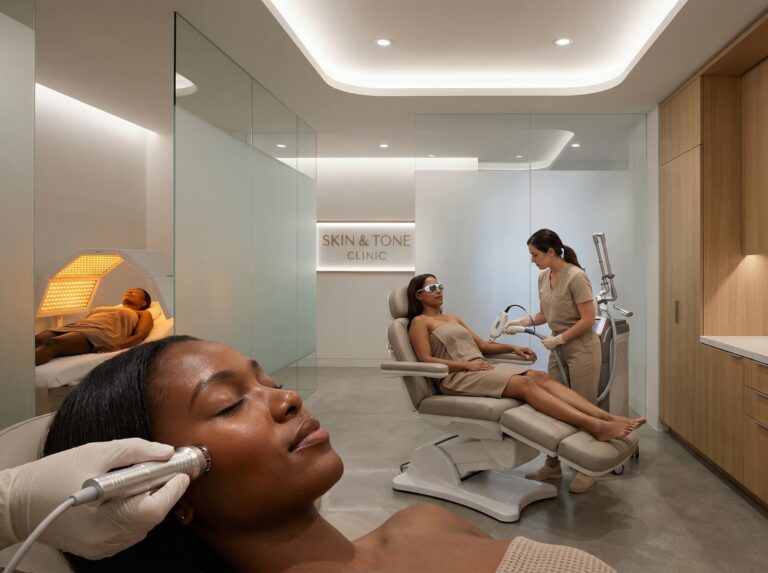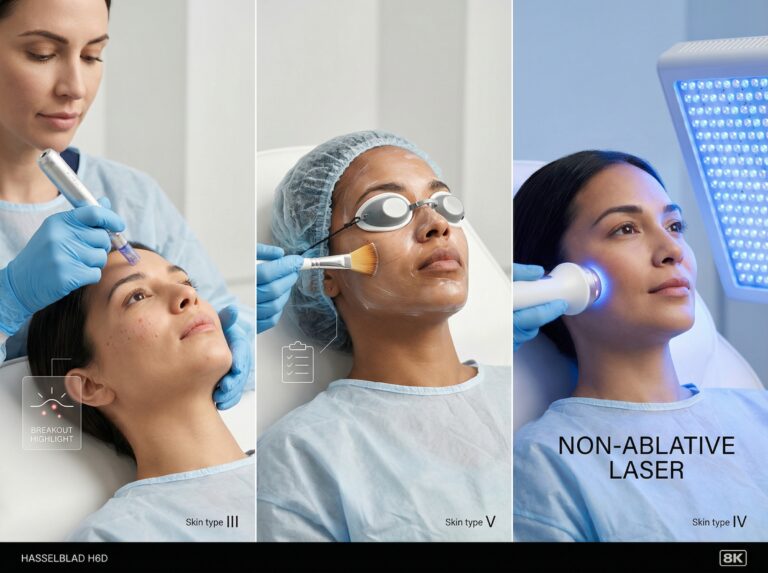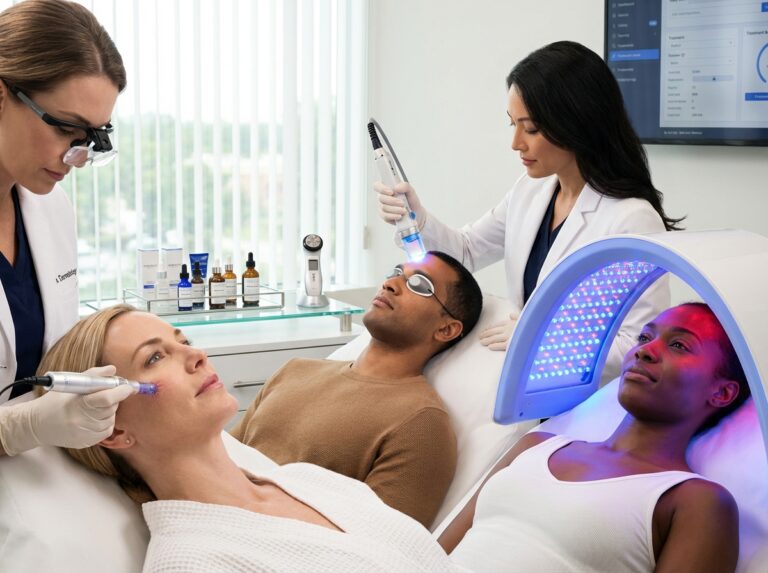
Non-invasive skin rejuvenation — microneedling, laser facials, chemical peels, radiofrequency, and LED — delivers cosmetic improvement with less downtime than surgery. Yet post-inflammatory hyperpigmentation (PIH) and laser burns remain real risks, particularly in darker skin types. This article explores indications, expected results, realistic downtime, and detailed safety and prevention strategies to minimize PIH and thermal injury.
How PIH relates to non-invasive rejuvenation and who is at risk
Post-inflammatory hyperpigmentation, often called PIH, is one of the most frustrating complications in aesthetic medicine. It is not a scar in the textural sense, but rather a stain left behind after the skin attempts to heal itself. When we talk about non-invasive rejuvenation, understanding PIH is just as important as understanding the benefits of the treatment itself. With the U.S. non-invasive aesthetic treatment market growing rapidly, seeing more patients means we are also seeing more complications in clinics that do not prioritize safety protocols.
Understanding the Mechanism of PIH
PIH is fundamentally an overreaction of the skin’s pigment system. When the skin undergoes injury or significant inflammation, the body releases inflammatory mediators like leukotrienes and prostaglandins. These chemical signals stimulate melanocytes, the cells responsible for producing color, to go into overdrive. They produce excess melanin, which is then deposited into the surrounding skin cells (keratinocytes) or dropped deeper into the dermis.
Clinical Appearance and Timeline
Unlike a burn or a bruise, PIH does not usually appear immediately. It typically develops 2 to 4 weeks after the initial injury or procedure. On the skin, it looks like flat, discolored spots ranging from tan to dark brown or even gray-blue, depending on how deep the pigment sits. While the inflammation from a procedure might resolve in a few days, the resulting pigmentation can last for months or even years if left untreated.
Why Rejuvenation Triggers It
Thermal and mechanical procedures are controlled injuries. Lasers work by heating water or pigment in the skin to stimulate collagen. Microneedling creates thousands of tiny physical wounds. Even chemical peels work by burning off the top layers of skin with acid. In an ideal scenario, this injury is just enough to trigger repair without causing excessive inflammation. However, if the thermal energy is too high or the chemical reaction is too strong, the inflammation threshold is crossed, and the melanocytes react defensively by darkening the skin.
Risk Stratification: The Fitzpatrick Scale
We cannot talk about laser safety without using the Fitzpatrick skin type scale. This classification system measures how skin reacts to UV light, but it is the best predictor we have for PIH risk.
Types I through III (Lower Risk)
These patients have pale to beige skin. They tend to burn easily in the sun and tan poorly or gradually. Their melanocytes are generally sluggish and less reactive. While they can get PIH, it is less common and usually resolves faster.
Types IV through VI (Higher Risk)
These patients have light brown, olive, dark brown, or black skin. They tan easily and rarely burn. Their melanocytes are larger and more active. In these skin types, the risk of PIH is significant because the pigment cells are “labile,” meaning they are easily provoked by heat or trauma. For a Fitzpatrick type VI patient, even a minor irritation can result in lasting hyperpigmentation.
Hidden Risk Factors
Genetics are not the only variable. Even a patient with low-risk skin can develop PIH if other factors are present.
- Recent Tanning: Active tanning puts melanocytes in a high-alert state. Treating a patient who has been at the beach recently increases the risk of burns and PIH by up to three times.
- Hormonal Pigmentation: Patients with melasma have unstable melanocytes. Heat from lasers or IPL can flare their condition, making the pigmentation worse rather than better.
- Medications: Certain drugs make the skin sensitive to light. Systemic retinoids (like Accutane) or photosensitizing antibiotics (like doxycycline) can turn a safe laser setting into a burn hazard.
- Active Inflammation: Performing procedures over active acne or eczema adds inflammation on top of inflammation, guaranteeing a pigment response.
Distinguishing Laser Burns from PIH
It is critical to understand that a laser burn and PIH are different entities, though one often leads to the other.
The Burn (Thermal Injury)
A burn is immediate physical damage. It happens when the laser energy is absorbed too aggressively by the skin, causing extreme heat buildup. Signs of a burn include blistering, crusting, or whitening of the skin (blanching) that appears within minutes to 24 hours. This is an acute wound.
The Aftermath (Secondary PIH)
PIH is the biological response to that burn. In darker skin types (IV-VI), a laser burn will lead to secondary PIH in 20% to 50% of cases. The burn heals, but the brown mark remains. However, you can get PIH without a visible burn. This happens when the heat was just high enough to irritate the melanocytes but not high enough to blister the skin.
Common Clinical Scenarios
We see specific patterns of injury depending on the device used.
Intense Pulsed Light (IPL)
IPL is a broad-spectrum light that targets pigment. It is notoriously risky for darker skin. If used on Fitzpatrick types V or VI, the device cannot distinguish between the “bad” pigment (sunspots) and the “good” pigment (natural skin color). This often results in rectangular burn marks that turn into stubborn PIH.
Ablative Lasers (CO2)
CO2 lasers vaporize tissue. In darker skin, the heat generated spreads into the surrounding tissue. Without aggressive pre-treatment and lower density settings, PIH rates can reach 40% in these populations.
Chemical Peels
Deep peels, particularly those using TCA (trichloroacetic acid), carry a high risk if the frost (the white reaction on the skin) is not controlled. A medium-depth peel on unprimed dark skin has a PIH risk exceeding 30%.
Recognizing these risks before the treatment begins is the only way to prevent them. Once the heat is delivered, the biological cascade starts, and it is very difficult to stop. Prevention is not just about settings; it is about patient selection and preparation.
Overview of non-invasive modalities indications results and downtime
Choosing the right treatment feels overwhelming because the market is flooded with options. In 2025, the U.S. non-invasive aesthetic treatment market continues to expand rapidly, meaning patients have more choices than ever. But more choice brings more confusion, especially regarding safety profiles for different skin tones. We need to break down exactly what these machines and chemicals do, how much downtime they demand, and where the real risks lie.
Microneedling and Radiofrequency (RF) Microneedling
Microneedling remains a favorite because it relies primarily on mechanical stimulation rather than heat. This makes it inherently safer for darker skin tones prone to hyperpigmentation.
Standard Microneedling
This creates controlled micro-injuries to trigger collagen production. It is excellent for acne scars and texture issues. You typically need 3 to 6 sessions spaced 4 weeks apart. Downtime is minimal, usually just 24 to 48 hours of redness similar to a sunburn. Since there is no thermal energy, the risk of PIH is low, roughly 5-10% in darker skin types if post-care is neglected.
RF Microneedling
This adds radiofrequency energy to the needles, delivering heat deep into the dermis to tighten skin while addressing scars. The insulated needles protect the surface layer (epidermis), which keeps the PIH risk lower than lasers, though slightly higher than manual needling. Expect 3 to 4 sessions. You will see initial tightening quickly, but deep collagen remodeling peaks around 3 to 6 months. Downtime involves 2 to 3 days of redness and potential grid marks.
Laser Resurfacing Modalities
Lasers are grouped by how they interact with the skin. Understanding the difference between non-ablative and ablative is critical for safety.
Non-Ablative Fractional (1550/1540 nm)
These devices heat columns of tissue without removing the top layer of skin. They work well for fine lines and mild scarring. You need 3 to 5 sessions. Downtime is manageable, usually 3 to 5 days of swelling and a “sandpaper” skin texture. The risk of PIH sits around 15% for Fitzpatrick types IV-VI, so pre-treatment protocols are necessary.
Nd:YAG (1064 nm)
This wavelength bypasses melanin in the epidermis, making it the safest laser option for darker skin tones. It targets vascular lesions and deep pigment while stimulating collagen. It requires 4 to 6 sessions. Downtime is almost non-existent, often just a few hours of pinkness. It is the go-to for “laser facials” on sensitive or ethnic skin.
Ablative Fractional (CO2 and Er:YAG)
These vaporize tissue to remove wrinkles and deep scars. The results are dramatic, often requiring only 1 to 3 sessions. However, the trade-off is significant. Downtime ranges from 7 to 14 days with oozing and crusting. The PIH risk is high, reaching up to 40% in darker skin without aggressive pre-conditioning. CO2 generates more heat than Erbium (Er:YAG), making CO2 riskier for pigmentary issues.
Intense Pulsed Light (IPL)
IPL is not a laser. It uses a broad spectrum of light to target redness and brown spots.
Efficacy and Risk
It clears sun damage and rosacea effectively in fair skin (Fitzpatrick I-III). You usually need 3 to 5 sessions with 1 to 2 days of downtime where spots darken and flake off. However, IPL is notoriously risky for darker skin. The scattered light is easily absorbed by epidermal melanin, leading to a burn or PIH risk exceeding 50% in Fitzpatrick V-VI. It is generally avoided for these skin types.
Chemical Peels
Peels use acids to exfoliate the skin. The depth of the peel determines the result and the risk.
Superficial Peels (Glycolic, Lactic)
These target the outermost layer for glow and minor texture improvement. They require a series of 4 to 6 treatments. Downtime is zero to 2 days of dry flaking. They are generally safe for all skin types.
Medium Depth (TCA)
Trichloroacetic acid penetrates deeper to treat wrinkles and pigment. Downtime involves 5 to 7 days of peeling sheets of skin. In darker skin, TCA carries a 20-30% risk of PIH. Pre-treatment with tyrosinase inhibitors is mandatory here.
Radiofrequency and LED Therapy
These are the “lunchtime” procedures with the highest safety profiles.
Radiofrequency (Monopolar/Bipolar)
RF relies on electrical resistance to create heat, ignoring melanin completely. This makes it colorblind and safe for all skin tones. It is used for tightening and contouring. You need 3 to 4 sessions, and there is virtually no downtime.
LED Therapy
Red light stimulates collagen; blue light kills acne bacteria. It is completely non-thermal and painless. Results are subtle and cumulative, requiring 10 to 20 sessions. There is no downtime and no risk of burns or PIH.
Comparison of Efficacy and Downtime
| Modality | Primary Indication | Downtime | PIH Risk (Dark Skin) |
|---|---|---|---|
| Microneedling | Scars, Texture | 1-2 Days | Low |
| RF Microneedling | Tightening, Scars | 2-3 Days | Low-Moderate |
| Nd:YAG 1064nm | Vascular, Rejuvenation | 0-1 Day | Very Low |
| Non-Ablative (1550nm) | Fine Lines, Texture | 3-5 Days | Moderate |
| Ablative (CO2) | Deep Wrinkles | 7-14 Days | High |
| IPL | Redness, Sun Spots | 1-2 Days | Very High |
| TCA Peel | Pigment, Wrinkles | 5-7 Days | Moderate-High |
Making the Right Decision
Choosing a treatment requires balancing the desire for speed against safety. Aggressive treatments like CO2 lasers offer “one and done” results but carry the highest risk of burns and lasting pigment damage in olive to dark skin. Conversely, modalities like Nd:YAG or standard microneedling are safer but require patience and multiple visits to achieve comparable collagen remodeling.
For patients with Fitzpatrick skin types IV-VI, the safest route involves avoiding bulk heating of the epidermis. RF microneedling and 1064 nm lasers are superior choices here. If you have fair skin and want to address sun damage, IPL or fractional non-ablative lasers provide excellent clearance.
Providers must look beyond the immediate problem. Treating acne scars with a laser that triggers PIH only trades one type of mark for another. Recognizing these trade-offs is the first step in the pre-procedure assessment, where we define the specific protocols to mitigate these risks.
Pre-procedure assessment device selection and strategies to prevent burns and PIH
Success in aesthetic medicine happens before the device is even turned on. The difference between a glowing result and a complication often comes down to the intake interview and skin preparation. We cannot treat every patient with the same settings or protocols. A rigid pre-procedure assessment is the only way to catch red flags that lead to burns or Post-Inflammatory Hyperpigmentation (PIH).
The Exhaustive Pre-Procedure Assessment
You need to act like a detective during the consultation. Patients often forget to mention supplements or lifestyle habits that affect their skin’s reactivity.
Medical History and Medications
Review every medication. We are looking for photosensitizers. Common antibiotics like doxycycline or tetracycline make the skin hypersensitive to light. These should generally be paused for 7 to 10 days before treatment. Isotretinoin (Accutane) is the biggest red flag. The standard safety guideline is to wait 6 to 12 months after stopping isotretinoin before performing energy-based treatments. This wait time reduces the risk of scarring and poor wound healing.
Dermatologic History
Ask specifically about cold sores. Laser energy can trigger a herpes simplex outbreak, which can spread across the resurfaced skin and cause scarring. Prophylactic antivirals are necessary for anyone with a history of facial herpes. You also need to know about melasma. Heat aggravates melasma. If a patient has active melasma, aggressive heat treatments like IPL might make it worse. We also check for active acne. Treating over infected cysts can spread bacteria.
Sun Exposure and Tanning
This is a non-negotiable dealbreaker. Recent sun exposure or tanning bed use within the last 4 weeks significantly increases the risk of burns. Tanned skin has more melanin near the surface. The laser targets this pigment instead of the deeper issue, causing a surface burn. If a patient comes in with a fresh tan, reschedule them.
Skin Typing and Expectation Setting
We use the Fitzpatrick scale to determine safety parameters. Types I-III are generally lower risk but can still burn. Types IV-VI (olive to deep brown skin) are high risk for PIH.
Assessment of Fitzpatrick Type
Don’t just look at the face. Look at non-sun-exposed skin like the inner arm to see their baseline color. Ask how they react to the sun. Do they burn and then peel? Do they tan immediately? Patients who tan easily have overactive melanocytes and are prime candidates for PIH.
Setting Expectations
Be honest about the trade-off between safety and speed. Darker skin types often require lower energy settings. This means they might need more sessions to achieve the same result as a lighter-skinned patient. Explain this upfront so they do not feel shortchanged by a gentler approach.
Preconditioning the Skin
For Fitzpatrick types IV-VI or anyone prone to pigment issues, we “prime” the skin. This puts the melanocytes to sleep before we irritate them with heat.
Topical Brightening Agents
Start a tyrosinase inhibitor 2 to 4 weeks before the procedure. Hydroquinone (2-4%) is the gold standard. It stops the production of pigment. For patients who cannot tolerate hydroquinone, we use alternatives like azelaic acid, kojic acid, or tranexamic acid. This step reduces the risk of PIH by suppressing the pigment response to inflammation.
Retinoids and Exfoliants
Retinoids (tretinoin, retinol) thin the dead outer layer of skin (stratum corneum) and speed up cell turnover. This can actually help laser penetration, but it also makes skin sensitive. Conservative guidance suggests stopping strong retinoids, glycolic acids, and active Vitamin C 3 to 5 days before the treatment. For medium-depth chemical peels, stopping these agents a week prior is safer to prevent unpredictable penetration.
Strict Sun Protection
Patients must wear broad-spectrum SPF 50+ daily for at least 4 weeks prior. This ensures the melanocytes are in a resting state.
Device Selection and Parameter Adjustments
Choosing the right tool is half the battle. Some wavelengths are simply unsafe for dark skin.
Wavelength and Pulse Duration
Longer wavelengths are safer for darker skin because they bypass surface melanin. The 1064 nm Nd:YAG is the workhorse for darker skin types. It penetrates deep without heating the epidermis too much. Avoid short wavelengths like IPL (Intense Pulsed Light) on Fitzpatrick V and VI, as the risk of surface burn is extremely high.
Energy and Pulse Width
We adjust the physics to protect the skin.
- Fluence (Energy): We lower the fluence for darker skin. High energy creates rapid heating that melanocytes react to aggressively.
- Pulse Duration (Width): We extend the pulse duration. A longer pulse delivers the energy more slowly. This allows the target tissue to cool down slightly during the energy delivery, preventing bulk heating of the surrounding skin.
- Spot Size: Larger spot sizes allow for deeper penetration with less scatter, but the energy density must be managed carefully.
- Passes: Reduce the number of passes. Multiple passes cause heat stacking. In high-risk skin, one precise pass is safer than multiple lower-energy passes that accumulate heat.
Safety Measures and Test Spots
The Importance of Test Spots
Always perform a test spot on patients with Fitzpatrick types IV-VI or those with a history of PIH. Treat a small, inconspicuous area near the jawline. The critical part is the waiting game. Immediate whitening or blistering is an obvious fail. However, PIH is a delayed reaction. You must wait 2 to 4 weeks to see if the test spot hyperpigments. If the area remains clear after a month, you can proceed.
Cooling and Technique
Heat is the enemy of pigment. Use robust cooling. Contact cooling (chilled sapphire tips), cryogen spray, or chilled air (Zimmer) protects the epidermis while the laser works underneath. Never stack pulses in the same spot without allowing the skin to cool. Keep the handpiece moving.
Eye Protection
Both the patient and the operator need wavelength-specific eye shields. For facial procedures, metal corneal shields are the safest option for the patient to allow treatment of the eyelids and orbital rim.
Patient-Facing Pre-Op Checklist
Give this to your patient at the consultation. It clears up any confusion.
- 4 Weeks Prior: Start daily SPF 50+. Avoid direct sun and tanning beds. If you have darker skin, start your brightening cream (hydroquinone/azelaic acid) as discussed.
- 2 Weeks Prior: Confirm you have no major events right after the treatment. Check your calendar for downtime.
- 1 Week Prior: Stop taking blood thinners (aspirin, ibuprofen, fish oil) if medically cleared, to reduce bruising. Stop using exfoliating acids or scrubs.
- 3 Days Prior: Stop using Retin-A, retinol, or prescription acne creams.
- Day of Treatment: Arrive with a clean face. No makeup, lotions, or jewelry. Inform your provider if you have had any recent sun exposure or changes in medication.
The U.S. Non-invasive Aesthetic Treatment Market is growing rapidly, meaning more patients are seeking these treatments than ever before. Thorough preparation ensures they get the results they want without the complications they fear.
Immediate aftercare management recognizing and treating laser burns and early PIH
The moment the device is turned off, the window to prevent permanent pigment changes begins. While pre-procedure assessment sets the stage, the first 48 to 72 hours post-treatment are where we win or lose the battle against Post-Inflammatory Hyperpigmentation (PIH) and scarring. The goal here is simple: calm the inflammation immediately and protect the barrier while it rebuilds.
Standard Immediate Aftercare Protocols
For the vast majority of non-invasive treatments—whether it’s microneedling, a chemical peel, or a laser facial—the skin barrier is compromised. The rule of thumb is to treat the face like an open wound, even if it doesn’t look like one.
Cleansing and Moisture
Patients should switch to a gentle, non-foaming cleanser immediately. For the first 24 hours, tepid water and sterile saline are often enough. Once the initial heat subsides, a bland moisturizer is necessary. For ablative procedures or medium-depth peels, we use emollient occlusion. This means applying a thick layer of petrolatum-based ointment (like Aquaphor) or a specific barrier repair balm. This creates a seal that prevents water loss and speeds up re-epithelialization. We keep this occlusion going for 48 hours or until the skin is no longer weeping.
Sun Protection
This is non-negotiable. Physical blockers (zinc oxide or titanium dioxide) are preferred immediately after treatment because chemical filters can irritate compromised skin. We layer SPF 50+ every two hours if there is any light exposure.
Cosmetics Timeline
Makeup is a common request, but it introduces bacteria. For non-ablative lasers and superficial peels, patients can usually resume mineral makeup after 24 hours. For microneedling or ablative lasers, we wait until the channels have fully closed and crusting has formed, typically 72 hours to 5 days.
Managing Thermal Burns and Intense Reactions
Sometimes, despite perfect settings, tissue responds unpredictably. Recognizing the difference between expected erythema (redness) and a thermal injury is critical. Expected redness fades within hours; a burn persists and intensifies.
Immediate Cooling
If the skin remains intensely hot or turns a dusky gray-white (signaling epidermal separation), stop everything. Apply cool compresses soaked in sterile saline. Do this for 10 to 15 minutes every hour. Never apply ice directly to the skin. Injured tissue has compromised blood flow, and the extreme cold of ice can cause frostbite and further necrosis.
Topical Steroids
There is a specific window for using steroids. If we see significant edema or blistering, a short course of a high-potency topical steroid (like clobetasol or fluocinonide) used for 3 to 5 days can drastically reduce the inflammatory cascade that leads to PIH. This must be done under provider guidance. We do not use steroids if there is an open infection, as it suppresses the immune response needed to fight bacteria.
Red Flags Requiring Urgent Care
Patients need to know when to call. Blistering within 24 hours suggests a second-degree burn. Spreading redness accompanied by heat or throbbing pain after 48 hours usually indicates infection. Fever over 100.4°F is a systemic sign that requires immediate medical attention.
Evidence-Based Early PIH Management
If a burn occurs or if the patient has Fitzpatrick skin type IV-VI, we assume PIH is coming and treat it prophylactically. We don’t wait for the brown spots to appear.
Anti-Inflammatory Phase
In the first week, the focus is solely on reducing inflammation. We continue bland emollients and sun avoidance. If the skin is intact, we might introduce topical niacinamide, which calms redness and inhibits melanosome transfer.
Depigmenting Agents
Once the skin has re-epithelialized (usually day 7 to 10), we introduce tyrosinase inhibitors. Hydroquinone 4% remains the gold standard for halting pigment production. For patients who cannot tolerate hydroquinone, we use Azelaic Acid 15-20% or topical Tranexamic Acid. These agents are applied nightly.
Chemical Exfoliants and Retinoids
We hold off on retinoids and acids until the skin barrier is robust, typically 2 to 4 weeks post-procedure. Introducing tretinoin or glycolic acid too early on inflamed skin will only trigger more inflammation and worsen the PIH.
| Timeframe | Action/Agent |
| 0-48 Hours | Cooling, sterile saline, petrolatum occlusion, oral NSAIDs. |
| Day 3-7 | Gentle cleanser, physical sunscreen, topical niacinamide. Short-course steroid if prescribed. |
| Day 7-14 | Start tyrosinase inhibitors (Hydroquinone, Azelaic Acid) if skin is closed. |
| Week 3-4 | Reintroduce retinoids and chemical exfoliants cautiously. |
Salvage Therapies for Stubborn PIH
Sometimes topicals aren’t enough. If dark patches persist beyond 8 weeks, we consider in-office salvage therapies. This requires extreme caution; throwing more energy at heat-induced pigment can backfire.
Low-Fluence Lasers
We use large spot sizes and very low fluence. A Q-switched 1064 nm Nd:YAG laser is the safest option for breaking up deep pigment in darker skin tones without reheating the epidermis. Picosecond lasers are also excellent here because they use acoustic energy rather than thermal energy to shatter pigment.
Non-Ablative Fractional Resurfacing
Low-energy, low-density non-ablative fractional lasers (like the 1927 nm thulium) can help lift pigment out of the skin. This is generally reserved for lighter skin types or used with extreme care in darker skin, often combined with aggressive sun protection.
Follow-Up and Documentation
You cannot manage what you do not monitor. A strict follow-up schedule is part of the safety protocol.
Schedule
High-risk patients or those who experienced an adverse event should be seen on Day 1 (virtually or in-person) to check for burns. Standard follow-ups occur at Week 1 to assess healing, Week 4 to check for early PIH, and Month 3 for final results.
Documentation
Take standardized photos at every single visit. Lighting and angles must be consistent. These photos are the only way to objectively track if a dark spot is fading or if erythema is resolving.
With the U.S. non-invasive aesthetic treatment market continuing to expand, the volume of complications will naturally rise. The difference between a temporary side effect and a permanent scar often comes down to how quickly and correctly we manage the first few days after the treatment.
Frequently Asked Questions
Patients often feel overwhelmed by the technical details of skin rejuvenation. You might know you want a glow or smoother texture, but the fear of burns or lasting dark spots is real. This section breaks down the most common concerns we hear. These answers rely on current clinical standards as of late 2025 to help you make safer choices.
Which treatments are actually safe for darker skin tones?
This is the most critical question for anyone with Fitzpatrick skin types IV through VI. The safest options bypass the epidermis or use wavelengths that do not heavily target melanin. Radiofrequency (RF) microneedling is a top choice because the needles deliver heat deep into the dermis, sparing the surface layer where pigment lives. For lasers, the 1064 nm Nd:YAG is the gold standard. It has a longer wavelength that penetrates deeper, ignoring surface melanin. Picosecond lasers are also excellent because they use sound waves (acoustic energy) rather than just heat, significantly lowering burn risk.
Practical Step
Ask your provider specifically for “color-blind” technologies like RF microneedling or Nd:YAG lasers. If they suggest IPL for dark skin, find a different clinic immediately.
How do I prevent PIH before and after a laser or peel?
Prevention starts weeks before you step into the clinic. We call this “preconditioning.” For 2 to 4 weeks prior, you should suppress your pigment cells. Doctors often prescribe hydroquinone (4%) or suggest non-prescription brighteners like azelaic acid, tranexamic acid, or kojic acid. This puts your melanocytes to sleep so they are less likely to panic and overproduce pigment when the laser hits. After the treatment, your main job is reducing inflammation. Keep the skin cool and moist. Avoid heat sources like saunas or hot yoga for at least 48 hours.
Practical Step
Start wearing SPF 50+ daily four weeks before your appointment and ask your doctor if you need a tyrosinase inhibitor cream to prep your skin.
How long is the downtime for these treatments?
Downtime varies heavily by device and intensity. It is rarely “zero” even if marketing says so. You need to plan your social calendar honestly. For example, standard microneedling usually involves 24-48 hours of redness similar to a sunburn. Non-ablative lasers often result in 3-5 days of a “sandpaper” texture and bronzing. Aggressive CO2 lasers can require 7-14 days of significant redness and peeling.
Practical Step
Clear your schedule for 2 days more than the provider suggests. If they say 3 days, give yourself 5 before a big event.
Is IPL safe for my skin tone?
Intense Pulsed Light (IPL) is generally not safe for Fitzpatrick skin types IV, V, and VI. IPL uses a broad spectrum of light that targets color indiscriminately. In darker skin, the device cannot easily distinguish between the sunspot you want to remove and your natural skin color. This confusion often leads to rectangular burns or “tiger striping.” While some advanced filters exist, the risk remains high compared to specific lasers like the Nd:YAG.
Practical Step
If you have tan, olive, or brown skin, refuse IPL. Request a test spot with a specific laser instead.
Can I have treatments while on isotretinoin (Accutane)?
The old rule was to wait 6 to 12 months. Current guidelines are shifting, but caution is still the priority. Most conservative providers require a 6-month waiting period after stopping isotretinoin before performing energy-based treatments or medium-depth peels. This medication shrinks oil glands and impairs wound healing, which increases the risk of scarring. Some very superficial treatments might be allowed sooner, but only under strict dermatologist supervision.
Practical Step
Disclose your medication history immediately. Do not hide it to get an appointment sooner.
What should I do if I notice hyperpigmentation after a treatment?
First, distinguish between normal healing and PIH. After lasers, pigment often darkens and creates “coffee ground” crusts that flake off. This is good. However, if you see a new gray or brown shadow forming 2 to 4 weeks later, that is likely PIH. You must act fast. Inflammation is the fire fueling the pigment. You need to put out the fire. Contact your provider to potentially start a short course of topical steroids or stronger pigment inhibitors.
Practical Step
If a dark spot appears after the initial healing phase, call your doctor within 24 hours. Do not wait for your next scheduled follow-up.
How soon after sun exposure can I be treated?
You cannot treat tanned skin. A tan is melanin acting as a shield. If a laser targets pigment, it will attack your tan and burn the surface. You generally need to wait at least 4 weeks after significant sun exposure before having a laser or chemical peel. This applies to self-tanners too. Fake tan residue reacts with laser energy and can cause severe blistering.
Practical Step
Exfoliate any self-tanner completely 7 days before your session. If you have a tan line, reschedule.
How many sessions are needed to see results?
Non-invasive means we are nudging the skin, not forcing it. One session rarely delivers the final result. Collagen remodeling takes time. For microneedling or non-ablative lasers, the standard protocol is a series of 3 to 6 treatments spaced 4 weeks apart. You might see a “glow” after one, but structural changes like scar reduction or tightening require cumulative energy.
Practical Step
Budget for a package of 3 sessions minimum. Non-Surgical Aesthetics Statistics: Botox, Fillers & Laser Treatments show that millions of these sessions are performed annually, confirming that consistency drives the best outcomes.
What are realistic costs and how do I choose a qualified provider?
In 2025, prices in the U.S. vary by zip code and technology. A single laser facial typically ranges from $500 to $1,500. RF microneedling often sits between $800 and $1,200 per session. Be wary of prices that seem too low. Discounted lasers often mean older machines or under-qualified technicians. Safety is expensive because training and maintenance are expensive.
Practical Step
Verify credentials. Look for a board-certified dermatologist or a plastic surgeon for high-energy devices. Ask to see before-and-after photos of patients who have your exact skin tone.
When should I seek medical attention?
Discomfort is normal, but agony is not. If you experience intense burning that lasts more than a few hours, blistering, or yellow crusting (a sign of infection), you need help. Cold sores can also flare up after treatments around the mouth. If you feel that familiar tingle, you need antiviral medication immediately to prevent widespread scarring.
Practical Step
If you see a blister or feel feverish (temperature >100.4°F), go to the doctor or urgent care. Do not apply home remedies like butter or toothpaste.
Takeaways and clinical guidance for safe long term outcomes
We have covered the specific treatments, the risks, and the common questions. Now we need to look at the big picture. The goal of non-invasive rejuvenation is improvement without injury. But the line between effective treatment and damage is often thin. This is especially true for darker skin tones where Post-Inflammatory Hyperpigmentation (PIH) is a constant risk.
Success in 2025 is not just about the technology. It is about the strategy. The market is flooded with devices. The U.S. non-invasive aesthetic treatment market is a multi-billion dollar industry that continues to grow. This growth means more options but also more potential for errors. We need a strict safety protocol to protect the skin barrier and pigment.
The Hierarchy of Safety
You cannot rely on luck. You must rely on a structured approach to safety. This hierarchy applies to every laser, peel, or microneedling session.
Individualized Risk Assessment
Every patient needs a Fitzpatrick skin typing. This is the foundation. You must also ask about recent sun exposure. A patient with Fitzpatrick III skin who spent the weekend at the beach behaves like a Fitzpatrick IV or V. Their risk of burns increases significantly. Check for medication use. Drugs like doxycycline make the skin sensitive to light.
Conservative Parameter Selection
Start low. You can always increase energy in future sessions. You cannot undo a burn. For darker skin types (IV-VI), reduce fluence by 20 to 30 percent compared to standard settings. Increase the pulse duration. This allows heat to dissipate and spares the epidermis.
Preconditioning the Skin
Melanocytes need to be calm before you apply heat. For high-risk patients, start a topical regimen 2 to 4 weeks before the procedure. Use tyrosinase inhibitors like hydroquinone 4% or azelaic acid. This reduces the risk of PIH by up to 70 percent.
Mandatory Test Spots
Do not skip this step for new patients or new devices. Treat a small area near the ear or jawline. Wait 48 hours for lighter skin. Wait 2 to 4 weeks for darker skin. Pigment issues often take time to surface.
Active Cooling
Heat is the enemy of the epidermis. Contact cooling or cold air cooling is essential during laser treatments. It protects the top layer of skin while the energy works deeper. Proper cooling reduces burn risk by nearly 60 percent.
Clinician Checklist for Safety
Providers need a fail-safe routine. This checklist helps prevent errors before the device even touches the skin.
- Confirm the Fitzpatrick skin type and adjust settings accordingly.
- Verify no active tan or sun exposure in the last 4 weeks.
- Check that the patient has stopped retinoids 5 to 7 days prior.
- Ensure the skin is clean and free of makeup or lotions.
- Validate that cooling systems are functioning correctly.
- Perform a test spot if the patient is Fitzpatrick IV-VI or if using a new setting.
- Observe the clinical endpoint immediately. Look for mild erythema, not whitening or graying.
- Apply cool compresses immediately if the skin looks too red or hot.
Patient Checklist for Preparation and Recovery
Patients play a huge role in their own safety. You control what happens at home.
- Apply broad-spectrum sunscreen SPF 50+ every morning for 4 weeks before your appointment.
- Stop using exfoliating acids and retinol 5 to 7 days before treatment.
- Arrive at the clinic with a clean face.
- Tell your provider if you started any new antibiotics.
- Keep the treated area moist with a bland ointment like Aquaphor for 48 hours post-treatment.
- Avoid direct sun exposure and tanning beds completely during recovery.
- Do not pick at any scabs or flaking skin. This causes scarring.
- Attend your follow-up appointment to monitor healing.
Monitoring Outcomes and Collagen Remodeling
Patience is necessary for non-invasive treatments. The results are rarely immediate. Biology takes time. Collagen remodeling happens over months.
| Phase | Timeframe | What to Expect |
|---|---|---|
| Acute Phase | Day 1 to 3 | Redness, mild swelling, initial healing. Risk of infection is highest here. |
| Sub-Acute Phase | Week 1 to 2 | Peeling resolves. Epidermis restores. Early PIH may appear in darker skin. |
| Collagen Induction | Week 4 to 8 | New collagen production begins. Texture starts to improve. |
| Peak Remodeling | Month 3 to 6 | Full results become visible. Skin tightening and scar reduction peak. |
You should not judge the final result after one week. The skin needs 3 to 6 months to show the full benefit of collagen stimulation. Additional sessions should be spaced out to allow healing. Rushing sessions increases inflammation and the risk of PIH.
When to Refer to a Specialist
Most treatments go smoothly. But complications happen. You need to know when to seek help from a board-certified dermatologist.
Signs of Infection
If you see pus, yellow crusting, or spreading redness after 48 hours, call a doctor. Fever over 100.4°F is a serious red flag. Early antibiotics can prevent scarring.
Suspected Burns
Blisters are not a normal reaction for non-ablative treatments. If you develop blisters within 24 hours, this is a burn. It requires immediate medical wound care to prevent permanent damage.
Persistent Pigmentation
Dark spots that do not fade after 2 to 3 months need professional management. A dermatologist may prescribe stronger topicals or use a specific laser to break up the pigment.
Prioritize Safety Over Speed
We all want fast results. But aggressive treatments often lead to setbacks. It is better to have 4 gentle sessions than 1 aggressive session that causes a burn. The U.S. non-invasive aesthetic treatment market size was estimated at USD 20.8 billion in 2023 and continues to grow because these treatments work. They work best when we respect the biology of the skin.
Take your time. Prepare your skin. Choose a qualified provider who puts safety first. The goal is long-term health and rejuvenation, not a quick fix that leaves a mark. Monitor your progress over months and trust the process.
Sources
- U.S. Non-invasive Aesthetic Treatment Market | Industry Report 2030 — The US non-invasive aesthetic treatment market size was estimated at USD 20.8 billion in 2023 and is expected to grow at a CAGR of 14.1% from 2024 to 2030.
- Facelift Statistics 2025: Cost, Age Trends & Results Analysis — The US alone saw over 4.7 million cosmetic procedures performed in 2025, with facelifts remaining among the most requested invasive treatments.
- Non-Surgical Aesthetics Statistics: Botox, Fillers & Laser Treatments — Most procedures occur in the USA, which accounted for around 42.8% of global treatments in 2022, totaling nearly 3.95 million sessions. The …
- U.S. Non-Invasive Aesthetic Treatment Market Size to Surpass USD … — The US non-invasive aesthetic treatment market size was calculated at USD 7.38 billion in 2024 and is predicted to increase from USD 8.03 billion in 2025 to …
- Non-invasive Aesthetic Treatments Market Hits $238.04 Bn by 2034 — The non-invasive aesthetic treatment market size is forecast to rise from USD 73.96 billion in 2024 to USD 238.04 billion by 2034, with a CAGR of 12.4%.
- Clinical Trial Statistics for Beauty Treatments in 2025 – Free Yourself — Non-invasive skin treatments such as laser therapies, injectables, and microneedling are expected to continue gaining popularity in 2025. These procedures, …
- Non-Invasive Aesthetic Treatment Market Forecast, 2025-2032 — Non-Invasive Aesthetic Treatment Market is estimated at USD 40.06 Bn in 2025 and is expected to expand at CAGR of 13.1%, reaching USD 94.90 …
- Non-Invasive Anti-Ageing Treatments Gain in US — Although women still make up most patients, an increasing number of men are opting for Botox, laser skin resurfacing, and skin tightening.
- Top 5 Noninvasive Cosmetic Treatments of 2025 | Botox® & Trends — Discover the top 5 noninvasive cosmetic treatments of 2025, from Botox® to Sculptra®. Why NYC patients trust Dr. Ron Shelton.
Legal Disclaimers & Brand Notices
The content provided in this article is for informational and educational purposes only and does not constitute professional medical advice, diagnosis, or treatment. Always seek the advice of a physician or other qualified health provider with any questions you may have regarding a medical condition or aesthetic procedure. Never disregard professional medical advice or delay in seeking it because of something you have read in this article.
All product names, logos, and brands mentioned in this text are the property of their respective owners. This includes, but is not limited to, the following marks:
- Botox®
- Sculptra®
All company, product, and service names used in this article are for identification purposes only. Use of these names, logos, and brands does not imply endorsement, affiliation, or certification by the trademark owners.