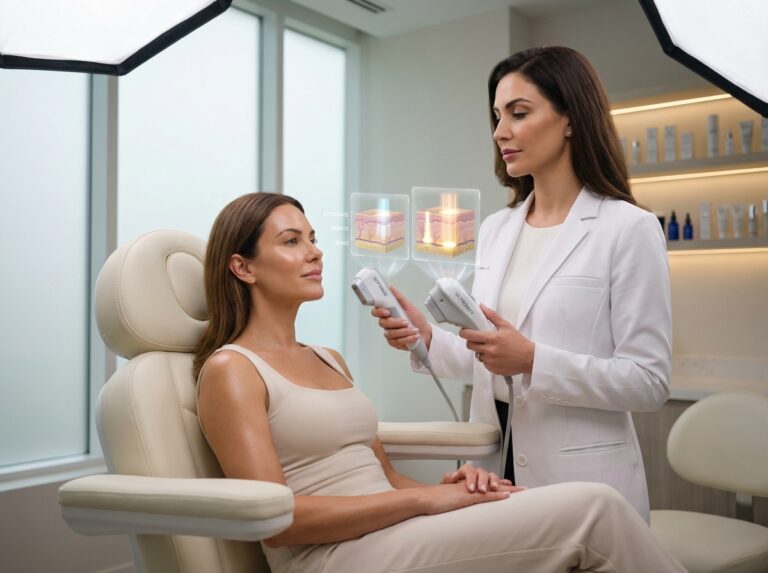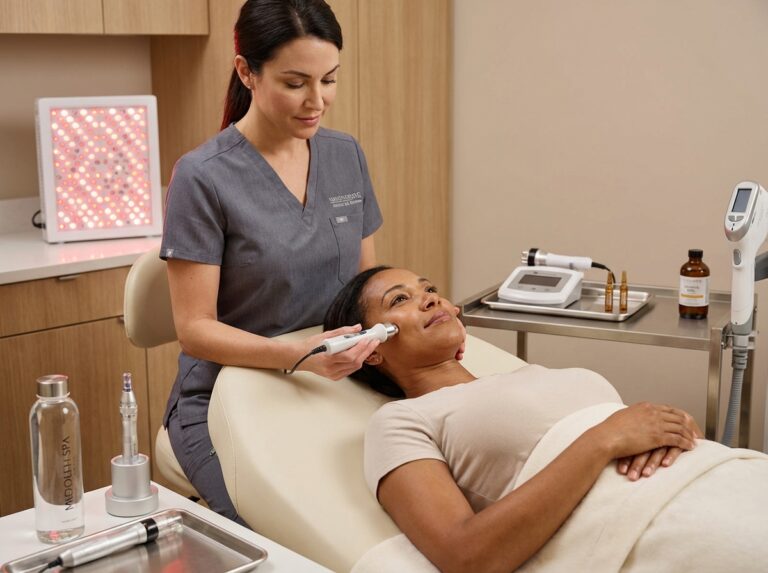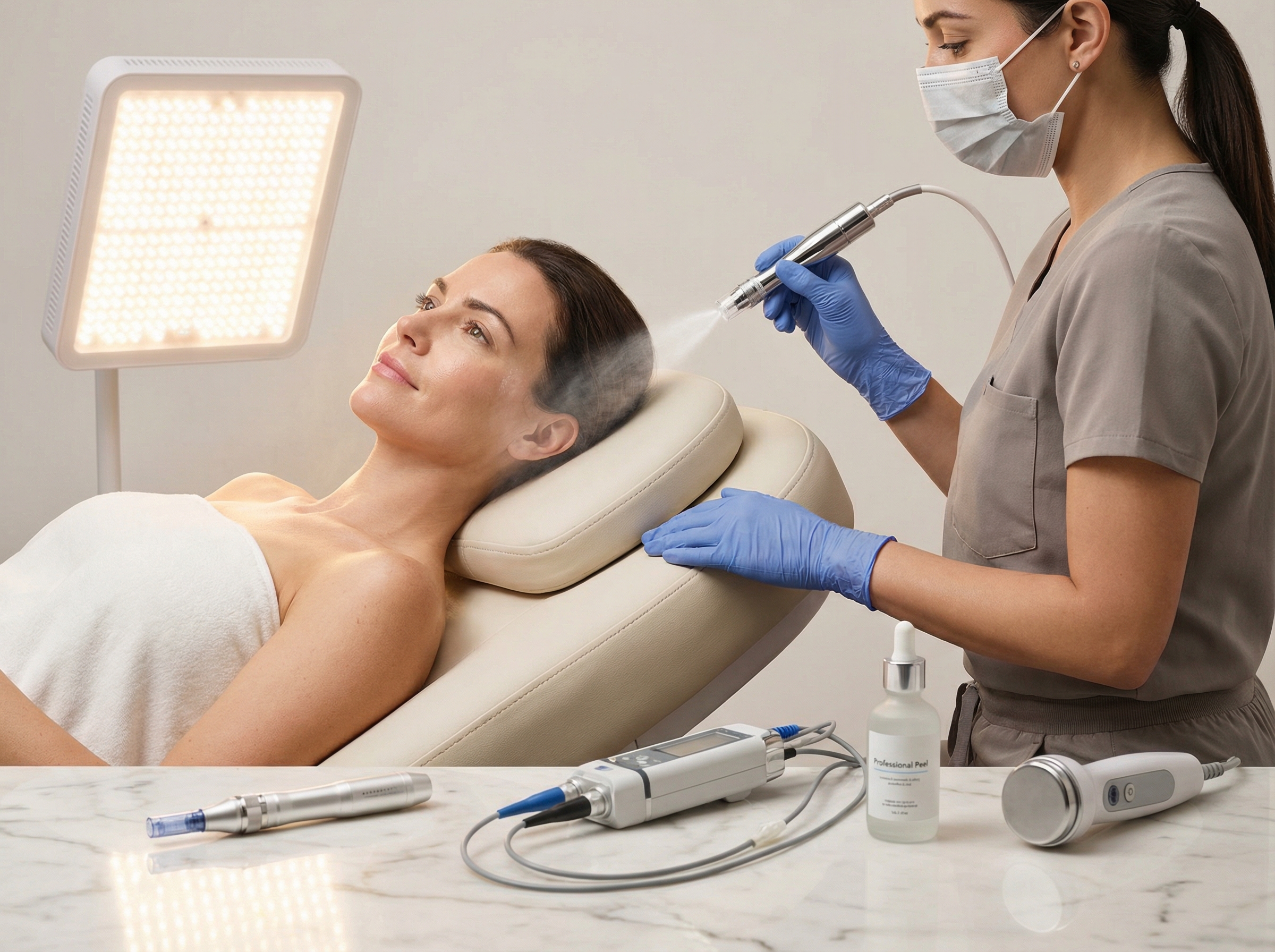
This article examines oxygen facials alongside proven non‑invasive skin rejuvenation options — microneedling, lasers, chemical peels, radiofrequency (RF) and LED. We evaluate mechanisms, clinical evidence, realistic results, common indications, downtime and safety tips so readers can separate marketing from medicine and choose the right option for their skin goals.
Overview of Non-Invasive Skin Rejuvenation Treatments
The gap between what you can achieve with a jar of retinol at home and what happens in a plastic surgeon’s operating room is bridged by the medical aesthetic treatments we have available today. We are looking at a spectrum of efficacy, downtime, and cost. Understanding where each modality fits helps manage expectations, especially when comparing established heavy hitters like lasers against softer options like oxygen facials.
Microneedling and Collagen Induction
Mechanism and Protocol
Microneedling, or collagen induction therapy, relies on a simple physiological response: controlled injury. A device equipped with fine needles creates thousands of microscopic channels in the dermis. This triggers a wound-healing cascade, stimulating the release of growth factors and the production of new collagen and elastin. Protocols typically require 3 to 6 sessions spaced 4 weeks apart. For enhanced results, many providers add Platelet-Rich Plasma (PRP), derived from the patient’s own blood, which studies suggest can improve scar reduction by 20–30% compared to needling alone.
Results and Realities
You won’t see the final result immediately. The remodeling process peaks around 3 months post-treatment. It is highly effective for acne scarring and textural issues. Downtime usually involves 1 to 3 days of redness resembling a sunburn. In the United States, median prices in 2025 hover between $250 and $700 per session, with PRP adding a premium.
Laser and Light-Based Therapies
Ablative vs. Non-Ablative
Lasers operate on the principle of selective photothermolysis. Ablative lasers (like CO2) vaporize the outer layers of skin to force regeneration, offering dramatic results for deep wrinkles and photoaging but requiring significant downtime (7–10 days). Non-ablative fractional lasers heat the underlying tissue without destroying the surface, leading to a faster recovery (1–3 days) but requiring more sessions. Intense Pulsed Light (IPL) uses broad-spectrum light to target pigment and redness (hemoglobin), making it the standard for rosacea and sunspots rather than texture.
Cost and Considerations
Laser treatments are among the most expensive non-invasive options, ranging from $800 to over $2,000 per session. Results are long-term, often lasting years with maintenance. However, safety is paramount here; incorrect settings on darker skin tones can cause permanent hyperpigmentation.
Chemical Peels
Depth and Agents
Chemical peels use acids to dissolve the bonds between skin cells, causing them to slough off. Superficial peels (Glycolic, Salicylic) target the stratum corneum for brightness and mild acne. Medium-depth peels (TCA) penetrate the papillary dermis to treat pigment and fine lines. Deep peels (Phenol) are rarely performed now due to the cardiac monitoring required and long recovery. Superficial peels generally cost $150–$300, while medium peels can go higher.
Downtime
Downtime varies strictly by depth. A superficial peel might cause minor flaking for a day, while a medium peel involves visible shedding for 5 to 7 days.
Radiofrequency (RF) and LED Phototherapy
Radiofrequency (RF)
RF devices use electrical current to generate heat in the dermis (typically 40–43°C), causing immediate collagen contraction and stimulating new production over time. It is the go-to non-surgical option for skin laxity and tightening. Prices are steep, often $1,000–$3,000 per session, but the downtime is minimal compared to lasers.
LED Phototherapy
Light Emitting Diode therapy is non-thermal. Red light (630–660nm) modulates cellular activity to support collagen, while blue light (405–420nm) targets the bacteria responsible for acne. It is painless with zero downtime, often costing $50–$200 as an add-on. The evidence is moderate, supporting it best as a cumulative maintenance therapy rather than a corrective one.
Oxygen Facials in the Treatment Landscape
Mechanism and Delivery
Oxygen facials differ fundamentally from the wound-healing modalities above. They do not injure the skin to provoke a response. Instead, they utilize pressurized oxygen to deliver atomized serums (hyaluronic acid, antioxidants) into the epidermis, or they use chemical reactions (like the Bohr effect) to increase skin oxygenation from within. Studies on carbon dioxide facial therapy have shown immediate improvements in skin oxygenation and perfusion, which supports the “glow” often cited by patients.
Positioning and Expectations
While lasers and microneedling offer structural changes over months, oxygen facials are positioned as “event-ready” treatments—often described as the “Cinderella” of facials. The results—intense hydration and radiance—are immediate but transient, typically lasting 7 to 14 days. With a price point of $150–$300, they are accessible options for maintenance or soothing post-procedure skin. Note that insurance does not cover this procedure as it is considered purely cosmetic with no medical necessity code. The evidence base for long-term anti-aging effects is limited compared to the robust clinical trials supporting lasers and microneedling.
Patient Selection and Safety Factors
Fitzpatrick Skin Type
Your genetic skin type dictates safety. Patients with Fitzpatrick types IV–VI (darker skin) are at higher risk for Post-Inflammatory Hyperpigmentation (PIH) with heat-based devices like lasers and IPL. Microneedling and RF are generally safer for these skin types because they bypass the melanin-rich epidermis. Oxygen facials are safe for all Fitzpatrick types as they generate no heat.
Contraindications
Active acne is a contraindication for microneedling due to the risk of spreading bacteria, whereas blue LED and oxygen treatments can be beneficial. A history of Herpes Simplex requires prophylactic antiviral medication before peels or lasers to prevent outbreaks. Recent use of isotretinoin (Accutane) typically requires a waiting period of 6–12 months before undergoing aggressive resurfacing, though recent guidelines are becoming more lenient for superficial treatments.
Combination Approaches
Stacking Modalities
Modern aesthetics rarely relies on a single tool. A common protocol involves stacking treatments to maximize results while minimizing downtime. For example, a chemical peel followed immediately by LED therapy can reduce the inflammatory response and speed up recovery. Similarly, microneedling is frequently paired with PRP to accelerate healing and boost collagen synthesis. Oxygen facials are increasingly used as a “finishing touch” after harsher treatments like laser or microneedling to cool the skin, reduce erythema, and restore hydration levels immediately.
| Modality | Primary Indication | Downtime | Results Timeline | Evidence Level |
|---|---|---|---|---|
| Microneedling | Scars, Texture | 1–3 Days | 3 Months | Strong |
| Fractional Laser | Aging, Deep Wrinkles | 3–7 Days | 3–6 Months | Strong |
| Chemical Peel | Pigment, Glow | 0–7 Days | 1 Month | Moderate |
| Radiofrequency | Laxity, Tightening | 0–1 Day | 3–6 Months | Strong |
| Oxygen Facial | Hydration, Radiance | 0 Hours | Immediate | Limited |
The Verdict on Oxygen
In the hierarchy of rejuvenation, oxygen facials occupy a specific niche. They are not a replacement for the structural remodeling provided by lasers or microneedling. Instead, they serve as a low-risk, zero-downtime option for immediate aesthetic improvement. While conclusive research on long-term wrinkle reduction is scarce, the short-term benefits of hydration and circulation make them a valid tool when the goal is instant gratification rather than deep correction.
Evaluating Oxygen Facials Versus Established Modalities
Oxygen facials occupy a strange space in aesthetics. Walk into any high-end spa in Manhattan right now, and you will see them marketed as the secret to “red carpet radiance.” They promise instant hydration and a glow that looks great on Instagram. But when we strip away the marketing and look at the biology, the picture gets complicated. Unlike microneedling or lasers, which rely on controlled injury to force the skin to repair itself, oxygen facials rely on the idea that delivering oxygen to the surface can energize cells.
We need to separate the biological plausibility from the hype. As of late 2025, the evidence base for these treatments is growing but remains distinct from the heavy hitters like RF or chemical peels.
Understanding the Commercial Formats
Not all oxygen treatments are the same. You will generally encounter three specific mechanisms in a clinical or spa setting.
Pressurized Oxygen Delivery
This is the most common format, popularized by brands like Intraceuticals. The device uses an air compressor to spray a stream of 90-95% pure oxygen onto the skin. The pressure is used to push low-molecular-weight serums—usually hyaluronic acid, antioxidants, and peptides—deeper into the epidermis than manual application would allow. The oxygen itself cools the skin, acting as a vasoconstrictor to reduce redness.
The “Bohr Effect” CO2 Facials
These treatments, such as the Geneo platform, don’t actually spray oxygen. They generate a chemical reaction on the skin surface that produces carbon dioxide bubbles. This triggers a physiological response known as the Bohr effect. The body senses the increase in CO2 and sends oxygen-rich blood to the area to balance it out. It is essentially oxygenating the skin from the inside out.
Hyperbaric-Like Topical Infusion
Some newer devices use a dome or mask to increase atmospheric pressure (around 1.3 to 1.5 ATA) locally over the face. This attempts to mimic hyperbaric oxygen therapy (HBOT), which is a proven medical treatment for wound healing, but applies it strictly to the facial tissue. It is important to distinguish this from systemic HBOT; facial devices do not oxygenate your entire system or cure systemic diseases.
Critical Appraisal of the Evidence
If we look at the clinical data available through 2025, the support for oxygen facials is mixed. It depends entirely on what you are trying to treat.
Hydration and Glow
The evidence here is moderate but short-term. The pressurized application of hyaluronic acid does result in a measurable increase in hydration. Corneometer readings often show a 30-50% increase in skin moisture 24 hours post-treatment. However, this is largely due to the serum and the cooling effect, rather than the oxygen itself altering cellular metabolism long-term.
Acne and Inflammation
This is where oxygen has the strongest biological footing. Propionibacterium acnes (or C. acnes) is an anaerobic bacterium, meaning it thrives in low-oxygen environments. Introducing oxygen can help reduce bacterial load. A study reviewing topical oxygen therapy noted significant reductions in inflammatory lesions. Specifically, one trial showed a 62.4% reduction in papulopustular acne after 4 weeks of treatment. Potential applications of topical oxygen therapy in dermatology suggest it is a viable adjuvant therapy, especially for patients who cannot tolerate harsh retinoids.
Anti-Aging and Collagen
The claims that topical oxygen stimulates durable collagen production are weak. A 2015 split-face study on 12 patients showed that CO2 facials improved skin oxygenation immediately after treatment due to the Bohr effect. However, improving oxygenation temporarily does not equate to the structural remodeling we see with lasers. There are no large-scale randomized controlled trials (RCTs) showing that oxygen facials reduce deep wrinkles or correct significant laxity comparable to fractional lasers or microneedling.
Comparative Analysis: Oxygen vs. Established Modalities
To understand where oxygen fits, we have to compare it against the treatments discussed in the previous chapter. The primary difference is the mechanism: oxygen is non-destructive, while lasers and needles are constructive via damage.
| Feature | Oxygen Facial | Microneedling | Chemical Peels (Medium) | Fractional Laser |
|---|---|---|---|---|
| Primary Goal | Hydration, immediate glow, soothing | Texture, acne scars, collagen | Pigment, texture, turnover | Deep wrinkles, severe damage |
| Downtime | 0 hours (Immediate makeup) | 24–72 hours | 3–7 days | 5–10 days |
| Pain Level | None (Relaxing) | Mild to Moderate | Moderate (Stinging) | Moderate to High |
| Results Duration | 1–2 weeks | Months to years | Months | Years |
| Cost (Avg 2025) | $150–$300 | $250–$700 | $300–$600 | $1,500+ |
Efficacy on Scars and Texture
If your goal is smoothing acne scars, oxygen is not the right tool. Microneedling creates physical channels that break up scar tissue; oxygen simply hydrates the tissue around it. While the hydration might temporarily “plump” the skin and make scars look 10-20% better for a few days, the effect is optical, not structural.
Efficacy on Pigmentation
Chemical peels and IPL are far superior for hyperpigmentation. Oxygen facials can brighten the skin tone by increasing circulation, but they do not exfoliate melanin-filled cells or target chromophores like a laser does.
Safety and Risk Mitigation
Because oxygen facials are non-invasive, the safety profile is excellent, but it is not risk-free.
Infection Control and Aerosols
Since 2020, we pay more attention to aerosolization. Pressurized oxygen devices blow air and particles around. If a patient has an active viral infection, the device could theoretically aerosolize pathogens. Reputable clinics now use HEPA filters and ensure the wand tip does not touch the mucous membranes. The risk of bacterial infection is extremely low (<0.1%) provided the serum infusion tips are single-use or sterilized.
Contraindications
Oxygen facials are generally safe for all Fitzpatrick skin types (I-VI) because there is no heat involved, eliminating the risk of post-inflammatory hyperpigmentation (PIH) common with lasers. However, you should avoid them if you have open wounds or uncontrolled rosacea that reacts poorly to increased circulation.
Practical Guidance for Patient Selection
We can categorize the best use cases for oxygen facials into two distinct buckets: “Event Prep” and “Post-Procedure Support.”
The “Red Carpet” Indication
This is the gold standard use case. If you have a wedding or a photoshoot in 24 hours, do not get a peel or microneedling; you will be shedding or red. An oxygen facial provides immediate vasoconstriction (reducing redness) and saturates the stratum corneum with hydration. This creates a smooth canvas for makeup. Expect the results to peak at 24 hours and fade by day 5 or 6.
Post-Procedure Soothing
Interestingly, oxygen is increasingly used after more aggressive treatments. Some dermatologists use topical oxygen immediately after a laser session to cool the skin and accelerate re-epithelialization. The oxygen environment supports the metabolic demand of healing tissue.
Consumer Checklist: Verifying Claims
When booking these treatments, you need to filter the marketing.
Regulatory Status
In the United States, many oxygen devices are Class I medical devices or general wellness devices. They are FDA-cleared for safety, but this clearance does not validate their efficacy claims regarding anti-aging. Ask the provider if the device is FDA-cleared for general skin care.
Red Flags
Be skeptical of any provider claiming an oxygen facial will “lift” sagging skin or “permanently remove” wrinkles. These are physiological impossibilities for this modality. Also, ensure the serums used are from reputable medical-grade brands, as the pressurized oxygen drives ingredients deep; you do not want cheap fillers pushed into your dermis.
Realistic Expectations
Go into an oxygen facial expecting a “reset,” not a “remodel.” It is a maintenance treatment that supports skin health and barrier function. It pairs exceptionally well as a monthly maintenance between quarterly laser or microneedling sessions, keeping the skin hydrated and calm.
Practical Guidelines for Treatment Selection
The landscape of non-invasive skin rejuvenation offers a spectrum of choices that range from purely cosmetic boosts to medical-grade corrections. Navigating these options requires a clear understanding of what each technology actually delivers versus what marketing materials might promise. We have examined the mechanics of oxygen facials alongside more aggressive modalities like microneedling, lasers, and radiofrequency. This final section synthesizes that information into a practical framework to help you make the right choice for your specific skin needs and lifestyle.
Pre-Appointment Preparation Checklist
A productive consultation ensures you do not waste money on a treatment that cannot meet your expectations. Bring this mental checklist to your appointment to verify that the provider and the procedure align with your needs.
- Medical History Review
Confirm you have disclosed all medications. Isotretinoin use within the last six months is a major contraindication for lasers and deep peels but may be acceptable for certain oxygen protocols. History of cold sores requires antiviral prophylaxis before heat-based treatments. - Fitzpatrick Skin Typing
Ask specifically how the device or product interacts with your skin tone. Oxygen facials are generally safe for Fitzpatrick types IV-VI. Lasers and deep peels carry a risk of post-inflammatory hyperpigmentation in darker skin tones if settings are not adjusted correctly. - Device Verification
Ask about the specific machine being used. For oxygen facials, verify if it is a pressurized topical system or a carbon dioxide generation system. For lasers and RF, ask if the device is FDA-cleared for your specific concern. - Realistic Budgeting
Clarify the total cost of the full course. One microneedling session is rarely enough. Most structural treatments require a series of three to six sessions. Oxygen facials are often sold as single treatments or monthly memberships.
Post-Procedure Care and Safety
The success of any skin rejuvenation treatment relies heavily on what you do after leaving the clinic. Even zero-downtime procedures like oxygen facials require specific aftercare to maintain the results.
Immediate Aftercare
For oxygen facials, avoid washing your face for at least six hours to let the serums fully absorb. You can apply makeup immediately if necessary. For lasers and microneedling, strictly avoid makeup for 24 to 48 hours. Keep the skin clean and use only the gentle cleansers and moisturizers recommended by your provider.
Sun Protection
UV exposure is the enemy of rejuvenation. After lasers or peels, your skin is hypersensitive. Unprotected exposure can lead to permanent dark spots. Apply a broad-spectrum SPF 50 every morning regardless of the weather. This is equally important after oxygen facials to preserve the antioxidant benefits delivered during the treatment.
Monitoring for Complications
Mild redness is normal for active treatments. However, you should contact your provider immediately if you experience intense heat that does not subside, blistering, pus, or increasing pain. While infection rates for oxygen facials are extremely low (estimated under 0.1%), any breach of the skin barrier carries a theoretical risk.
When to Refer to a Specialist
Estheticians and med-spas are excellent resources for maintenance and mild correction. However, certain conditions require the expertise of a board-certified dermatologist or plastic surgeon.
Deep Structural Issues
If you have grade 3 or 4 acne scars (deep icepick or boxcar scars), superficial treatments will not suffice. You likely need a combination of subcision, TCA cross, or ablative lasers that should be managed by a physician.
Suspicious Lesions
Never attempt to treat a changing mole, a non-healing sore, or a suspicious pigmented patch with a cosmetic laser or facial. These require medical evaluation to rule out skin cancer before any aesthetic intervention.
Uncontrolled Skin Conditions
Active flare-ups of rosacea, eczema, or cystic acne should be medically managed before starting cosmetic rejuvenation. Treating inflamed skin with heat or abrasion can worsen the underlying condition.
Final Thoughts on Expectations
The most satisfied patients are those who match the treatment to the reality of their skin condition. Oxygen facials are excellent tools for maintenance and immediate beautification. They bridge the gap between daily home care and medical procedures. They do not replace the need for lasers or microneedling when the goal is reversing years of sun damage or scarring. By understanding the distinct roles of these technologies, you can build a skincare strategy that delivers both immediate confidence and long-term health.
Sources
- Effect of Carbon Dioxide Facial Therapy on Skin Oxygenation — CONCLUSION: Carbon dioxide facials improve skin oxygenation immediately following treatment, attributable to the generation of an artificial Bohr effect. J …
- Oxygen Facial Treatment: The Key To Refreshing Your Look | Bednar — Research from the NCBI suggests that oxygen therapy reduces inflammation and supports clearer skin over time. At Bednar Cosmetic Surgery, we can integrate a …
- Potential applications of topical oxygen therapy in dermatology – PMC — Oxygen has various beneficial effects on the skin. It is capable of improving cellular metabolism, of accelerating the healing processes, of …
- Oxygeno Facial: Dermatologist Insights on Benefits and Hype — Oxygen has antibacterial properties that help cleanse pores and reduce acne-causing bacteria. The treatment also calms inflammation, making it …
- The Science Behind Oxygen Facials: How They Rejuvenate Your Skin — Oxygen facials are more than just a trend, for they represent a scientifically grounded, gentle, and highly effective way to rejuvenate your …
- The Science Behind Use Of Oxygen In Skincare – Alladerm — A double-blind study conducted to find the effectiveness of oxygen-containing products found that topical treatments increased the amounts of oxygen in the skin …
- Oxygen Facials: Procedure, Efficacy, Side Effects, Cost – Healthline — Oxygen facials purportedly help reduce fine lines and promote younger-looking skin. There's no conclusive research on the subject.
Legal Disclaimers & Brand Notices
The content provided in this article is for informational and educational purposes only and does not constitute medical advice, diagnosis, or treatment. Always seek the advice of a board-certified physician or other qualified healthcare provider with any questions you may have regarding a medical condition or specific aesthetic procedure. Never disregard professional medical advice or delay in seeking it because of something you have read in this article.
All product names, logos, and brands mentioned in this text are the property of their respective owners. All company, product, and service names used in this article are for identification purposes only. Use of these names, logos, and brands does not imply endorsement or affiliation.