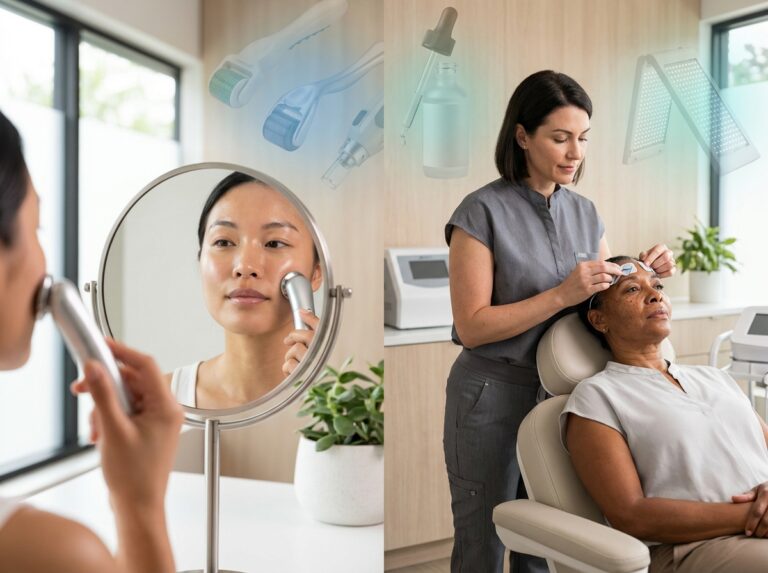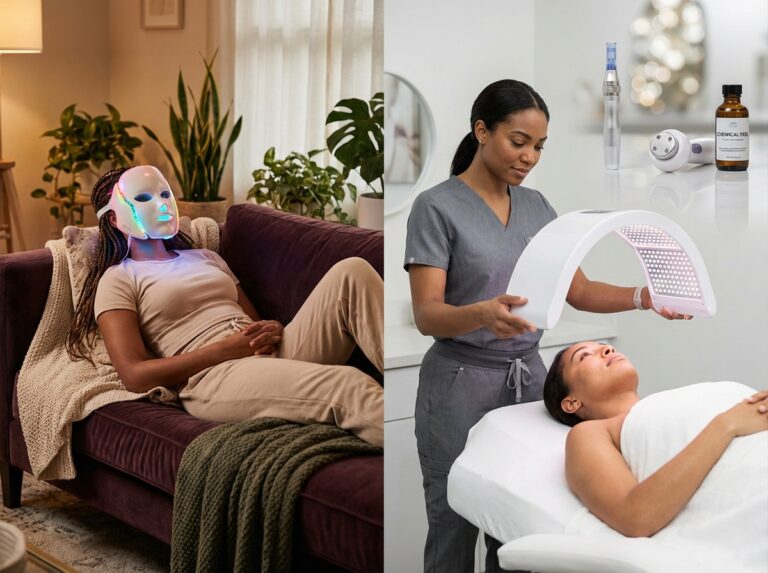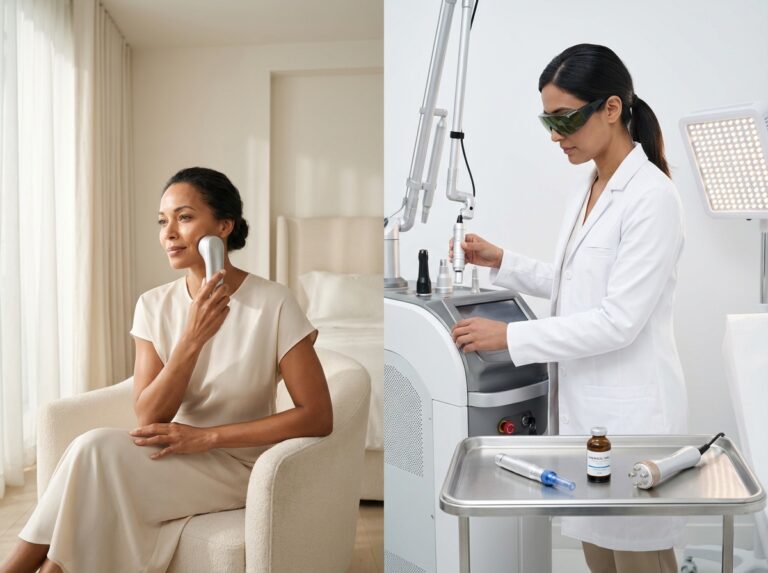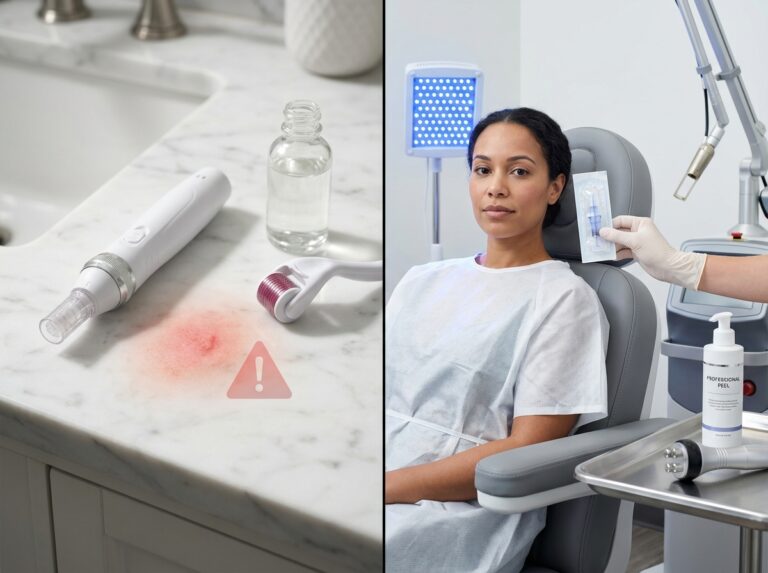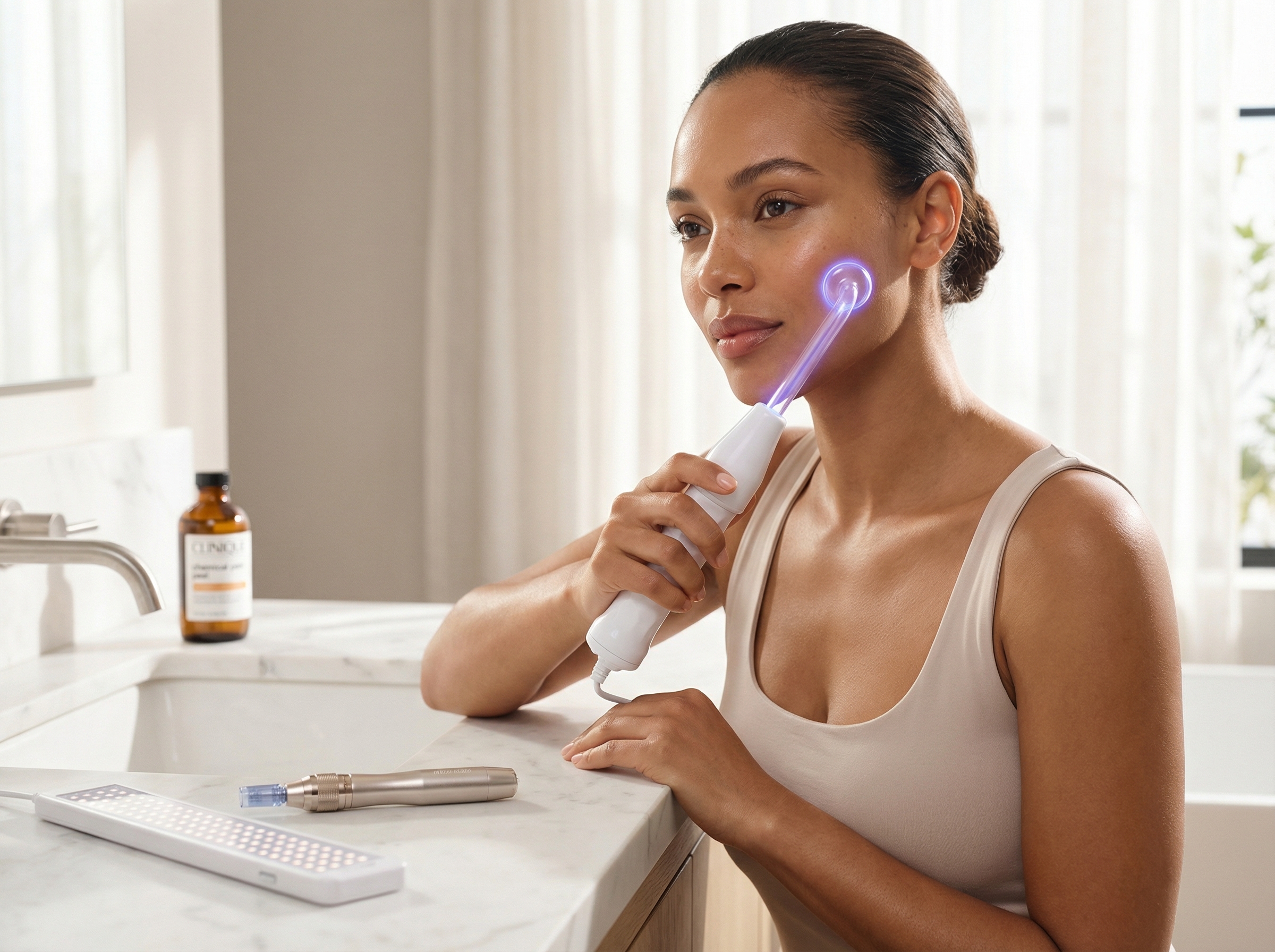
Non-invasive skin rejuvenation options have exploded in popularity for treating acne and early aging. This guide focuses on high-frequency wands for home use within the broader context of microneedling, laser facials, chemical peels, radiofrequency, and LED therapies. Read on for indications, expected downtime, comparative results, safety precautions, device selection tips, and protocols to get safe, evidence-informed outcomes at home.
Understanding Non-Invasive Skin Rejuvenation and High-Frequency Technology
Now that we understand the science behind the violet and orange glow, we need to talk about practical application. Having a high-frequency wand in your bathroom drawer is useless if you don’t know how to use it safely, and it can be counterproductive if you use it incorrectly. This isn’t a device you just turn on and drag across your face hoping for the best.
Safety First: The Pre-Use Checklist
Before you even plug the device in, you need to run through a mental checklist. High-frequency technology relies on electrical current and thermal energy. While home devices are much lower power than the machines seen in professional offices, they still carry risks.
Contraindications and Warning Signs
Do not use this device if you have a pacemaker or any implanted electrical device. The current can interfere with the signal. Avoid use if you are pregnant or breastfeeding, as ethical testing on these groups simply doesn’t exist. If you have a history of epilepsy, the flickering light and electrical stimulation can be a trigger.
Skin Condition Checks
Look at your skin closely. Do not use the wand over broken capillaries (spider veins) or rosacea, as the heat can worsen dilation. Avoid open wounds or sores. If you have active, weeping cystic acne, you need to be careful—high frequency is for surface inflammation, not deep, fluid-filled cysts that might rupture. Also, if you have taken isotretinoin (Accutane) in the last six months, your skin barrier is likely too fragile for this treatment.
Metal and Water Hazards
Remove all metal jewelry. This includes nose rings, earrings, and necklaces. Metal conducts electricity, and you don’t want the current jumping to your jewelry. If you have heavy dental work (fillings, braces, permanent retainers), you may experience a metallic taste or uncomfortable conduction if treating the jawline. You can place a piece of dry cotton gauze between your cheek and teeth to break the conductive path. Finally, never use this device near water or on soaking wet skin.
Protocol 1: Managing Acne Breakouts
This is the most common reason people buy these wands. You are looking for the violet-colored electrode (Argon gas). The goal here is to create an oxygen-rich environment on the skin’s surface that kills P. acnes bacteria and reduces inflammation.
Step 1: Preparation
Wash your face thoroughly. Your skin must be clean and completely dry. Any water left on the skin can cause an uncomfortable stinging sensation. If you have a lot of drag on your skin, you can place a piece of dry gauze over the area you are treating. This helps the electrode glide and creates a small gap that facilitates ionization (ozone formation).
Step 2: Device Setup
Insert the mushroom electrode (for cheeks/forehead) or the small spot electrode (for specific pimples). Turn the dial to the lowest setting before placing it on your skin. Place your finger on the glass electrode to “ground” it, touch it to your face, and then release your finger. This prevents that initial shocking zap.
Step 3: The Treatment
Move the wand in small circular motions over the affected zones. Do not stay in one spot for too long (no more than 3–5 seconds). For active breakouts, you can use a technique called “sparking” with the spot electrode: tap the electrode lightly against the blemish for a few seconds, pulling it away slightly to create a tiny spark. This concentrates the ozone.
Step 4: Duration and Frequency
Keep the session short. Spend about 1 to 3 minutes per zone (e.g., left cheek, right cheek, chin). The total time shouldn’t exceed 10 minutes. Initially, do this 2 to 3 times per week. You are not trying to burn the acne off; you are trying to sanitize the environment.
Expected Outcomes
Consistency is key. You typically see a reduction in redness and inflammation within 4 to 8 weeks. Existing pustules often dry out and heal faster—sometimes cutting healing time by half—but don’t expect deep hormonal cysts to vanish overnight.
Protocol 2: Anti-Aging and Skin Brightening
For aging concerns, you generally want the orange/red glow (Neon gas). This wavelength promotes mild thermal heating, which stimulates blood circulation and fibroblast activity.
Routine Adjustments for Aging
Use the mushroom attachment. The motion should be upward and outward, moving from the center of the face toward the ears and from the brows toward the hairline. This mimics lymphatic drainage patterns. Focus on the jawline, cheeks, and forehead.
Frequency and Timing
This is a maintenance tool, not a facelift. Use it 1 to 2 times per week. A full session should take about 3 to 6 minutes. Overdoing it can overstimulate the skin and lead to irritation rather than rejuvenation.
Realistic Expectations
You might notice a temporary “tight” feeling immediately after use due to mild swelling and pore contraction. Real collagen benefits take months of cumulative use. It is subtle. Compared to in-office radiofrequency or laser, the results are minimal. Think of this as extending the life of your professional treatments rather than replacing them.
Sequencing with Other Treatments
Where does this fit in your broader routine? This is where many people go wrong.
High-Frequency and Microneedling
If you are microneedling at home (which requires its own safety protocol), use high frequency before you needle. Using the violet wand beforehand helps kill surface bacteria and reduces the risk of infection. Do not use high frequency immediately after microneedling. Your skin channels are open, and the electrical current and ozone can cause severe stinging and irritation. Wait until the skin barrier has closed, typically 48 to 72 hours.
Chemical Peels and Retinoids
Avoid high frequency immediately after a chemical peel. Even a superficial peel leaves the skin sensitive. Wait at least 48 to 72 hours, or until any peeling has stopped. Regarding retinoids (like tretinoin) or strong acids (glycolic/salicylic), skip them for 24 hours before and after your high-frequency session to avoid compounding irritation.
Combining with LED Therapy
This is a safe and effective combination. You can use your LED mask immediately after high frequency. The high frequency targets bacteria and circulation, while the LED (red or blue) works on cellular energy and further inflammation reduction. They work via different mechanisms and don’t conflict.
Device Care and Safety Tips
These devices are fragile. The electrodes are made of thin glass.
Cleaning the Electrodes
After every single use, wipe the glass electrode with 70% alcohol. Do not submerge them in water. Let them dry completely before storing them in their box to prevent breakage.
Eye Protection
When treating the forehead or upper cheeks, protect your eyes. You don’t need blackout goggles, but keep the electrode away from the immediate eye area (inside the orbital bone). The electrical current can cause muscle twitching around the eye, which is uncomfortable and unnecessary.
Adverse Reactions
Normal reactions include a metallic smell (ozone), mild redness, and a tingling sensation. If your skin stays red for more than an hour, or if you feel a burning sensation that persists, you used a setting that was too high. Stop use. Apply a soothing, bland moisturizer and give your skin a week to recover.
Choosing the Right Device
The market is flooded with cheap knock-offs. Since you are applying electricity to your face, quality matters.
What to Look For
Check for a grounded plug and adjustable intensity dial. You want a device that operates within the 60-250 kHz range. Anything lower is ineffective; anything higher belongs in a doctor’s office. Ensure the brand offers replaceable electrodes because the glass will eventually break. While wireless models exist, corded models generally deliver more consistent power output over the duration of a treatment.
Reputable Options
Based on testing and reviews from late 2025, the NuDerma High-Frequency Wand remains a solid standard. It usually scores well for ease of use and durability. Another reliable option is the Project E Beauty Faisca, which often includes both neon and argon gas options. StackedSkincare also offers devices with established safety records.
Cost and Time: A Reality Check
Let’s compare this to professional treatments so you can manage your expectations.
| Feature | At-Home High Frequency | Professional Treatment |
|---|---|---|
| Cost | $70 – $150 (One-time purchase) | $100 – $300 (Per session) |
| Time Commitment | 3-10 minutes, 3x/week | 30-60 minutes, monthly |
| Downtime | None to minimal redness | Varies (None to several days) |
| Power/Intensity | Low (Safe for amateurs) | High (Medical grade) |
If you are dealing with mild congestion or want to maintain the results of a professional facial, a home wand is a reasonable investment. It requires patience and consistency. If you have deep wrinkles or severe acne, save your money for a dermatologist. The home wand won’t fix structural skin issues, but it can be a helpful tool in a well-rounded skincare routine.
Frequently Asked Questions
Bringing an electrical device into your bathroom routine naturally raises safety and efficacy questions. The following answers address the most common concerns regarding at-home high-frequency wands, based on current product safety standards and clinical evidence as of late 2025.
Safety and Skin Suitability
Is high-frequency safe for all skin types and tones?
High-frequency is generally considered safe for all Fitzpatrick skin types (I through VI) because it does not rely on chromophores (pigment targets) like many laser treatments do. The mechanism is electrical oscillation and oxygenation, not light absorption by melanin. However, darker skin tones are more prone to Post-Inflammatory Hyperpigmentation (PIH). While the device itself does not target pigment, overuse or using an intensity setting that is too high can cause inflammation. If you irritate the skin, that irritation can heal as a dark spot. Always start on the lowest setting and perform a patch test behind the ear or on the neck 24 hours before treating the face.
Can I use this during pregnancy or while breastfeeding?
No. High-frequency devices are contraindicated during pregnancy. While the current is low-voltage and localized, there is insufficient data to prove safety for the fetus. Most manufacturers and dermatologists strictly advise against using electrical modalities during pregnancy. If you are breastfeeding, the risk is lower, but you should consult your physician before introducing any electrical therapy.
Treating Acne and Blemishes
Can high-frequency treat cystic acne?
No. This is a critical distinction. High-frequency wands work by generating ozone (enriched oxygen) on the skin’s surface, which creates an antibacterial environment ideal for killing C. acnes bacteria. This works well for surface-level pustules, whiteheads, and general congestion. Cystic acne and nodules form deep within the dermis, far below the reach of the surface ozone or the mild thermal effect of a home device. Attempting to “burn out” a deep cyst by holding the wand over it will only damage the surface skin, leading to crusting and potential scarring without resolving the deep infection.
Can I use the wand on “picked” or broken skin?
You should never use the wand directly on an open wound or a pimple you have just picked or popped. The device increases blood flow, which can cause a fresh wound to bleed more or become more inflamed. Furthermore, the electrode is not sterile. Placing a non-sterile glass tube on an open lesion introduces a risk of secondary infection. Wait until the skin has formed a seal or scab before treating the area to speed up healing.
Anti-Aging and Maintenance
How long does it take to see results for fine lines?
Expectations must be managed carefully here. While you may see a temporary “plumping” effect immediately after treatment due to increased circulation and slight edema (swelling), real collagen stimulation takes time. Home devices operate at a much lower power (typically 60-250 kHz) compared to professional machines. You are looking at cumulative benefits over 3 to 6 months of consistent weekly use. The results will be subtle—a refinement of skin texture and tone rather than the erasure of deep wrinkles.
Does it replace Botox or fillers?
It does not. Botox works by freezing muscle movement; fillers work by adding volume. High-frequency works by stimulating circulation and oxygenation. They operate on completely different physiological pathways. High-frequency is better viewed as a skin health maintenance tool that improves the canvas of the skin, whereas injectables alter the structure or movement beneath it.
Usage and Routine Integration
Can children or teenagers use these devices?
Teenagers with mild acne can use high-frequency wands, but strict adult supervision is required. The risk is not necessarily the electricity itself, but user error—teens often believe that “turning it up to 10” will clear acne faster. This leads to burns. A parent should set the intensity (starting at the lowest dial) and monitor the duration to ensure they do not hold the wand in one spot for too long.
Why does the wand smell like rain?
That metallic “storm” smell is ozone (O3). The electrical current ionizes the oxygen in the air between the electrode and your skin. This ozone is exactly what kills the bacteria. It is normal and indicates the device is working. However, you should use the device in a ventilated room, as inhaling high concentrations of ozone directly is not recommended for respiratory health.
Can I use it on other parts of the body?
Yes. The “mushroom” electrode is often used for back acne (bacne) or chest breakouts. The same rules apply: clean dry skin, keep the wand moving, and do not use over metal jewelry or tattoos that are healing. Note that body skin is thicker, so you might need a slightly higher setting than on the face, but always start low.
Does high-frequency help with dark circles?
It can help with puffiness due to lymphatic drainage, but it will not fix dark circles caused by pigmentation or hollow tear troughs. If your dark circles are vascular (blue/purple due to thin skin), the increased circulation might temporarily brighten the area, but it is not a permanent fix. Use the spoon or tongue electrode for the under-eye area and keep the intensity very low to avoid twitching the delicate eye muscles.
Final Takeaways and Practical Next Steps
We have walked through the mechanics, the safety profiles, and the specific questions regarding high-frequency therapy. Now we arrive at the point of action. Understanding the theory is useful, but knowing exactly how to integrate a glass electrode wand into a Tuesday night routine is what actually changes your skin.
The market in late 2025 is saturated with devices promising clinical results in a handheld format. The reality is more nuanced. High-frequency wands are excellent tools for specific, surface-level maintenance, but they are not magic erasers for structural skin issues. This chapter consolidates everything into a decision framework and a concrete schedule to ensure you get results without compromising your skin barrier.
Decision Matrix: Home Wand vs. Professional Treatment
Before you purchase a device, you must assess the severity of your skin concerns. Home devices operate at a much lower power compared to the medical-grade machines used in professional offices. This safety cap prevents burns but also limits the depth of treatment.
Use the following logic to decide where to invest your time and money.
| Skin Concern | Home High-Frequency Wand | Professional Treatment (Dermatologist/Esthetician) |
|---|---|---|
| Acne Type | Best for mild to moderate inflammatory acne (papules, pustules) and surface congestion. | Required for nodulocystic acne, deep cysts, or widespread infection. Home devices cannot penetrate deep enough to treat cysts effectively. |
| Aging Signs | Effective for early prevention, fine lines, and maintaining skin tension (tightening effect). | Necessary for deep rhytides (wrinkles), significant sagging (jowls), or volume loss. |
| Pigmentation | Can help reduce post-inflammatory hyperpigmentation (PIH) by speeding up healing. | Required for melasma, deep sun damage, or significant dyschromia. Lasers or chemical peels are superior here. |
| Expectations | Cumulative, subtle improvements over 6–12 weeks. Maintenance is ongoing. | Faster, more dramatic results, often visible after 1–3 sessions depending on the modality. |
If your skin profile fits the left column, a home device is a sensible addition. If you align more with the right column, a home wand will likely lead to frustration. In those cases, save the $100 you would spend on a device and put it toward a professional consult.
A Practical First-Month Protocol
Consistency beats intensity. A common mistake is using the wand daily at high power, which dehydrates the skin and triggers more oil production. Follow this pacing guide for the first four weeks.
Week 1: Introduction and Patch Test
Perform a patch test on your neck or jawline. Run the device for 30 seconds on the lowest setting. Wait 24 hours to ensure no adverse reaction occurs. If clear, perform one full-face session this week. Keep the intensity low (you should barely feel the zap).
Duration: 2 minutes total.
Week 2: Building Tolerance
Increase to two sessions this week, spaced at least three days apart (e.g., Monday and Thursday). You can slightly increase the intensity dial, but it should never be painful. The sensation should be a warm tingle.
Duration: 3 minutes total.
Week 3: Targeted Treatment
If treating acne, you can move to three sessions a week. Use the “sparking” method (tapping the electrode on the blemish) for stubborn pimples, but do not exceed 10 seconds per spot. For anti-aging, stick to two sessions a week, focusing on upward circular motions.
Duration: 3–5 minutes total.
Week 4 and Beyond: Maintenance
Settle into a rhythm. For acne, continue 2–3 times weekly until clear, then drop to once a week for maintenance. For aging, 1–2 times weekly is sufficient.
Duration: 5–8 minutes total (never exceed 10 minutes per session).
Tracking Progress and When to Stop
The changes from high-frequency are cumulative. You will not wake up the next morning with a new face. To accurately gauge if the device is working, you need objective data.
The 6–12 Week Log
Take a photo of your bare skin in natural light on Day 1. Do not rely on your memory or the bathroom mirror. Take subsequent photos every two weeks in the same lighting.
What to look for: In acne cases, look for a reduction in the lifespan of a pimple (does it heal in 3 days instead of 7?) rather than just the number of breakouts. For aging, look for subtle improvements in skin texture and a reduction in morning puffiness.
When to Stop or Pause
If you experience persistent redness that lasts more than 30 minutes after use, your intensity is too high or your skin is too sensitive. If you notice excessive dryness or flaking, you are overusing the device—cut back frequency immediately. If you see no improvement after 12 weeks of consistent use, your skin concern may be deeper than the dermis, and it is time to consult a professional.
Final Recommendation
High-frequency is a valuable tool in the home-care arsenal, bridging the gap between topical skincare and clinical procedures. It empowers you to manage minor flare-ups and maintain collagen health without downtime. However, it is not a replacement for medical intervention. If your acne worsens, becomes painful, or if you notice changing pigmentation, put the wand down and see a board-certified dermatologist. Your skin’s health is always the priority over the convenience of a gadget.
Sources
- NuDerma High-Frequency Wand Review, Tested in 2026 – PureWow — The NuDerma high-frequency wand is a handheld facial device that uses mild electric currents to help increase blood flow and collagen production …
- The 5 best high frequency wands and how they work 2025 — This at-home tool targets a variety of skin concerns, including acne, pigmentation, and even hair loss. Here's the expert verdict on the …
- Evaluation of the Safety and Efficacy of Continuous Use of a Home … — This study was conducted to evaluate the safety and efficacy of one-month continuous use of a home-use high-frequency facial treatment appliance, the NEWA.
- 6 Best High Frequency Wands for Skin (Tested & Reviewed for 2025) — Two licensed aestheticians share their top picks for best high frequency facial wands of 2025 along with the best ways to use a wand to …
- High-frequency wand: How to use it and maximize results — A high-frequency wand may offer benefits for skin appearance, including reducing fine lines or wrinkles and acne. However, more research is …
- I Tried the Most Popular At-Home Beauty Devices – Here's What Works — … 2025, including LED light masks, microcurrent tools, microneedling rollers, and laser hair removal devices. We … High frequency wands 10:22 At- …
- 5 Best High Frequency Wands, Plus How to Use Them — I asked the experts all about high frequency wands and how these skincare tools work. Plus, I rounded up the best high frequency wands on …
Legal Disclaimers & Brand Notices
This content is provided for informational purposes only and does not constitute professional medical advice, diagnosis, or treatment. Always seek the advice of your physician or another qualified healthcare provider with any questions you may have regarding a medical condition or specific aesthetic procedures. Never disregard professional medical advice or delay in seeking it because of something you have read in this article.
All product names, logos, and brands mentioned in this text, including but not limited to Botox, are the property of their respective owners. All company, product, and service names used in this article are for identification purposes only. Use of these names, trademarks, and brands does not imply endorsement, affiliation, or certification by the trademark holders.