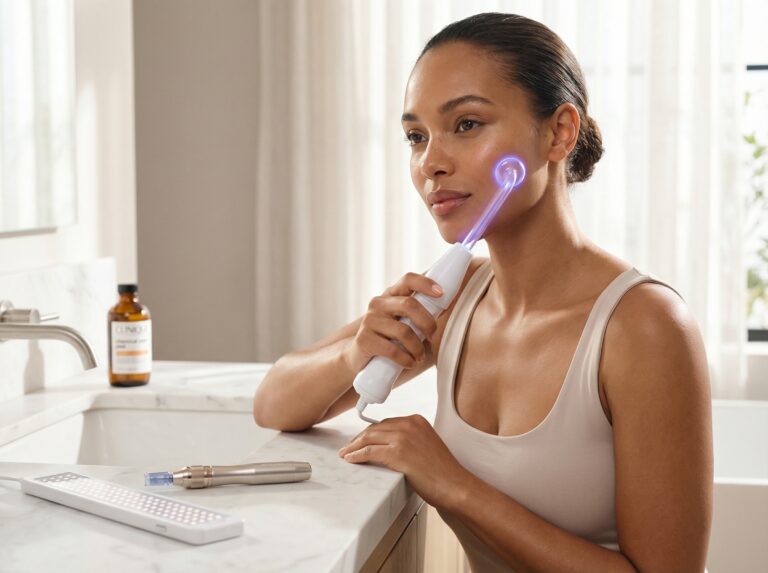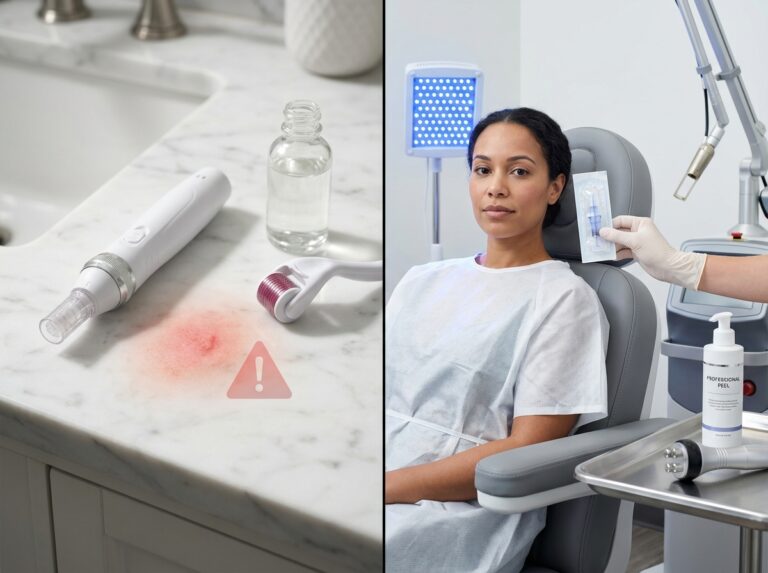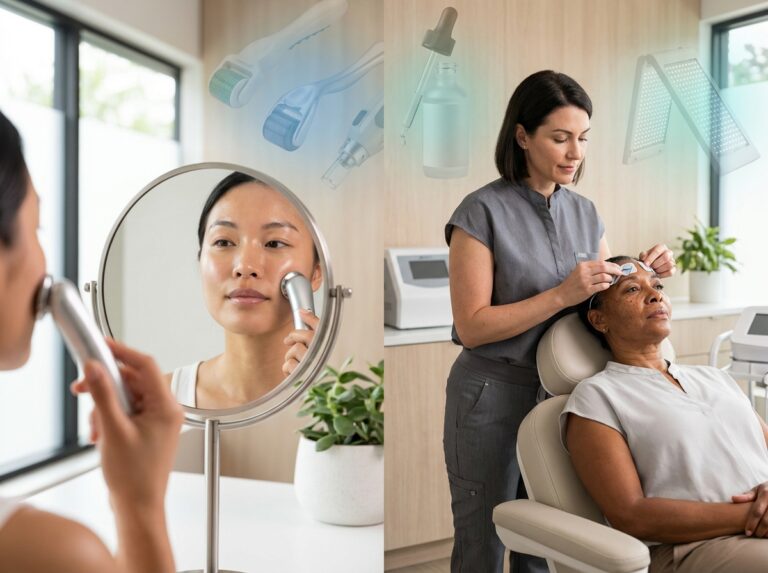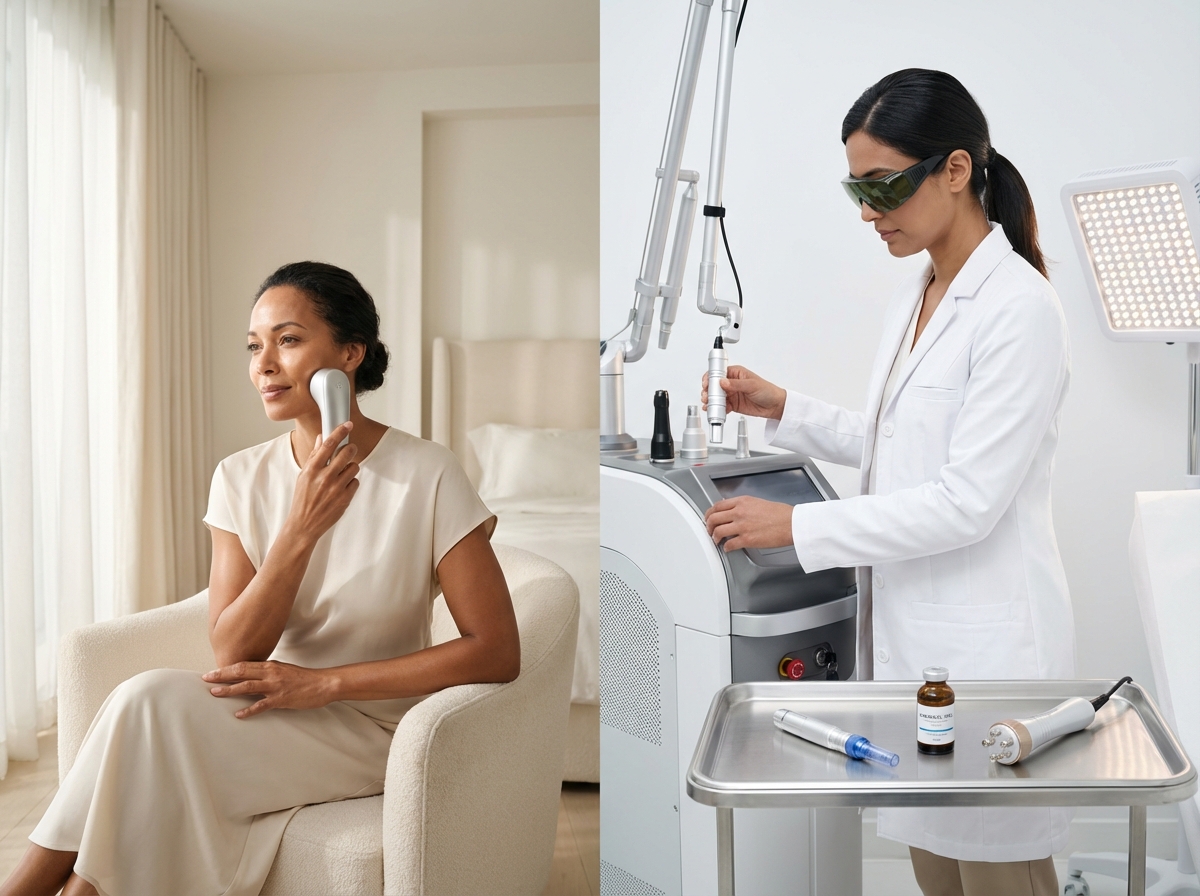
Non-invasive skin rejuvenation is booming—from microneedling and chemical peels to professional lasers, RF, and home devices like the Lyma Laser. This article examines how each option works, expected downtime and results, and whether a high-end home laser justifies its cost. Read on for evidence-based comparisons, safety advice, and practical recommendations for U.S. consumers.
How non-invasive skin rejuvenation works and what it treats
Before examining specific devices like the Lyma Laser, it is essential to understand the landscape of non-invasive treatments available in 2025. We categorize these by how they interact with your biology. Most professional treatments rely on the principle of controlled injury: damaging the skin slightly to force it to repair itself stronger and tighter. Others use light to stimulate cellular energy without damage. Here is how the major modalities work.
Microneedling
Mechanism of Action
Often called collagen induction therapy, this modality uses a device with fine needles to create thousands of microscopic channels in the dermis. This physical trauma triggers a wound-healing cascade. The body repairs these micro-injuries by producing new collagen and elastin.
Indications and Patient Profile
This is a primary treatment for textural issues, including acne scars, enlarged pores, and fine lines. It is generally safe for all Fitzpatrick skin types (I–VI) because it does not rely on thermal energy, meaning darker skin tones have a significantly lower risk of hyperpigmentation compared to lasers.
Results and Downtime
Patients typically appear sunburned for 24 to 48 hours. Pinpoint bleeding is normal during the procedure. Results are not immediate; changes appear over three to six months as new collagen forms. Most protocols recommend three to six sessions spaced four weeks apart.
Chemical Peels
Mechanism of Action
Acids are applied to the skin to dissolve the bonds holding dead skin cells together. Superficial peels (glycolic, salicylic) exfoliate the stratum corneum. Medium-depth peels (TCA) penetrate the papillary dermis to force significant regeneration.
Indications and Patient Profile
Superficial peels address dullness and mild acne. Medium peels address melasma, sun spots, and deeper wrinkles. Fitzpatrick types IV–VI must exercise extreme caution with medium or deep peels due to the risk of permanent pigmentary changes.
Results and Downtime
Superficial peels result in zero to two days of flaking. Medium peels involve significant peeling for seven to ten days. Visible results typically require a series of three to six superficial peels, whereas a medium peel might only require one or two sessions annually.
Laser Facials
Mechanism of Action
Lasers work through selective photothermolysis. The device emits a specific wavelength of light that targets a chromophore—water, melanin, or hemoglobin. The light converts to heat and destroys the target.
Types of Laser Treatments
Broadband Light (IPL) uses scattered light to target redness and brown spots. Non-ablative fractional lasers heat columns of tissue to stimulate collagen without breaking the surface. Ablative fractional lasers vaporize tissue for heavy-duty resurfacing.
Indications and Patient Profile
IPL is effective for rosacea and sun damage but is generally unsafe for Fitzpatrick IV–VI. Non-ablative lasers treat fine lines and texture with moderate safety across skin types. Ablative lasers are for deep wrinkles and severe scarring but carry the highest risk profile.
Results and Downtime
IPL has minimal downtime. Non-ablative lasers cause redness and swelling for several days. Ablative lasers require one to two weeks of recovery. Results from ablative lasers are dramatic and often visible after one session, while non-ablative options usually require a series.
Radiofrequency (RF)
Mechanism of Action
RF uses electrical current to generate heat within the dermis. This bulk heating causes immediate contraction of existing collagen fibers and stimulates the production of new ones, focusing on structural tightening rather than surface texture.
Indications and Patient Profile
RF is the standard for mild to moderate skin laxity and jowling. It is considered “colorblind” technology because the energy bypasses melanin in the epidermis, making it one of the safest options for Fitzpatrick types IV–VI.
Results and Downtime
Surface RF has minimal downtime. Microneedling RF (where needles deliver the heat) involves a few days of redness and grid marks. Protocols typically require three to four sessions, with full results manifesting over three to six months.
LED Phototherapy
Mechanism of Action
Light Emitting Diodes use photobiomodulation. Specific wavelengths (usually blue, red, or near-infrared) enter skin cells and stimulate mitochondria to increase ATP production. This provides cells with energy to function and repair without producing heat or damage.
Indications and Patient Profile
Blue light targets acne bacteria. Red and near-infrared light reduce inflammation and support collagen production. It is safe for all skin types.
Results and Downtime
There is zero downtime. Results are subtle and cumulative, requiring consistent sessions (often weekly or bi-weekly) over months. It is best utilized as a maintenance therapy rather than a corrective one.
Safety and Guidelines
Pre-Procedure Care
Sun protection is mandatory before any energy device treatment. Tanned skin absorbs laser energy differently, increasing burn risk. Discontinue retinoids and exfoliating acids three to seven days before treatment.
Post-Procedure Care
The skin barrier is often compromised. Use gentle cleansers and bland moisturizers. Avoid active ingredients like Vitamin C or AHAs until the skin heals. Strict sun avoidance is critical to prevent post-inflammatory hyperpigmentation (PIH).
When to Refer
Consult a board-certified dermatologist if you have a history of keloid scarring, active acne flare-ups, or melasma. Melasma can worsen with heat-based treatments if not managed correctly.
Comparison of Modalities
| Modality | Primary Target | Efficacy (1-10) | Downtime | Sessions Needed | Risk Profile |
|---|---|---|---|---|---|
| Microneedling | Texture / Scars | 7/10 | 2-3 Days | 3-6 | Low |
| Chemical Peels | Tone / Glow | 5/10 (Superficial) 8/10 (Medium) |
0-10 Days | 1-6 | Moderate |
| IPL | Redness / Pigment | 6/10 | 0-1 Days | 3-5 | Moderate (High for dark skin) |
| Non-Ablative Laser | Fine Lines | 7/10 | 3-5 Days | 3-5 | Moderate |
| Ablative Laser | Deep Wrinkles | 10/10 | 7-14 Days | 1 | High |
| Radiofrequency | Laxity / Tightening | 7/10 | 0-3 Days | 1-4 | Low |
| LED Therapy | Inflammation | 3/10 | None | Ongoing | Very Low |
Understanding Lyma and at-home high-end laser devices
The market for at-home beauty devices has shifted significantly, moving from simple vibrating rollers to tools that mimic clinical machinery. The Lyma Laser sits at the top of this hierarchy in terms of price and promises, marketing itself as a clinic-grade laser for home use. To understand if this $2,695 to $6,000 investment is viable, we must examine the engineering and biology.
Technical Specifications and Mechanism
The Lyma Laser and its stronger sibling, the Lyma Laser PRO, operate differently from the fractional or IPL lasers discussed previously. While in-office lasers use heat to create controlled damage (selective photothermolysis), Lyma uses Low-Level Laser Therapy (LLLT), also known as cold laser or photobiomodulation.
Wavelength and Power
The device emits a near-infrared laser beam at 808nm. This wavelength penetrates deeper than visible red light, reaching the dermis where collagen production occurs. The standard model operates at 500mW, while the PRO model delivers 1450mW. Unlike LED masks which scatter light, this is a coherent, monochromatic laser beam. It does not rely on heat, so users feel no sensation or burn.
Photobiomodulation Explained
Instead of thermal injury, this technology acts as an energy source for cells. The 808nm light is absorbed by mitochondria, stimulating the production of Adenosine Triphosphate (ATP). Increased ATP provides cells with the energy needed to regenerate, produce collagen, and downregulate inflammation. This technology was originally used in sports medicine for joint healing before adaptation for aesthetics.
Regulatory Status
As of December 2025, the Lyma Laser is FDA-cleared. It is important to distinguish between “cleared” and “approved.” Clearance via a 510(k) pathway indicates the manufacturer demonstrated the device is substantially equivalent to a predicate device already on the market. This confirms safety and equivalence but does not necessarily validate every specific marketing claim regarding the speed of skin transformation.
Assessing the Clinical Evidence
Data on the Lyma Laser specifically is less abundant than its marketing suggests. There are currently no large-scale, independent, double-blind, randomized controlled trials published in major medical journals specifically for the Lyma consumer device that compare it directly to standard in-office lasers like Fraxel or Thermage.
Extrapolated Evidence
Efficacy claims rely heavily on the broader body of research surrounding LLLT. Studies on 808nm cold lasers in clinical settings have shown positive results for wound healing, inflammation reduction, and collagen synthesis. We can infer that if the home device delivers the stated energy density, it should trigger similar biological pathways. However, the gap between a hospital-grade cold laser and a handheld battery-operated unit is where consumer expectations often falter.
User Experience and Protocols
The most critical factor with Lyma is compliance. Because it is a low-energy, non-thermal device, results are cumulative.
- Daily Commitment: The standard protocol requires daily use for at least 12 weeks. Treating the entire face and neck can take 30 to 60 minutes daily.
- Sensation and Safety: The treatment is painless, with no snapping sensation or heat. This ensures safety but can be unsatisfying for users who equate pain with efficacy.
- Visible Results: Do not expect immediate changes. Users typically report a “glow” after a few weeks due to increased circulation, while structural changes like tightening or wrinkle reduction usually appear after 3 to 6 months of consistent use.
Cost and Value Comparison
The price point is the primary barrier. The standard Lyma Laser PRO kit retails around $5,995, while the original model sits near $2,695.
Comparing to In-Office Procedures
For $3,000, a patient in the U.S. can typically purchase a series of three to four non-ablative laser sessions (like Clear + Brilliant or Laser Genesis) or one significant thermomechanical treatment (like Ultherapy).
- In-Office Value: Professional treatments offer faster, more dramatic results, leveraging the doctor’s expertise and high-powered machinery. The downside is the need for appointments and potential downtime.
- At-Home Value: The Lyma device has a lifespan of roughly 10 years. If used daily for five years, the cost per session is negligible. However, the “lifestyle tax” of spending 30 minutes a day is significant. Additionally, the “Glide” gel or similar conductive medium adds a recurring cost of $30 to $60 per month.
Candidacy and Safety Profile
Cold laser technology excels in safety across the spectrum of skin tones.
Fitzpatrick Skin Types I–VI
Because the 808nm laser does not target melanin to generate heat, it is safe for Fitzpatrick skin types IV, V, and VI. There is virtually no risk of Post-Inflammatory Hyperpigmentation (PIH), a major concern with thermal lasers and IPL on darker skin.
Contraindications
Avoid using the device over the thyroid gland (neck area), known malignancies, or suspicious moles. It is contraindicated for those who are pregnant (as effects on fetal development are not established), those with light-induced seizures, or those taking photosensitizing medications.
Verdict Framework: Is It Right for You?
Buy it if:
You have a high budget and a low tolerance for pain or downtime. You possess the discipline to use a device for 30 minutes daily. You have darker skin and fear the pigmentation risks of professional heat-based lasers. You view skincare as a long-term maintenance strategy rather than a quick fix.
Skip it if:
You require immediate results. You struggle to maintain a daily routine. You prefer the “one and done” approach of clinical visits. You are on a budget where $2,700 represents a significant strain; in this case, professional microneedling or prescription retinoids offer a superior return on investment.
The Lyma Laser is a legitimate application of photobiomodulation technology, but it is not a magic wand. It is a slow, steady tool for cellular health that demands patience and consistency to justify its premium price tag.
Choosing the right treatment for your concerns: practical comparison and decision guide
Selecting the right skin rejuvenation method requires balancing your tolerance for downtime, pain threshold, and budget against the severity of your skin concerns. While marketing often blurs the lines between home devices and medical procedures, the biological mechanisms are distinct.
Matching the Modality to the Concern
Different skin issues respond to specific forms of energy and injury. A device that excels at treating pigment might do very little for deep structural sagging.
Fine Lines and Deep Wrinkles
For etched-in lines, ablative or non-ablative fractional lasers (like Fraxel or CO2) in a clinical setting remain the gold standard because they physically vaporize or coagulate tissue to force rapid collagen remodeling.
Home Device Role: The LYMA Laser PRO (1450mW) or standard model (500mW) uses LLLT at 808nm. This does not damage tissue but stimulates bio-stimulation over months. It is better suited for maintenance or for those who cannot tolerate the recovery of CO2 lasers.
Loss of Firmness and Jowls
Radiofrequency (RF) and Ultrasound (Ultherapy) are the preferred medical modalities here. Heat must penetrate deep into the dermis (60-70°C) to denature collagen and cause tightening.
Home Device Role: Most home RF devices are underpowered for significant lifting. The Lyma laser claims to reach the base layer of the dermis without heat, but for significant jowl lifting, in-office RF microneedling (like Morpheus8) provides a more drastic mechanical and thermal intervention.
Acne Scarring and Texture
Physical remodeling is necessary to break up scar tissue. Microneedling (in-office) is highly effective and cost-efficient as it physically breaks collagen bundles.
Home Device Role: Cold lasers can help reduce the inflammation of active acne and speed up healing, but they do not physically break down pitted scar tissue as effectively as needles.
Melasma and Hyperpigmentation
Heat is the enemy of melasma. High-energy thermal lasers can trigger rebound pigmentation. Chemical peels (TCA, VI Peel) and microneedling are often safer than heat-based lasers.
Home Device Role: This is where cold lasers like Lyma have a distinct safety advantage. Because the 808nm beam is coherent but non-thermal, it does not trigger the inflammatory heat response that worsens melasma in darker skin tones.
Practical Comparison: In-Office vs. At-Home
To make an informed financial decision, you must look at the “Total Cost of Ownership” over one year, not just the single session price.
| Modality | Pain Level (1-10) | Downtime | Est. Annual Cost (US) | Best For |
|---|---|---|---|---|
| Pro Microneedling | 4 (Numbing used) | 2-4 Days (Redness) | $1,200 – $2,500 (Series of 3-6) | Texture, Scars, Pores |
| RF Microneedling | 7 (Numbing/Nitrox) | 3-7 Days (Swelling) | $2,400 – $4,500 (Series of 3) | Sagging, Deep Wrinkles |
| Chemical Peels | 3-6 (Stinging) | 3-10 Days (Peeling) | $900 – $1,500 (Series of 3) | Pigment, Glow |
| Lyma Laser (Home) | 0 (Sensationless) | None | $2,695 – $5,995 (One-time) | Thin skin, Rosacea, Maintenance |
Cost Context
In-office procedures require repeat “maintenance” sessions every 6 to 12 months. A device like the Lyma Laser PRO costs roughly the same as a full course of RF Microneedling ($6,000 range). The value proposition of the home device depends entirely on your discipline to use it daily. If it sits in a drawer, the cost per session is infinite.
Safety for Darker Skin Tones (Fitzpatrick IV-VI)
The risk of Post-Inflammatory Hyperpigmentation (PIH) is the primary concern for melanin-rich skin.
The Heat Risk
Traditional lasers (IPL, some fractional lasers) target pigment. In darker skin, the device cannot distinguish between the “target” sunspot and the natural skin color, leading to burns or permanent dark patches.
Safe Options: Microneedling is color-blind (mechanical only). Radiofrequency is generally safe as it targets water/collagen, not pigment. Cold lasers (Lyma) are theoretically the safest optical option because they generate zero heat, removing the thermal trigger for PIH.
Decision Checklist
Before booking an appointment or purchasing a high-end device, run through this verification list.
- Define the Primary Deficit
Is it surface pigment (Peels/Lyma), texture (Microneedling), or deep volume loss (Fillers/RF)? A laser cannot fix volume loss. - Calculate the “Real” Budget
For in-office: Add the cost of the initial series plus one maintenance session per year.
For home devices: Can you pay $2,695+ upfront? If financing (e.g., $499/month), does that fit your monthly cash flow better than saving for a yearly procedure? - Check the Technology Specs
If buying a home laser, verify the wavelength. It should be 808nm or similar for deep penetration. Check the power output. Many cheap “lasers” are actually LEDs. Lyma uses a 500mW or 1450mW coherent laser diode, which justifies the price gap compared to $300 LED masks. - Consult a Board-Certified Dermatologist
Even if you plan to treat at home, a diagnosis is vital. Treating a spot that looks like hyperpigmentation but is actually a lentigo maligna (melanoma) with a home laser will delay life-saving treatment. - Look for Red Flags
Avoid clinics or device sellers that promise “permanent” results with one session or claim to lift sagging muscle with topical light. If a device manufacturer does not list their specific wavelength and power density, assume it is underpowered.
Common questions consumers ask and expert answers
Consumers often find themselves paralyzed by choice when navigating the crowded market of aesthetic devices. Below are evidence-backed answers to frequent inquiries regarding the gap between professional care and premium home tools like the Lyma Laser.
How do I know which treatment is best for my concern?
Diagnosis drives the treatment. You cannot treat structural sagging with a topical laser, and you cannot treat deep volume loss with a chemical peel. If your primary concern is surface-level pigment or dullness, chemical peels and superficial lasers are standard. For textural issues like acne scars, microneedling triggers collagen induction effectively. If you are seeing jowls or significant laxity, energy-based devices that reach the deep dermis or SMAS layer (Ultherapy, Morpheus8) are required. Home devices like Lyma are better suited for general skin health, calming inflammation, and slow, cumulative improvement rather than corrective structural work.
Action Item
Stand in front of a mirror with good lighting. Lift your skin gently. If the issue disappears with a slight lift, it is laxity (needs RF or Ultrasound). If the issue remains (spots, etched lines), it is surface texture (needs lasers, peels, or microneedling). Schedule a consultation with a board-certified dermatologist to confirm this assessment.
Are home lasers like Lyma as effective as in-office treatments?
No, and they are not designed to be. In-office lasers work by “controlled damage,” delivering high energy to heat water or hemoglobin in the skin. This requires power levels that would be unsafe for home use. The Lyma Laser PRO uses a 1450mW cold laser beam to signal cells to behave younger via photobiomodulation. Home devices are best viewed as “gym memberships” for the skin—daily maintenance that preserves quality—while in-office treatments are the “surgery” or heavy lifting.
Action Item
Adjust your expectations based on the technology. If you need dramatic results before a specific event next month, book a professional series. If you want to maintain results between clinic visits or treat chronic issues like rosacea slowly, a home device is appropriate.
How many sessions will I need to see results and how long do results last?
Professional treatments usually require a series. Microneedling typically takes 3 to 6 sessions spaced 4 weeks apart. Results from these can last 12 to 18 months. Home devices require significantly more volume. The Lyma protocol demands daily use (15-30 minutes) for at least 12 weeks to see visible changes. If you stop using a home device, the cellular stimulation stops, and natural aging resumes immediately.
Action Item
Take standardized “before” photos. Use the same lighting, same time of day, and no makeup. Do this every 30 days. Without this objective data, the slow progression of home device results is often missed by the naked eye.
What is the usual downtime and when can I return to work/makeup?
Downtime varies by the depth of the injury.
- Zero Downtime: LED masks, Lyma Laser, microcurrent. You can apply makeup immediately.
- Social Downtime (Redness): Light chemical peels, Clear + Brilliant, standard microneedling. You look sunburned for 24 to 48 hours. Makeup is usually permitted after 24 hours.
- Medical Downtime: CO2 lasers, deep peels (TCA), aggressive RF microneedling. Expect swelling, scabbing, and peeling for 5 to 10 days. No makeup is allowed until the skin barrier closes, usually day 4 or 5.
Action Item
Check your calendar. Never schedule a heat-based professional treatment within two weeks of a major event. For home devices, consistency is key, so ensure you can fit the 20-minute daily routine into your schedule without skipping.
Are these treatments safe for darker skin tones and melasma?
Heat triggers melanocytes. In darker skin tones (Fitzpatrick IV-VI) or melasma-prone skin, the heat from traditional lasers or IPL can cause Post-Inflammatory Hyperpigmentation (PIH). Cold lasers like Lyma are inherently safe for all skin tones because they do not generate heat. For in-office procedures, microneedling and specific picosecond lasers are generally safe for darker skin because they rely less on thermal accumulation.
Action Item
If you have darker skin or melasma, strictly avoid IPL (Intense Pulsed Light). Always ask your provider if they have specific experience treating your skin type and request to see photos of patients with your complexion.
Can I combine treatments and how should they be spaced?
Stacking treatments is the gold standard for modern rejuvenation, but timing is everything.
- Home + Office: You can use the Lyma laser or LED masks to speed up healing after in-office microneedling or laser, often starting 24-48 hours post-procedure (check with your doctor).
- Office + Office: Dermatologists often combine RF microneedling with a chemical peel in the same visit to treat different depths.
- Contraindications: Do not use home lasers over active acne cysts if it causes pain, and avoid using active skincare (retinoids, acids) on the same night you do a heavy home treatment if your skin feels sensitive.
Action Item
Create a treatment calendar. If you use a retinoid, stop it 3-5 days before any professional treatment. Resume home devices only when the skin is no longer tender to the touch.
Is the cost of a high-end home laser justified versus pro treatments?
The Lyma Laser PRO costs nearly $6,000. For that price, you could purchase a full year of Botox and two to three sessions of RF microneedling. The professional treatments will yield faster, more dramatic structural changes. The home laser is justified only for two types of consumers: those who cannot tolerate the downtime or pain of professional procedures, and those who are already maxing out professional care and want to optimize results at home.
Action Item
Calculate the cost per use. If you buy a $2,700 device and use it daily for two years, it costs about $3.70 a day. If you use it five times and put it in a drawer, it is a waste. Be honest about your discipline levels.
What are the red flags to watch for when buying a device or choosing a clinic?
The aesthetic industry is loosely regulated. Be vigilant.
- Device Red Flags: Claims of “instant facelifts,” lack of FDA clearance (look for “FDA cleared” not just “FDA registered”), and websites that do not list technical specifications like wavelength or power output.
- Clinic Red Flags: Prices that are significantly lower than the local average (often means counterfeit tips or under-qualified staff), lack of a supervising physician on-site, and providers who guarantee results. Medical aesthetics is biology, not mechanics; results can never be 100% guaranteed.
Action Item
Verify the device. For home lasers, check the manufacturer’s website for clinical trial summaries—not just user perception studies. For clinics, verify the provider’s license with your state medical board.
Special Considerations
Pregnant women should generally avoid energy-based devices due to a lack of testing, though LED and cold lasers are theoretically safe (consult your OB-GYN). If you take medications that increase photosensitivity (like doxycycline or isotretinoin), you must pause laser treatments. Always protect your eyes; while some devices claim to be eye-safe, looking directly into a laser beam is never recommended.
Final recommendations and actionable takeaways
We have covered the skin mechanics, device specifications, and the reality of collagen production. Now it is time to distill everything into a practical strategy. You need to know exactly where your money goes and what kind of return on investment you can realistically expect.
When to Buy vs. When to Book
Deciding between a $6,000 device and a series of clinical treatments depends on your lifestyle and your specific skin pathology.
Invest in a Home Laser (like Lyma) if:
You are terrified of pain or cannot afford downtime. If you have mild to moderate signs of aging and are extremely disciplined, this makes sense. It is also a smart choice for maintenance. If you have already spent thousands on a facelift or Fraxel, a home laser can help extend those results. It is also the safest bet for darker skin tones that react poorly to heat.
Book a Professional Treatment if:
You have deep acne scars, significant volume loss, or advanced photoaging. A home device will not lift heavy jowls or erase deep ice-pick scars. If you are the type of person who buys gadgets and leaves them in the drawer after two weeks, do not buy a Lyma. Go to a clinic where you pay someone else to ensure the treatment actually happens.
Safety and Success Checklist
Before you commit your credit card to a device or a clinic, run through this protocol to protect your skin and your wallet.
- Verify the Technology: Check if the device is FDA-cleared. For home devices, look for the specific wavelength (usually 600-900nm range) and power output. Marketing terms like “clinical grade” mean nothing without the specs to back them up.
- Consult a Dermatologist First: Even if you plan to treat at home, get a baseline assessment. A doctor can tell you if that spot is just sun damage or something precancerous that a laser shouldn’t touch.
- Follow the “Low and Slow” Rule: Whether it is retinol or a laser, start with conservative settings. Your skin needs time to acclimate. Blasting your face with maximum energy on day one is a recipe for a burn, not better skin.
- Protect Your Eyes: This is non-negotiable. If you are using a laser or strong LED device near your face, use the protective eyewear provided. The Lyma beam is coherent light; you do not want that shining directly into your retina.
- Track Your Progress: Take photos in the same lighting every week. Changes from non-invasive treatments are incremental. You might not notice the difference in the mirror day-to-day, but a 3-month comparison photo will tell the truth.
The Verdict on Value
Is the Lyma Laser worth the hype? The answer is nuanced.
If you expect the Lyma to replicate the results of a CO2 laser resurfacing session, you will be disappointed. It does not vaporize tissue. It stimulates cells. The price point—ranging from roughly $2,700 for the original to nearly $6,000 for the Pro—is steep.
However, for a specific user profile, it is worth it. If you have the budget and the discipline to use it for 15 to 30 minutes daily, the cumulative effect on skin quality, elasticity, and redness is genuine. It is particularly valuable for people who have been told they are not candidates for heat-based lasers due to melasma or skin tone risks.
Next Steps
If you are ready to move forward, do your due diligence.
Researching Providers
If opting for in-office care, ask to see before-and-after photos of patients with your specific skin type. Ask about their protocol for complications. A good provider will tell you exactly how they handle a burn or a reaction.
Buying a Device
If you choose the home route, buy directly from the manufacturer or authorized retailers like Dermstore. Counterfeit devices are a real problem in the beauty tech space, and they can be dangerous. Read the return policy carefully. Some companies offer a money-back guarantee if you do not see results, but the terms are often strict.
The technology for skin rejuvenation in late 2025 is better than it has ever been. You have options that did not exist a decade ago. Choose the one that fits your habits, not just your aspirations. Consistency will always beat intensity when it comes to long-term skin health.
Sources
- Shop The LYMA Laser PRO Today — Total skin transformation for face, neck and body in 30 days. Wrinkles. Pigmentation. Skin tightening. Scars. Neck & Jowls. World's largest 30cm² cold laser …
- Lyma Laser Cyber Monday Sale 2025 — Through December 2, Lyma is offering 25 percent off its Lyma Laser Starter Kit. Save nearly $700 on the A-list and expert-loved device.
- LYMA Laser PRO Starter Kit — Starter Kit includes LYMA Laser PRO, LYMA Oxygen Mist & Glide, engineered to optimised LYMA's laser technology, travel case, charging accessories.
- 25% OFF LYMA Laser + 20% OFF Laser PRO Gift Set — First-ever LYMA Black Friday event in the US: 25% OFF the LYMA Laser and 20%+ OFF the Laser PRO Gift Set with Globe-Trotter Case & LYMA Skincare.
- Drop Everything—the Lyma Laser Is Currently $670+ Off — From November 7 to December 2, the Lyma Laser is over $670 off for Black Friday and Cyber Monday. Don't wait! See all the celeb-endorsed …
- Is the $2500 LYMA Laser Worth It? A Real Look at … – NIRA — With a price tag hovering near $2,695 to $5,995 for their base or Pro models, it's natural to wonder: Is that investment truly worth the sticker …
- Full Price Starter Kits — The LYMA Laser · Wrinkles Pigmentation Skin tightening Scars Neck & Jowls · From $2,695.00 ; LYMA Skincare · Wrinkles Elasticity Rosy skin Hydration Firmness · From …
Legal Disclaimers & Brand Notices
The information provided in this article is for informational and educational purposes only and does not constitute professional medical advice, diagnosis, or treatment. Always seek the advice of a board-certified dermatologist or other qualified healthcare provider with any questions you may have regarding a medical condition or before undergoing any aesthetic procedure. Never disregard professional medical advice or delay in seeking it because of something you have read in this content.
All product names, logos, and brands are the property of their respective owners. All company, product, and service names used in this article, including Botox®, are for identification purposes only. Use of these names, logos, and brands does not imply endorsement or affiliation.