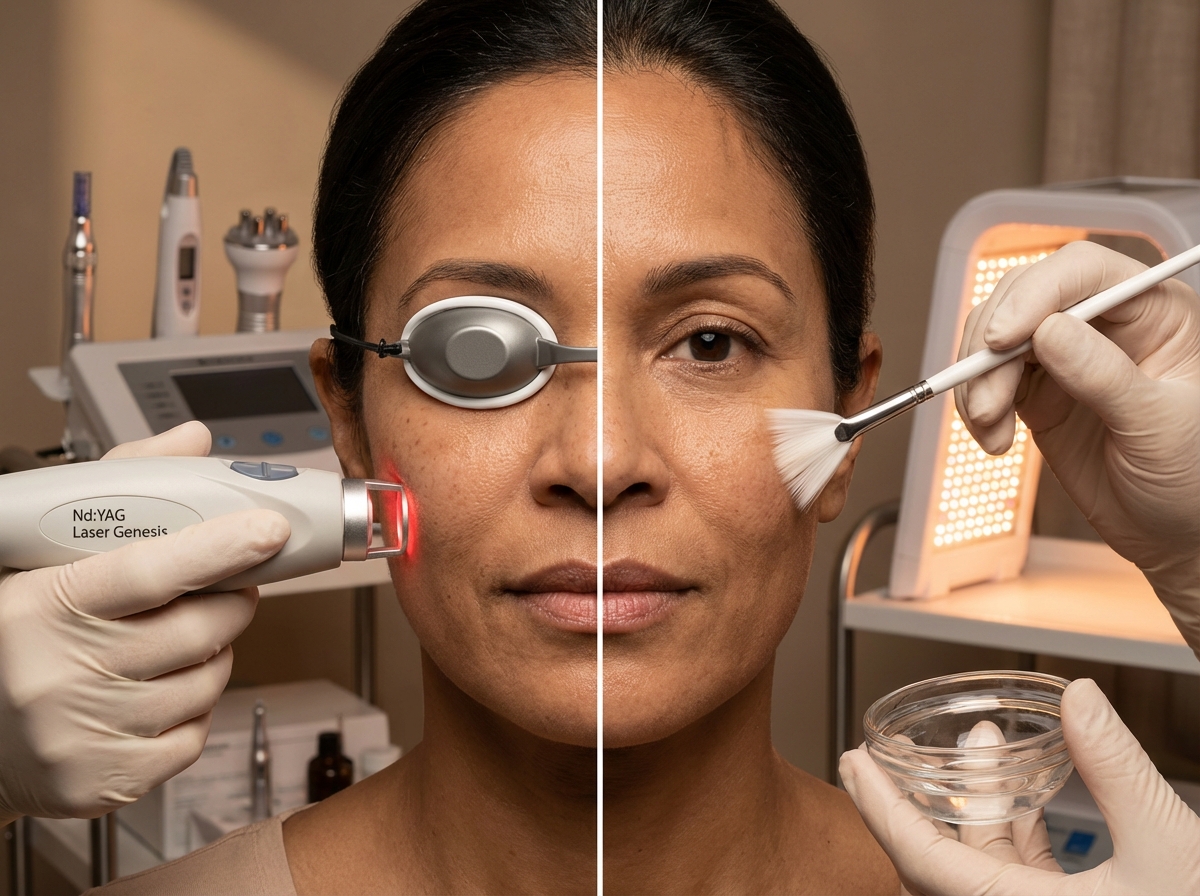
Large pores are a common aesthetic concern. This article compares Laser Genesis and chemical peels for pore reduction within the wider context of non-invasive skin rejuvenation—microneedling, laser facials, RF and LED. We cover how each works, expected results, downtime, safety considerations and practical tips to choose or combine treatments for safer, lasting improvement.
Laser Genesis vs. Chemical Peels: Mechanisms and Efficacy
Now that we understand the biological factors driving pore size, the practical question becomes how to treat them. Two of the most common clinical interventions are Laser Genesis and chemical peels. While both aim to refine skin texture, they operate on completely different physiological principles. One uses thermal energy to remodel collagen from within, while the other uses chemical exfoliation to clear the surface.
Mechanism of Action: Heat vs. Exfoliation
To choose the right treatment, it is essential to understand what is happening under the skin.
Laser Genesis (Thermal Remodeling)
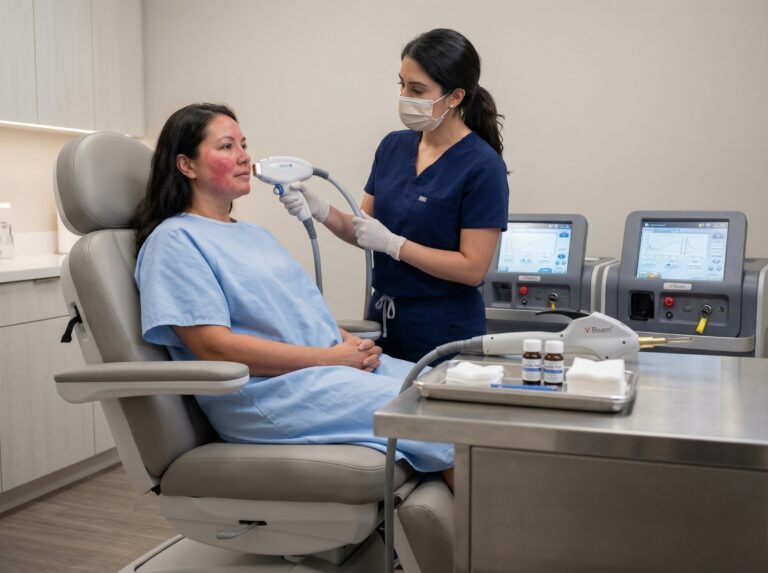
Laser Genesis utilizes a non-ablative 1064 nm Nd:YAG laser. It works by delivering micropulses of high-repetition, low-fluence energy into the dermis. This creates a bulk heating effect that triggers a wound-healing response without creating an actual wound. The heat stimulates fibroblasts to produce new collagen, which gradually tightens the skin around the pore structure. It essentially firms the “walls” of the pore, making the opening appear smaller. Additionally, the heat kills P. acnes bacteria and reduces inflammation, which helps prevent the oil congestion that stretches pores open.
Chemical Peels (Chemical Resurfacing)
Chemical peels work from the outside in. Superficial peels (like glycolic or salicylic acid) and medium-depth peels (like TCA) dissolve the bonds holding dead skin cells together. Salicylic acid is particularly effective for pores because it is oil-soluble; it can penetrate into the pore lining to dissolve sebum and debris. By removing the top layer of dead skin and clearing the blockage, the pore appears less prominent and the surrounding texture is smoothed. Medium-depth peels also trigger some collagen production by causing controlled injury to the epidermis and upper dermis.
Treatment Sessions and Timeline
Patience is required for both modalities, but the timelines differ. Laser Genesis is a cumulative treatment. A single session provides a temporary “glow,” but structural changes to pore size require a series. The standard protocol involves 4 to 6 treatments spaced 4 weeks apart. Clinical data indicates that significant pore reduction—often around 30%—peaks roughly 6 months after the final treatment as collagen remodeling continues.
Chemical peels offer more immediate gratification regarding texture, but pore refinement still takes time. You will typically see smoother skin within 7 to 10 days after the peeling process finishes. For sustained pore reduction, a series of 4 to 6 superficial peels spaced 2 to 4 weeks apart is standard. Medium peels might only require 1 or 2 sessions per year, but the recovery is significantly harder.
Downtime and Recovery
Laser Genesis Recovery
This is often called a “lunchtime procedure” because there is virtually no downtime. You might experience mild redness (erythema) that looks like a post-workout flush, but this usually subsides within a few hours. Most patients rate the pain level as minimal (around 3 out of 10), describing the sensation as “warm rain droplets” on the skin. You can apply makeup and return to work immediately.
Chemical Peel Recovery
Recovery varies by depth. A light glycolic or salicylic peel might cause minor flaking and dryness for 2 to 3 days. A medium-depth TCA peel will result in visible peeling, redness, and brown crusting that can last 5 to 10 days. During this time, sun avoidance is critical, and you cannot pick at the skin, which makes it socially inconvenient for some patients.
Cost Comparison (USA 2025 Estimates)
Prices vary significantly by location and provider expertise. As of late 2025, the costs in major US metropolitan areas reflect the technology and time involved.
- Laser Genesis: $300 to $600 per session. A package of six treatments typically ranges from $1,500 to $3,000.
- Superficial Peels (Glycolic/Salicylic): $150 to $300 per session. Packages of four often range from $500 to $1,200.
- Medium Peels (TCA): $400 to $800 per session due to the higher risk profile and required clinician skill.
Suitability and Safety Profile
Fitzpatrick Skin Types
Laser Genesis is one of the few laser treatments safe for all Fitzpatrick skin types (I-VI). The 1064 nm wavelength bypasses the melanin in the epidermis, significantly reducing the risk of hyperpigmentation in darker skin tones. It is a go-to for patients with dark skin who want rejuvenation without the risk of burns.
Chemical peels require more caution. While salicylic acid is generally safe for most tones, medium-depth TCA peels pose a higher risk of post-inflammatory hyperpigmentation (PIH) in Fitzpatrick types IV-VI. Clinicians often require patients with darker skin to use a tyrosinase inhibitor (like hydroquinone) for weeks prior to a peel to mitigate this risk.
Acne-Prone Skin
Both treatments help acne, but in different ways. Quantitative assessment of the long‐term efficacy suggests Laser Genesis is excellent for reducing inflammation and scarring associated with old acne. However, for active, pustular acne and blackheads, a salicylic acid peel is often the superior first-line choice because it directly unclogs the follicle.
Comparison Summary
| Feature | Laser Genesis | Chemical Peels |
|---|---|---|
| Primary Action | Collagen stimulation & heat | Exfoliation & oil dissolution |
| Downtime | None (0 days) | 2–10 days (depending on depth) |
| Pain Level | Low (Warm sensation) | Moderate (Stinging/Burning) |
| Best For | All skin types, aging, redness | Oily skin, active acne, texture |
| Results Timeline | Gradual (months) | Immediate texture, gradual pore size |
Combining Modalities
For many patients, the choice isn’t mutually exclusive. Combining these treatments often yields the best results. A common protocol involves alternating treatments: a Laser Genesis session to build collagen, followed two weeks later by a light chemical peel to clear surface debris. This “stacking” approach addresses the pore from both the inside (structure) and outside (congestion). However, this increases the total cost and requires strict adherence to sun protection.
It is important to manage expectations. Neither treatment will “erase” pores. The goal is a visible reduction in size and a smoother overall canvas.
Complementary non-invasive options and combination strategies
While Laser Genesis and chemical peels are the workhorses of pore reduction, they are rarely the only tools in a dermatologist’s kit. Skin texture is complex. Enlarged pores often coexist with acne scarring, laxity, or sun damage, meaning a single modality might not deliver the complete smoothing effect you want. By late 2025, the standard of care has shifted toward “stacking” or alternating treatments to target different layers of the skin.
Beyond the Basics: Microneedling, RF, and LED
If you aren’t getting the desired finish from peels or non-ablative lasers alone, or if your skin concerns are deeper than the epidermis, these alternatives often serve as the next step.
Microneedling (Collagen Induction Therapy)
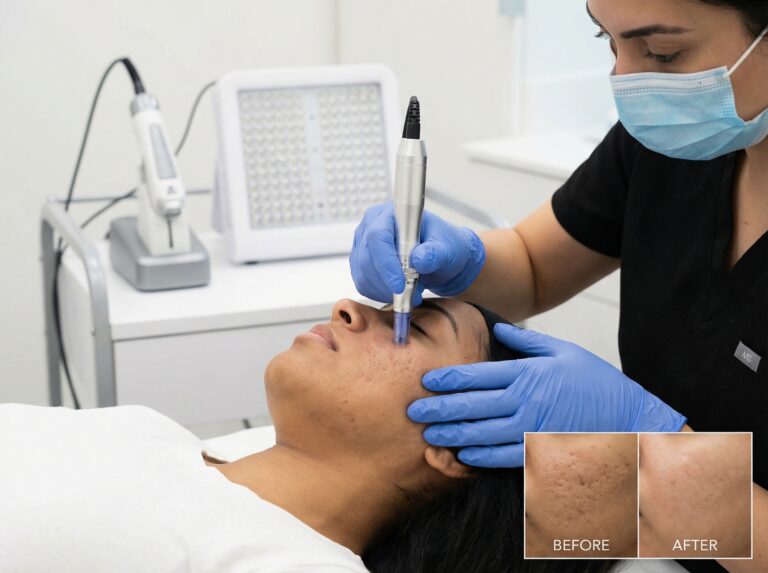
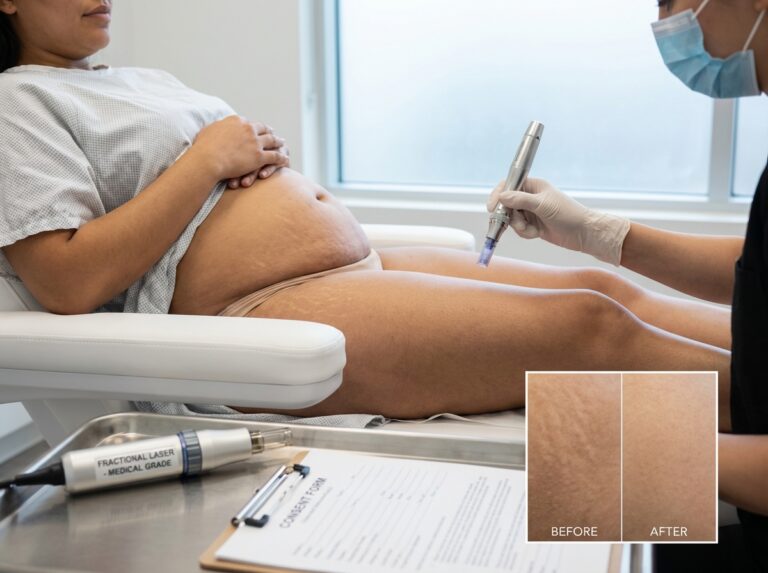
This technique uses sterile needles to create thousands of microscopic channels in the skin. Unlike lasers that use heat, this is a mechanical injury. It forces the skin to repair itself by producing new collagen and elastin.
Best Use: Patients with acne scars that distort the shape of the pore. It is safe for all skin tones because it generates no heat.
Protocol: 3 to 6 sessions spaced 4 weeks apart.
Downtime: 24 to 72 hours of redness and minor swelling.
Radiofrequency (RF) Microneedling
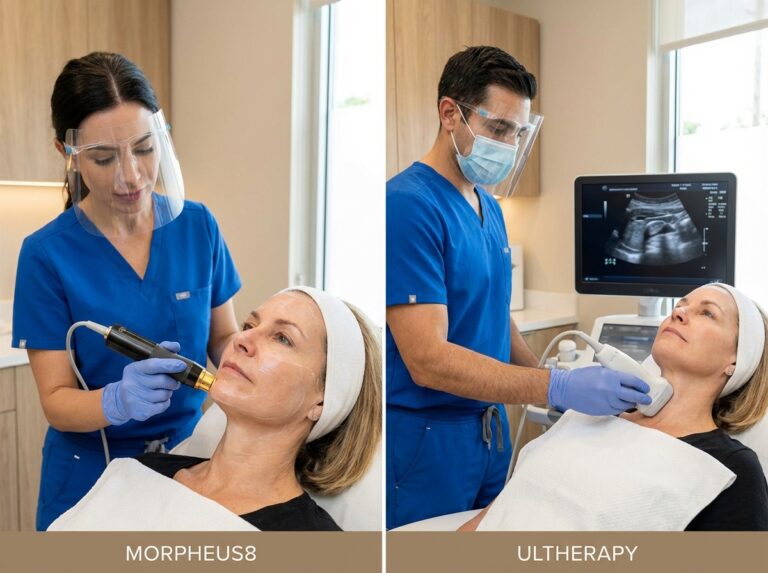
This adds thermal energy to the mechanical action of traditional microneedling. The needles deliver radiofrequency energy deep into the dermis to trigger thermal coagulation. This tightens the skin structure around the pore, effectively “cinching” the opening.
Best Use: Enlarged pores caused by aging and skin laxity. If your pores look stretched or oval rather than round, this is often superior to standard lasers.
Protocol: 3 sessions, spaced 4 to 6 weeks apart.
Downtime: 2 to 5 days. You may see grid marks or rough texture as the skin heals.
Fractional Laser Facials (Thulium or Erbium)
These lasers create micro-zones of ablation (tissue removal) or non-ablative coagulation that are more intense than Laser Genesis. They resurface the top layer of skin while heating the bottom.
Best Use: Stubborn texture issues where superficial peels have failed.
Protocol: 1 to 3 sessions depending on intensity.
Downtime: 3 to 7 days of redness, bronzing, and flaking (the “sandpaper” phase).
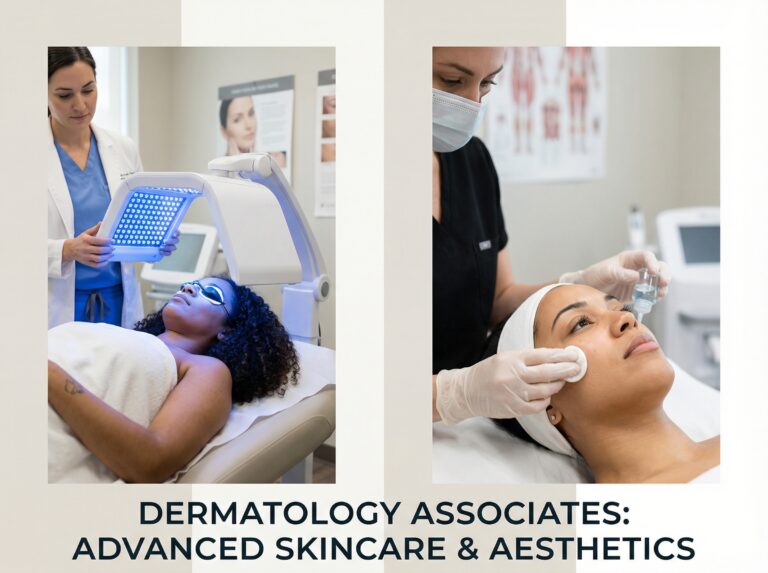
LED Phototherapy
Light Emitting Diode therapy does not shrink pores directly through injury. Instead, it uses photobiomodulation to reduce inflammation and speed up cell function.
Best Use: As an add-on recovery booster. It calms the redness from a peel or laser session and helps prevent breakouts.
Protocol: Weekly or immediately following other procedures.
Downtime: None.
| Modality | Mechanism | Downtime | Best For |
|---|---|---|---|
| Microneedling | Mechanical Trauma | 1–3 Days | Acne scars, texture |
| RF Microneedling | Thermal Coagulation | 2–5 Days | Laxity + Pores |
| Fractional Laser | Micro-ablation/Heat | 3–7 Days | Resurfacing |
| LED Light | Photobiomodulation | 0 Days | Recovery, Acne |
Strategic Combination Plans
Mixing treatments requires careful timing. You cannot simply throw everything at the skin at once without risking barrier damage or burns. The goal is to stimulate turnover without overwhelming the skin’s healing capacity.
The “Alternating” Schedule
A common strategy involves alternating between a chemical peel and a laser treatment. For example, you might schedule a salicylic acid peel to clear out sebum and debris. Four weeks later, you follow up with Laser Genesis to stimulate collagen and tighten the pore walls. This spacing reduces the risk of hyperpigmentation, especially in darker skin types.
Preconditioning for Safety
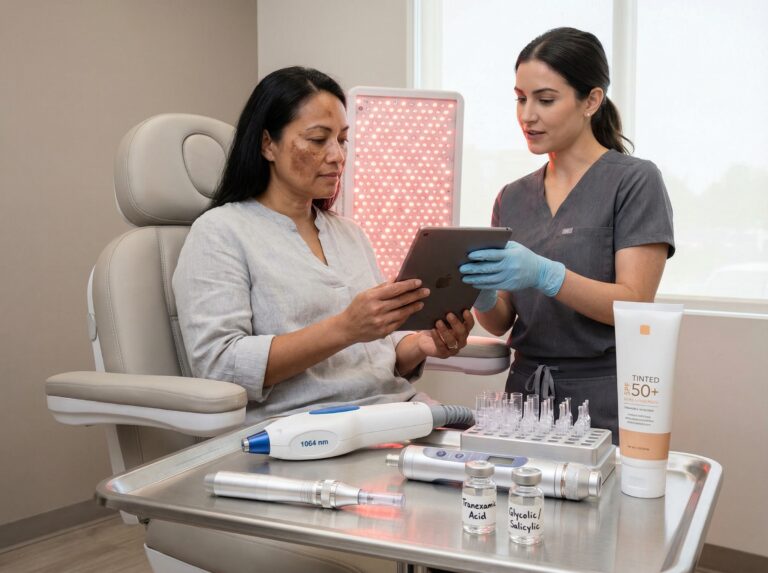
For patients with Fitzpatrick skin types IV-VI (olive to deep brown skin), preparation is non-negotiable. Before starting a combination series involving heat (lasers/RF) or medium-depth peels, you should use a tyrosinase inhibitor (like hydroquinone, arbutin, or tranexamic acid) and a retinoid for 2 to 4 weeks. This puts the pigment-producing cells to sleep, significantly lowering the risk of Post-Inflammatory Hyperpigmentation (PIH).
Stacking with LED
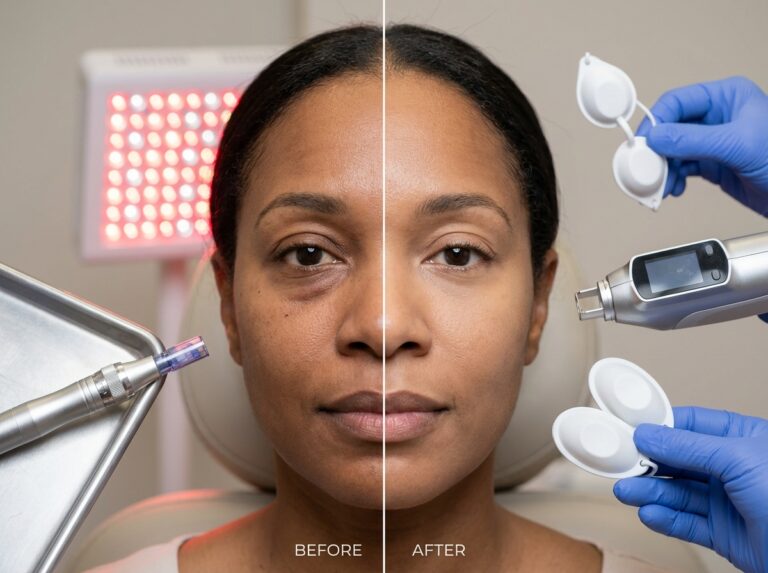
LED therapy is the safest modality to stack. It can be done immediately after Laser Genesis, microneedling, or a superficial peel. Red light (633nm) reduces the immediate flush and inflammation, while blue light (415nm) targets bacteria if acne is a concern.
Post-Procedure Care and Safety
Regardless of the device or acid used, the aftercare determines your result. The skin barrier is temporarily compromised, making it susceptible to UV damage and infection.
The “Do Not” List
For the first 3 to 7 days (depending on intensity), avoid active exfoliants. This means no retinol, no glycolic wash, and no scrub brushes. Do not sweat heavily for 48 hours, as sweat can irritate open channels or fresh skin, leading to bacteria buildup.
Sun Protection
You must use a broad-spectrum sunscreen of SPF 30 or higher. Physical blockers (zinc oxide or titanium dioxide) are generally less irritating to sensitized skin than chemical filters. Sun exposure during the healing phase is the fastest way to reverse your results and cause long-term staining.
When to Call the Provider
Normal reactions include a sunburn sensation, tightness, and mild flaking. However, you should contact your provider immediately if you experience:
- Blistering or crusting that looks like cold sores (this could be a reactivated HSV infection).
- Intense itching or hives (allergic reaction).
- Heat or redness that gets worse after 24 hours rather than better.
- Pus or yellow discharge (signs of bacterial infection).
Clinical studies have shown that while single modalities work, combination approaches often yield higher satisfaction. For instance, data indicates that pore size reduction is significant and sustained when collagen remodeling is supported by proper surface maintenance. However, patience is required; collagen remodeling takes months, not days.
Common Questions About Pore Reduction and Non-Invasive Treatments
Patients often feel overwhelmed when trying to navigate the logistics of pore reduction treatments. While the science behind collagen remodeling and exfoliation is fascinating, most people just want to know if it hurts, how much it costs, and if they can go to work the next day.
Here are the answers to the most frequent safety and logistical questions regarding Laser Genesis and chemical peels.
How long do the pore-reducing results actually last?
Results are not permanent because your skin continues to age, but they are long-lasting. For Laser Genesis, the collagen stimulation peaks around six months after your final treatment. Most patients see sustained pore refinement for 6 to 12 months. Chemical peels offer a different timeline; superficial peels offer a temporary glow for a few weeks, while medium-depth peels can improve texture for several months.
Practical Tip
Think of this like gym maintenance. Plan for a single “booster” laser session or a maintenance peel every 4 to 6 months to keep the collagen active and pores tight.
How many sessions will I need to see a difference?
One session is rarely enough for structural pore changes. Laser Genesis is cumulative. Clinical data suggests significant pore size reduction (around 30%) is measurable after 3 to 6 treatments spaced four weeks apart. Chemical peels generally require a series of 4 to 6 treatments if you are using superficial acids (like glycolic or salicylic) to clear out congestion.
Red Flag
Be wary of any provider promising “glass skin” after a single non-ablative laser session. Real texture change requires the skin’s repair cycle, which takes time.
Is the procedure painful?
Laser Genesis is widely considered one of the most comfortable laser treatments available. Patients typically rate the pain around 3 out of 10. It feels like warm rain or sunbathing on your face. There is no need for numbing cream. Chemical peels vary by strength. Superficial peels cause a mild tingling or itching sensation, while medium-depth peels (like TCA) can cause intense stinging and heat for several minutes.
Practical Tip
If you are getting a chemical peel, ask for a handheld fan during the application. The airflow significantly reduces the stinging sensation.
What is the immediate downtime? Will I peel or scab?
Laser Genesis has effectively zero downtime. You might have a rosy flush for a few hours, often called a “post-treatment glow,” but you can apply makeup immediately. Chemical peels are different. Even “no-peel” peels often cause dryness. A standard superficial peel usually results in minor flaking around day three. Stronger peels will result in visible shedding and crusting for 5 to 7 days.
Practical Tip
Do not schedule a chemical peel within two weeks of a major event (weddings, photoshoots). Unpredictable flaking is difficult to cover with makeup.
I have darker skin. Are these treatments safe for me?
This is a critical distinction. Laser Genesis is exceptionally safe for all skin tones (Fitzpatrick I-VI) because the 1064 nm Nd:YAG wavelength bypasses surface pigment to heat the dermis. It carries a very low risk of hyperpigmentation. Chemical peels require extreme caution. Darker skin is prone to Post-Inflammatory Hyperpigmentation (PIH) if the peel is too strong or neutralized incorrectly.
Red Flag
Avoid providers who suggest medium-depth peels for darker skin tones without a pre-treatment protocol involving tyrosinase inhibitors (like hydroquinone) for 2-4 weeks prior.
Can I treat oily skin without drying it out completely?
Yes. This is where Laser Genesis shines. The heat energy helps regulate sebum production and kills P. acnes bacteria without stripping the skin’s moisture barrier. Chemical peels reduce oil by chemically exfoliating the top layer. While effective, peels can cause temporary dehydration.
Practical Tip
If you have oily but dehydrated skin, opt for the laser. It treats the oil gland directly rather than just drying out the surface.
I took isotretinoin (Accutane) recently. Can I get treated?
You must wait. The standard medical guideline for chemical peels and most laser resurfacing is to wait 6 to 12 months after stopping isotretinoin. Your skin’s healing capacity is compromised, and treating it too soon can lead to scarring. Some dermatologists may approve gentle Laser Genesis sooner, but this is strictly a case-by-case medical decision.
Red Flag
If a clinic does not ask about your medication history or recent isotretinoin use during the consultation, do not proceed with treatment there.
What are the realistic costs in 2025?
Prices vary by location and provider expertise. Laser Genesis typically ranges from $300 to $600 per session, with packages of six costing between $1,500 and $3,000. Superficial peels generally cost $150 to $300 per session, while stronger TCA peels range from $400 to $800.
Practical Tip
Look for membership programs or package bundles. Clinics often offer 15-20% discounts when you buy a series of six, which is the recommended protocol anyway.
Are combined treatments actually better?
Stacking treatments often yields superior results. A common protocol is alternating Laser Genesis with superficial chemical peels every two weeks. The peel clears surface debris, allowing the laser to penetrate more effectively. Another popular combination is performing a very light enzyme peel immediately before Laser Genesis to maximize the “glow.”
Practical Tip
Start with one modality first to see how your skin reacts before paying for a combination package. Ensure your skin barrier can handle the double stimulation.
How do I choose a qualified provider?
In many states, regulations on who can fire a laser are loose. However, improper settings can cause burns or fat loss. Look for a board-certified dermatologist or a medical aesthetician working directly under physician supervision. They should have specific experience with the Nd:YAG laser system.
Red Flag
Avoid “daily deal” sites for laser treatments. The equipment may be outdated, or the technicians may be inexperienced. Your face is not the place to bargain hunt for discount hardware.
Takeaway and practical recommendations
We have covered the science, the procedure details, and the most common questions. Now it is time to make a decision. The choice between Laser Genesis and chemical peels usually depends on your specific skin concerns, your tolerance for downtime, and your skin tone. There is rarely a single right answer, but there is definitely a right answer for *you*.
Here is a breakdown of which path to take based on common skin profiles.
The Oily and Acne-Prone Profile
If your primary issue is excessive oil production combined with active breakouts, chemical peels are often the most effective starting point. Specifically, salicylic acid peels penetrate deep into the pore lining to dissolve sebum and exfoliate dead skin cells that cause blockages. However, Laser Genesis is a strong contender here if you want to avoid the physical peeling phase. The heat from the 1064 nm laser kills P. acnes bacteria and has been shown to reduce sebum levels significantly. If you have active, inflamed acne, Laser Genesis might be more comfortable than applying acid to irritated skin.
The Photoaged Skin Profile
When enlarged pores are caused by a loss of collagen and sun damage, exfoliation alone is not enough. You need structural support. Quantitative assessment of the long‐term efficacy shows that Laser Genesis can reduce pore size by roughly 30% after a full series by stimulating collagen production deep in the dermis. This tightens the skin around the pore, making it look smaller. Chemical peels can help with surface texture and discoloration, but for structural pore tightening due to aging, the laser is generally superior.
The Darker Skin Tone Profile (Fitzpatrick IV-VI)
Safety is the priority here. Chemical peels carry a risk of post-inflammatory hyperpigmentation (PIH) if the acid is too strong or not neutralized correctly. While experienced professionals can safely administer peels to darker skin, Laser Genesis is inherently safer for these skin types. The Nd:YAG wavelength bypasses the melanin in the surface of the skin to heat the deeper layers without burning the epidermis. It is the preferred option for risk-averse patients with melanin-rich skin.
The “Zero Downtime” Profile
If you cannot afford to have visible flaking or redness at work, Laser Genesis is the clear winner. You leave the office with a mild rosy glow that fades within hours. Chemical peels, even superficial ones, usually involve some degree of dryness or flaking for 3 to 7 days post-treatment.
When to Combine Treatments
You do not always have to choose just one. Combining modalities often yields faster and more comprehensive results, provided your budget allows for it.
- Laser Genesis + Chemical Peels
This is a popular stack. Some providers perform a very light enzyme or lactic acid peel immediately before Laser Genesis to clear surface debris, allowing the laser to penetrate better. Alternatively, you might alternate them monthly. This tackles pores from the inside (laser) and the outside (peel). - Adding Microneedling
If you have acne scarring alongside enlarged pores, microneedling is a powerful addition. It creates physical micro-channels that trigger a stronger wound-healing response than non-ablative lasers alone. A common protocol is to do a series of microneedling sessions first to smooth texture, followed by Laser Genesis for maintenance and redness reduction. - Adding LED Therapy
LED is the gentle closer. Blue light kills bacteria, while red light reduces inflammation. It is an excellent add-on immediately after either a peel or a laser session to speed up recovery and calm the skin.
Pre-Consultation Decision Checklist
Before you book an appointment, use this checklist to organize your thoughts. Being prepared helps your provider design the safest plan for you.
| Factor | Consideration |
|---|---|
| Budget | Can you commit to 4-6 sessions? Laser Genesis typically costs $300-600 per session, while peels range from $150-400. Single treatments rarely give lasting pore reduction. |
| Downtime | Can you handle 3-5 days of peeling? If no, choose Laser Genesis. |
| Timeline | Do you need to look good for an event next week? Choose Laser Genesis. Do you have 3 months to overhaul your skin? A peel series or combination approach works well. |
| Pain Tolerance | Laser Genesis feels like warm rain (3/10 pain scale). Peels can sting and burn significantly for a few minutes. |
| Sun Habits | If you work outdoors or refuse to wear hats, deep chemical peels are dangerous due to sun sensitivity. |
Safety First: Final Requirements
The technology is only as good as the hands holding it. In the United States, regulations on who can fire a laser or apply a medical-grade peel vary by state.
Verify Credentials
Always choose a board-certified dermatologist or a licensed medical aesthetician working under direct physician supervision. Lasers can cause burns and scars if the settings are incorrect for your skin type. Laser Genesis vs. Other Laser Treatments highlights that while the procedure is safe, the technique matters for results.
Full Disclosure is Mandatory
You must tell your provider everything you are taking. If you have taken isotretinoin (Accutane) in the last 6 to 12 months, you are likely not a candidate for resurfacing treatments yet. Mention any history of cold sores (HSV), as lasers and peels can trigger outbreaks. Your provider can prescribe prophylactic antivirals.
The Non-Negotiable Aftercare
Invest in a high-quality, broad-spectrum SPF 30 or higher before you even book your appointment. Treating your pores is a waste of money if you expose that fresh, vulnerable collagen to UV radiation immediately after. Sun damage is a primary cause of enlarged pores, so protection is the only way to maintain your investment.
Sources
- How Laser Genesis Rejuvenates Skin for Women & Men — 3.4 Shrinks Pore Size. Many clients love that their pores appear smaller after Laser Genesis. By firming the skin and clearing out debris …
- Quantitative assessment of the long‐term efficacy and safety of … – NIH — The total average pore size was 1.15652 ± 0.614322 and 0.8087 ± 0.50515 at baseline and at 6 months after the final treatment, respectively, resulting in an …
- Laser Genesis – Scars, Large Pores, Skin Texture & Rosacea — Laser Genesis is a virtually painless, no-downtime treatment that helps improve facial redness, fine lines, pore size, rough texture, scarring, and brown spots, …
- Laser Genesis vs. Other Laser Treatments – Dr. Debra Jaliman — In a clinical study, as many as 80% of participants reported visible improvements in skin texture after completing six treatment sessions. This …
- Laser Genesis: Benefits of Non-Invasive Skin Rejuvenation Treatment — Pore Size Reduction: Enlarged pores can be a source of frustration for many individuals. Laser Genesis works to tighten the skin, thereby …
- Laser Genesis: Everything You Need to Know — By stimulating collagen regrowth Laser Genesis effectively reduces the appearance of fine lines and wrinkles, tightens pores, reduces oil production, …
- Treatment of enlarged pores with the quasi long-pulsed versus Q … — The micropulsed and Q-switched Nd:YAG laser treatments reduced pore size and sebum levels with more or less equal efficacy and with no adverse side effects.
- Reduce the Appearance of Large Pores with Laser Genesis Skin … — Laser Genesis is a revolutionary skin treatment that does not damage the skin's surface but, instead, uses targeted laser energy to warm the deeper layers of …
- Laser Genesis & Pore Size? (photo) – RealSelf.com — Yes Laser Genesis can reduce pore size and other helpful actions such as skin tightening. However there are also several other lasers, as well …
- 5 Surprising Reasons to Love Laser Genesis | Quinn Clinics — Pore size gets reduced, skin complexion improves, fine lines disappear! Compatibility. Drum roll please for the main Bonus Benefit! Genesis …
Legal Disclaimers & Brand Notices
The content provided in this article is for informational and educational purposes only and does not constitute medical advice, diagnosis, or treatment. Always seek the advice of a board-certified dermatologist, plastic surgeon, or other qualified health provider with any questions you may have regarding a medical condition or specific aesthetic procedure. Never disregard professional medical advice or delay in seeking it because of something you have read in this article.
All product names, logos, brands, and registered trademarks mentioned in this text—including but not limited to Laser Genesis—are the property of their respective owners. All company, product, and service names used in this website are for identification purposes only. Use of these names, trademarks, and brands does not imply endorsement or affiliation.