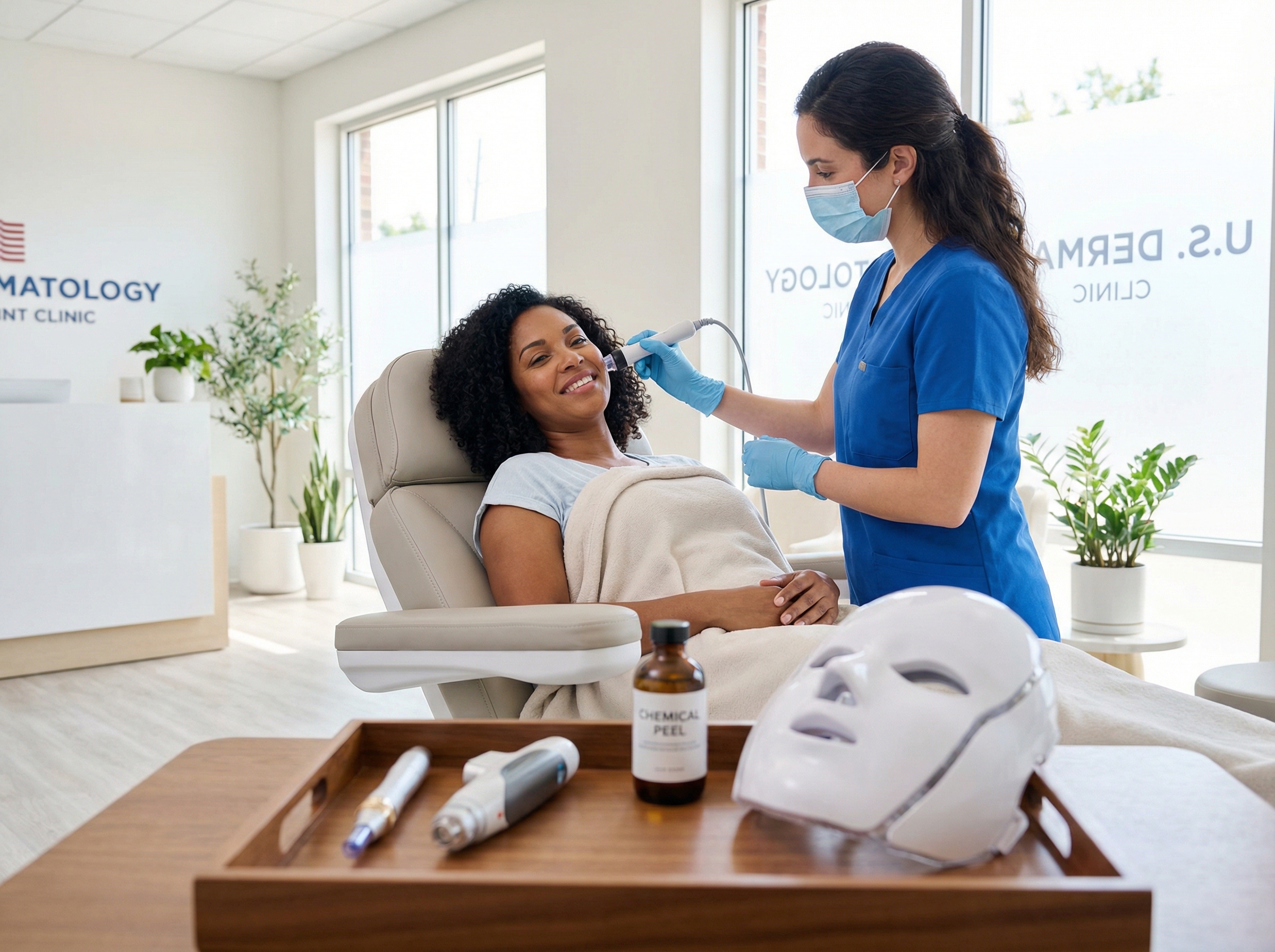
Non‑invasive skin rejuvenation offers effective alternatives to surgery. This article explains how radiofrequency facials use heat to stimulate collagen and places RF in context with microneedling, lasers, chemical peels, and LED. Learn indications, expected downtime, realistic results, and safety measures so you can choose treatments aligned with your skin goals and lifestyle.
Understanding Non‑Invasive Skin Rejuvenation and How Treatments Compare
Patients in the United States increasingly prefer treatments that offer visible improvements without the recovery time of surgery. The shift toward non-surgical options is driven by the desire for subtle maintenance rather than drastic changes. We see a high demand for procedures that fit into a busy schedule. Understanding the differences between the main technologies is necessary before choosing a provider or a specific device.
Defining the Core Modalities
Each treatment category targets skin aging through a different physiological pathway. The goal is usually the same: to stimulate the body to repair itself.
Radiofrequency Facials
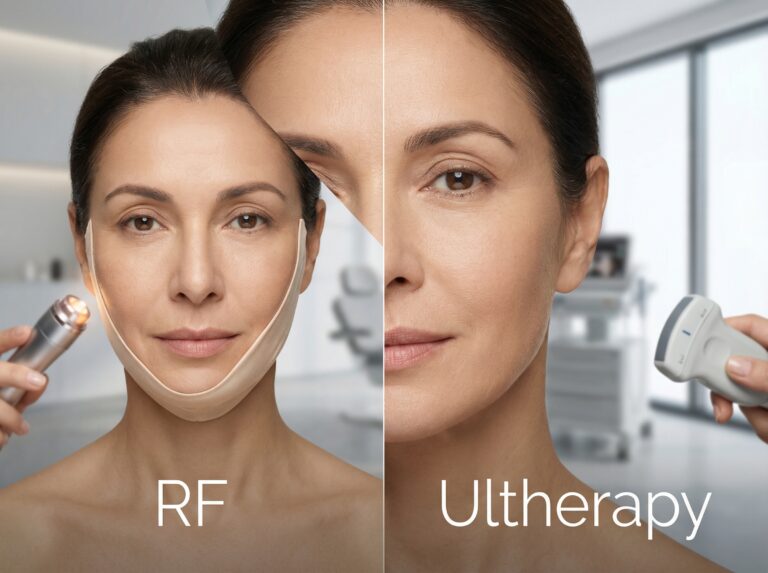
A radiofrequency (RF) facial uses electrical current to generate heat within the dermis while sparing the surface. This heat causes existing collagen to contract immediately and stimulates the production of new collagen over several months.
Microneedling
This technique uses fine needles to create thousands of controlled micro-injuries in the skin. The physical trauma triggers a wound-healing cascade that improves texture and reduces scarring.
Laser Facials (Ablative and Non-Ablative)
Lasers use focused light energy to target water or pigment in the skin. Non-ablative lasers heat columns of tissue to stimulate remodeling without breaking the skin surface. Ablative lasers vaporize the outer layers of skin for more dramatic resurfacing.
Chemical Peels
Peels apply acid solutions to the skin to dissolve the bonds between cells and cause exfoliation. The depth of the peel determines whether it treats superficial dullness or deep wrinkles.
LED Therapy
LED light therapy for skin uses specific wavelengths of non-thermal light to modulate cellular activity. Red light typically targets inflammation and collagen production while blue light targets acne-causing bacteria.
Comparing Treatment Profiles
Choosing between microneedling vs RF or a laser treatment often depends on downtime tolerance and specific skin concerns. The following table outlines how these modalities compare in a clinical setting.
| Modality | Mechanism | Depth | Best Indications | Downtime | Pain Level | Typical Sessions |
|---|---|---|---|---|---|---|
| Radiofrequency | Electrical heating of dermis | Deep (Dermis) | Laxity, mild wrinkles | Minimal (0 to 2 days) | Low to Moderate | 3 to 6 |
| Microneedling | Physical micro-injury | Variable (0.5 to 3.0 mm) | Scars, texture, pores | 1 to 3 days | Moderate | 3 to 6 |
| Non-Ablative Laser | Fractional thermal columns | Mid-Dermis | Fine lines, pigment | 1 to 5 days | Mild to Moderate | 3 to 5 |
| Ablative Laser | Vaporization of tissue | Epidermis and Dermis | Deep wrinkles, severe damage | 7 to 14 days | Moderate to High | 1 to 3 |
| Chemical Peel (Medium) | Chemical exfoliation | Epidermis to Upper Dermis | Pigment, texture | 5 to 7 days | Moderate | 1 to 2 |
| LED Therapy | Photobiomodulation | Superficial to Mid-Dermis | Acne, inflammation | None | None | 8 to 24 |
Patient Selection and Safety Considerations
Safety profiles vary significantly between these treatments. RF skin tightening is generally considered safe for all skin types, including darker skin tones (Fitzpatrick IV to VI), because it does not target melanin. Lasers and medium-depth chemical peels carry a higher risk of hyperpigmentation in darker skin and require strict parameter adjustments.
Medical history plays a critical role in candidacy. Patients with cardiac pacemakers or internal defibrillators (ICD) generally cannot undergo radiofrequency treatments due to potential electromagnetic interference. Metal implants in the treatment area are also a contraindication for RF. So, Are Radiofrequency Treatments Really Safe? The consensus is yes, provided the provider respects these contraindications and uses cleared devices.
Medications affect eligibility as well. Patients who have taken isotretinoin (Accutane) are typically advised to wait 6 to 12 months before undergoing invasive procedures like microneedling, ablative lasers, or deep peels to avoid scarring risks. Pregnancy is a standard contraindication for almost all energy-based devices and chemical peels due to a lack of safety data.
Timeline for Results and Recovery
Managing expectations regarding laser facial recovery and RF results is vital. Chemical peel downtime can involve visible peeling that makes social interaction difficult for a week. In contrast, non-ablative RF often allows patients to return to work immediately.
Results are rarely instant. While some immediate tightening may occur with RF due to collagen contraction, true remodeling takes time. Visible improvements typically appear gradually between 2 to 6 months after the treatment course begins. Patients looking for RF skin tightening results should understand that the process relies on the body’s natural immune response to heat.
Cost Analysis in the U.S. Market
Treatment costs in the United States vary widely based on the device used, the practitioner’s expertise, and the geographic location. Prices in major metropolitan areas like New York or Los Angeles are typically higher than the national average. Since these are elective cosmetic procedures, they are not covered by insurance.
- Microneedling: $200 to $800 per session.
- Radiofrequency Facial (Non-invasive): $300 to $2,000 per session.
- Microneedling RF: $400 to $1,500 per session.
- Non-Ablative Laser: $500 to $2,000 per session.
- Ablative Laser (CO2): $2,000 to $8,000 per session.
- Chemical Peels: $150 (superficial) to $1,500 (medium).
Most providers recommend a series of treatments for optimal outcomes. A full course of RF or microneedling can range from $900 to over $6,000. Maintenance sessions are usually required annually or bi-annually to sustain the effects.
We have established how these modalities compare in terms of mechanics, cost, and recovery. The next section will focus specifically on the science of radiofrequency, detailing exactly how thermal energy interacts with dermal layers to stimulate collagen production.
Radiofrequency Facials Deep Dive: How Heat Stimulates Collagen and Clinical Practice
Radiofrequency (RF) facials rely on a specific biological trigger: heat. Unlike lasers that target pigment or water, RF uses electricity to generate resistance within the skin. This resistance produces thermal energy. When we control this heat correctly, we stimulate the body to repair itself. This chapter covers the technical mechanisms, clinical applications, and safety protocols for RF skin tightening in 2025.
The Physics of RF: How Heat Stimulates Collagen
RF energy works by oscillating ions in the tissue. This movement creates friction, and friction creates heat. The goal is to heat the dermis to a therapeutic temperature while keeping the epidermis (the surface) cool and intact. To put it in perspective, the wavelength used in RF skin tightening is about 100 million times slower than visible light, making it non-ionizing and safe when controlled.
The biological response happens in two phases. First, you get immediate collagen contraction. The heat breaks the hydrogen bonds in collagen fibers, causing them to shorten and thicken. This provides the temporary “glow” or tightness patients often see right after a session. Second, and more importantly, is the wound healing response. The thermal stress triggers fibroblasts to produce new collagen (neocollagenesis) and elastin (elastogenesis). This process takes time. You typically see the structural changes develop over 2 to 6 months.
Temperature and Depth Targets
Clinical outcomes depend on hitting specific temperatures. We generally aim to raise the dermal temperature to a range where protein denaturation occurs, often cited around 60°C to 65°C for brief intervals, or lower temperatures (40°C to 45°C) maintained for longer periods.
Providers do not usually measure the exact temperature inside the dermis because it is invasive. Instead, we monitor the skin surface temperature. Modern devices use infrared sensors or real-time impedance feedback to keep the surface safe, usually between 40°C and 43°C, while the deeper tissue gets much hotter.
Device Classifications and Delivery Methods
Not all RF is the same. The electrode configuration dictates where the energy goes and how deep it penetrates.
Monopolar RF
This is the original deep-heating modality. Energy travels from a single active electrode on the face to a grounding pad placed on the patient’s back or leg. This forces the current to travel through the entire body, allowing for deep, bulk heating of the dermis and subcutaneous fat. It is often used for contouring and significant laxity.
Bipolar and Multipolar RF
These devices use two or more electrodes placed close together on the handpiece. The energy travels in a shallow arc between them. This offers more controlled, superficial heating. It is excellent for fine lines and surface texture but does not penetrate as deeply as monopolar systems.
Fractional RF
Similar to fractional lasers, these devices deliver energy in a grid pattern. They leave small bridges of untreated tissue between the heated zones. This speeds up healing and reduces downtime.
Microneedling RF
This category has grown significantly in popularity. Here, insulated or non-insulated needles physically penetrate the skin before releasing RF energy at the tip. This bypasses the epidermis entirely, delivering heat directly into the reticular dermis. It allows for higher temperatures at depth with less risk to the surface.
Clinical vs. At-Home Devices
Patients often ask if at-home RF devices can replace in-office treatments. While popular, home devices are significantly less powerful than clinical machines. For safety reasons, consumer devices are regulated to deliver much lower energy to prevent users from accidentally burning themselves. Clinical devices can heat the deep dermis to 50°C–60°C (or higher in controlled coagulation zones) while cooling the surface. Home devices generally cannot reach these collagen-denaturing temperatures safely. While they can provide mild maintenance with consistent, daily use, they cannot replicate the depth or results of professional procedures.
Clinical Indications and Expected Outcomes
RF is versatile. We use it primarily for skin laxity and texture. It works well for:
- Mild to moderate skin laxity: It tightens the jawline, submental area (under the chin), and cheeks.
- Crepey skin: It improves the thin, crinkled skin often found on the neck or around the eyes.
- Acne scarring: Microneedling RF is particularly effective here as it combines physical remodeling with thermal energy.
- Body contouring: Larger handpieces treat laxity on the abdomen, knees, and arms.
Radiofrequency Improves Facial Fine Lines by Thermal Effect studies suggest that bipolar RF can produce measurable improvements in fine lines within just two weeks, though deep remodeling takes longer.
Session Protocols and Timeline
One treatment is rarely enough. A standard protocol involves 3 to 6 sessions spaced 4 to 8 weeks apart. This spacing allows the collagen induction cycle to complete between treatments.
Patients need patience. While some immediate tightening occurs, the real structural improvement builds gradually. Most patients notice the peak benefit between 3 and 6 months after their final session. Maintenance is usually required once or twice a year to combat natural aging.
Downtime, Pain Management, and Side Effects
One of the main reasons patients choose RF over surgery is the recovery profile, though comfort levels vary by device.
Pain Management
Non-invasive surface RF (where a wand glides over the skin) typically feels like a hot stone massage. It gets warm, sometimes intensely so, but it is rarely painful. Anesthesia is usually not required. Microneedling RF is different; because needles physically penetrate the skin, it can be painful. Providers almost always apply a strong topical numbing cream (lidocaine) for 45 to 60 minutes beforehand. Some practices offer nitrous oxide (laughing gas) for anxiety and discomfort.
Immediate Effects
For non-invasive surface RF, downtime is minimal. Patients typically experience erythema (redness) and mild edema (swelling) that resolves within 24 to 48 hours. The skin may feel warm, similar to a mild sunburn.
Microneedling RF Recovery
This is more intense. Patients will have pinpoint bleeding during the procedure and visible redness that can last 2 to 4 days. Some may experience minor crusting or a “sandpaper” texture as the skin heals.
Complications and Emergency Care
Serious side effects are rare but possible. They include burns, blisters, and paradoxical hyperpigmentation. If a patient feels intense, lingering heat that does not subside after treatment, or observes blistering, they should contact their provider immediately. Early intervention is key to preventing scars. While waiting for medical advice, apply cool compresses (not ice directly on skin) to draw out the heat. Do not apply makeup or harsh active ingredients to a suspected burn.
Safety and Contraindications
RF uses electrical current, which creates specific safety restrictions that differ from light-based devices.
Implants and Devices
You cannot treat over metallic implants, such as plates or screws, as the metal can heat up and burn the surrounding tissue. Pacemakers and Implantable Cardioverter Defibrillators (ICDs) are strict contraindications. The electromagnetic field can interfere with the device’s function.
Pregnancy
We do not perform elective energy treatments on pregnant patients. There is no data to support its safety, so we wait until after delivery.
Isotretinoin (Accutane)
Patients must be off systemic isotretinoin for 6 to 12 months before undergoing aggressive RF treatments, particularly microneedling RF. The drug alters wound healing and increases the risk of scarring.
Autoimmune Conditions
Active flares of autoimmune diseases like lupus or scleroderma are contraindications. The heat can trigger increased inflammation.
Combination Strategies
RF plays well with other modalities. We often sequence treatments to target different layers of the skin.
- RF + Microneedling: Some providers alternate these. Standard microneedling targets texture, while RF targets deep tightening.
- RF + Chemical Peels: We typically perform RF first or wait until the skin has fully healed from a peel (2 to 4 weeks) before applying heat.
- RF + Lasers: RF can be done safely after non-ablative lasers once inflammation subsides. For ablative lasers, we wait 3 to 6 months for full remodeling before adding RF.
Practical Safety Tips for Patients
If you are guiding a patient or preparing for a treatment yourself, these steps are vital.
Before the Procedure
Hydration is key. RF works by passing current through water in the tissue. Well-hydrated skin responds better. Patients should avoid retinoids and strong exfoliants for 3 to 7 days prior to reduce sensitivity. Blood thinners (anticoagulants), aspirin, and supplements like fish oil can increase bleeding and bruising, especially with microneedling RF.
Post-Procedure Care
Sun protection is non-negotiable. While RF is not as photosensitizing as lasers, the skin is inflamed and vulnerable to UV damage. Use a broad-spectrum SPF 30+. Avoid hot baths, saunas, and heavy exercise for 24 to 48 hours to keep inflammation down.
Evidence Summary
The clinical evidence for RF is solid but specific. It is not a facelift replacement. Efficacy and Safety of Radiofrequency and Focused Ultrasound studies show that over 90% of patients believe their facial condition improved, but the degree of improvement is usually mild to moderate.
Results are highly operator-dependent. The technique, the number of passes, and the energy settings matter more than the brand name of the machine. RF is a tool for collagen stimulation and maintenance, best suited for patients with early to moderate signs of aging who accept a gradual, cumulative improvement.
| Modality | Mechanism | Depth | Best For | Typical Downtime |
|---|---|---|---|---|
| Monopolar RF | Bulk heating via single electrode + grounding pad | Deep Dermis / Subcutaneous | Contouring, heavy laxity | 0–1 Days |
| Bipolar/Multipolar RF | Current flows between local electrodes | Superficial to Mid-Dermis | Fine lines, maintenance | 0 Days |
| Microneedling RF | Needles deliver energy internally | Reticular Dermis (Adjustable) | Acne scars, texture, deep wrinkles | 2–5 Days |
| Fractional Surface RF | Ablative/Coagulative grid pattern | Epidermis / Upper Dermis | Surface texture, pore size | 1–3 Days |
Other Popular Modalities: Microneedling, Laser Facials, Chemical Peels, and LED Therapy
While radiofrequency focuses on deep heating for tightening, other modalities target skin texture, pigmentation, and surface quality through different mechanisms. Understanding how these treatments work allows you to build a comprehensive rejuvenation plan. We will look at microneedling, lasers, chemical peels, and LED therapy to see where they fit alongside RF.
Microneedling
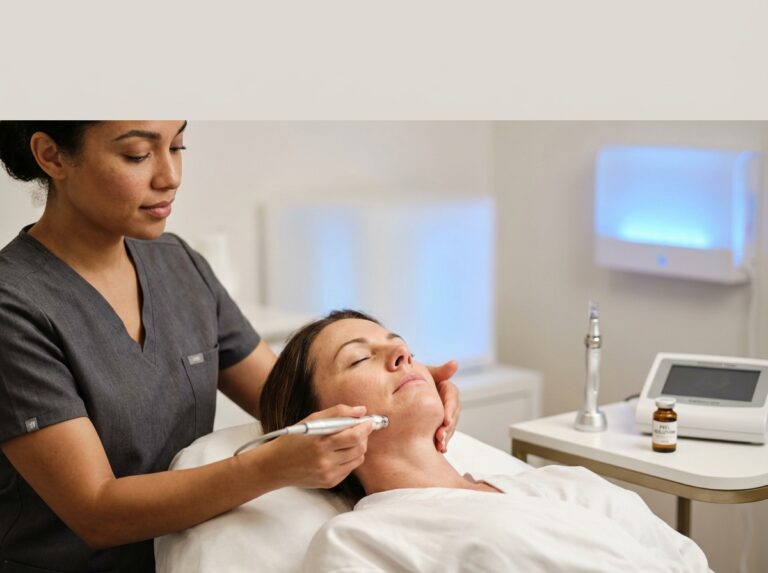
Microneedling is often called percutaneous collagen induction therapy. It uses sterile needles to create thousands of microscopic channels in the dermis. This physical trauma triggers a wound healing cascade. The body rushes to repair these micro-injuries by laying down new collagen and elastin.
Best Indications
This treatment excels at improving skin texture and reducing the appearance of acne scars. It also helps with large pores and fine lines. It does not reliably treat deep tissue laxity or sagging jowls on its own. For significant tightening, you would need to add radiofrequency energy to the needles.
Procedural Details and Differences
Standard microneedling relies solely on mechanical injury. Microneedling with PRP (Platelet-Rich Plasma) involves applying your own platelets to the skin during the procedure to speed up healing and potentially boost collagen production. Microneedling RF differs because it emits heat at the needle tip. This adds thermal coagulation to the physical puncture for better tightening.
Sessions and Spacing
Most patients require a series of 3 to 6 sessions. You should space these 4 to 6 weeks apart to allow for cellular turnover.
Downtime and Recovery
Expect 24 to 72 hours of redness and a sensation similar to a sunburn. You might see pinpoint bleeding immediately after the session. Keep the skin hydrated with simple hyaluronic acid and avoid makeup for at least 24 hours.
Risks and Darker Skin Types
Microneedling is generally safe for all Fitzpatrick skin types because it does not use heat or light that targets melanin. The risk of hyperpigmentation is lower than with lasers. However, aggressive settings can still cause trauma. Always ensure your provider uses sterile single-use cartridges to prevent infection.
Combination with RF
You can alternate microneedling with non-ablative RF. A common protocol is to perform RF to tighten the base and microneedling to polish the surface. Wait 2 weeks between different modalities.
Laser Facials
Laser treatments use light energy to target specific chromophores like water, melanin, or hemoglobin. The results depend heavily on the wavelength and delivery method.
Types of Laser Facials
- Non-ablative Fractional (1550/1540 nm): These lasers heat columns of tissue without removing the top layer of skin. They are good for general resurfacing and mild wrinkles.
- Picosecond Lasers: These deliver energy in ultra-short pulses. They create a photoacoustic effect rather than a thermal one. This makes them excellent for breaking up pigment and treating acne scars with less heat.
- Ablative Lasers (CO2/Er:YAG): These vaporize the outer layers of skin. They offer the most dramatic results for deep wrinkles and severe sun damage but come with significant recovery time.
Best Indications
Lasers are superior for correcting pigmentation issues like sun spots and melasma. They also smooth out rough texture. They are less effective than RF for deep tissue lifting.
Sessions and Spacing
Non-ablative and picosecond lasers typically require 3 to 5 sessions spaced 4 weeks apart. Ablative lasers are often done as a single aggressive treatment or a series of 2 lighter treatments.
Downtime and Recovery
Non-ablative lasers involve 1 to 3 days of redness and mild swelling. Ablative lasers require 7 to 14 days of downtime with significant crusting and peeling. You must avoid direct sun exposure strictly for weeks after any laser treatment.
Risks and Darker Skin Types
Lasers pose a higher risk for darker skin tones due to melanin absorption. Ablative lasers can cause permanent pigment changes in Fitzpatrick types IV-VI. Non-ablative and picosecond lasers are safer options but require conservative settings and test spots.
Combination with RF
RF can be performed after the skin has fully healed from laser treatment. For non-ablative lasers, wait 4 weeks. For ablative lasers, wait 3 to 6 months to ensure the skin barrier is fully restored.
Chemical Peels
Chemical peels use acids to exfoliate the skin at various depths. They remove dead skin cells and stimulate regeneration.
Levels of Peels
- Superficial (Glycolic, Salicylic): These affect only the epidermis. They brighten the skin and help with active acne.
- Medium (TCA 20–35%): These reach the upper dermis. They treat actinic keratosis, deeper pigment, and moderate wrinkles.
- Deep (Phenol): These penetrate the reticular dermis. They provide dramatic restructuring but require sedation and cardiac monitoring due to phenol toxicity risks.
Best Indications
Peels are the gold standard for overall brightness and treating widespread sun damage. They do not tighten loose muscle or deep fascia.
Sessions and Spacing
Superficial peels can be done monthly. Medium peels are usually limited to once or twice a year. Deep peels are typically a once-in-a-lifetime procedure.
Downtime and Recovery
Superficial peels cause flaking for 2 to 3 days. Medium peels result in brown crusting and peeling for 7 to 10 days. Deep peels require 2 to 3 weeks of recovery and can leave skin red for months. Do not pick at peeling skin as this causes scarring.
Risks and Darker Skin Types
Deep peels are generally unsafe for darker skin due to the risk of hypopigmentation (permanent white spots). Superficial and lighter medium peels are safe if the provider uses appropriate agents and pre-treats with pigment inhibitors.
Combination with RF
You can have RF treatments once the skin has re-epithelialized. For superficial peels, this might be 2 weeks. For medium peels, wait at least 4 to 6 weeks.
LED Therapy
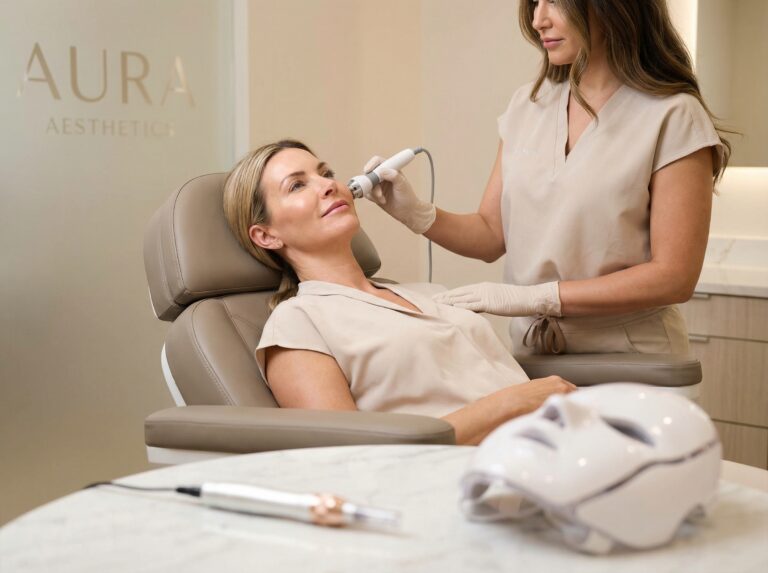
Light Emitting Diode (LED) therapy uses specific wavelengths of light to modulate cell activity. It is non-thermal and non-invasive.
Wavelengths and Benefits
- Blue Light (415 nm): Kills acne-causing bacteria and reduces breakouts.
- Red Light (630–660 nm): Stimulates fibroblast activity to boost collagen and elastin production.
- Near-Infrared (NIR): Penetrates deeper to reduce inflammation and accelerate tissue repair.
Best Indications
LED is best for calming inflammation and supporting maintenance. It does not produce the structural changes seen with RF or lasers. It is an excellent add-on to speed up recovery from other procedures.
Sessions and Spacing
Professional protocols often suggest 2 to 3 sessions per week for 4 to 12 weeks.
Downtime and Recovery
There is zero downtime. You can return to normal activities immediately.
Risks and Safety
LED is safe for all skin types and conditions. It is safe to use during pregnancy and while breastfeeding. Eye protection is recommended during treatment.
Combination with RF
LED is the perfect partner for RF. Efficacy and Safety of Radiofrequency and Focused Ultrasound studies suggest that combining modalities can enhance patient satisfaction. You can use LED immediately after an RF session to reduce redness and inflammation. It helps soothe the skin and may enhance the collagen stimulation process.
Decision Framework and Patient Guide
Making the right choice for your skin requires looking past the marketing hype and understanding the biology of how these treatments work. We have covered the science of radiofrequency, the nuances of different devices, and the specific protocols for safety. Now we need to synthesize this information into a practical decision framework. This final guide helps you weigh your goals against recovery time and budget to choose the right treatment for your specific needs.
Synthesizing the Science: Heat vs. Light vs. Mechanical Injury
Understanding the core mechanism of each modality clarifies why you would choose one over the other. Radiofrequency facials rely on electrical energy. This energy meets resistance in the tissue and converts to heat. This heat causes existing collagen fibers to contract immediately and stimulates fibroblasts to produce new collagen over the following months. It is primarily a deep tissue treatment focused on firmness and contour.
Microneedling works differently. It uses physical needles to create micro-injuries. This triggers a wound-healing cascade that improves surface texture and scarring. Lasers use light energy. They target specific chromophores like melanin or hemoglobin to treat pigment and redness or vaporize water to resurface the skin. Chemical peels use acid to exfoliate layers of the skin chemically.
RF stands out because it does not rely on light. This makes it color-blind and generally safer for darker skin tones compared to many lasers. It also bypasses the surface to heat the deeper layers. This allows for tightening without the peeling or social downtime associated with lasers and deep chemical peels.
Assessment of Goals and Skin Type
Your primary skin concern dictates the technology you should prioritize. If your main issue is mild to moderate laxity, such as jowling or loose skin on the neck, RF skin tightening is the most direct non-surgical solution. It addresses the structural integrity of the dermis.
If your concerns are primarily surface-level, such as rough texture, large pores, or acne scars, microneedling or fractional lasers are often more effective. For pigmentation issues like sun spots or melasma, chemical peels or specific pigment-targeting lasers usually yield better results than standard RF.
Patients with darker skin types (Fitzpatrick IV–VI) must be cautious with heat and light. RF is a strong option here because it bypasses the melanin in the epidermis. Lasers require strict parameter adjustments to avoid hyperpigmentation in darker skin. Always confirm your provider has experience treating your specific skin type regardless of the device used.
Selecting a Qualified Provider
The device is only as good as the hands holding it. Look for a board-certified dermatologist, plastic surgeon, or a highly trained medical aesthetician working under physician supervision. During the consultation, ask specific questions: “How many times have you performed this specific procedure?” and “Do you have before and after photos of patients with my skin type?”
Be skeptical of guarantees. A trustworthy provider will manage your expectations, explaining that RF provides improvement, not perfection. They should also have a clear protocol for managing complications should they arise. If a clinic dismisses the risks or promises surgical-level results from a non-invasive machine, look elsewhere.
Timelines and Realistic Expectations
Patience is essential for non-invasive skin rejuvenation. Collagen remodeling is a biological process that takes time. While you might see a temporary “Cinderella effect” of tightening immediately after an RF session due to edema and collagen contraction, the real results appear later. Visible improvement typically begins two to six months after the treatment course starts. The peak result often manifests around the six-month mark.
These treatments are not replacements for surgery. They provide modest to moderate improvement. They are best suited for patients with early signs of aging who want to delay more invasive procedures. If you have severe laxity or excess skin, a surgical facelift remains the gold standard. RF can maintain surgical results but cannot replicate them.
Action Steps: Preparation and Consultation
Preparation ensures safety and maximizes results. Before you book an appointment, review your medication list. Isotretinoin use within the last six to twelve months is a major contraindication for most energy treatments. Blood thinners may increase bruising risk, especially for microneedling.
Prepare a list of questions for your consultation to verify provider expertise:
- Is this specific device FDA-cleared for my concern?
- How does this device monitor skin temperature to prevent burns?
- Can you show me before-and-after photos of patients with my skin type?
- What is the protocol if a complication or burn occurs?
Stop using retinoids and exfoliating acids three to seven days before your treatment to reduce skin sensitivity. Arrive at your appointment well-hydrated. Hydrated tissue conducts RF energy more efficiently. Plan to avoid heavy exercise and saunas for 24 to 48 hours post-treatment to keep inflammation down.
Maintenance and Long-Term Care
The aging process does not stop after your treatment. Maintenance is necessary to preserve your investment. Most providers recommend a single maintenance session every 6 to 12 months after completing the initial series. Consistent use of broad-spectrum sunscreen (SPF 30+) is non-negotiable. UV damage breaks down the new collagen you just worked to build.
Combining therapies often yields the best outcomes. A common strategy involves using RF for deep tightening and following up with superficial peels or lasers for surface brightness. Always allow full healing between different modalities. Wait at least two weeks after superficial treatments and three to six months after deep ablative procedures before adding RF.
Summary and Practical Takeaways
Radiofrequency works by heating the dermis to stimulate new collagen production without damaging the surface. It excels at treating mild laxity and is generally safer for darker skin than lasers. When you choose the right treatment, prioritize your goals. Select RF for tightening, microneedling for texture, and lasers for pigment. Always verify provider expertise and device safety features to avoid burns. Results appear gradually over three to six months. Plan for a series of 3–6 treatments and commit to annual maintenance for lasting non‑invasive skin rejuvenation.
Sources
- A Split-face Study on Rejuvenation Efficacy According to Monopolar … — RF treatment results in conformational changes in the collagen network and stimulation of collagen production de novo induced by elevated temperatures.
- Efficacy and Safety of Radiofrequency and Focused Ultrasound in … — In the RF group, 90.4% of patients believed their facial condition had improved, with 57.1% (12/21) reporting mild improvement, 19.0% (4/21) …
- Radiofrequency Improves Facial Fine Lines by Thermal Effect … — The bipolar RF technology can produce a significant effect by thermally stimulating collagen within just 2 weeks without causing thermal damage.
- So, Are Radiofrequency Treatments Really Safe? — To put it in greater perspective, the wavelength used in RF skin tightening is about 100 million times slower than visible light, and over 1 …
Legal Disclaimers & Brand Notices
The information provided in this article is for educational and informational purposes only and does not constitute professional medical advice, diagnosis, or treatment. Always seek the advice of a physician or other qualified health provider with any questions you may have regarding a medical condition or specific aesthetic procedures. Never disregard professional medical advice or delay in seeking it because of something you have read in this content.
All product names, logos, and brands are the property of their respective owners. All company, product, and service names used in this article are for identification purposes only. Use of these names, trademarks, and brands does not imply endorsement or affiliation.