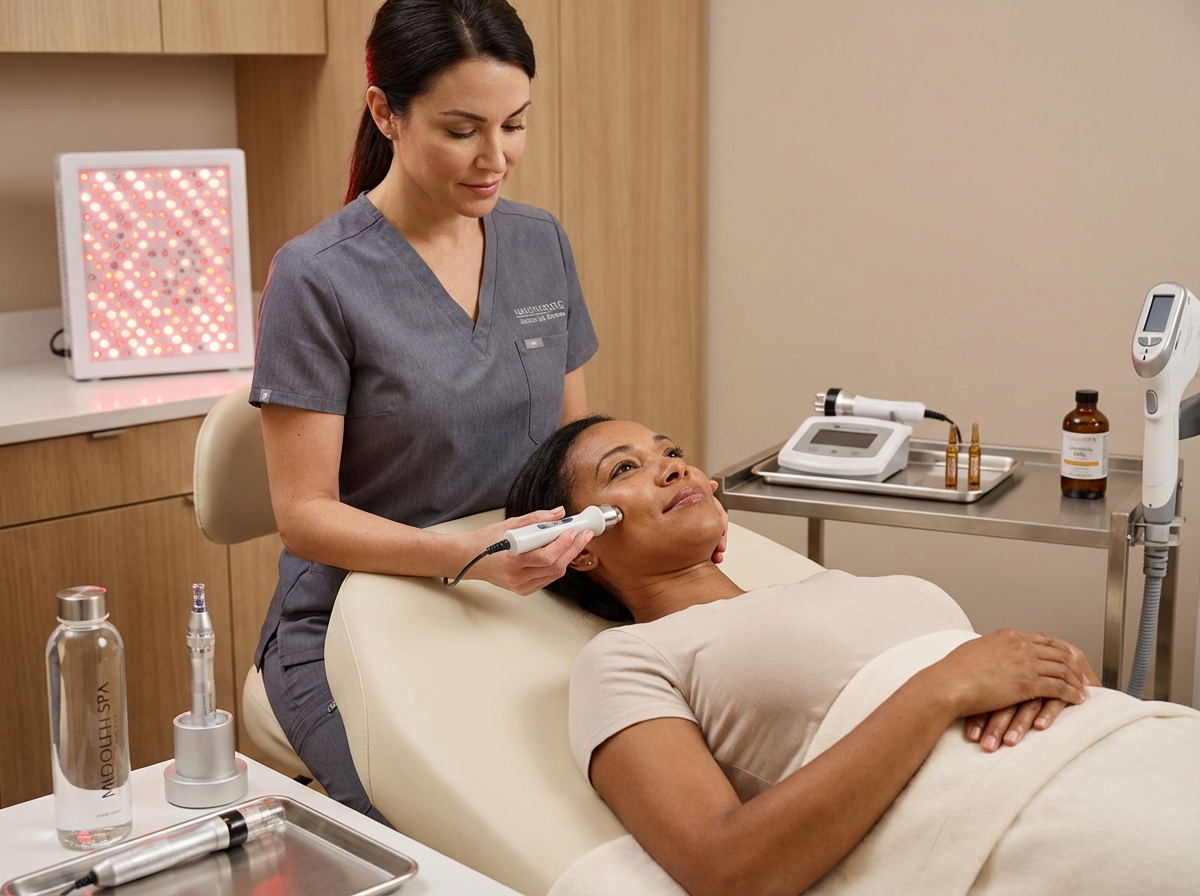
Microcurrent facials promise a lifted, firmer look using tiny electrical currents—but how real are the results? This article examines microcurrent alongside other non-invasive skin rejuvenation options: microneedling, laser facials, chemical peels, radiofrequency (RF), and LED. You’ll learn indications, expected downtime, comparative results, safety considerations, and practical tips to choose the right treatment for your skin and goals.
Understanding Microcurrent Facials
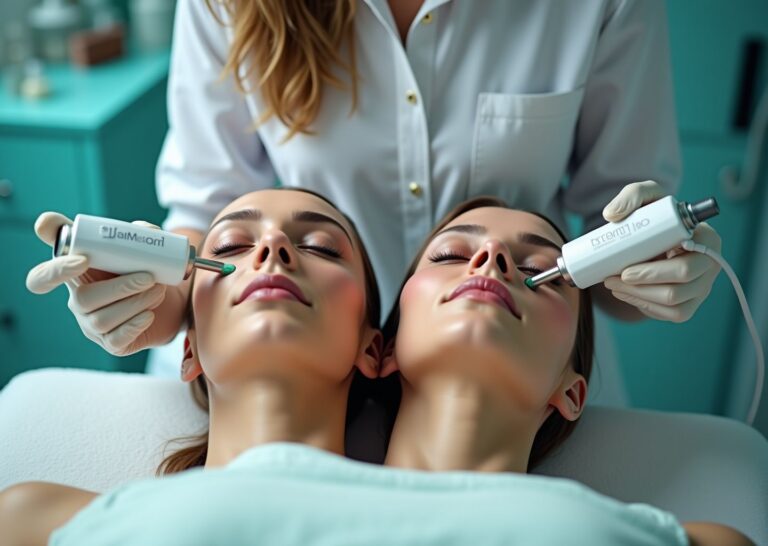
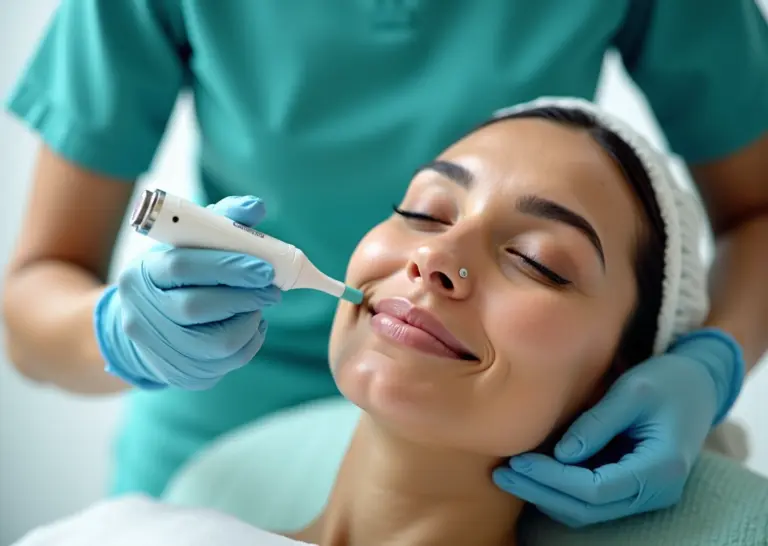
Microcurrent technology relies on the principle of bioelectricity to influence cellular behavior. The human body operates using internal electrical signals to regulate various functions. Microcurrent facials use low-level electrical currents in the microamp range, typically staying between 0 and 500 microamps. These currents are so subtle that they do not cause the visible muscle twitching associated with other electrical therapies. The primary goal involves boosting adenosine triphosphate (ATP) production. Research indicates that these currents can increase cellular energy by up to 500 percent in fibroblasts. This energy fuels the regeneration of cells and supports the natural repair processes of the skin. Unlike radiofrequency or laser treatments, microcurrent does not rely on thermal injury to stimulate change. It works through neuromuscular re-education. The current targets the facial muscle fibers, encouraging them to regain a more toned state. This process indirectly enhances the synthesis of structural proteins but does not directly heat the tissue to remodel collagen.
Technical Parameters and Device Standards
Professional devices used in clinical settings operate with specific parameters to ensure efficacy. These machines often utilize intensities ranging from 100 to 400 microamps, with some advanced units reaching up to 1000 microamps. Providers choose between different waveforms: square waves are common for lifting, while sine waves often help with product penetration. A typical professional session lasts between 45 and 60 minutes. The market in late 2025 shows a clear distinction between office-grade equipment and consumer tools. The FDA clears professional devices like the NuFACE Trinity as Class II medical devices for facial toning. At-home devices, such as the Foreo Bear, are often classified as cosmetic tools. These consumer versions operate at lower intensities, usually staying between 50 and 300 microamps, to ensure safety for untrained users. Professional treatments offer more customization and higher power for more significant results.
Clinical Evidence and Research Findings
The scientific community has scrutinized microcurrent efficacy through several studies. A 2023 study published by NCBI involved 42 participants, showing an 18 percent reduction in wrinkle depth after 30 sessions conducted over 12 weeks. Another observational study from 2024 followed 68 women between the ages of 35 and 60. Using 3D imaging, researchers recorded a 22 percent improvement in skin laxity after 8 sessions. A randomized controlled trial in 2022 measured muscle tone using ultrasound, finding a 15 percent increase in muscle thickness four weeks after a series of six treatments. Patient satisfaction remains high in recent data; a 2024 meta-analysis revealed that 85 percent of users reported a visible lift after 10 sessions. These gains were sustained for three months with regular maintenance. The data suggests that while the effects are measurable, they require consistency. Limitations in current research include small sample sizes and a lack of long-term follow-up beyond six months.
Expected Results and Patient Profiles
Patients often see an immediate change after one treatment. This temporary lift usually ranges from 10 to 20 percent and typically lasts between three and seven days. Cumulative results peak after four to six weeks of regular use. At this stage, firmness can improve by 25 to 30 percent in cases of mild laxity. The best outcomes occur in patients between the ages of 30 and 55. Individuals with mild to moderate skin sagging see the most benefit, while those with severe laxity or deep structural folds may find the results too subtle. The treatment also offers a lymphatic drainage effect, reducing facial puffiness by approximately 30 percent immediately after a session. Research shows that microcurrent stimulates fibroblasts, which helps with long-term skin health. You can find more about this at The Science Behind Microcurrent Treatments. The hydration levels of the skin also improve; a 2021 study noted a 28 percent increase in skin moisture 72 hours after treatment.
Protocols and Maintenance Schedules
Achieving lasting results requires a structured approach. A standard protocol involves an initial series of 5 to 12 sessions, occurring once or twice per week. After the initial phase, maintenance is necessary. Most providers recommend a follow-up every four to six weeks, which sustains about 80 percent of the initial gains. Skipping maintenance leads to a gradual loss of muscle tone as muscles eventually return to their original state. At-home devices require more frequent use to be effective; many manufacturers suggest using them five days a week for the first two months, dropping to three times a week for upkeep.
Professional sessions in the United States currently cost between $200 and $400. To make long-term care more accessible, many clinics in 2025 offer membership models, bringing the annual maintenance cost to around $1,200 for six sessions. At-home devices range from $195 to $400. Choosing a professional provider ensures the correct application of current to specific muscle groups. If you have a major event, it is best to schedule microcurrent on the day of the event for maximum lift, whereas other treatments like microneedling should be scheduled at least two weeks in advance.
Safety Information and Contraindications
Microcurrent is generally safe but has strict contraindications. Individuals with pacemakers or implanted electronic devices must avoid this treatment, as the electrical current can interfere with those devices. Pregnancy is a standard contraindication. People with epilepsy, active cancer, or heart conditions should not use microcurrent. Do not apply the current over open wounds, active skin infections, or severe acne breakouts.
Common side effects are mild. On a pain scale of 0 to 10, microcurrent typically ranks at a 1. About 5 to 10 percent of users experience a slight tingling sensation or a metallic taste in the mouth, particularly if they have dental fillings. Less than 2 percent report temporary redness. Proper pre-care involves avoiding retinoids for five days before the session. Post-care includes staying hydrated and avoiding hot showers for 24 hours after the treatment to maintain the skin’s moisture balance. When choosing a provider, look for licensed estheticians with specific certification in microcurrent technology and check for FDA clearance on any home-use device.
Market Trends and Future Directions
The microcurrent facial market continues to grow. In 2025, the market value reached over 429 million dollars, with projections suggesting a steady growth rate of 7.6 percent through 2035. This popularity stems from the demand for non-invasive options with zero downtime. New trends include the use of artificial intelligence to personalize current delivery; some 2025 devices claim a 20 percent increase in efficacy due to these adjustments. The technology is also being used to reduce inflammation, decreasing redness in acne-prone skin by up to 20 percent. As the technology evolves, the distinction between professional and home results may narrow, but the expertise of a trained provider remains a significant factor in achieving a balanced, lifted appearance. Understanding the science behind microcurrent helps in setting realistic expectations for this electrical facial therapy.
Overview of Other Non-Invasive Rejuvenation Options
The microcurrent facial is unique because it works on muscle tone and cellular energy without relying on heat or controlled injury. Most other non-invasive rejuvenation options achieve results by creating controlled damage to the skin layers. This damage forces the body to heal itself by producing new collagen and elastin. Understanding these mechanisms is key to choosing the right treatment for your specific goals.
Microneedling and Radiofrequency Microneedling
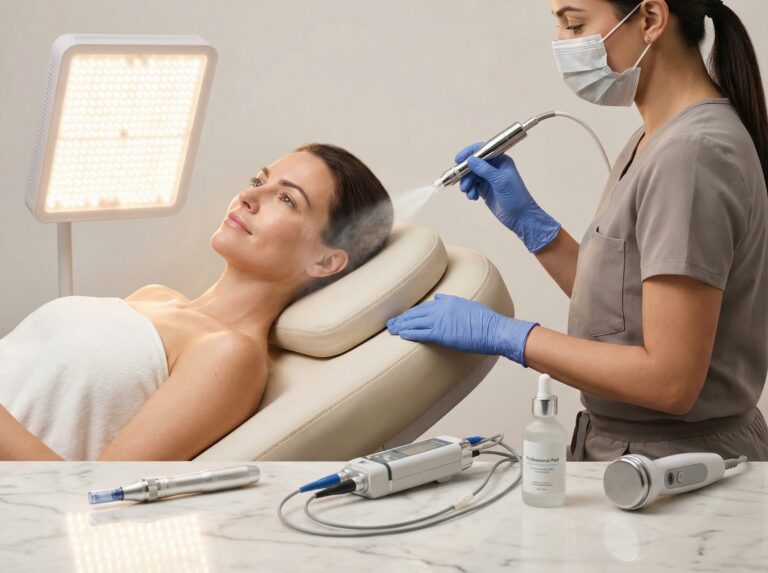
Microneedling uses fine needles to create thousands of microscopic channels in the skin. This controlled injury triggers the wound healing cascade, known as Collagen Induction Therapy (CIT). The depth of the needles is adjustable, typically ranging from 0.5 mm for texture improvement up to 2.5 mm for treating deeper acne scars. The deeper the penetration, the more dramatic the collagen remodeling and the longer the downtime.
Typical indications for standard microneedling include improving skin texture, reducing fine lines, and treating mild to moderate acne scarring. You usually need 3 to 6 sessions spaced about four weeks apart. Downtime involves pinpoint bleeding immediately after the procedure, followed by redness and swelling that lasts anywhere from 2 to 5 days.
Radiofrequency (RF) microneedling takes this a step further. The needles deliver thermal energy directly into the dermis, sometimes reaching depths of 4 mm. This heat contracts existing collagen immediately and provides a much stronger stimulus for new collagen production than mechanical needling alone. RF microneedling is highly effective for treating skin laxity and deeper, more stubborn scars. Because the heat is delivered below the surface via insulated needles, the downtime is often slightly less severe than deep manual needling, usually involving redness and swelling for 24 to 48 hours.
A significant safety consideration for microneedling is the risk of Post-Inflammatory Hyperpigmentation (PIH), especially in Fitzpatrick skin types IV through VI. The risk can be as high as 15 to 25% if the skin is not properly prepped or if post-care instructions are ignored. Combining microneedling with Platelet Rich Plasma (PRP) is common practice and can improve scar reduction results by up to 50%.
Radiofrequency Treatments for Laxity
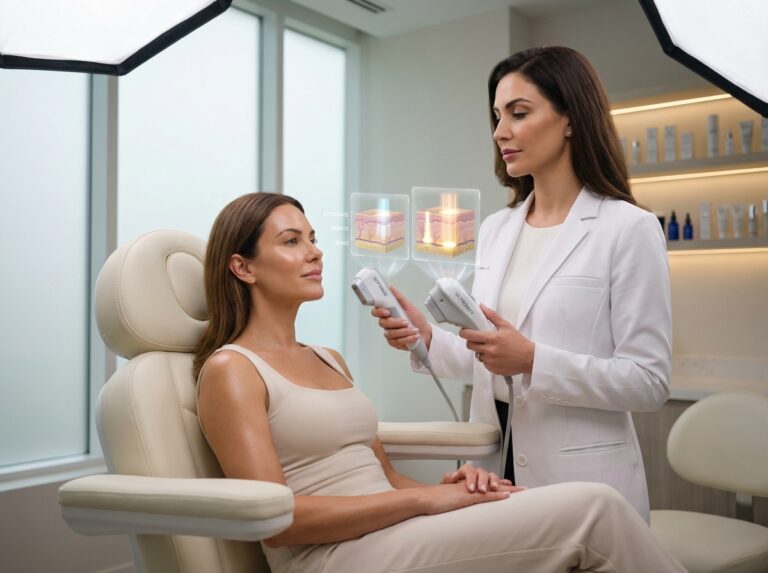
Beyond RF microneedling, traditional radiofrequency devices focus purely on thermal energy to tighten the skin. These treatments use electrical current to generate heat in the deeper dermal layers. Monopolar RF devices, like Thermage, deliver energy deep into the tissue (3 to 4.3 mm), targeting significant laxity with a single high-energy session. Bipolar RF devices target more superficial layers (1 to 2 mm), focusing on texture and mild tightening.
The mechanism relies on heating the collagen fibers to 40–60 degrees Celsius, causing an immediate contraction of 20 to 30%. This immediate tightening is followed by long-term collagen synthesis. RF treatments are indicated primarily for skin laxity, jowl reduction, and overall facial contouring. Downtime is minimal, typically just mild redness that resolves within 24 hours. A typical protocol involves 1 to 3 sessions spaced 4 to 6 weeks apart, with maintenance needed annually. Clinical trials show up to 35% improvement in laxity after a full course of treatment.
Laser Facials: Targeting Pigment and Texture
Laser treatments use focused light energy at specific wavelengths to target different components in the skin.
- Non-ablative fractional lasers (e.g., 1550 nm) create microscopic columns of thermal damage deep in the dermis while leaving the surface intact. This targets fine lines and texture with minimal downtime, usually 1 to 3 days of redness and swelling.
- Ablative lasers (e.g., CO2) vaporize the entire top layer of the epidermis. These are used for severe wrinkles and deep scarring but require significant downtime, often 7 to 10 days of peeling and wound care.
- Pico lasers use ultra-short pulses to shatter pigment particles without relying on bulk heat. They are highly effective for treating hyperpigmentation and melasma, showing up to 60% clearance after 6 sessions.
The selection of the laser wavelength and energy parameters directly dictates the indication and recovery. For Fitzpatrick IV to VI skin types, the risk of PIH with non-ablative lasers is around 18%, making careful parameter selection and cooling absolutely critical.
Chemical Peels: Controlled Exfoliation
Chemical peels use acidic solutions to remove damaged outer layers of skin, forcing regeneration. They are categorized by their depth of penetration.
- Superficial peels (AHAs/BHAs like 30–50% glycolic acid) target only the epidermis. They are great for mild texture issues and require 1 to 2 days of light flaking.
- Medium depth peels (25–35% TCA) reach the papillary dermis. These treat moderate sun damage and pigmentation but require 5 to 7 days of significant peeling and recovery.
- Deep peels (phenol) reach the reticular dermis and are reserved for severe photoaging. Recovery can take 10 to 14 days.
Chemical peels are excellent for hyperpigmentation, with superficial peels showing about 50% improvement. However, the PIH risk for medium peels in darker skin types is high, around 20%.
LED Phototherapy: Healing and Adjunctive Care
LED phototherapy uses specific light wavelengths to stimulate cellular processes without heat or injury. This modality has zero downtime and is often used as a supportive treatment. Red LED light (630–660 nm) boosts fibroblast activity and collagen production, showing up to 25% wrinkle reduction after 12 weeks of consistent use. Blue light (415 nm) targets acne bacteria. Near-infrared light (830 nm) is used primarily for reducing inflammation.
LED is safe for all skin types and conditions. It is frequently combined with more aggressive treatments like fractional laser or microneedling. Studies show that using LED immediately after a laser treatment can reduce the recovery time by up to 40% by minimizing inflammation.
Comparative Summary and Safety
When comparing these options, microcurrent stands alone as the only treatment focused on muscle tone and ATP boost without relying on thermal or mechanical injury. All other modalities require some level of downtime because they rely on controlled damage.
| Treatment | Primary Mechanism | Downtime (Typical) | Key Indication | PIH Risk (Fitz IV-VI) | Est. Cost (2025) |
| Microcurrent | Neuromuscular re-education | None | Muscle Tone, Lift | None | $200–$400 |
| Microneedling | Mechanical injury/CIT | 2-5 days redness | Texture, Acne Scars | 15-25% | $300–$800 |
| RF Microneedling | Thermal + Mechanical | 24-48 hours swelling | Laxity, Deep Scars | Moderate | $600–$1200 |
| Non-Ablative Laser | Fractional thermal injury | 1-3 days redness | Texture, Fine Lines | 18% | $500–$1500 |
| Medium Chemical Peel | Chemical exfoliation | 5-7 days peeling | Pigmentation, Sun Damage | 20% | $150–$1000 |
| Monopolar RF | Deep bulk heating | 24 hours mild redness | Skin Laxity/Tightening | Very Low | $2000–$4000 |
| Red LED Phototherapy | Cellular light stimulation | 0 hours | Inflammation, Healing | None | $50–$150 |
Skin type is the most critical factor in determining risk. Darker skin types (Fitzpatrick IV to VI) must approach medium peels and lasers with extreme caution due to the high risk of PIH. Active skin conditions also influence selection. For example, microneedling and medium peels are contraindicated if you have active acne, rosacea flare-ups, or eczema. Furthermore, medications like isotretinoin require a waiting period of 6 to 12 months before undergoing any procedure that causes deep dermal injury, such as microneedling or ablative lasers. Pregnancy is a contraindication for all these treatments except for LED phototherapy.
The next step is understanding how to match these powerful tools to your specific aesthetic goals and how to safely combine them for maximum benefit.
Choosing Treatments and Combining Them Safely
Choosing the right path for skin rejuvenation requires a clear understanding of your specific needs. A professional consultation is the first step in this process. During this meeting, you should provide a full medical history. This includes any autoimmune conditions or a history of epilepsy. You must disclose the use of implantable devices such as pacemakers or defibrillators. Microcurrent uses electrical paths that can interfere with these devices. If you are pregnant, most providers will advise against electrical or heat-based treatments. Mention any recent use of isotretinoin. Most experts recommend waiting six to twelve months after finishing this medication before starting microneedling or aggressive lasers. This wait time ensures your skin can heal properly without scarring.
Matching Goals to Modalities
You need to identify if your primary concern is tone, volume, texture, or pigmentation. Microcurrent is excellent for muscle tone and subtle lifting. It works by sending low-level currents to the facial muscles. If you are looking for a significant lift in the lower face, you might consider radiofrequency. This technology uses heat to contract collagen fibers. For those focused on surface issues like acne scars or large pores, microneedling is the standard choice. It creates controlled micro-injuries to trigger the natural healing response. Pigmentation issues like sun spots or melasma usually require targeted lasers or chemical peels to break down excess melanin.
Safe Sequencing and Spacing
Combining treatments can lead to better results, but the order matters for safety. If you plan to use microcurrent alongside more invasive procedures, you must allow the skin to recover. After a microneedling session or a fractional laser treatment, wait at least two weeks before using a microcurrent device. Your skin barrier needs to be fully intact before you apply conductive gels and electrical stimulation. If you receive Botox or dermal fillers, many practitioners suggest waiting at least two weeks to ensure the injectables have settled. However, some modern protocols allow for microcurrent on the same day as Botox if done before the injections. Always follow the specific advice of your injector.
LED phototherapy is a great adjunctive therapy that you can use almost immediately after other treatments. Red light and near-infrared wavelengths help reduce inflammation and speed up the healing process. Using LED after a chemical peel or laser session can cut down on redness and swelling. For long-term results, microcurrent usually requires an initial series of ten to twelve sessions spaced once a week. Maintenance sessions every four to six weeks help sustain the muscle tone. Lasers and microneedling are typically done in a series of three to six sessions with four weeks between each appointment.
Pre-Procedure Preparation
Preparation starts at home at least one week before your appointment. Stop using retinoids, alpha hydroxy acids (AHAs), and beta hydroxy acids (BHAs) five days prior to any professional treatment. These ingredients can make the skin too sensitive. Avoid direct sun exposure and tanning beds for at least two weeks. Sunburned skin cannot be treated with lasers or peels. If you are prone to cold sores, ask your doctor for an antiviral medication to take before microneedling or laser work. You should also avoid anticoagulants like aspirin or ibuprofen for a few days if your doctor says it is safe. This helps minimize bruising during microneedling or injectable treatments.
Post-Procedure Care and Complications
After your treatment, the goal is protection and hydration. Use a gentle cleanser and a bland moisturizer. Sunscreen is mandatory every single day. Choose a physical blocker with zinc oxide or titanium dioxide to avoid irritating the treated area. Avoid hot showers, saunas, and intense exercise for 24 hours after microcurrent or RF treatments. For microneedling and lasers, you may need to wait 48 hours. Do not pick at any flaking skin after a chemical peel. This can lead to permanent scarring or pigment changes.
Watch for signs of complications. Normal side effects include mild redness or a slight tingling sensation. If you experience prolonged swelling, blistering, or extreme pain, contact your clinic immediately. Persistent redness that lasts more than a week after a non-ablative treatment could indicate a secondary infection or a compromised barrier. Early intervention is key to preventing long-term damage.
Selecting a Practitioner
The quality of your results depends on the skill of the person performing the treatment. Look for credentials such as a board-certified dermatologist or a licensed aesthetician with specific certifications in advanced modalities. Ask about the devices they use. Reputable clinics are transparent about their technology and use FDA-cleared equipment. Review before and after photos of actual patients with similar skin tones to yours. A professional clinic will always perform a thorough consultation and a patch test for peels or lasers. This is especially important for those with pigment-rich skin. Industry analysis, such as Why Microcurrent Facial Devices Are Trending in 2025, attributes the treatment’s popularity partly to its high safety profile when used correctly by trained professionals.
Protecting Pigment-Rich Skin
Individuals with Fitzpatrick IV through VI skin types face a higher risk of post-inflammatory hyperpigmentation (PIH). This occurs when the skin produces extra melanin in response to heat or injury. To reduce this risk, use a tyrosinase inhibitor for two weeks before your procedure. Ingredients like kojic acid, azelaic acid, or vitamin C can help stabilize pigment-producing cells. When choosing a laser, look for options like the Pico laser which uses pressure rather than heat to treat the skin. Always insist on a lower energy setting for the first session to see how your skin reacts. Consistent use of a broad-spectrum sunscreen is the most effective way to prevent PIH from worsening after any treatment. Clinical data, including Investigating the therapeutic efficacy of microcurrent therapy, suggests that low-level stimulation can actually aid in the healing process without triggering the inflammatory response seen in more aggressive heat-based therapies.
Conclusions and Practical Takeaways
Choosing the right path for skin rejuvenation in late 2025 requires a clear understanding of how different technologies interact with your biology. Microcurrent facials have secured a permanent spot in the professional skincare landscape because they offer something unique. They do not rely on controlled injury or heat. Instead, these treatments use low-level electrical currents to communicate with your muscles and cells. This approach mimics the natural bioelectricity of the human body. It is a gentle way to encourage the face to look more lifted and refreshed without the need for recovery time.
The primary benefit of microcurrent lies in its ability to boost adenosine triphosphate (ATP). Research shows that these sessions can increase ATP production by up to 500 percent. This molecule acts as the fuel for your cells. When ATP levels are high, your skin can repair itself faster and produce more structural proteins. While it does not heat the tissue like radiofrequency, it indirectly supports collagen and elastin synthesis. This makes it an excellent choice for individuals between the ages of 30 and 55 who notice early signs of sagging or a loss of facial definition.
Comparing Non-Invasive Modalities
It is helpful to see where microcurrent fits among other popular treatments. Each technology targets a specific layer of the skin or a different concern. If your main goal is to fix deep acne scars or rough texture, microneedling is often the superior choice. It creates physical micro-injuries that force the skin to rebuild. Radiofrequency is better for significant skin laxity because it uses heat to contract collagen fibers immediately. Lasers are the gold standard for removing sun spots or redness. Microcurrent acts more like a workout for the facial muscles. It provides a subtle lift that looks natural and improves over time with consistent use.
The cumulative nature of microcurrent means that results build upon each other. A single session might give you a visible lift for a few days. This is great for a special event. However, a 2024 meta-analysis showed that patient satisfaction reaches 85 percent only after a full series of ten treatments. These gains can be sustained for several months if you follow a proper maintenance schedule. Many people find that one professional session every four weeks keeps their facial contours looking sharp.
Your Decision Checklist
Before you book your next appointment, use this checklist to ensure you are making the best choice for your skin and safety. It is important to be thorough during the consultation phase.
- Identify your primary skin concern. Determine if you are looking for a lift in the muscles or a change in the surface texture. Microcurrent is for lifting. Microneedling or peels are for texture and pigment.
- Check your Fitzpatrick skin type and risk factors. People with darker skin tones (Fitzpatrick IV through VI) have a higher risk of hyperpigmentation with lasers and deep peels. Microcurrent is generally safe for all skin types.
- Verify practitioner credentials and device claims. Ensure your professional is a licensed aesthetician or a board-certified dermatologist. Ask if they use FDA-cleared devices for professional use rather than cosmetic-grade home tools.
- Ask about downtime and patch tests. Even though microcurrent has no downtime, other treatments like TCA peels require a week of recovery. Always request a patch test if you have sensitive skin or a history of allergies.
- Plan your post-procedure sun protection and aftercare. Every rejuvenation treatment makes your skin more vulnerable to the sun. You must commit to daily SPF 30 or higher and follow specific hydration protocols provided by your specialist.
Safety remains the most critical factor when using electricity or heat on the face. Microcurrent is very safe for most people, but it is not for everyone. You should avoid this treatment if you have a pacemaker or an implanted defibrillator. It is also contraindicated for individuals with epilepsy or those who are pregnant. If you experience any unusual side effects like prolonged redness or blistering after any non-invasive procedure, you should seek a medical evaluation immediately. A board-certified dermatologist can help manage complications and prevent long-term scarring.
The future of skincare in 2025 is about personalization. Many professionals now combine microcurrent with LED therapy or light chemical peels to achieve better results. For example, using red LED light alongside microcurrent can improve skin tone by 35 percent compared to using electricity alone. This holistic approach addresses both the muscle structure and the skin surface. Always consult with a licensed professional to create a plan that fits your specific needs and budget. They can help you navigate the costs, which typically range from $200 to $400 per session in the United States. Investing in a professional consultation ensures that you spend your money on treatments that actually work for your unique biology.
References
- Why Microcurrent Facial Devices Are Trending in 2025 – SP Beauty — Research has shown that microcurrent treatments can significantly improve facial muscle tone, reduce wrinkles, and enhance overall skin …
- How microcurrent facial treatment is redefining anti-ageing skincare — Microcurrent facial treatment refers to the use of low-level electrical currents that activate facial muscles and enhance cellular energy (ATP).
- The Science Behind Microcurrent Treatments: How They Lift and … — Research shows that microcurrent stimulates fibroblasts, speeding up collagen and elastin production, which are both essential for firmer, more …
- The Future of Skincare: Why Microcurrent Technology Is Taking Over — These currents stimulate facial muscles, increase cellular activity, and boost collagen and elastin production. The result? Firmer, lifted skin …
- Investigating the therapeutic efficacy of microcurrent therapy – PMC — Furthermore, extensive research demonstrates that MIC minimizes wound area in PI and burns, decreases healing time, and reduces pain by …
- Microcurrent Facial Market Size & Trends 2025-2035 — The microcurrent facial market is valued at USD 429.33 million in 2025. As per FMI's analysis, the market will grow at a CAGR of 7.3% and reach USD 868.54 …
- Microcurrent Therapy for Skin Rejuvenation: Efficacy, Safety, and … — Clinical evidence supports its efficacy in reducing wrinkles, improving laxity, and enhancing texture, with high tolerability and minimal side …
- Evaluating the Effectiveness and Safety of Home Facial Antiaging … — The devices showed effectiveness in improving facial skin aging but require further safety verification. The potential of meridian theory …