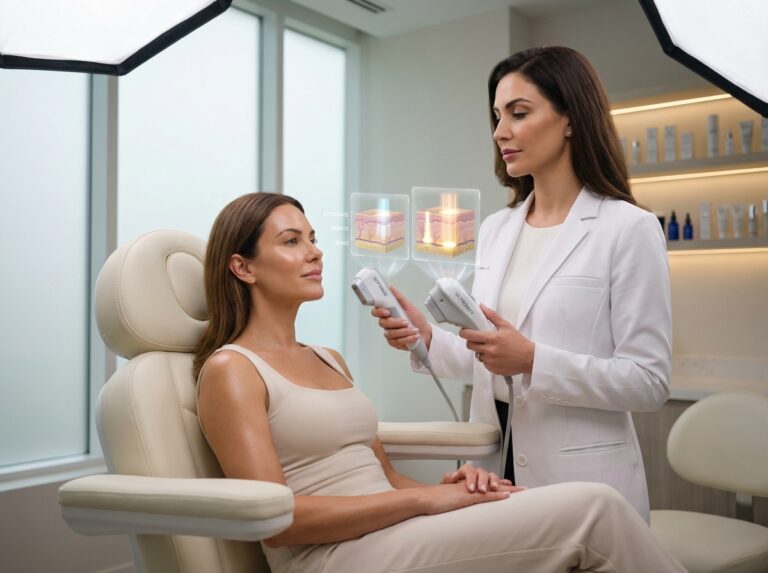
Non-invasive skin rejuvenation offers fast, visible improvement without surgery. This article focuses on HydraFacial as a tech-driven option and explains how it compares with microneedling, laser facials, chemical peels, radiofrequency, and LED therapies. You will learn indications, expected results, typical downtime, safety tips, and how to choose the right treatments for different skin concerns and skin types.
How non-invasive skin rejuvenation works
Non-invasive skin rejuvenation relies on a fundamental biological principle: triggering the body’s natural repair mechanisms without causing significant damage to the structural integrity of the tissue. Understanding this requires a look at the skin’s architecture. The skin consists of two primary layers relevant to these treatments. The epidermis is the outermost layer, acting as a barrier against environmental toxins and preventing water loss. The dermis sits beneath it, providing structural support through a matrix of collagen and elastin fibers.
Collagen gives skin its tensile strength, while elastin allows it to snap back after stretching. As we age, the production of these proteins slows down, and the breakdown of existing collagen accelerates due to sun exposure and oxidative stress. Most rejuvenation treatments aim to reverse this by stimulating the fibroblasts in the dermis to produce new matrix components. The method of stimulation varies by modality: some use heat, others use light, and many use controlled mechanical injury.
Mechanisms of Action in Skin Remodeling
The clinical logic behind these treatments falls into a few distinct categories. Understanding these mechanisms helps explain why a patient might choose one treatment over another.
Controlled Micro-Injury
Treatments like microneedling rely on physical trauma. Fine needles create thousands of microscopic channels in the skin. This does not remove tissue; rather, it triggers a wound-healing cascade. The body perceives a breach and rushes to repair it, releasing growth factors and stimulating the production of new collagen and elastin. Because the epidermis remains largely intact, the risk of infection is reduced compared to ablative procedures.
Thermal Injury and Remodeling
Lasers and radiofrequency (RF) devices use energy to generate heat. The target is often water within the cells or specific chromophores like melanin or hemoglobin. When the tissue reaches a specific temperature—typically between 40 and 42 degrees Celsius for mild remodeling or higher for coagulation—it causes immediate contraction of collagen fibers. The long-term effect is the stimulation of neocollagenesis, where the body replaces the heat-damaged collagen with new, tighter fibers over several months.
Chemical Exfoliation
Chemical peels work by dissolving the bonds between skin cells. Alpha hydroxy acids (AHAs) and beta hydroxy acids (BHAs) lower the pH of the skin, loosening the “glue” holding dead corneocytes together on the surface of the epidermis. Stronger peels penetrate deeper, causing protein coagulation and forcing the skin to shed layers. This reveals fresher tissue underneath and stimulates cell turnover.
Photobiomodulation
LED therapy operates differently; it does not cause injury. It uses specific wavelengths of light to interact with cellular mitochondria. Red light stimulates adenosine triphosphate (ATP) production, giving cells more energy to perform repair functions. Blue light targets the bacteria responsible for acne. This is a non-thermal and non-traumatic approach.
The HydraFacial Framework
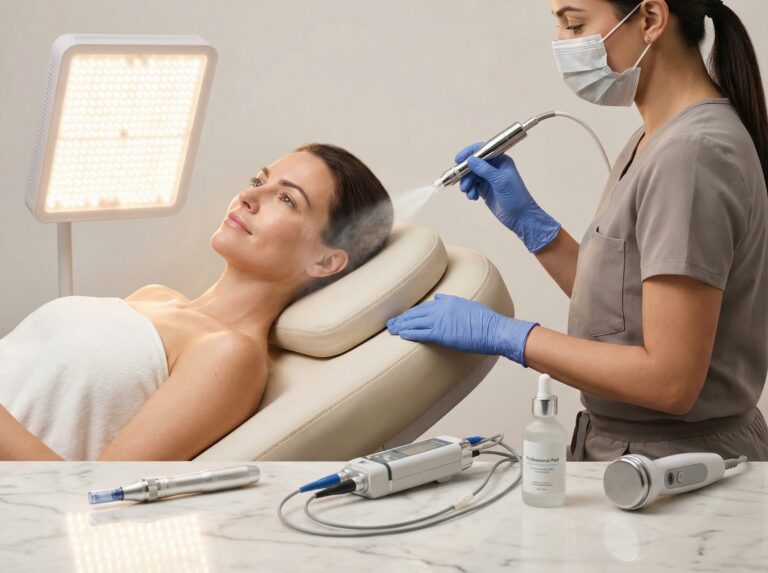
HydraFacial occupies a unique space in this landscape. It combines mechanical exfoliation with chemical infusion and vacuum extraction. The mechanism is distinct because it avoids the trauma associated with needles or high heat. The core technology is hydradermabrasion, which uses a patented vortex tip to simultaneously suction impurities and deliver fluids.
The process begins with physical exfoliation. The spiral design of the tip removes the stratum corneum, the outermost layer of dead skin cells. Removing this layer improves light reflection, creating the immediate “glow” patients see. Simultaneously, the device delivers a mix of salicylic and glycolic acids to soften sebum in the pores. The vacuum suction then physically extracts this debris.
The final phase involves saturation. The skin is drenched in antioxidants and peptides. Because the barrier has been cleared of dead cells, the penetration of these ingredients is enhanced. The treatment hydrates the skin rather than drying it out, supporting the barrier function immediately. It does not require the recovery time needed for the barrier to heal itself after a laser treatment or deep peel.
Biological Timelines for Results
Patients often confuse immediate aesthetic improvements with long-term biological changes. It is important to distinguish between the two.
Immediate Response (0 to 7 Days)
The “glow” seen right after a HydraFacial or mild peel is primarily optical. Smooth surfaces reflect light better than rough surfaces. Exfoliation removes the rough, dead cells, while intense hydration plumps the epidermal cells, reducing the appearance of fine lines caused by dehydration. Increased blood circulation from the vacuum or massage brings oxygen to the surface, creating a rosy, healthy appearance. These effects are temporary, typically lasting five to seven days.
Pigment Regulation (4 to 8 Weeks)
Treating hyperpigmentation requires patience. Melanin is produced by melanocytes in the basal layer of the epidermis. Treatments that target pigment work by speeding up cell turnover or breaking down pigment clusters. As the skin sheds, the pigmented cells rise to the surface and flake off. This cycle takes about 28 days in younger adults but slows down as we age. Significant improvement in sun spots or melasma usually requires multiple cellular turnover cycles.
Collagen Remodeling (4 to 12 Weeks)
True structural change takes the longest. The process of building new collagen is slow. After a microneedling or RF session, the inflammatory phase lasts a few days, followed by the proliferative phase where fibroblasts create a new matrix. The remodeling phase can last for months. Patients might not see the full tightening or smoothing effect of a collagen-stimulating treatment until three months after their final session.
Individual Factors Influencing Treatment Choice
Biology varies from person to person. A treatment that works for one individual might be ineffective or dangerous for another. Several key factors dictate the clinical approach.
The Fitzpatrick Scale
This scale classifies skin types from I (very fair, always burns) to VI (deeply pigmented, never burns) and is the most critical factor in safety. Darker skin types (IV-VI) have more active melanocytes. Injury or heat can trigger post-inflammatory hyperpigmentation (PIH), meaning the treatment meant to fix the skin actually causes dark spots. HydraFacial is generally safe for all Fitzpatrick types because it does not use heat. Lasers and deep peels require extreme caution and specific wavelengths for darker skin.
Age and Skin Quality
A patient in their 20s usually has high collagen density; their main concerns are often acne or prevention, responding well to superficial treatments like HydraFacial or light peels. A patient in their 50s has thinner skin and less active fibroblasts, often requiring stronger modalities like RF or microneedling to generate a visible lifting effect. The skin’s ability to heal also slows with age, affecting downtime expectations.
Medical History and Lifestyle
Certain conditions contraindicate specific treatments. Active acne is a major consideration; you cannot microneedle over active pustules as this spreads bacteria. HydraFacial is often preferred here because it extracts bacteria without spreading it. Rosacea presents another challenge, as the heat from lasers or RF can trigger a flare-up. Mechanical abrasion must be very gentle. A history of cold sores is also relevant, as trauma around the mouth can trigger a breakout. Prophylactic antivirals are often prescribed.
Medications play a role. Isotretinoin (Accutane) significantly thins the skin and alters wound healing. Most providers require a waiting period of six to twelve months after stopping this medication before performing invasive procedures. Even topical retinoids usually need to be paused five to seven days before treatment to prevent excessive irritation.
Safety and Barrier Function
The skin barrier is the first line of defense. Aggressive over-treatment can compromise this barrier, leading to chronic inflammation, sensitivity, and breakouts. The trend in 2025 is moving toward “barrier-first” treatments, with the goal of strengthening the skin rather than constantly stripping it. HydraFacial aligns with this by infusing hydration. Other treatments require a strict post-procedure protocol to restore the barrier, including the use of occlusive moisturizers and strict sun avoidance.
Treatment breakdown and clinical guidance
Understanding the biological basis of skin rejuvenation helps you appreciate what happens in the treatment room. We now move from theory to practice. This guide breaks down the most effective non-invasive procedures available in 2025, focusing on clinical protocols, patient experiences, and safety profiles.
HydraFacial: The Standard for Hydro-Dermabrasion
HydraFacial remains a dominant force in aesthetic treatments because it bridges the gap between a relaxing spa facial and a clinical resurfacing procedure. It utilizes a patented Vortex-Fusion delivery system, distinguishing it from traditional microdermabrasion which relies on manual abrasion.
Mechanism and Protocol
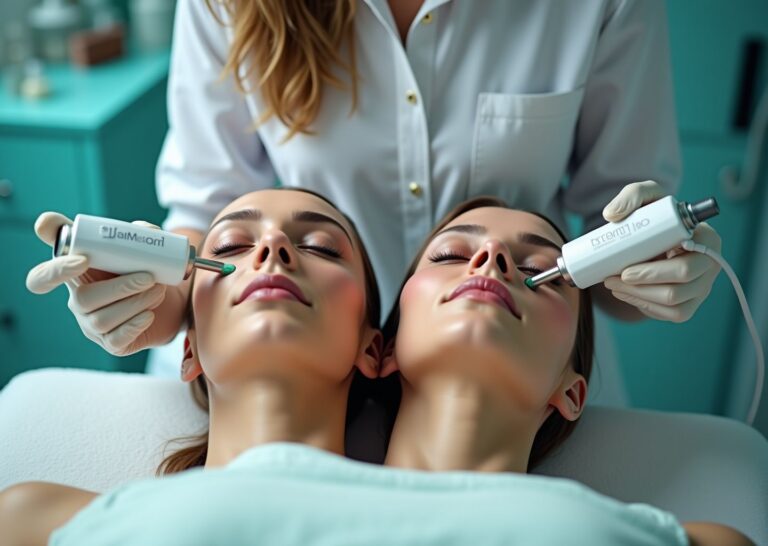
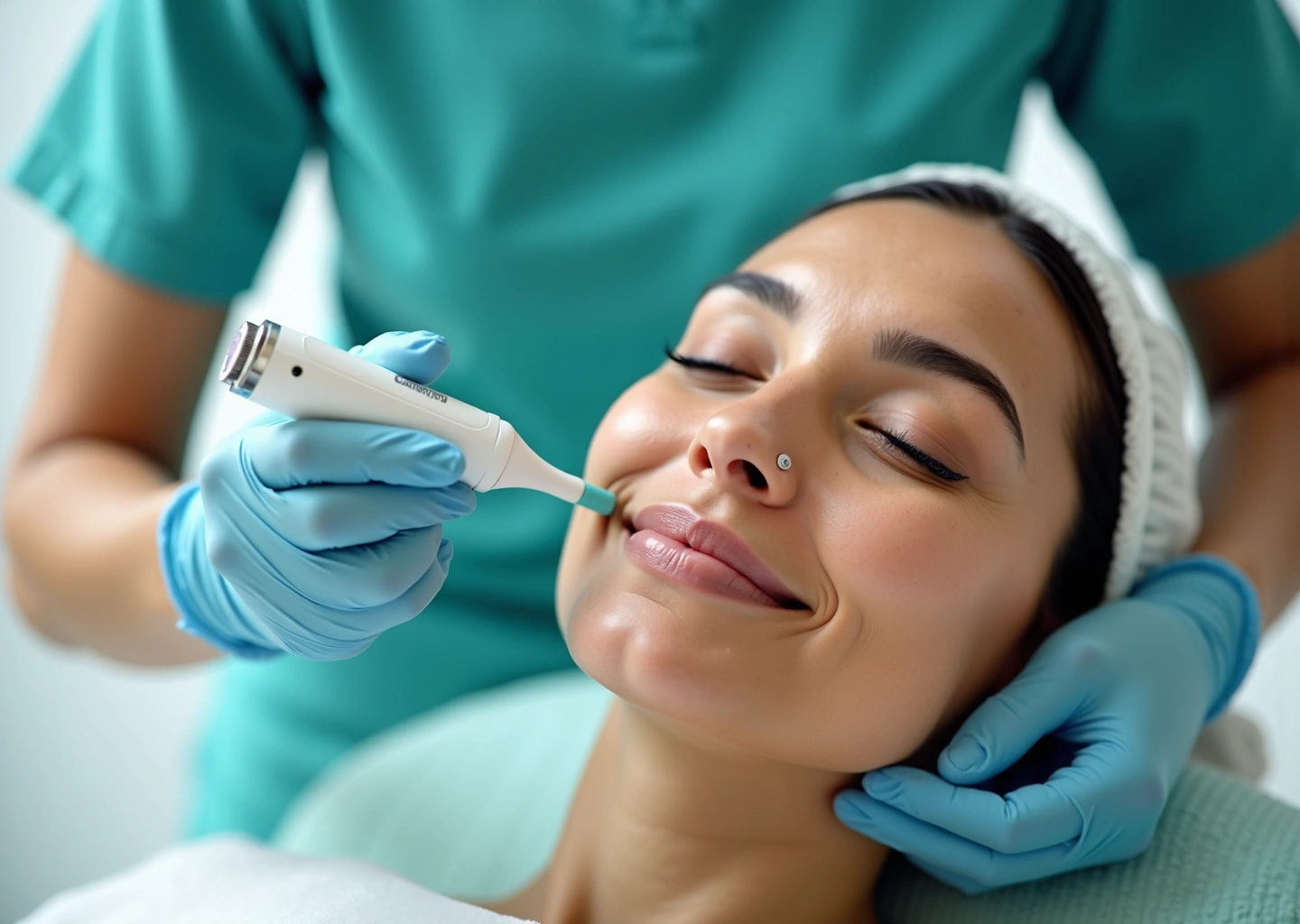
The device uses a handheld wand with a spiral tip that creates a vortex effect to dislodge impurities while simultaneously delivering proprietary serums. The typical session lasts 30 minutes and follows three specific steps:
- Cleanse and Peel. The provider uses a tip to gently exfoliate the stratum corneum. A mix of glycolic and salicylic acid softens the pores.
- Extract and Hydrate. The device uses automated vacuum suction to remove debris from pores (painless extraction) while intense moisturizers quench the skin.
- Fuse and Protect. The final step saturates the skin with antioxidants and peptides to maximize the glow.
Patient Experience and Results
You will feel a cool sensation and a mild vacuum tugging on your skin. It is not painful; many patients describe it as a wet paintbrush moving over the face. You can see the extracted impurities in a waste container at the end of the session, providing visual confirmation of the deep clean. Results are immediate, with noticeable radiance and smoother texture typically lasting 5 to 7 days. Long-term skin health improves with monthly maintenance.
Cost and Considerations
In the United States, a standard session ranges from $150 to $300. Prices increase if you add boosters or lymphatic drainage. It is safe for all skin types, including sensitive skin, but should be avoided if you have an active rash or sunburn.
Microneedling: Collagen Induction Therapy
Microneedling is the go-to option for textural issues, addressing acne scars, large pores, and fine lines more aggressively than a HydraFacial.
Clinical Application
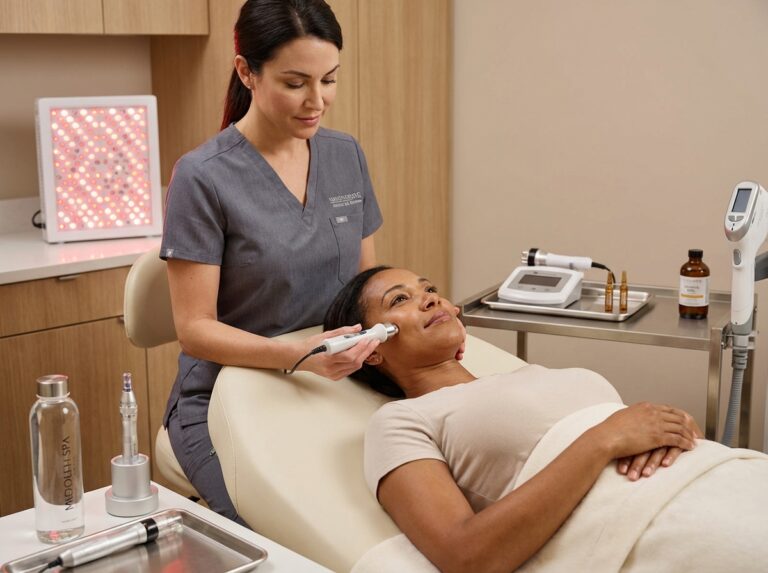
A device with fine sterile needles creates thousands of microscopic channels in the dermis. This controlled injury triggers the body to produce new collagen and elastin. Providers often apply a topical numbing cream 30 minutes prior to the procedure to minimize discomfort. You might feel vibration and a scratching sensation near bony areas like the forehead.
Recovery and Timeline
Social downtime is usually 24 to 72 hours. You will look like you have a mild to moderate sunburn immediately after, and skin may feel tight and dry. Visible improvements in texture appear after 4 to 6 weeks as collagen remodels. A series of 3 to 6 sessions spaced 4 weeks apart yields the best results for acne scarring.
The cost per session typically falls between $300 and $700 depending on the provider and location. Adding Platelet-Rich Plasma (PRP) can increase this price but may accelerate healing.
Laser Facials and Light Therapies
Laser treatments vary significantly in intensity. We focus here on non-ablative options often called “lunchtime lasers” which target pigment and redness without breaking the skin surface.
Targeting Pigment and Redness
These devices use light energy to heat specific targets in the skin, such as melanin in sun spots or hemoglobin in broken capillaries. The heat destroys the target while leaving surrounding tissue unharmed. It is excellent for sun damage and rosacea management.
Safety and Skin Tone
Assessment of your Fitzpatrick skin type is critical here. Darker skin tones (Fitzpatrick IV-VI) have a higher risk of post-inflammatory hyperpigmentation with certain lasers. A HydraFacial is generally safer for these skin types if the goal is general brightness. Always ensure your provider uses a device cleared for your specific skin tone.
Chemical Peels: Controlled Exfoliation
Chemical peels use acids to dissolve the bonds holding dead skin cells together. They range from superficial to deep.
Light vs. Medium Peels
A light peel uses alpha-hydroxy acids (AHA) or beta-hydroxy acids (BHA) to provide subtle brightening with little to no visible peeling. A medium peel, often using TCA (trichloroacetic acid), penetrates deeper to treat significant pigmentation and wrinkles but requires 3 to 7 days of downtime where the skin physically sheds.
Choose a light peel for general maintenance. Choose a medium peel if you can tolerate downtime and need to correct years of sun damage. Costs range from $150 for light peels to over $400 for advanced formulations.
Radiofrequency (RF) and LED Phototherapy
These modalities rely on energy rather than physical exfoliation.
Radiofrequency for Tightening
RF devices deliver thermal energy deep into the dermis. This heat contracts existing collagen fibers and stimulates new production. It is the preferred non-invasive choice for mild skin laxity. You will feel intense warmth similar to a hot stone massage. Redness usually subsides within a few hours.
LED Phototherapy
Light Emitting Diode (LED) therapy is non-thermal. Blue light targets acne-causing bacteria, while red light reduces inflammation and supports collagen. It is painless and often added to other treatments. The Complete Beginners Guide to Hydrafacials notes that LED is frequently paired with HydraFacial to enhance results.
Comparative Guide and Combination Protocols
Selecting the right treatment depends on your primary concern and downtime tolerance. The following table outlines the key differences to help you decide.
| Feature | HydraFacial | Microneedling | Chemical Peel (Light) | Laser Facial (Gentle) |
|---|---|---|---|---|
| Primary Goal | Instant Glow & Hydration | Texture & Scars | Exfoliation & Brightness | Pigment & Redness |
| Downtime | None (0 days) | 1-3 days | 1-3 days (flaking) | 0-2 days |
| Pain Level (1-10) | 1 (Relaxing) | 4-6 (Numbing used) | 3-5 (Tingling) | 3-5 (Snapping feeling) |
| Best For | Events, Maintenance | Acne Scars, Pores | Acne, Dullness | Sun Spots, Rosacea |
Stacking Treatments
Providers often combine modalities for synergistic effects. A common protocol involves performing a HydraFacial followed immediately by LED therapy; the clean skin allows better light penetration. Another option is alternating treatments: you might schedule a microneedling session to treat scars and follow it two weeks later with a HydraFacial to maintain hydration during the healing phase.
Do not combine aggressive exfoliation methods in one visit. Doing a medium depth chemical peel on the same day as microneedling creates excessive trauma and increases the risk of scarring.
Common questions and answers
You have read through the technical breakdowns and the clinical science. Below are the honest answers to the most frequent concerns patients have regarding HydraFacial and other non-invasive rejuvenation methods, focusing on safety, logistics, and realistic expectations for 2025.
Is the treatment actually painless, or is that just marketing?
The Reality: Pain tolerance is subjective, but there is a clear hierarchy. HydraFacial is genuinely painless for the vast majority of people. Most patients describe the sensation as a cool, wet paintbrush moving over the face with a slight suction. The exfoliation step might feel slightly scratchy, but it does not sting.
Comparisons:
- Chemical Peels: Even light peels often cause a tingling or prickly sensation that can last for a few minutes.
- Microneedling: This involves physical needles entering the skin. While numbing cream is applied, you will likely feel pressure and vibration. In sensitive areas like the forehead or upper lip, it can be uncomfortable.
- Laser Facials: Depending on the wavelength, these often feel like a rubber band snapping against the skin.
How long will the “glow” really last?
The Reality: The immediate radiance seen right after a HydraFacial is primarily due to physical exfoliation and intense hydration. This “glass skin” effect typically lasts between 5 to 7 days. As the infused serums are absorbed and dead skin cells begin to accumulate again, the high-gloss finish fades.
For treatments targeting collagen, like RF or microneedling, the “glow” is different. You might look red or puffy initially. The real aesthetic improvement—tighter pores and smoother texture—appears much later and lasts longer, often several months.
Can I combine treatments to get results faster?
The Reality: Yes, “stacking” treatments is standard practice, but you cannot combine everything randomly. The goal is to maximize results without destroying your skin barrier.
Common Safe Combinations:
- HydraFacial + LED Light Therapy: The most common pairing. The facial clears the pores, and the LED light calms inflammation and stimulates collagen immediately after.
- HydraFacial + Lymphatic Drainage: Often done in the same session to reduce puffiness.
- Microneedling + PRP: Using your own platelets enhances the healing of the micro-injuries.
Risky Combinations:
Do not combine a deep chemical peel with a laser treatment or aggressive microneedling on the same day unless your provider is following a very specific, advanced protocol. Over-traumatizing the skin increases the risk of post-inflammatory hyperpigmentation (PIH) and prolonged redness.
Who is absolutely NOT a candidate for these treatments?
The Reality: While HydraFacial is marketed as suitable for everyone, there are hard stops for safety.
Contraindications include:
- Active Infection: If you have a cold sore (herpes simplex) or active bacterial infection on the face, any device can spread it.
- Recent Isotretinoin (Accutane) Use: You typically need to be off this medication for 6 to 12 months before doing any resurfacing treatment because your skin’s healing capacity is altered.
- Autoimmune Diseases: Conditions like lupus can make your skin react unpredictably to the inflammation caused by microneedling or lasers.
- Pregnancy: Most providers will not perform treatments involving electrical current (like RF) or salicylic acid (often used in HydraFacial) on pregnant women.
What is the downtime? Can I wear makeup immediately?
The Reality: “No downtime” is a popular phrase, but it depends on your definition.
- HydraFacial: Truly zero social downtime. You might be slightly pink for 20 minutes due to circulation. You can apply makeup immediately, though most providers recommend leaving the skin bare to let the serums work.
- Microneedling: You will look like you have a mild to moderate sunburn for 24 to 48 hours. You should strictly avoid makeup for at least 24 hours to prevent infection in the open micro-channels.
- Chemical Peels: Light peels have little downtime. Medium peels will result in visible flaking or peeling skin starting around day 3 and lasting up to a week. Makeup looks terrible over peeling skin, so plan accordingly.
How soon will I see collagen changes or wrinkle reduction?
The Reality: Patience is biologically required here. Collagen remodeling is a slow physiological process.
- Immediate: You see hydration and plumpness (temporary).
- 4 Weeks: Early changes in texture and pore size may become visible after microneedling or RF.
- 3 to 6 Months: This is when the real collagen maturation happens. The results from a series of treatments you do in January might not be fully visible until April or May.
How many sessions do I actually need for acne scarring or pigmentation?
The Reality: One session will not fix textured scarring or deep pigment.
Typical Protocols:
- General Radiance/Maintenance: 1 session monthly.
- Hyperpigmentation (Sun spots/Melasma): Usually 3 to 6 sessions spaced 2-4 weeks apart. This often requires a mix of peels and light-based therapies.
- Acne Scarring (Indented scars): This is the hardest to treat. Expect 4 to 6 sessions of microneedling or RF microneedling. Significant scarring may never fully disappear but can be improved by 50-70%.
How much does this cost, and will insurance cover it?
The Reality: In the United States, these are elective cosmetic procedures and are not covered by insurance.
Estimated Cost Ranges (2025 National Averages):
- HydraFacial: $150 – $300 per session.
- Chemical Peels: $150 – $400 depending on depth.
- Microneedling: $300 – $700 per session.
- RF Microneedling / Laser: $600 – $1,500 per session.
Is there a risk of pigmentary changes for darker skin tones?
The Reality: Yes, this is a major safety consideration. Skin types IV-VI on the Fitzpatrick scale are more prone to Post-Inflammatory Hyperpigmentation (PIH).
- Safest: HydraFacial is generally safe for all skin tones because it relies on hydration and vacuum suction rather than heat or abrasion. A Brief History of The HydraFacial Company shows how the technology was developed to be inclusive of different skin types from the start.
- Caution Needed: Lasers and deep chemical peels. You must see a provider who specializes in skin of color. They will likely use lower settings or specific wavelengths (like Nd:YAG lasers) that bypass the melanin in the surface of the skin.
What medications or topicals do I need to stop before my appointment?
The Reality: Your skin needs to be in a “neutral” state before you subject it to professional exfoliation or energy devices.
Pre-Procedure Checklist:
| Retinoids (Retin-A, Tretinoin, Retinol) | Stop 5-7 days prior. These thin the outer layer of skin, making you susceptible to burns or raw skin during waxing or peeling. |
| Acids (Glycolic, Salicylic) | Stop 3-5 days prior to avoid over-exfoliation. |
| Autoimmune/Blood Thinners | Consult your physician. Blood thinners can increase bruising from microneedling. |
| Sun Exposure | Avoid heavy sun 48 hours before. You cannot treat sunburned skin. |
Takeaways and next steps
We have covered the mechanics, the science, and the frequently asked questions regarding non-invasive skin treatments. You now understand how vortex technology differs from a laser beam and why a chemical peel feels different than microneedling. Information is useful only when you can apply it to your specific situation. This final section organizes that knowledge into a practical strategy for your skin.
Matching Treatments to Your Goals
Choosing the right procedure starts with identifying your primary complaint. Many patients book a HydraFacial because the marketing is attractive, but they might actually need a different modality to see the results they want.
Goal: Immediate Radiance and Event Prep
If you have a wedding, a reunion, or a photoshoot within forty-eight hours, HydraFacial is your best option. It excels at surface-level refinement. The exfoliation removes dead skin cells that make the complexion look dull, while the hydration step plumps fine lines temporarily. There is no downtime. You walk out looking better than you walked in. Other treatments like peels or microneedling require recovery time that would interfere with an immediate event.
Goal: Reduction of Acne Scarring
This is where HydraFacial hits a limitation. While it helps keep pores clean to prevent future breakouts, it cannot remodel the deep scar tissue associated with pitted acne scars. For texture changes, you need to trigger a wound-healing response. Microneedling is the superior choice here. It creates controlled micro-injuries that force the skin to produce new collagen. You will need a series of sessions, and you will experience redness for a few days, but the structural change is far more significant than what hydradermabrasion can offer.
Goal: Pigmentation and Sun Damage
Hyperpigmentation is tricky. HydraFacial can help brighten the skin tone through exfoliation and the infusion of brighteners like Britenol, but it works on the superficial layers. For deep sun damage or stubborn melasma, chemical peels or laser treatments are often more effective. However, lasers carry a higher risk for those with darker skin tones (Fitzpatrick IV-VI). If you have a darker complexion, a series of HydraFacials combined with superficial chemical peels is a safer, albeit slower, route than aggressive laser work.
Goal: Skin Tightening and Laxity
Hydration can make skin look plumper, but it does not tighten loose skin. If your main concern is jowls or laxity in the neck, you need to target the deeper dermis to contract collagen fibers. Radiofrequency (RF) treatments are designed for this specific purpose. You might combine RF with HydraFacial to address both the surface texture and the deeper structure, but do not expect a facial to lift sagging skin.
The Decision Checklist
Before you commit to an appointment, run through this mental checklist. It prevents buyer’s remorse and ensures safety.
1. Assess Your Skin Condition
Look at your skin today. Do you have an active cold sore? Is your rosacea flaring up? Do you have a sunburn? If the answer is yes to any of these, you are not a candidate for a treatment today. Even gentle devices can spread infection or aggravate inflammation.
2. Verify the Provider
In the United States, regulations vary by state. Generally, a licensed esthetician can perform a HydraFacial, but deeper medical treatments like aggressive lasers often require a nurse or a physician. Check their credentials. You want someone who understands skin biology, not just someone who knows how to turn on a machine.
3. Check the Technology
Ask if they use the genuine device. The Complete Beginners Guide to Hydrafacials notes that the technology has evolved significantly since the early 2000s. Genuine devices from The Beauty Health Company use patented Vortex-Fusion technology. Knock-off machines often lack the specific suction and fluid delivery systems that ensure safety and efficacy.
4. The Consultation Interview
Ask specific questions during your consultation. Ask how many times they have performed this specific treatment. Ask to see before and after photos of their actual patients, not stock photography. Ask what their protocol is if you have an adverse reaction. A reputable provider will have a clear answer for safety protocols.
Safe Post-Procedure Practices
Your skin barrier is temporarily more permeable after treatment. This is good for product absorption but bad for protection against environmental toxins.
- Apply a broad-spectrum sunscreen with SPF 50 immediately and reapply every two hours if you are outside. Your skin is highly sensitive to UV rays right now.
- Avoid sweating heavily for 24 hours. Skip the hot yoga class or the sauna. Sweat can irritate freshly exfoliated follicles.
- Do not use exfoliating acids (AHAs, BHAs) or scrubs for at least 3 to 5 days. Let your skin barrier recover.
- Stick to a gentle cleanser and a fragrance-free moisturizer for the first 48 hours.
- Wash your makeup brushes before applying makeup again to prevent introducing bacteria to open pores.
When to Consult a Board-Certified Dermatologist
Medspas are excellent for maintenance and cosmetic improvements, but they are not clinics for medical diagnosis. There are clear signs that you need a doctor rather than an esthetician.
If you have a mole that has changed shape, color, or size, do not get a facial. Go to a dermatologist. If you have persistent acne that leaves scars and does not respond to over-the-counter care, you likely need medical management, possibly including prescription medication. If you have a rash that you cannot identify, do not let anyone exfoliate it. Diagnosing skin conditions requires medical training that goes beyond aesthetic licensing.
Furthermore, if you have a history of keloid scarring, you must consult a dermatologist before trying microneedling or lasers. The risk of making the scarring worse is real. Safety always comes before vanity.
Planning Your Timeline and Budget
Consistency yields results. One session of any treatment is rarely enough to create lasting change. You need to view skin rejuvenation as a process rather than an event.
Budgeting for a Series
A single HydraFacial in 2025 costs between $150 and $300. A series of six sessions can run up to $1800. If you add boosters or LED therapy, the price increases. When you plan your budget, calculate the cost of the full series. It is better to save up and do the treatments at the recommended intervals than to do one sporadically. The cumulative effect is where the value lies.
Timeline Expectations
Collagen production is a slow biological process. If you choose microneedling or RF, you will not see the final results for 4 to 12 weeks. Do not get discouraged if you look the same the next day. The cellular changes are happening beneath the surface.
For HydraFacial, the timeline is immediate for glow but cumulative for skin health. A monthly cadence is standard. This matches the natural turnover cycle of your skin cells. Over six months, regular exfoliation and hydration lead to a baseline improvement in texture and tone.
Realistic Expectations
We live in an era of filters and editing. No device can give you the skin of a porcelain doll. Pores are a necessary part of human anatomy. Texture is normal. The goal of these treatments is to have the healthiest version of your skin, not to erase your humanity. When you approach rejuvenation with this mindset, you will be satisfied with the results.
References
- A Brief History of The HydraFacial Company – MNML Aesthetics — The story of The HydraFacial Company started in Southern California in 1997 by a pair of aestheticians named Clint Carnell and his wife, Lisa.
- The Evolution Of HydraFacial: Advanced Skincare Innovations — HydraFacial technology was first introduced in 1997 by Edge Systems LLC, marking a significant advancement in non-invasive skincare treatments.
- Main Post Partners / HydraFacial — Hydrafacial was founded in 1997 by Roger Ignon, along with co-inventor Bill Cohen. Together, they set a course to revolutionize spa-quality skincare.
- Edge Systems changes name to The HydraFacial Company — Established in 1997, the Signal Hill, Calif.-based company has products in more than 75 countries. Healthcare-focused private equity firms …
- The Beauty Health Company (SKIN): history, ownership, mission … — The company's foundational technology, HydraFacial, was first developed in 1997. Original location. The original entity, Edge Systems …
- HydraFacial Innovations | Modern Skincare Technology Explained — The journey of HydraFacial began with a simple yet profound idea: to create a skincare treatment that combines cleansing, exfoliation, …
- The Complete Beginners Guide to Hydrafacials – Hertford Cosmetics — Firs developed in the early 2000s it has evolved significantly over the years. Today, it's available in over 80 countries and has gained …