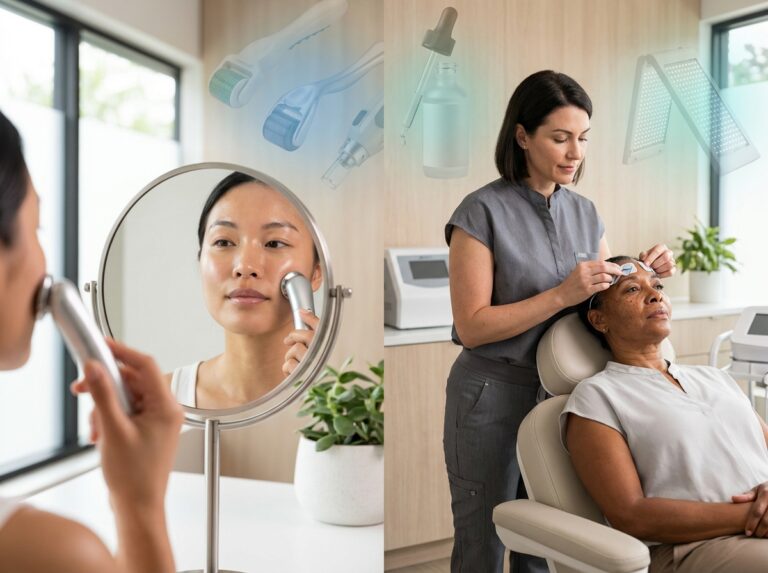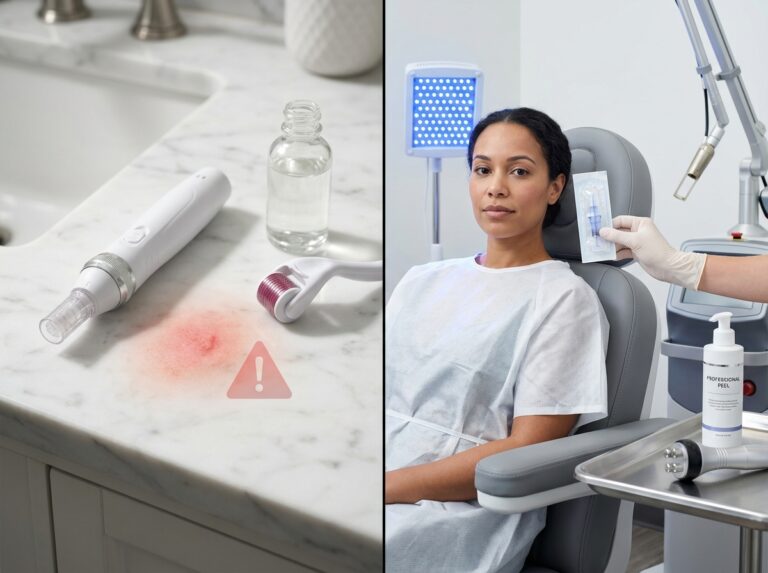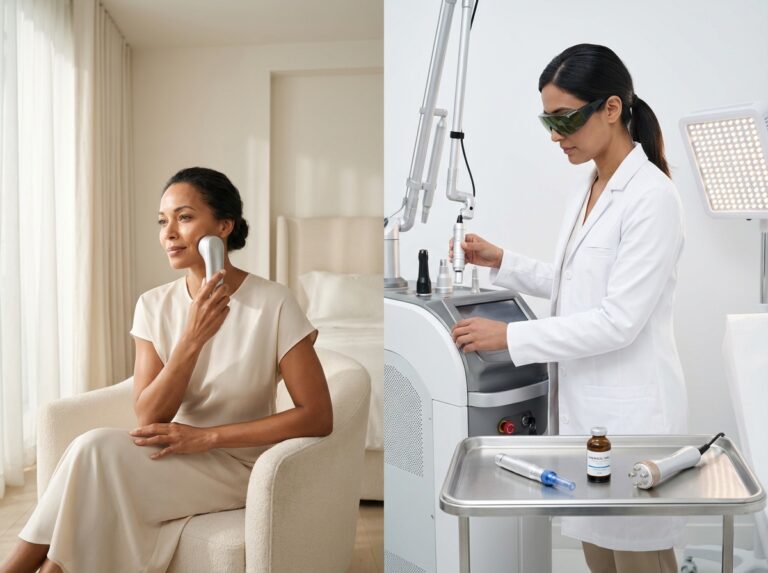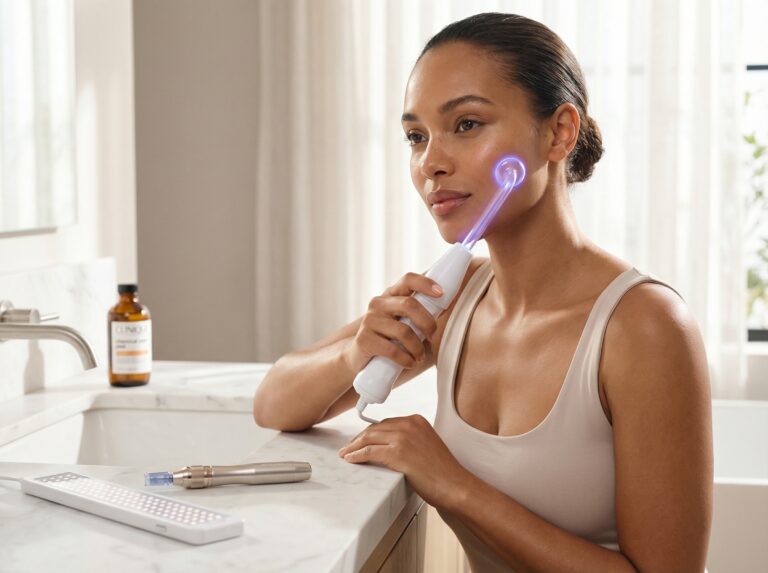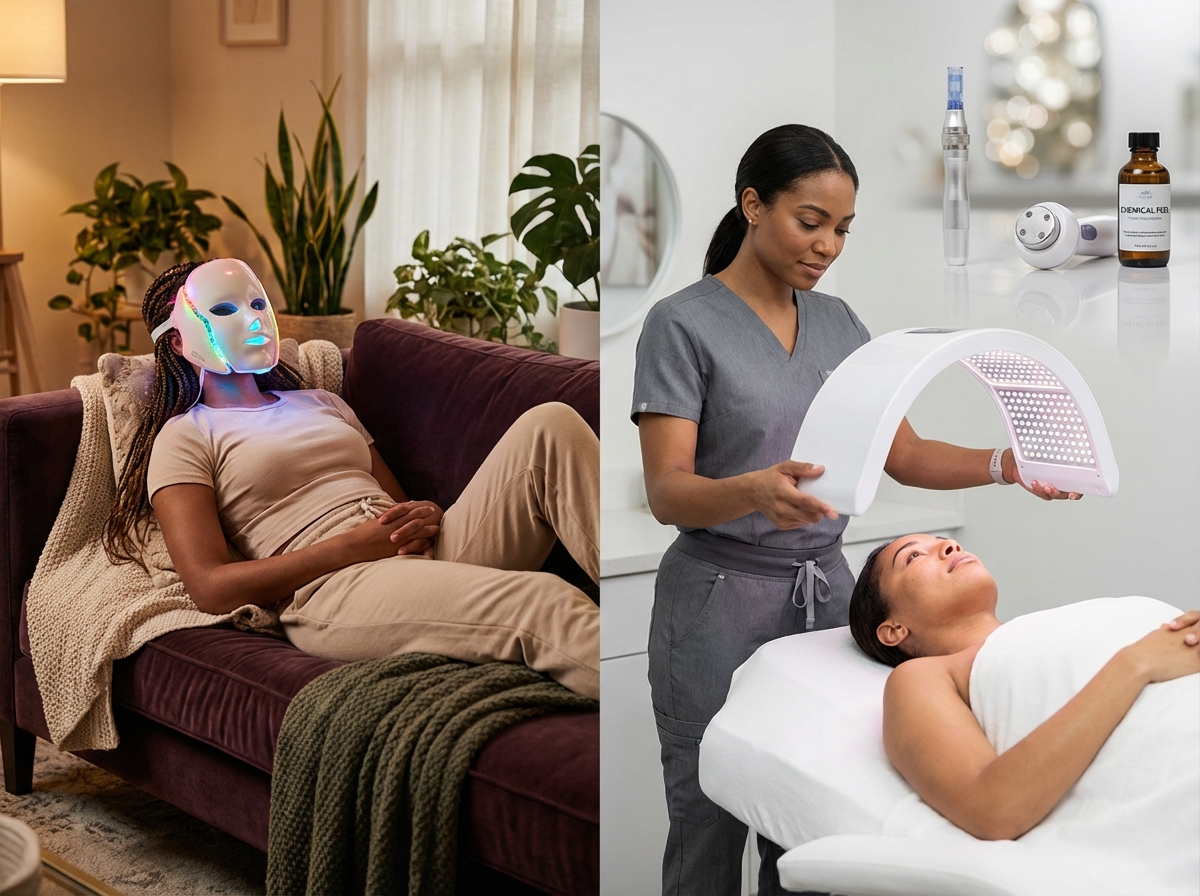
Explore differences between home LED masks and professional LED panels within broader non-invasive skin rejuvenation treatments—microneedling, laser facials, chemical peels, and RF. This article explains how LED power, wavelength, and delivery affect clinical results, compares safety, downtime, and costs, and gives practical guidance on choosing devices and combining therapies for safe, evidence-based skin rejuvenation in the USA.
Modern non-invasive skin rejuvenation at a glance
Non-invasive skin rejuvenation has shifted from a luxury to a standard part of dermatological care in the United States. Patients in late 2025 prioritize treatments that offer visible improvements with manageable recovery times. We see a move away from aggressive surgical interventions toward consistent, lower-downtime procedures that maintain skin health over decades. Understanding the mechanics, timelines, and risks of these modalities is necessary for anyone navigating the current aesthetic landscape.
Microneedling and Collagen Induction
Microneedling remains a cornerstone of textural improvement. This method uses sterile needles to create controlled micro-injuries in the dermis. These physical channels trigger a wound-healing cascade. The body responds by releasing growth factors and synthesizing new collagen and elastin. Providers often combine this with topical serums, platelet-rich plasma (PRP), or exosomes to enhance penetration and recovery.
Indications and Results: It is the primary choice for acne scarring, enlarged pores, and fine lines. It improves overall skin texture effectively. Patients typically require a series of three to six sessions spaced four weeks apart. Visible changes in texture often appear after the second session, but collagen maturation continues for months.
Downtime and Risks: Recovery is relatively quick. Most patients experience erythema and mild swelling resembling a sunburn for 24 to 48 hours. Pinpoint bleeding is common during the procedure. Risks include infection if performed in unsterile conditions or granuloma formation if improper topicals are applied to open channels. It is generally safe for all Fitzpatrick skin types (I–VI) because it does not rely on heat.
Laser Facials: Ablative and Non-Ablative
Lasers use focused light energy to target specific chromophores like water, melanin, or hemoglobin. The technology splits into two main categories. Ablative lasers (like CO2 or Er:YAG) vaporize the outer layers of skin for dramatic resurfacing. Non-ablative lasers pass through the epidermis to heat the underlying tissue without destroying the surface.
Indications and Results: Ablative lasers address deep wrinkles, significant photodamage, and severe scarring. Non-ablative options target early signs of aging, mild pigmentation, and redness. Fractional technology, which treats only a fraction of the skin surface at a time, has become the standard to speed up healing. High-quality evidence supports laser efficacy, but results vary by device intensity.
Downtime and Risks: Ablative treatments require significant downtime, often 7 to 14 days of peeling and redness. Non-ablative options might cause redness for only a few hours. The primary risk is thermal injury. Burns, scarring, and post-inflammatory hyperpigmentation (PIH) are serious concerns, particularly for darker skin tones. Providers must exercise extreme caution with Fitzpatrick types IV–VI.
Chemical Peels
Chemical peels rely on controlled chemical exfoliation to remove damaged skin layers. The depth of the peel determines the result. Superficial peels use alpha-hydroxy acids (like glycolic) or beta-hydroxy acids (salicylic). Medium-depth peels often use trichloroacetic acid (TCA). Deep peels, such as phenol, reach the reticular dermis.
Indications and Results: Superficial peels brighten the complexion and treat active acne. Medium peels target pigmentation, melasma, and moderate wrinkles. Deep peels offer dramatic restructuring for severe photoaging but are rarely performed due to the intense recovery. A course of superficial peels usually involves 3 to 6 treatments every two to four weeks.
Downtime and Risks: Superficial peels involve little to no downtime. Medium peels result in 3 to 7 days of shedding. Deep peels require weeks of recovery. The main risks are hyperpigmentation and infection. Darker skin types require careful formulation selection to avoid permanent pigment alteration.
Radiofrequency (RF) and Microneedling-RF
Radiofrequency devices use electrical current to generate heat within the dermis. This heat, typically between 55°C and 65°C, causes immediate collagen contraction and stimulates long-term remodeling. Modern devices often combine RF with microneedling to deliver energy directly into the deeper layers of the skin.
Indications and Results: RF is the standard for skin tightening and mild contouring. It addresses laxity in the lower face, neck, and jawline. Microneedling-RF is particularly effective for acne scars and texture issues in darker skin types. A typical course involves 3 to 4 sessions spaced four to six weeks apart. Results build gradually over 3 to 6 months.
Downtime and Risks: Pure RF treatments often have zero downtime. Microneedling-RF may cause redness and grid marks for a few days. The risk profile is favorable for Fitzpatrick types IV–VI because the energy bypasses the melanin-rich epidermis. Burns are rare but possible if the device arcs or is handled incorrectly.
LED Photobiomodulation
Light Emitting Diode (LED) therapy works differently from the modalities above. It is non-thermal and non-ablative. It does not rely on heat or injury. Instead, it uses specific wavelengths of light to trigger intracellular biochemical changes. Red light therapy stimulates mitochondrial activity, while blue light targets the bacteria responsible for acne.
Indications and Results: Clinicians use LED for acne reduction, inflammation control, and mild skin rejuvenation. It is frequently used as an adjunct therapy to accelerate healing after microneedling or laser procedures. Controlled trials indicate improvements in skin complexion and roughness. However, results are cumulative. A single session provides temporary glow or calming, but structural change requires consistent treatment over 8 to 12 weeks.
Downtime and Risks: There is no downtime. Patients return to normal activities immediately. It is safe for all skin types and does not cause burns when used correctly. The primary risk involves eye safety, necessitating protective goggles during treatment, especially with blue or near-infrared wavelengths.
Selecting the Right Modality
Providers select treatments based on a matrix of skin type, primary concern, and tolerance for downtime. The Fitzpatrick scale is the critical filter. Patients with Fitzpatrick I–III skin can generally tolerate ablative lasers and deep peels safely. Patients with Fitzpatrick IV–VI skin are better candidates for microneedling, RF, and LED therapy due to the lower risk of pigmentary complications.
Clinical evidence varies by modality. Lasers and RF are supported by abundant randomized controlled trials (RCTs) and meta-analyses demonstrating structural skin changes. LED therapy has a growing body of evidence, particularly for acne and wound healing, though study parameters often vary widely. The choice often involves combining modalities. A patient might receive microneedling for texture followed immediately by LED to reduce redness.
This brings us to a crucial distinction in light therapy. While lasers rely on high power to destroy or heat tissue, LED relies on precise, lower-level energy to stimulate cells. But “low level” does not mean weak. For LED to work, the skin must receive an adequate dose of energy within a specific timeframe. This requirement highlights the importance of irradiance and power density.
LED therapy fundamentals and how power is measured
While microneedling, lasers, and chemical peels largely rely on controlled injury to trigger a healing response, LED therapy works on a completely different principle. It adds energy to the system rather than stressing it. Think of lasers as the renovation crew that tears down old walls to build new ones, while LED is the daily nutrition that keeps the house standing. To understand why a ten-minute session under a clinic panel feels different from thirty minutes with a home mask, we have to look at the physics of light and how our biology interprets it.
The Biology of Photobiomodulation
The technical term for this process is photobiomodulation (PBM). At its core, PBM is about energy transfer. Our cells contain mitochondria, often called the power plants of the cell. Inside these mitochondria sits a photo-acceptor enzyme called cytochrome c oxidase. When this enzyme absorbs light at specific wavelengths, it becomes more active.
This activation triggers an increase in Adenosine Triphosphate (ATP) production. You can think of ATP as cellular currency. With more currency available, cells can perform their jobs more efficiently. Fibroblasts produce more collagen, circulation improves, and repair processes accelerate. Beyond just energy production, PBM modulates reactive oxygen species and reduces inflammation. This is why red light therapy shows promise for wound healing and calming skin conditions.
Wavelengths and Penetration Depth
Not all light reaches the same destination. The wavelength, measured in nanometers (nm), determines how deep the energy travels and what biological target it hits. Accuracy here is non-negotiable. A device emitting at 600 nm will not have the same effect as one strictly calibrated to 633 nm.
- Blue Light (415 nm): This wavelength has the shallowest penetration. It barely gets past the epidermis. Its primary target is not the mitochondria but the porphyrins found inside Cutibacterium acnes bacteria. When blue light hits these porphyrins, it causes an oxidative reaction that destroys the bacteria. It is highly effective for acne management but offers little for structural anti-aging.
- Red Light (633 nm): This is the sweet spot for skin rejuvenation. It penetrates into the dermis where fibroblasts reside. Clinical literature consistently cites wavelengths around 633 nm as optimal for stimulating collagen production and reducing inflammation. Clinical assessment has shown significant reduction in fine lines when these specific wavelengths are used correctly.
- Near-Infrared (NIR) (830 nm): Invisible to the human eye, NIR wavelengths penetrate the deepest, reaching subcutaneous tissue, muscle, and even bone. This range is crucial for reducing deep inflammation, accelerating tissue repair, and improving blood flow. Most high-quality rejuvenation devices pair red and NIR light to treat the skin at multiple levels simultaneously.
The Math of Light: Irradiance and Fluence
Understanding the difference between home and professional devices requires understanding two key metrics: irradiance and fluence. Marketing materials often confuse these, but they are distinct concepts.
Irradiance is the power density. It measures how much photon energy hits a specific area of skin per second. It is usually expressed in milliwatts per square centimeter (mW/cm²). Think of this as the water pressure coming out of a hose.
Fluence is the total dose of energy delivered over time. It is measured in Joules per square centimeter (J/cm²). Think of this as the total amount of water in the bucket after you finish spraying.
The relationship follows a simple formula:
Fluence (J/cm²) = Irradiance (mW/cm²) × Time (seconds) × 0.001
For a treatment to be effective, you need to hit a specific “therapeutic window.” Most clinical studies on skin rejuvenation and acne suggest an effective fluence range of 20 to 100 J/cm². If the dose is too low, the cellular machinery does not turn on. If it is too high, the benefits plateau or can even become inhibitory.
Power Differences: Home Masks vs. Professional Panels
As of late 2025, the gap between consumer and professional technology remains significant, primarily due to power supply and heat management.
Home LED Masks: These devices typically sit directly on the skin. Because they run on small batteries and cannot dissipate much heat without burning the user, their irradiance is capped. Typical home masks deliver between 5 and 20 mW/cm². To achieve a therapeutic dose of 50 J/cm² with a 15 mW/cm² device, you would need a continuous treatment time of roughly 55 minutes. However, most home devices run for 10 or 20 minutes, delivering a lower cumulative dose (around 9–18 J/cm²). This lower dose can still be effective, but it requires consistency over weeks or months to accumulate results.
Professional Panels: Clinic-grade devices are large, wall-mounted or on stands, and contain active cooling fans. They do not touch the skin. These systems generate significantly higher irradiance, typically ranging from 40 to 150 mW/cm² at the skin surface. A professional panel running at 100 mW/cm² can deliver that same 50 J/cm² dose in just over 8 minutes. This high intensity allows for shorter appointment times and ensures the light penetrates effectively even if the patient is sitting a few inches away.
Why Higher Irradiance Matters
You might assume that you can simply wear a low-power home mask for two hours to match a ten-minute professional session. Unfortunately, biology is not always linear. There is a concept known as the Bunsen-Roscoe law of reciprocity, which states that effect depends on the total dose. However, in photobiology, this law often fails at the extremes. If the irradiance is too low, the rate of photon delivery may not exceed the cell’s natural energy loss, meaning the “battery” never charges regardless of how long you sit there.
Higher irradiance ensures that the threshold for cellular activation is met quickly. Furthermore, professional systems often use pulsed light—rapidly turning the LEDs on and off (often at 10Hz or 100Hz). Pulsing allows the device to drive higher peak power without overheating the tissue. Some research suggests that pulsed light may interact differently with cell membranes, potentially enhancing the biological response compared to the continuous wave output found in most home masks.
Safety and Uniformity
Power is nothing without control. A major differentiator in 2025 technology is beam uniformity. In cheaper devices, you might have “hot spots” of high intensity and “dead zones” between the bulbs. This leads to uneven dosing. Professional panels use lenses to overlap beams, creating a uniform field of light. This ensures that the skin on the nose receives the same dose as the skin on the cheek.
Thermal management is the final safety constraint. LEDs produce heat. Professional panels manage this with fans and heat sinks, keeping the light output stable. As LEDs heat up, their wavelength can shift. A device that starts at 633 nm might drift to 640 nm if it overheats, reducing its efficacy. Home masks, lacking active cooling, often run at lower power specifically to avoid this thermal drift and to prevent thermal injury to the skin.
Side‑by‑side practical comparison of home masks and professional panels
The main difference between the LED mask on your nightstand and the large panel at your dermatologist’s office comes down to physics and patience. While both utilize the same fundamental mechanism—photobiomodulation—the delivery systems create two very different user experiences. Understanding these differences helps in setting realistic expectations for skin rejuvenation, acne treatment, and recovery.
The Power Gap: Irradiance and Dosing
The most significant technical difference is irradiance, or the power density. Professional panels are designed to treat the skin from a distance, usually 4 to 12 inches away. To bridge that gap and still deliver an effective dose of energy to the cells, they must pump out light at high intensities, often ranging from 40 to 150 mW/cm².
Home masks sit directly on the skin. Because there is zero distance between the diode and your face, they don’t need as much power to be effective. Typical home devices in 2025 operate between 5 and 20 mW/cm². If a home device ran at professional power levels while touching your skin, it would likely generate uncomfortable heat or exceed safe optical limits for untrained users.
This power difference dictates the treatment time. A professional session might deliver a therapeutic dose (fluence) of 40-60 J/cm² in just 10 to 15 minutes. To achieve a similar cumulative dose with a home mask, you would theoretically need to wear it for 45 minutes to an hour. However, most home protocols rely on lower daily doses (around 4-6 J/cm²) accumulated over weeks rather than a single high-impact session.
Beam Uniformity and Coverage
Professional panels use lenses to collimate light, keeping the beams straight and uniform over a larger area. This ensures that the skin on the nose receives roughly the same energy as the skin on the cheek, provided the patient stays still.
Home masks face a different challenge: contouring. Rigid masks often have “dead zones” where the plastic doesn’t touch the skin, leading to uneven dosing. Flexible silicone masks solve the fit issue but can suffer from inconsistent spacing between the LEDs. If the diodes are too far apart, you get a “polka dot” effect where small circles of skin are treated, but the spaces in between are not.
Practical Comparison: Home vs. Professional
| Feature | Home LED Mask | Professional LED Panel |
|---|---|---|
| Irradiance | Low (5–20 mW/cm²) | High (40–150+ mW/cm²) |
| Treatment Time | 10–20 minutes (Daily/Frequent) | 10–20 minutes (Weekly/Bi-weekly) |
| Distance to Skin | Direct contact (0 mm) | 4–12 inches |
| Wavelength Accuracy | Standard (±10–20 nm) | Precision (±2–5 nm) |
| Cost | $250–$600 (One-time) | $100–$300 (Per session) |
| Primary Use | Maintenance, mild correction | Acute recovery, deeper correction |
Timeline of Results
Patience is the currency of home devices. With daily or every-other-day use of a home mask, visible changes in skin texture and fine lines typically appear between 8 and 12 weeks. It is a slow, cumulative process. You are essentially “trickling” energy into the mitochondria to keep collagen production humming.
In a clinical setting, the higher power allows for a more profound immediate anti-inflammatory response. Patients often see a reduction in redness or a “glow” after just one or two sessions. For structural changes like wrinkle reduction, professional protocols usually require a series of 6 to 12 treatments spaced a week apart.
Phototherapy with Light Emitting Diodes studies have shown that consistent treatment can lead to significant improvement in fine lines, but the speed of these results correlates directly with the intensity and frequency of the dose.
Combining LED with Other Modalities
The real strength of LED therapy lies in its ability to act as a “force multiplier” for other procedures. It is rarely a standalone miracle cure, but it makes other treatments work better and safer.
Microneedling and LED
This is the gold standard combination. Microneedling creates controlled physical trauma to stimulate collagen. Following this immediately with Red (633 nm) and Near-Infrared (830 nm) light accelerates the wound healing cascade. The light boosts ATP production in the cells exactly when they need energy to repair the micro-injuries. This reduces downtime, redness, and the stinging sensation post-procedure.
Chemical Peels
After a superficial or medium-depth peel, the skin barrier is compromised. Using LED 24 to 48 hours post-peel (once the immediate heat has dissipated) can speed up re-epithelialization. It helps calm the inflammatory response, reducing the risk of post-inflammatory hyperpigmentation (PIH), which is a major concern for darker skin tones.
Radiofrequency (RF)
RF works by generating heat in the deeper dermis to tighten tissue. While effective, it causes thermal stress. Pairing RF with LED helps manage the oxidative stress caused by the heat, allowing for a quicker recovery without negating the tightening effects of the RF.
Interpreting Marketing Claims
When buying a device or booking a treatment, look past the box copy.
“Number of LEDs” is misleading. A mask with 100 high-quality, high-output diodes is superior to a mask with 500 weak, cheap diodes. More lights do not equal more power if the individual chips are underpowered.
“Clinical Grade” means nothing. This is an unregulated marketing term. Instead, look for specific technical specifications: irradiance stated in mW/cm² and specific wavelengths (e.g., 633 nm, not just “red”).
FDA Clearance. In the USA, look for “FDA Cleared” (Class II medical device), which means the device has demonstrated substantial equivalence to an existing safe device. This is different from “FDA Registered,” which is simply an administrative paperwork process.
When to See a Professional
Home devices are excellent for maintenance and prevention. However, a professional panel is the better choice in specific scenarios:
- Acute Acne Flare-ups: Professional blue light (415 nm) at higher power can kill C. acnes bacteria more effectively than lower-powered home masks, often calming a breakout in 24-48 hours.
- Post-Surgical Healing: After a facelift, blepharoplasty, or laser resurfacing, the higher energy of a professional panel is necessary to penetrate swollen tissue and accelerate deep healing.
- Body Treatments: Treating large areas like the back or chest is impractical with small home face masks.
Red Light Therapy is an emerging treatment showing promise, but success depends on matching the device power to the condition being treated. For general “anti-aging” maintenance, a high-quality home mask is a solid investment. For correcting damage or managing recovery from stronger procedures, the professional panel remains superior.
Safety rules, contraindications and clinical best practices in the USA
You might assume that because LED therapy doesn’t vaporize tissue like a CO2 laser or peel off layers of skin like glycolic acid, it is completely risk-free. While it is certainly the safest tool in the aesthetic toolkit, “safe” does not mean “foolproof.” When we talk about putting energy into the body—whether it is light, heat, or radiofrequency—biological responses happen. Understanding these responses is the difference between a successful rejuvenation plan and an accidental injury.
Adverse Effects: LED vs. Aggressive Modalities
The safety profile of LED is distinct because it is non-thermal and non-ablative. It does not rely on heat to work. Lasers and Radiofrequency (RF) work by controlled damage; they heat tissue to stimulate repair. LED works by photobiomodulation, which is a chemical signal to cells. This fundamental difference changes the risk landscape entirely.
With lasers, the primary risks are burns, scarring, and post-inflammatory hyperpigmentation (PIH), especially in darker skin tones. With chemical peels, you risk chemical burns or persistent redness if the pH is too low or the acid is left on too long. With LED, the most common adverse effect is temporary erythema (redness) that usually resolves within 30 minutes. However, misuse can still cause issues.
| Modality | Primary Mechanism | Common Adverse Effects | Risk of Hyperpigmentation (PIH) |
|---|---|---|---|
| LED Therapy | Photobiomodulation (Non-thermal) | Mild transient redness, headaches (from glare) | Very Low (< 5%) |
| Ablative Laser | Vaporization/Heat | Burns, scarring, infection, prolonged edema | High (requires strict prep) |
| Chemical Peels (Medium/Deep) | Chemical exfoliation | Frosting, crusting, chemical burns | Moderate to High |
| Radiofrequency (RF) | Bulk Heating | Fat volume loss (if too deep), burns | Low to Moderate |
Eye Protection and Wavelength Safety
This is the most debated topic in home use, but clinical standards in the US are clear. The brightness of modern LEDs, particularly professional panels and high-end home masks, poses a risk to the retina. This is not just about comfort; it is about phototoxicity.
Blue Light (415 nm): This wavelength is excellent for killing acne bacteria, but it is hazardous to the eye. Blue light stress can damage the retina (photoretinitis). If you have darker skin, intense blue light can occasionally trigger hyperpigmentation if the irradiance is too high. If you are using a device with blue LEDs, opaque blackout goggles are mandatory. Closing your eyes is not enough because the eyelids are thin and transparent to intense light.
Near-Infrared (830 nm): You cannot see this light, which makes it tricky. The eye’s natural blink reflex doesn’t trigger because the light is invisible. Prolonged exposure to high-intensity NIR can heat the lens of the eye, potentially contributing to cataract formation over time. Always wear protection provided with the device.
Contraindications and Medication Interactions
Light sensitivity is a side effect of many common drugs. If a medication label says “avoid sunlight,” it usually means you should avoid LED therapy too. The mechanism is photosensitivity—drugs can absorb light energy and release free radicals, damaging the skin.
Common Photosensitizing Categories:
- Antibiotics: Tetracyclines (Doxycycline, Minocycline) and Fluoroquinolones.
- Diuretics: Furosemide (Lasix) and Hydrochlorothiazide.
- Retinoids: Oral isotretinoin (Accutane) is the big one. Topical retinoids (tretinoin) generally just need to be washed off before treatment, but oral intake changes skin chemistry systemically.
- NSAIDs: High doses of Ibuprofen or Naproxen can increase sensitivity in some individuals.
Special Populations:
- Pregnancy: There are no ethical studies testing LED on pregnant women. While likely safe, the standard medical advice is to avoid it to prevent any liability or unknown fetal stress.
- Epilepsy: Pulsed light (often used in professional panels) can trigger seizures in photosensitive epileptics. Continuous wave mode (common in home masks) is safer, but consultation is required.
- Active Cancer: Since LED stimulates cell growth and blood flow, there is a theoretical risk of stimulating malignant cells. Avoid treating areas with active or suspected lesions.
Isotretinoin (Accutane) Waiting Periods
For years, the rule was a strict 6 to 12-month wait after stopping isotretinoin before doing any procedure. However, by late 2025, consensus has shifted slightly. The American Society for Dermatologic Surgery (ASDS) suggests that non-ablative treatments like LED might be safe sooner, potentially within 1-3 months, because they don’t break the skin barrier. However, most conservative clinics still enforce a 6-month waiting period to ensure the skin’s healing response has normalized. If you are treating active acne, blue light is generally tolerated better than heat-generating treatments.
Skin Types and Dyspigmentation Risks
One of the massive advantages of LED is its safety on Fitzpatrick Skin Types IV-VI (darker skin). Lasers often target melanin, which puts darker skin at risk of burns. LED targets cellular chromophores (like cytochrome c oxidase), not melanin. This makes it color-blind in terms of safety.
However, heat is the enemy. Some high-powered professional panels generate radiant heat. If the skin temperature rises above 40°C-42°C, it can trigger melanocytes to produce pigment. For patients with melasma or a history of hyperpigmentation, keep the device further away or use a fan to keep the skin cool. Phototherapy with Light Emitting Diodes has shown significant promise in treating skin issues without the pigment risks associated with thermal devices.
Understanding FDA Clearance
In the US, medical devices are regulated by the FDA. Most LED devices fall under Class II. Manufacturers must submit a 510(k) premarket notification. This is often misunderstood. FDA “clearance” does not mean the FDA ran their own clinical trials on that specific mask to prove it erases wrinkles. It means the manufacturer proved the device is “substantially equivalent” to a device already on the market (a predicate) in terms of safety and technical specs.
FDA Cleared vs. FDA Registered: “Registered” just means the company is on a list; it implies no safety review. “Cleared” means the FDA reviewed their data. To verify a device, you can search the FDA’s 510(k) database using the manufacturer’s name. If a company claims to treat medical conditions like acne, they must have clearance. General “wellness” devices that only claim to “promote relaxation” might bypass this, but they cannot legally claim to treat wrinkles or acne.
Clinic-Level Protocols and Documentation
If you are a clinician or a serious home user treating others, documentation is your safety net.
- Informed Consent: Your form must explicitly state that results vary and require multiple sessions. It should list the contraindications (pregnancy, photosensitizing drugs) and require a signature confirming the patient is not taking them.
- Patch Testing: For any new patient, especially those with sensitive skin or complex medical histories, do a 5-minute test spot on the inner arm. Wait 24 hours to check for unusual histamine reactions or light sensitivity.
- Cumulative Fluence Log: Track the dose. Record the duration, distance (if using a panel), and wavelength used. We know that controlled trials determine efficacy based on specific energy parameters. If a patient isn’t seeing results, checking the log might reveal they are under-dosing.
- When to Refer: If you see a suspicious lesion that changes shape, color, or bleeds, do not treat it with LED. Refer to a board-certified dermatologist. LED is not a treatment for skin cancer and delaying diagnosis can be dangerous.
Final takeaways and practical recommendations
We have analyzed the physics of irradiance and reviewed the clinical data. The distinction between home LED masks and professional panels is not just about price. It is about the delivery of energy over time. Home devices rely on cumulative low-dose exposure. Professional systems utilize high-power density to trigger cellular responses rapidly. Your choice depends on your specific skin goals and how much time you can dedicate to the process.
Decision Framework for LED Therapy
Choosing the right modality requires an honest assessment of your skin condition and your schedule. A home mask is a long-term commitment. A professional series is an intensive intervention. Use this decision matrix to determine the best path for your needs.
| Factor | Choose Home LED Mask | Choose Professional Panel |
|---|---|---|
| Primary Goal | Maintenance, prevention, minor texture issues, mild acne management. | Deep wrinkle correction, severe acne, wound healing, post-procedure recovery. |
| Timeline | Patient approach. Results appear after 8 to 12 weeks of consistent use. | Accelerated approach. Visible changes often occur within 2 to 4 weeks. |
| Budget | One-time investment ($250–$600). Low cost per session over time (pennies per use). | Higher upfront cost ($100–$300 per session). Total series cost $1,000–$3,000. |
| Convenience | High. Treatment happens on your couch. Requires daily discipline. | Moderate. Requires travel to a clinic. Guaranteed adherence during appointments. |
Recommended Treatment Schedules
Random use of light therapy yields random results. Biology responds to consistent dosing. We have developed three distinct protocols based on current 2025 clinical standards and device capabilities.
Protocol A: The Home-Only Maintenance Route
This pathway suits individuals looking to sustain collagen levels or manage mild breakouts without clinic visits. The key here is frequency to compensate for lower power output.
- Frequency: 3 to 5 times per week.
- Duration: 10 to 20 minutes per session (device dependent).
- Course Length: Indefinite. Treat this like brushing your teeth.
- Expectation: You will likely see improved skin tone and texture around week 4. Fine line reduction typically becomes visible after week 12.
Protocol B: The Professional Corrective Series
This approach addresses specific damage or inflammatory conditions. It utilizes high irradiance panels to saturate the tissue with photons quickly.
- Frequency: 2 sessions per week.
- Duration: 10 to 20 minutes per session.
- Course Length: 4 to 6 weeks (8 to 12 sessions total).
- Expectation: Reduction in inflammatory acne lesions often reaches 50% to 80% by the end of the series. Clinical assessment of the periorbital region has shown significant fine line reduction in professional settings.
Protocol C: The Hybrid Sequencing Strategy
This is the most effective method for long-term rejuvenation. It combines the intensity of clinical treatments with the consistency of home care.
- Phase 1 (Correction): Complete a 4-week professional series (8 sessions) to jumpstart fibroblast activity and reduce inflammation.
- Phase 2 (Transition): Wait 2 weeks after the final clinic session.
- Phase 3 (Maintenance): Begin home mask use 3 times per week to maintain the cellular energy levels established during the professional phase.
Safety Checkpoints and Red Flags
Non-invasive does not mean risk-free. While LED is generally safe for all Fitzpatrick skin types, device malfunctions or improper use can cause issues. Stop treatment immediately if you experience any of the following signs.
- Heat accumulation: LEDs should not feel hot. If your mask or panel generates significant heat, it may be a thermal hazard or a sign of cheap engineering. Heat can worsen melasma and hyperpigmentation.
- Unexpected redness: Mild pinkness that fades in 30 minutes is normal. Redness lasting more than 24 hours indicates over-treatment or a reaction to a topical product used during the session.
- Visual disturbances: Always use blackout goggles for Blue and Near-Infrared wavelengths. If you see spots or have a headache after a session, your eye protection is inadequate.
Certain medications sensitize the skin to light. Review your prescriptions for isotretinoin, tetracyclines, or other photosensitizing drugs before starting a regimen. Red light therapy is an emerging treatment that requires respect for contraindications.
Final Guidance
The market is flooded with devices making broad claims. FDA clearance (510k) validates safety but does not guarantee efficacy for every skin concern. A home mask is a valuable tool for maintenance and patience is required. A professional panel is a medical-grade instrument for correction.
Consult a board-certified dermatologist or licensed aesthetic provider before investing in expensive equipment or booking a long series. They can verify if your specific skin condition will respond to photobiomodulation. They can also help you design a personalized schedule that integrates LED safely with your existing skincare routine and procedures.
Sources
- Phototherapy with Light Emitting Diodes: Treating a Broad Range of … — Clinical assessment of the periorbital region showed a significant treatment response in four subjects (67%) with a reduction in fine lines.
- Utilization of light‐emitting diodes for skin therapy: Systematic … — Data on the clinical practice of LED in skin rejuvenation were summarized and analyzed. LED illumination significantly reduced wrinkles and fine …
- Light-emitting Diodes: A Brief Review and Clinical Experience | JCAD — Durometry measurements in 7 out of 10 patients showed a persistent marked improvement in hardness of the skin after therapy.[46] This could prove to be …
- A Controlled Trial to Determine the Efficacy of Red and Near … – NIH — Results: The treated subjects experienced significantly improved skin complexion and skin feeling, profilometrically assessed skin roughness, and …
- Red light therapy: What the science says – Stanford Medicine — Wound healing, scarring: Some preliminary studies pointed toward potential for accelerated skin and tissue healing, depending on the wavelength …
- Red Light Therapy: Benefits, Side Effects & Uses – Cleveland Clinic — Red light therapy (RLT) is an emerging treatment that's showing promise in treating wrinkles, redness, acne, scars and other signs of aging.