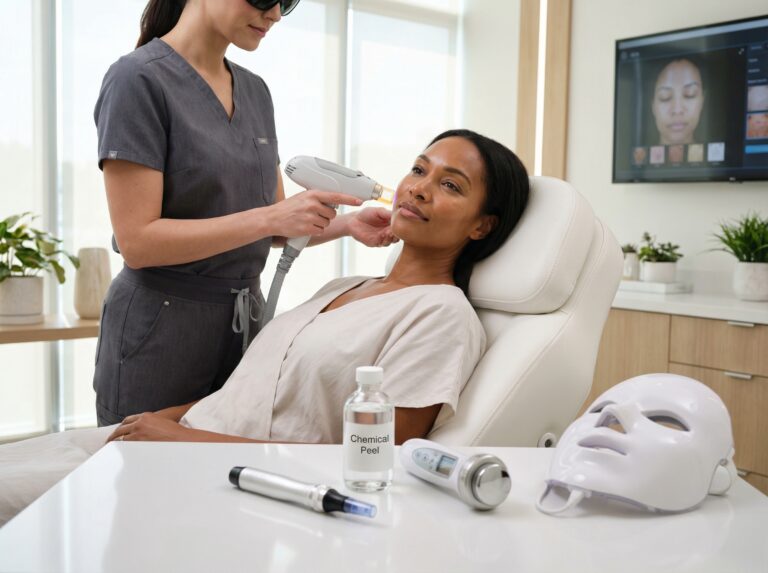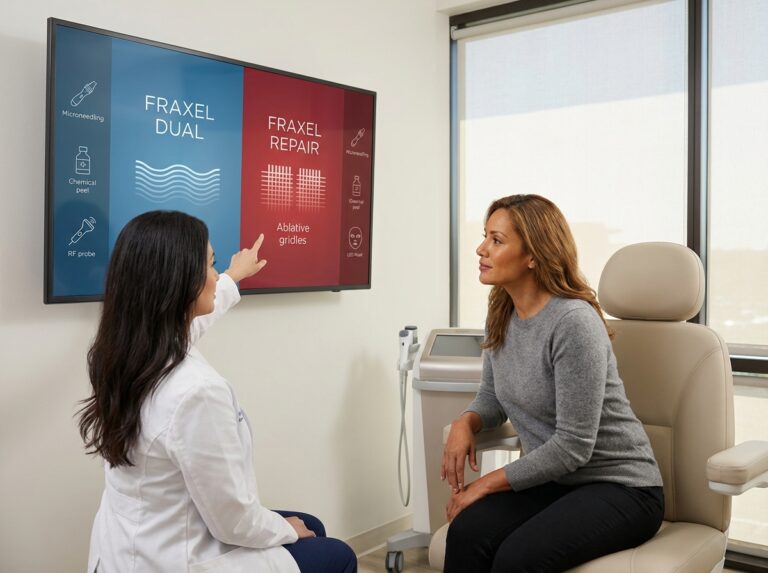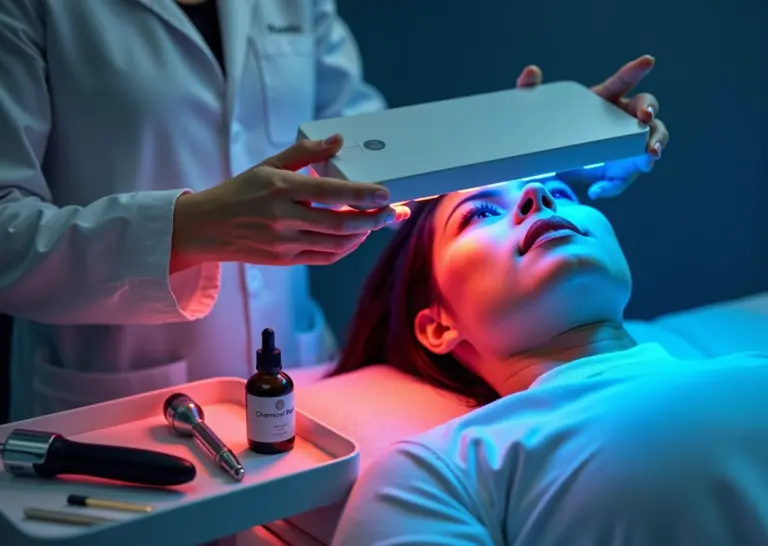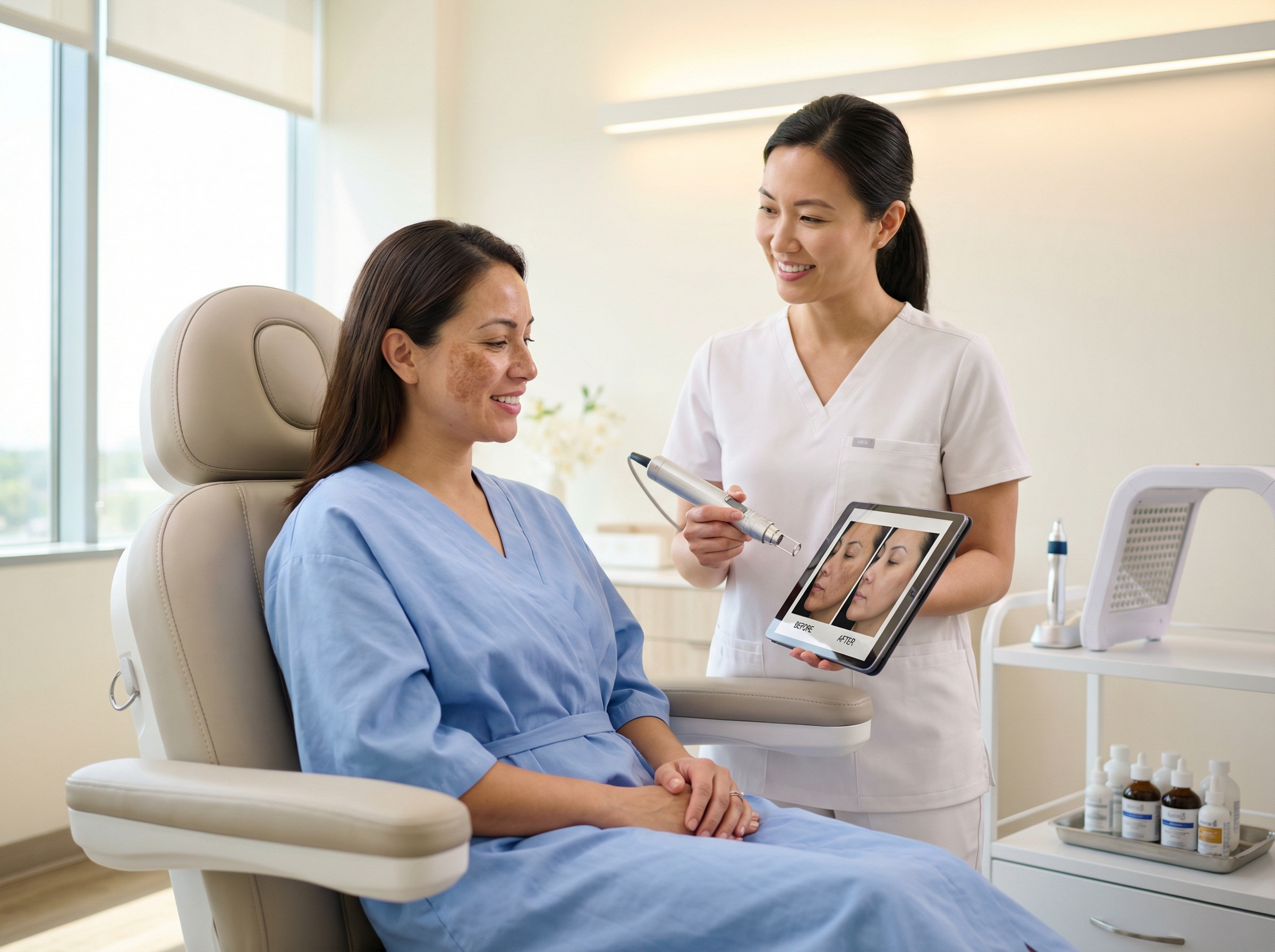
Non-invasive skin rejuvenation offers options to improve melasma and overall skin tone with less risk than ablative surgery. This article examines the PicoSure picosecond laser’s heat-minimizing approach to pigment and compares it with microneedling, laser facials, chemical peels, radiofrequency, and LED therapy. Read on for indications, expected downtime, typical results, and practical safety tips for U.S.-based patients and providers.
Understanding Melasma and the Goals of Non-Invasive Rejuvenation
Melasma is often called the “mask of pregnancy,” but that nickname simplifies a condition that is incredibly complex and frustrating for those who live with it. Unlike simple sunspots (solar lentigines) that sit on the surface of the skin like dust on a table, melasma is more like ink soaked into a tablecloth. It is a chronic, relapsing disorder where your pigment-producing cells, the melanocytes, become hyperactive.
To understand why we use advanced tools like picosecond lasers, you first have to understand the biology of what we are fighting. If we treat melasma like a standard sunspot, we often make it worse.
The Anatomy of Melasma: Why It’s So Stubborn
The primary reason melasma is clinically challenging is that it exists at different depths in the skin. Dermatologists classify it into three main types based on where the pigment lives.
Epidermal Melasma
This is the most superficial type. The excess melanin is located in the top layer of the skin (the epidermis). Under a Wood’s lamp (a diagnostic black light), these patches look dark brown and have well-defined borders. This type is generally the easiest to treat because the pigment is accessible to topical creams and superficial peels.
Dermal Melasma
This is the “ink in the tablecloth” scenario. The pigment has dropped down into the deeper dermis, where it is swallowed up by scavenger cells called melanophages. Visually, this looks light brown or bluish-gray and has blurry, ill-defined borders. Because the pigment is deep and protected by the skin above it, topical creams struggle to reach it, and aggressive heat can cause inflammation that leads to more pigment.
Mixed Melasma
This is the most common presentation. Patients have patches of both superficial brown pigment and deeper blue-gray undertones. Treating this requires a multi-pronged approach: lifting the surface pigment while calming the deeper inflammation without aggravating the melanocytes.
It is also important to note that melasma isn’t just about pigment. Recent research shows that the skin in melasma patches often has increased vascularity (more blood vessels) and signs of solar elastosis (sun damage to the elastic tissue). The melanocytes are not just producing more color; they are larger, have more branches (dendrites), and are biologically hypersensitive.
Triggers: It’s Not Just the Sun
While ultraviolet (UV) radiation is the biggest enemy, it is not the only one. You might be diligent with sunscreen and still see your melasma flare up. This is because the triggers are multifactorial.
- UV Exposure: Both UVA and UVB rays stimulate pigment production. UVA rays penetrate through glass, meaning driving a car can trigger a flare.
- Visible Light: High-energy visible (HEV) light, including blue light from the sun and screens, induces pigmentation, especially in darker skin types (Fitzpatrick III-VI). Standard sunscreens often do not block this.
- Hormones: Estrogen and progesterone are major drivers. This explains why melasma is common during pregnancy (chloasma), with oral contraceptive use, or during hormone replacement therapy.
- Heat: Infrared heat (saunas, hot yoga, cooking over a hot stove) can trigger inflammation that wakes up melanocytes, even in the dark.
- Thyroid Disease: There is a statistical link between autoimmune thyroid conditions and melasma, suggesting a systemic inflammatory component.
How Dermatologists Diagnose Melasma
Diagnosis is usually clinical, meaning a dermatologist can tell just by looking at you. However, to treat it safely, we need to know the depth.
Wood’s Lamp Examination
This handheld black light helps differentiate epidermal from dermal pigment. Epidermal pigment enhances (looks darker) under the light, while dermal pigment does not change much. However, in darker skin tones, this tool is less reliable.
Dermoscopy
A dermoscope is a magnifier that allows providers to see the pigment network. It helps distinguish melasma from other conditions like Hori’s nevus or lichen planus pigmentosus. It also reveals the vascular component—tiny blood vessels hiding beneath the pigment—which might influence the choice of treatment.
Biopsies are rarely needed unless the diagnosis is unclear or to rule out other conditions.
The Non-Negotiable Foundation: Topicals and Lifestyle
Before we even discuss lasers like PicoSure, we have to stabilize the skin. I cannot stress this enough: you cannot laser your way out of active, uncontrolled melasma. If you skip this step, the heat or energy from a device can trigger a rebound effect, leaving the pigment darker than before (Post-Inflammatory Hyperpigmentation, or PIH).
Primary treatment goals are to reduce visible pigment, prevent relapse, and improve skin texture. To do this, we use a “inhibit and protect” strategy.
1. The Sunscreen Upgrade
A standard SPF 30 is not enough. For melasma, you need a broad-spectrum mineral sunscreen (zinc oxide or titanium dioxide) that also contains Iron Oxide. Iron oxide is the ingredient that gives tinted sunscreens their color, and it is currently the best defense we have against blue light (HEV). If your sunscreen is white, it is likely not protecting you from the blue light spectrum that drives melasma.
2. Tyrosinase Inhibitors
These are topical agents that tell the enzyme tyrosinase (which controls melanin production) to slow down.
- Hydroquinone: Still considered the gold standard in the U.S. for short-term use (typically 8-12 weeks). It is potent but requires medical supervision to avoid side effects like ochronosis (a permanent blue-black discoloration).
- Azelaic Acid: A fantastic alternative, especially for pregnant women or for long-term maintenance. It reduces pigment and also targets inflammation.
- Tranexamic Acid: This has become a star player in recent years. It works by inhibiting the interaction between melanocytes and skin cells (keratinocytes) and also addresses the vascular component. It can be used topically or orally (off-label) for refractory cases.
- Retinoids: Tretinoin helps turn over the skin cells, shedding the pigmented layers faster and helping other topicals penetrate deeper.
Setting Realistic Expectations: Management vs. Cure
This is the hardest conversation to have, but the most necessary. There is currently no permanent “cure” for melasma. It is a condition to be managed, much like diabetes or high blood pressure.
When we use treatments like Treating PIH and Melasma with the PicoSure Picosecond Laser, the goal is to break up the existing pigment deposits without heating the surrounding tissue, which could trigger more inflammation. We aim for significant clearance—often 50% to 90% improvement—but maintenance is lifelong.
Clinical Example: The Difference in Approach
Consider two patients. Patient A has epidermal melasma: dark brown, distinct patches on the upper lip. She might respond quickly to a chemical peel or a few sessions of laser. Patient B has dermal melasma: shadowy, gray patches on the cheeks. If we treat Patient B with the same aggression as Patient A, her melasma will likely flare. Patient B requires a “low and slow” approach—gentle picosecond toning, strict sun avoidance, and perhaps oral tranexamic acid.
Shared decision-making is vital. You need to agree on a plan that fits your lifestyle. If you cannot commit to strict sun protection or the downtime of pre-treatment creams, high-energy procedures are unsafe. The path to clear skin involves patience, consistency, and a respect for the complexity of your skin’s biology.
How PicoSure Works and Practical Considerations for Melasma
Melasma presents a unique contradiction in dermatology. We need energy to break up the pigment, but heat is often the very trigger that causes melanocytes to flare up. This creates a difficult cycle where treating the spot might actually make it worse later. Picosecond technology, specifically the 755 nm alexandrite laser found in the PicoSure system, attempts to solve this by changing how energy is delivered. Instead of relying on long pulses of heat, it uses pressure.
The Photomechanical Difference
Traditional Q-switched lasers use nanosecond pulses. While fast, they still generate a significant amount of photothermal energy. Heat accumulates in the tissue. For a patient with stable sunspots, this is fine. For a melasma patient, this heat can trigger inflammation and subsequent rebound hyperpigmentation.
Picosecond lasers operate in the realm of trillionths of a second (10^-12). This speed changes the mechanism of action from photothermal to photomechanical or photoacoustic. The laser energy hits the pigment particle so fast that it shatters the target into dust-like particles without transferring excessive heat to the surrounding skin. The body’s lymphatic system then clears these tiny particles more easily than the larger fragments left by nanosecond lasers.
Why Wavelength Matters
The 755 nm alexandrite wavelength is highly attracted to melanin. It is effective for epidermal and mixed melasma because it targets the pigment directly. However, in darker skin types (Fitzpatrick IV-VI), the 755 nm wavelength must be used with extreme caution because the laser struggles to distinguish between the unwanted melasma and the patient’s natural skin tone. In these cases, providers often switch to a 1064 nm Nd:YAG picosecond wavelength, which penetrates deeper and bypasses more of the surface melanin.
Skin Rejuvenation and the Lens Array
PicoSure is not just for breaking up pigment. It is widely used for skin revitalization using a specialized attachment often called the Diffractive Lens Array (DLA) or Focus lens. This optic splits the main laser beam into microscopic points of high intensity.
These focused points create Laser-Induced Optical Breakdown (LIOB) in the epidermis. LIOB creates pressure waves that propagate into the dermis. These waves signal the cells to produce new collagen and elastin without burning the skin surface. This remodeling helps improve skin texture and pore size, which is beneficial since melasma skin often shows signs of solar damage and vascular changes.
Clinical Protocols for Melasma
Treating melasma with a picosecond laser is not a “one and done” event. The approach is often described as “pico-toning.” This involves using low fluences (energy settings) over multiple sessions to chip away at the pigment without angering the melanocytes.
Standard Treatment Parameters and Sensation
Most clinical protocols suggest a series of 3 to 5 sessions, typically spaced 3 to 6 weeks apart. The spacing allows the body to clear the fragmented pigment and the skin to recover from any sub-clinical inflammation.
Regarding comfort, most patients describe the sensation as a rubber band snapping against the skin. Pain scores in clinical trials often average around 4 out of 10. Providers typically apply a topical numbing cream (anesthetic) for 30 to 60 minutes prior to the procedure to ensure comfort. The treatment itself is fast, usually taking only 10 to 20 minutes for a full face.
The Clinical Endpoint
During a session, the provider looks for a specific reaction. For melasma, the goal is mild erythema (pinkness). We do not want to see immediate whitening or “frosting” on the skin. Frosting indicates a more aggressive reaction that increases the risk of Post-Inflammatory Hyperpigmentation (PIH).
Expected Outcomes and Timelines
Patients need realistic expectations before starting. Clinical studies indicate that picosecond lasers can achieve a 20% to 40% reduction in Melasma Area and Severity Index (MASI) scores after a treatment series. Clinical studies have demonstrated the effectiveness of the PicoSure laser in treating melasma and PIH, but results vary significantly by individual.
Pigment lightening is gradual. You might notice the pigment breaking up after the second or third session. It is vital to understand that recurrence is likely. Melasma is a chronic condition. The laser clears the current pigment, but it does not stop your cells from making new pigment in the future.
Downtime and Side Effects
One advantage of picosecond technology is the minimal downtime. Because the thermal damage is low, recovery is fast.
- Immediate Reactions: You will look pink or red, similar to a mild sunburn. This usually fades within a few hours to 24 hours.
- Texture Changes: If the Focus lens array is used, you might feel a rough, sandpaper-like texture for a few days as microscopic epidermal debris exfoliates.
- Temporary Darkening: The pigment may look darker before it gets lighter. This is the fragmented melanin moving to the surface.
- Risk of PIH: Even with picosecond technology, PIH is a risk, especially in darker skin tones. This manifests as the treated area turning brown or gray weeks after the procedure.
Safety Strategies and Patient Selection
Safety in 2025 relies on strict adherence to protocols that respect the skin’s barrier and pigmentary potential.
Pre-Treatment Priming
For patients with Fitzpatrick skin types III-VI, priming the skin is mandatory. This involves using a tyrosinase inhibitor (like hydroquinone, azelaic acid, or tranexamic acid) for 4 to 12 weeks before the laser treatment. This suppresses the melanocytes and reduces the risk of a flare-up.
Test Spots
A test patch is essential for new patients. The provider treats a small, inconspicuous area and waits 4 to 6 weeks to see how the skin reacts. Delayed PIH can appear weeks later, so a 24-hour check is insufficient for darker skin.
Contraindications
Treatment should be delayed during pregnancy. Hormonal fluctuations during pregnancy make melasma unpredictable, and safety for the fetus is the priority. Most dermatologists recommend waiting until you have finished breastfeeding to begin laser therapy, as hormones need time to stabilize. Patients taking isotretinoin (Accutane) should generally wait 6 to 12 months after stopping the medication before undergoing laser resurfacing. Active inflammation or infection in the treatment area is an absolute contraindication.
Practical Advice for Providers
Documentation protects both the patient and the practice. Standardized photography with consistent lighting and positioning is the only way to track progress objectively. Melasma changes slowly, and patients often forget their baseline.
Informed consent must be explicit about the chronic nature of melasma. The consent form should state clearly that the laser is a management tool, not a cure. It should also outline the need for indefinite maintenance therapy, including topical agents and rigorous sun protection.
Comparison of Picosecond vs. Q-Switched for Melasma
| Feature | Picosecond (755 nm / 1064 nm) | Q-Switched (Nanosecond) |
|---|---|---|
| Pulse Duration | Trillionths of a second (ps) | Billionths of a second (ns) |
| Primary Mechanism | Photomechanical (Pressure) | Photothermal (Heat) + Mechanical |
| Heat Generation | Minimal | Moderate to High |
| PIH Risk | Lower | Higher |
| Clearance Efficiency | Higher clearance with fewer sessions | Requires more sessions |
While the FDA has cleared picosecond lasers for tattoo removal and benign pigmented lesions, the specific treatment of melasma is often an off-label application of the cleared indication for pigmentation. The study reported a small percentage of post-inflammatory hyperpigmentation, which resolved within three months in 78.9% of all subjects, highlighting that while risks exist, they are often manageable with correct protocols.
Picosecond lasers represent a significant advancement in managing melasma by decoupling pigment destruction from heat. However, they are best viewed as part of a broader management strategy that includes lifestyle changes and topical therapies.
Comparing Microneedling, Laser Facials, Chemical Peels, Radiofrequency, and LED for Melasma
While the previous chapter focused heavily on the photomechanical magic of PicoSure, we have to be realistic: it is rarely the only tool in the shed. Most successful skin rejuvenation plans, especially for stubborn conditions like melasma, involve a mix of modalities. You need to know where picosecond technology fits compared to the other options you will see on a clinic menu. We are looking at how these treatments stack up regarding heat, downtime, and the specific risks for pigment-prone skin.
Microneedling and RF Microneedling
Microneedling remains a favorite for texture issues, but its role in melasma is specific. It works by creating mechanical micro-injuries that trigger a wound-healing response.
Standard Microneedling
This uses sterile needles to puncture the skin, typically at depths of 0.5mm to 2.5mm. For melasma, the primary benefit isn’t the injury itself, but the “channels” it creates to deliver topical agents deeper into the dermis. Clinicians often use this to drive tranexamic acid or vitamin C into the skin. It is generally safer than heat-based lasers for darker skin tones (Fitzpatrick IV-VI) because it is mechanical, not thermal. However, aggressive depth can still cause inflammation, which risks post-inflammatory hyperpigmentation (PIH).
Radiofrequency (RF) Microneedling
Devices like Morpheus8 or Potenza add heat to the needles. This is excellent for tightening loose skin and treating acne scars because the thermal energy remodels collagen. For melasma, however, you must be cautious. The heat generated by RF can sometimes trigger melanocyte activity if not controlled perfectly. While it improves texture, evidence for it lifting pigment is limited compared to lasers. If you have active melasma, standard microneedling with depigmenting serums is usually the safer bet over high-energy RF.
Laser Facials and Fractional Resurfacing
The laser market is crowded. Understanding the difference between “ablative” and “non-ablative” is critical for safety.
Ablative Lasers (CO2, Erbium:YAG)
These vaporize the top layers of skin. They offer dramatic results for deep wrinkles and severe sun damage but are generally high-risk for melasma. The intense heat and inflammation almost guarantee a rebound of pigment in melasma-prone patients. Recovery takes 7 to 21 days, and the risk of PIH is significant.
Non-Ablative Fractional Lasers
These heat columns of tissue without destroying the surface. They are safer than ablative lasers but still rely on thermal coagulation. For general rejuvenation, they are fantastic. For melasma, they are a gamble. The heat can still be a trigger. This is where PicoSure differentiates itself; it uses pressure (photomechanical) rather than just heat (photothermal), making it a safer option for breaking up pigment without cooking the surrounding tissue.
IPL (Intense Pulsed Light)
You will see this marketed as a “photofacial.” IPL uses broad-spectrum light to target red and brown spots. While great for general sun damage on fair skin, IPL is notoriously risky for melasma. The uncapped heat can easily worsen the condition, leading to darker, more stubborn patches. Most specialists avoid IPL for melasma entirely.
Chemical Peels
Chemical peels are the workhorses of dermatology. They exfoliate the skin chemically rather than physically.
Superficial Peels
Glycolic (20-70%), lactic, and salicylic acid peels are standard. They remove the very top layer of the epidermis where superficial pigment lives. They are excellent for “priming” the skin before stronger treatments or for maintenance. Downtime is minimal—usually just a few days of dryness or mild flaking.
Medium-Depth Peels (TCA)
Trichloroacetic acid (TCA) penetrates deeper. While effective for sun spots and texture, TCA peels (10-35%) carry a higher risk of PIH in darker skin. They require strict pre-treatment priming with tyrosinase inhibitors (like hydroquinone) for weeks beforehand. Downtime involves visible peeling for 7 to 14 days.
Radiofrequency (Non-Ablative) and LED
Radiofrequency for Tightening
Treatments like Thermage or Exilis use bulk heating to tighten skin. They do not target pigment. Their mechanism is purely collagen contraction. They are generally safe for all skin tones because the heat bypasses the melanin-rich epidermis, but do not expect them to clear sun spots or melasma.
LED Therapy
Light Emitting Diode therapy, specifically red and near-infrared light, is a non-thermal add-on. It reduces inflammation and speeds up healing. It won’t clear melasma on its own, but it is an excellent adjunct immediately following a laser or peel to calm the skin and reduce the risk of PIH. There is zero downtime.
Evidence Synthesis: What the Data Says
When we look at randomized controlled trials (RCTs), the hierarchy of efficacy becomes clearer, though absolute “cures” remain elusive.
Pico vs. Q-Switched
Traditional Q-switched lasers (nanosecond pulses) have been the standard for years. However, studies suggest picosecond lasers clear pigment faster with less collateral damage. Comparison of the efficacy and safety of picosecond Nd:YAG laser trials have shown that picosecond devices often result in lower rates of PIH compared to their nanosecond predecessors, particularly in Asian and darker skin types. The shorter pulse width means less heat transfer to the skin.
Pico vs. Topicals
Research indicates that while topicals (like hydroquinone) are essential, lasers provide faster clearance. One study showed that picosecond treatment combined with topicals improved MASI (Melasma Area and Severity Index) scores significantly more than topicals alone. However, relapse rates at 6 months are comparable if maintenance isn’t strictly followed.
Combination Strategies
Monotherapy rarely works long-term. The most effective clinical protocols use a “sandwich” approach.
Priming (4-12 weeks pre-treatment)
Patients, especially those with Fitzpatrick skin types III-VI, should use a tyrosinase inhibitor (hydroquinone, azelaic acid, or non-hydroquinone brighteners) and strict SPF before any heat or energy device touches their face. This suppresses melanocytes and reduces the risk of the laser causing a flare-up.
The Procedure Phase
This is where PicoSure or a chemical peel comes in. Treatments are typically spaced 3 to 6 weeks apart. For melasma, we often use a “low and slow” approach—lower fluence settings over more sessions (3-5 typically) to chip away at the pigment without angering it.
Maintenance and Adjuncts
Oral or topical tranexamic acid is increasingly used as an adjunct to stabilize the vasculature and pigment production during treatment. Post-procedure, the patient must return to tyrosinase inhibitors and rigorous sun protection. Without this, recurrence is not just possible; it is probable.
Practical Patient Selection
Not everyone is a candidate for energy-based devices. Safety is the priority.
Fitzpatrick Phototypes
PicoSure (755nm) is generally safe for lighter skin types. For darker skin (Fitzpatrick V-VI), providers often switch to 1064nm picosecond wavelengths or use extremely conservative settings to avoid hypopigmentation (white spots) or hyperpigmentation.
Contraindications
Pregnancy is a hard stop for elective laser treatments due to hormonal fluctuations and safety concerns. Active acne or infections (like cold sores) in the treatment area must be cleared first. Patients with a history of keloids need careful evaluation, although non-ablative pico treatments rarely cause scarring.
Realistic Expectations and Counseling
We need to be honest about timelines and money. Pigment does not disappear overnight.
Timelines
Visible improvement typically takes 2 to 3 sessions, meaning 2 to 3 months into the process. Full results might not be seen until month 4 or 5. Patients should be counseled that “clearance” usually means a 50-70% reduction in pigment, not 100% removal.
Cost and Commitment
These treatments are an investment. In the United States, melasma treatment is classified as a cosmetic procedure, meaning health insurance plans rarely cover the cost. Patients should expect to pay out-of-pocket, with costs often ranging from $400 to over $1,000 per session depending on location and provider expertise. You must budget not just for the laser package, but for the skincare regimen (medical-grade SPF, serums) required to maintain it. The conversation must emphasize that melasma is a chronic condition—like diabetes or hypertension—that is managed, not cured. Maintenance treatments every 4 to 6 months are often necessary to keep the pigment at bay.
Final Takeaways: Practical Recommendations and Next Steps
We have reached the point where strategy matters more than technology. You now understand how the 755 nm picosecond laser works—shattering pigment with pressure waves rather than cooking it with heat. This distinction is what makes PicoSure a viable option for melasma patients who were previously told to avoid lasers entirely. But a sophisticated device does not guarantee a sophisticated result. Success relies on how you prepare, how the treatment is executed, and what you do every day afterward.
Where PicoSure Fits in the Melasma Spectrum
PicoSure occupies a specific middle ground in the treatment hierarchy. It is more aggressive than chemical peels but significantly safer for melanin-rich skin than traditional Q-switched nanosecond lasers or fractional ablative resurfacing.
The primary advantage here is the photoacoustic effect. Because the pulse width is so short—measured in picoseconds—it creates a photomechanical impact. This breaks up melasma pigment without generating the bulk heat that often triggers Post-Inflammatory Hyperpigmentation (PIH). Studies indicate that picosecond lasers have a lower incidence of PIH compared to older nanosecond devices, making them a safer bet for Fitzpatrick skin types III through VI.
However, limitations exist. This is not a cure. Melasma is a chronic, relapsing condition driven by hormones, genetics, and light exposure. PicoSure is a tool for clearance and management, not permanent eradication. It works best on epidermal and mixed melasma. Deep dermal pigment is harder to reach and may require more sessions or combination therapies.
Patient Guide: Preparation and Consultation
If you are considering this treatment, your behavior before and after the appointment is just as critical as the laser session itself.
Pre-Treatment Priming is Mandatory
You cannot walk off the street and get this laser treatment safely. Most reputable providers require a priming period of 4 to 12 weeks. This involves using tyrosinase inhibitors—like hydroquinone, azelaic acid, or non-hydroquinone brighteners—to stabilize your melanocytes. This reduces the risk of your skin reacting to the laser energy by producing even more pigment.
Sun Protection is Non-Negotiable
Strict sun avoidance must start weeks before treatment. If you have a tan, you cannot be treated. The laser targets contrast; if your background skin is tanned, the risk of burns and hypopigmentation (white spots) skyrockets.
Questions to Ask During Consultation
Do not be shy about vetting your provider. The device is only as good as the hands holding it. Improper settings can cause permanent worsening. When selecting a provider, look for:
- Credentials: A board-certified dermatologist or a highly experienced laser practitioner operating under direct supervision.
- Specific Experience: Ask specifically about their experience treating melasma in your skin type.
- Test Spots: A reputable provider will often suggest a “patch test” (treating a small area near the ear or jawline) and waiting 4 to 6 weeks to ensure you do not develop PIH before treating the whole face.
Red Flags to Avoid
Walk away if a provider promises a permanent cure or claims you only need one session. Melasma almost always requires a series of 3 to 6 treatments spaced weeks apart. Also, be wary if they do not discuss a maintenance plan. If they treat you and send you home without a long-term topical regimen, they are setting you up for relapse.
Practical Maintenance Strategies
The laser clears the canvas, but your home care keeps it clean. Relapse rates for melasma are high, often occurring within 3 to 6 months if maintenance stops.
- Iron Oxide Sunscreen: Standard SPF is not enough. You need a physical sunscreen (zinc or titanium) that also contains iron oxide. This ingredient blocks visible blue light, which we now know triggers melasma just as much as UV rays.
- Topical Maintenance: After your laser series, you will likely need to stay on a non-hydroquinone brightener indefinitely. Ingredients like tranexamic acid, kojic acid, niacinamide, and cysteamine help keep pigment suppressed without the safety concerns of long-term hydroquinone use.
- Oral Tranexamic Acid: For stubborn cases, many dermatologists now prescribe oral tranexamic acid as an adjunct therapy. It works on the vascular component of melasma. This requires medical supervision to screen for blood clot risks, but it can significantly boost results when combined with laser treatments. Studies suggest combining tranexamic acid with picosecond laser can offer superior clearance.
- Periodic Touch-Ups: Plan for the future. Most patients benefit from a maintenance laser session every 3 to 6 months to catch reactivated pigment early.
Clinician Corner: Practice Tips and Safety
For providers, the margin for error with melasma is narrow. The goal is gradual lightening, not immediate destruction.
Conservative Settings are Key
When treating melasma, especially in higher Fitzpatrick types, use large spot sizes (6-10mm) and low fluences (often 0.3–0.8 J/cm² depending on the device). This “pico-toning” approach minimizes thermal injury. The clinical endpoint should be mild erythema. If you see immediate whitening or frosting, your energy is too high, and you risk PIH.
Documentation Standards
Standard photography often fails to capture the nuance of melasma. Use cross-polarized lighting to visualize epidermal pigment and UV photography to see underlying damage. Track progress using the MASI (Melasma Area and Severity Index) score to give patients objective data on their improvement.
Combination Sequencing
Do not rely on the laser alone. A common effective sequence is: 4-8 weeks of topical priming, followed by a series of low-fluence laser toning sessions spaced 4 weeks apart, and concluding with a transition to long-term topical maintenance. Research supports sustained improvement when these modalities are combined rather than used in isolation.
Referral Protocols
If a patient has extensive dermal melasma that fails to respond to conservative pico-toning after 3 sessions, or if they show signs of ochronosis (blue-black pigmentation from hydroquinone overuse), refer them to a board-certified dermatologist. These cases often require complex medical management, including oral medications or changing laser wavelengths (like 1064 nm).
Managing Expectations
We need to be honest about the emotional toll of this condition. Melasma affects quality of life, self-esteem, and social interactions. It is frustrating because it is chronic. There will be summers where it flares up despite your best efforts. There will be hormonal shifts that bring pigment back.
The goal of using PicoSure is not to erase every melanocyte from your skin. The goal is to reach a point where you feel confident, where the pigment is manageable, and where your skin looks healthy and radiant. It is a partnership between the technology, the provider, and your own daily discipline. Approach it with patience, respect the power of the device, and focus on long-term control rather than a quick fix.
Sources
- Comparison of the efficacy and safety of picosecond Nd:YAG laser … — Another two studies also demonstrated sustained improvement in melasma after the Picos treatment over a three-month follow-up (8, 10). And this …
- Picosecond laser evaluated in melasma study – Dermatology Times — Study results demonstrated significant improvement in pigment clearance on each treated side 6-months post-treatment. Meanwhile, researchers …
- PicoSure Laser Tattoo Removal & Skin Rejuvenation – RealSelf.com — It has emerged as a popular no-downtime skin rejuvenation treatment, which gently but effectively treats pigmentation concerns, fine lines, and acne scars.
- Evaluation of the Efficacy of the 755 nm Picosecond Laser in … – NIH — The study reported a small percentage of post-inflammatory hyperpigmentation, which resolved within three months in 78.9% of all subjects. Sakio …
- Treating PIH and Melasma with the PicoSure Picosecond Laser — Clinical studies have demonstrated the effectiveness of the PicoSure laser in treating melasma and PIH. Research indicates that the 755-nm …
- An update on fractional picosecond laser treatment: histology … – NIH — After six treatment sessions, the skin texture and dyspigmentation scores showed statistically significant improvement; however, there was no …
- Safety and efficacy of a picosecond 755‐nm alexandrite laser … — The picosecond 755-nm alexandrite laser and topical tranexamic acid (TA) have shown promise in treating melasma. Aim. This aim of this study was …
- Effectiveness of the Pico-toning Technique for the Treatment of … — The results of the study show that the pico-toning technique is effective in Asian patients with melasma. We believe that safety was enhanced by using low …
- Picosecond laser treatment for Asian skin pigments: a review — This study aimed to describe the PS laser treatment for common Asian BPDs compared with traditional laser treatments.
- PicoWay vs PicoSure: The Ultimate Comparison – Novuskin Med Spa — The advanced technology behind picosecond lasers often means you'll see quicker visible results with fewer sessions compared to older lasers. You'll likely …
Legal Disclaimers & Brand Notices
The information provided in this article is for informational purposes only and does not constitute professional medical advice, diagnosis, or treatment. Always seek the advice of a qualified physician or other licensed healthcare provider with any questions you may have regarding a medical condition or specific aesthetic procedure. Never disregard professional medical advice or delay in seeking it because of something you have read in this article.
All product names, logos, and brands mentioned in this text are the property of their respective owners. All company, product, and service names used in this article—including PicoSure—are for identification purposes only. Use of these names, trademarks, and brands does not imply endorsement or affiliation.