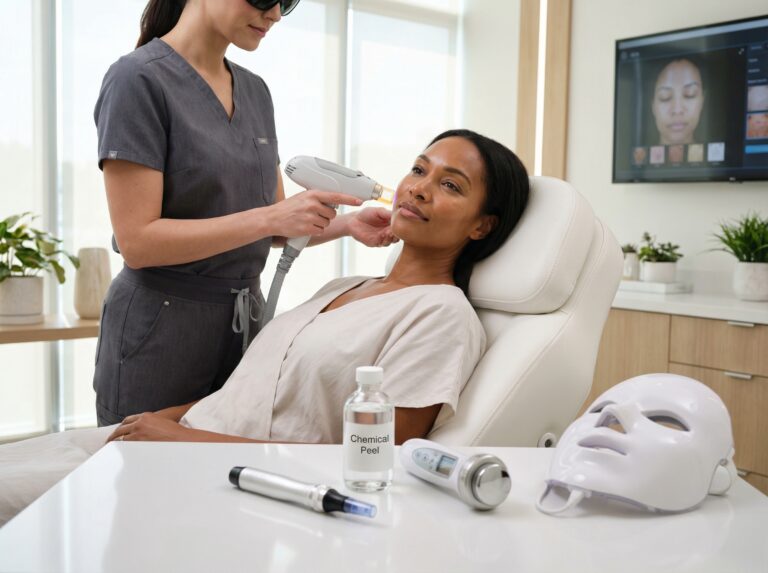
Explore how LED blue and red light therapy fits within the broader landscape of non-invasive skin rejuvenation, including microneedling, laser facials, chemical peels, and radiofrequency. This guide explains indications, expected results, downtime, and safety tips so you can choose evidence-based treatments for acne, aging, or combined concerns and plan realistic, staged care.
Overview of Non-Invasive Skin Rejuvenation
Non-invasive skin rejuvenation refers to a broad category of aesthetic procedures designed to improve skin quality, texture, and tone without surgical incisions. These treatments rely on stimulating the body’s natural repair mechanisms. The goal is usually collagen induction, cellular turnover, or pigment correction. By late 2025, the distinction between these modalities has become clearer, yet many clinics now combine them in hybrid protocols for enhanced results.
Microneedling and RF Microneedling
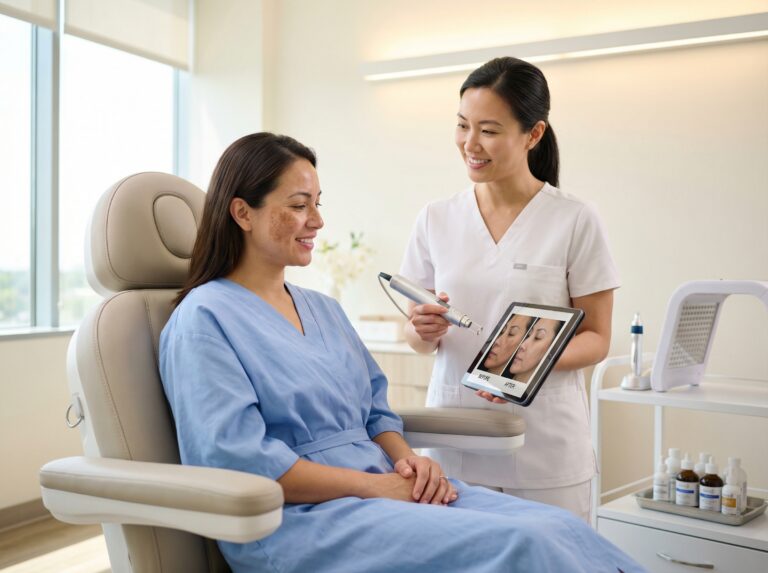
Microneedling uses fine needles to create controlled micro-injuries in the skin. This triggers a wound-healing response that boosts collagen and elastin. It is the primary choice for acne scarring, enlarged pores, and uneven texture. Standard microneedling is mechanical. Radiofrequency (RF) microneedling adds thermal energy to the needle tips. This heat coagulates tissue at specific depths to address skin laxity and deeper scars.
Most patients require a series of 3 to 6 sessions spaced 4 to 8 weeks apart. Downtime is minimal for standard pens, usually involving 24 to 48 hours of redness. RF versions may cause swelling for 2 to 4 days. Results appear gradually over 3 to 6 months as collagen remodels.
Laser Facials and IPL
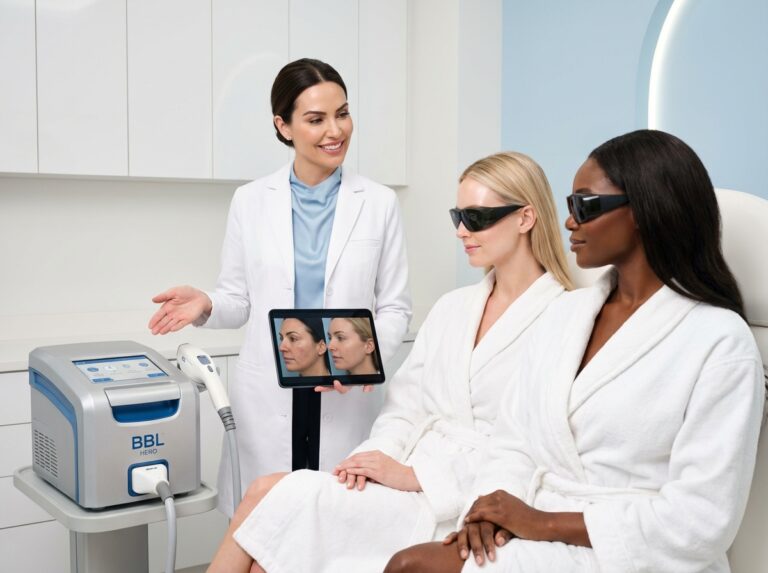
This category varies significantly in intensity. Intense Pulsed Light (IPL) uses broad-spectrum light to target redness (rosacea) and brown pigment (sun spots). It is not a true laser but is highly effective for color correction with minimal downtime.
Laser treatments split into non-ablative and ablative. Non-ablative lasers heat the underlying skin to treat fine lines and mild texture issues without breaking the surface. You might look pink for a day. Ablative lasers, such as fractional CO2, vaporize thin layers of skin. They offer dramatic results for deep wrinkles and severe scarring but require 7 to 14 days of recovery.
Chemical Peels
Peels use acids to exfoliate skin layers. Superficial peels (glycolic, salicylic) treat active acne and dullness with little to no peeling. They are often monthly maintenance treatments. Medium-depth peels (TCA) penetrate the papillary dermis to treat pigmentation and photoaging. These result in 5 to 7 days of visible peeling and crusting. Deep peels (phenol) are rare today due to the prevalence of lasers but remain an option for severe sun damage.
Radiofrequency (RF)
Non-invasive RF devices use electrical currents to heat the dermis without needles. This contracts existing collagen fibers and stimulates new production. It focuses on tightening and contouring rather than surface texture. It is suitable for mild to moderate skin laxity along the jawline and neck. A series of 4 to 6 sessions is standard. There is virtually no downtime, making it a “lunchtime” procedure.
LED Light Therapy
Light Emitting Diode (LED) therapy uses specific wavelengths to trigger intracellular reactions. It is the gentlest modality on this list. Blue light (415 nm) targets the bacteria responsible for acne. Red light (633 nm) reduces inflammation and stimulates mitochondrial activity for anti-aging effects.
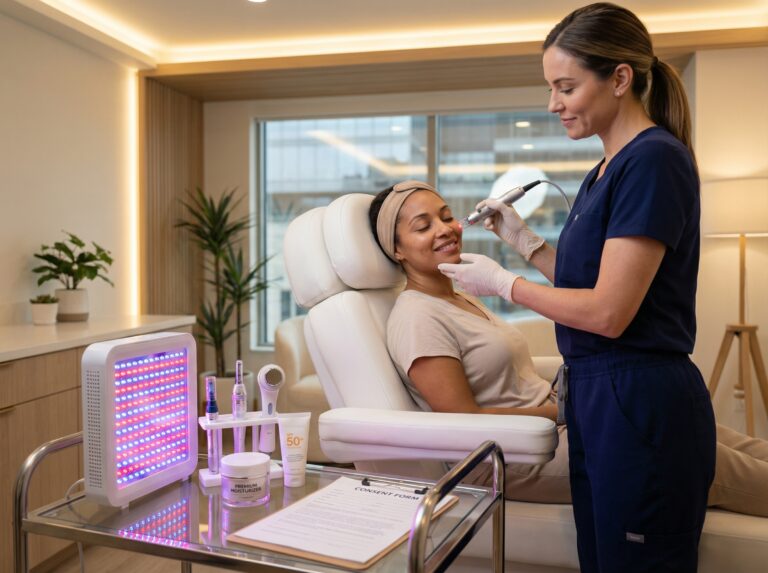
Overall, the evidence suggests that blue light and blue-red light combination is effective in treating mild to moderate inflammatory acne lesions. Unlike lasers, LED does not cause thermal damage. It has zero downtime. In 2025, it is frequently used immediately after microneedling or peels to accelerate healing and reduce redness. While in-office panels are powerful, consistent use is key. A typical course involves 8 to 12 sessions, often twice a week.
Comparative Overview of Modalities
The following table outlines the general parameters for these treatments in the U.S. market as of late 2025. Costs vary by location and provider expertise.
| Modality | Primary Indication | Downtime | Pain Level (1-10) | Cost Range (Per Session) |
|---|---|---|---|---|
| LED Therapy | Acne, Inflammation | None | 0 | $100 – $300 |
| Microneedling | Scars, Texture | 1-3 Days | 4-6 | $300 – $700 |
| RF Microneedling | Laxity, Deep Scars | 2-4 Days | 5-7 | $800 – $1,500 |
| Chemical Peel (Superficial) | Acne, Glow | 0-2 Days | 2-3 | $150 – $300 |
| Non-Ablative Laser | Fine Lines | 1-2 Days | 4-5 | $400 – $800 |
| Ablative Laser | Resurfacing | 7-14 Days | 6-8 | $1,000 – $3,000 |
Ideal Candidates and Safety Considerations
Patient selection depends heavily on skin type. The Fitzpatrick scale (I-VI) dictates safety. LED and microneedling are generally safe for all skin types, including darker skin (Fitzpatrick IV-VI), because they carry a low risk of post-inflammatory hyperpigmentation (PIH). Lasers and medium-depth peels require extreme caution in darker skin tones to avoid permanent pigment changes.
Common contraindications apply across most invasive modalities. Active infections, such as cold sores or cystic acne flares, require deferring treatment. Patients taking isotretinoin (Accutane) must wait 6 to 12 months before undergoing microneedling or lasers due to impaired wound healing. Pregnancy excludes the use of lasers, chemical peels, and RF, although LED is often considered safe with provider approval. A history of keloid scarring generally rules out deep microneedling or ablative lasers.
Making the Decision
Choosing the right treatment involves balancing three factors: specific skin concern, tolerance for downtime, and budget.
If the primary goal is treating active acne without irritation, LED therapy is the superior choice. It manages bacteria without the dryness associated with topicals. For acne scarring or texture issues, microneedling provides the best value and efficacy profile. Patients seeking significant tightening without surgery often invest in RF microneedling despite the higher cost.
Those with sun damage and pigmentation often see the fastest results with IPL or peels. However, these require strict sun avoidance post-treatment. Technology in 2025 has made at-home LED devices more effective, allowing patients to maintain clinic results between visits. This hybrid approach of professional treatments followed by home maintenance is the current standard for long-term skin health.
Deep Dive: LED Mechanics and Combination Therapy
While microneedling relies on controlled physical trauma to stimulate repair, LED light therapy takes a completely different approach. It uses specific wavelengths of light to trigger biochemical changes within the skin. This modality is non-thermal and non-invasive. It does not injure the surface. This makes it a unique tool in your rejuvenation plan, especially when your skin needs healing rather than more stimulation.
Understanding the Wavelengths
The two most clinically validated wavelengths are blue and red. They serve different purposes but often work best in tandem.
Blue Light (405–420 nm)
Blue light is primarily a treatment for acne. It targets porphyrins, which are compounds produced by the Cutibacterium acnes bacteria deep in your pores. When the blue light hits these porphyrins, it creates an oxygen reaction that destroys the bacteria from the inside out. It acts as an antiseptic without the dryness associated with topical antibiotics or benzoyl peroxide.
Recent data supports this efficacy. A 2025 meta-analysis published in JAMA Dermatology reviewed multiple randomized clinical trials. The researchers found that at-home LED devices reduced inflammatory acne lesions by roughly 45 percent compared to control groups. It is important to note that blue light works best on inflammatory acne, such as red papules and pustules. It is less effective on non-inflammatory comedones like blackheads.
Red Light (630–670 nm)
Red light penetrates deeper into the dermis. Its main job is photobiomodulation. It stimulates the mitochondria, the power plants of your cells, to produce more ATP (energy). This boost in cellular energy accelerates repair processes and reduces inflammation. For aging concerns, red light signals fibroblasts to produce collagen, though this process is slower and more subtle than the collagen induction seen with microneedling or lasers.
The Case for Combination Therapy
Using blue or red light in isolation is rarely the most efficient path. Acne is not just bacteria; it is also inflammation. Study: Combining Red and Blue Light Home-use Devices Perform … suggests that targeting both issues simultaneously yields superior results. The blue light handles the bacterial load while the red light calms the redness and swelling associated with breakouts.
Historical data from Goldberg and colleagues showed that a combination of blue (415 nm) and red (633 nm) light resulted in a mean lesion count reduction of 81 percent. This was significantly higher than blue light alone. If you are selecting a device or a treatment protocol, a system that utilizes both wavelengths is generally the superior choice.
Home Devices vs. In-Clinic Treatments
The market in late 2025 is flooded with at-home LED masks and wands. The primary difference between these and the panels found in a dermatology clinic is power output, also known as irradiance. In-office devices deliver a higher dose of energy in a shorter time. A typical clinic session lasts 10 to 20 minutes and covers the entire face with uniform intensity.
At-home devices are effective but require consistency. You cannot use a mask once a month and expect changes. The 2025 data indicates that regimens ranging from 2 to 15 minutes twice daily are necessary for visible results with home units. These devices typically cost between $200 and $1000. They are excellent for maintenance, but they will not replace the power of a professional series for acute issues.
Integrating LED with Other Modalities
LED therapy is rarely a standalone cure-all. Its real strength lies in how it supports other treatments like microneedling, chemical peels, and lasers.
With Microneedling
You learned in the previous section that microneedling creates inflammation to build collagen. Red LED therapy is the perfect follow-up. It accelerates wound healing and reduces the downtime erythema (redness). Many clinics now include a 15-minute red light session immediately following microneedling to jumpstart the recovery process. It helps resolve the “sunburn” feeling faster.
With Chemical Peels
Timing is critical here. You generally want to avoid heat or intense light immediately after a medium-depth peel. However, for superficial salicylic acid peels used for acne, blue LED can be a powerful add-on. The peel unclogs the pore, allowing the light to penetrate more effectively to kill the bacteria. A common protocol involves a superficial peel followed by LED 48 hours later.
With Lasers
Red light is frequently used after non-ablative laser sessions to manage swelling. It does not interfere with the thermal damage caused by the laser but helps the surrounding tissue recover. This is part of the “accelerated recovery” protocols trending in US clinics this year.
Safety and Contraindications
LED is safe for all skin types, from Fitzpatrick I to VI. It does not carry the risk of post-inflammatory hyperpigmentation (PIH) that heat-based devices do. This makes it a go-to option for darker skin tones where lasers might be risky.
However, safety precautions are still necessary. Eye protection is mandatory, especially with blue light, which can be harmful to the retina. You must also review your medication list. Drugs that cause photosensitivity, such as doxycycline or isotretinoin, are contraindications. If you are taking these, you must pause the medication or avoid light therapy to prevent burns or severe reactions.
Realistic Expectations
Patience is required. LED is not a quick fix. For acne, you typically need 8 to 12 weeks of consistent treatment to see a 40 to 50 percent reduction in lesions. For anti-aging, the results are cumulative and subtle. You will notice a glow and better skin texture before you see a reduction in wrinkles. It is best viewed as a conditioning tool that keeps your skin cells functioning at their peak, enhancing the heavy lifting done by stronger procedures like microneedling and lasers.
Laser Facials and Radiofrequency: What to Expect
Laser and radiofrequency treatments often confuse people because the terminology overlaps and the technology evolves quickly. These devices use energy to trigger a healing response in the skin but they do it in very different ways. Understanding the mechanism helps you choose the right tool for your specific concern whether that is pigmentation or loose skin.
Understanding the Laser Landscape
Lasers work by using a single wavelength of light to target a specific chromophore or color target in the skin. This target might be water, melanin, or hemoglobin.
Ablative Lasers
These are the heavy hitters of resurfacing. An ablative laser, like the CO2 or Erbium, vaporizes the top layer of skin. This removes damaged tissue and forces the skin to regenerate completely. It is the most effective option for deep wrinkles and significant textural issues. The trade-off is significant downtime. You will likely need a week or more of recovery while the skin oozes, peels, and heals.
Non-Ablative Lasers
These lasers heat the underlying tissue without destroying the surface. The heat stimulates collagen production while leaving the top layer of skin intact. Devices like the 1550 nm Fraxel fall into this category. The results are more gradual than ablative lasers. You usually need a series of treatments to see significant changes in fine lines and texture. The benefit is that you can often return to work the next day with only minor redness.
Fractional Technology
Most modern lasers use fractional delivery. Instead of treating the entire skin surface at once, the laser creates thousands of microscopic columns of heat or injury. This leaves small bridges of untreated skin between the treated areas. These bridges help the skin heal much faster. Both ablative and non-ablative lasers can be fractional.
Intense Pulsed Light (IPL)
IPL is technically not a laser. It uses a broad spectrum of light rather than a single wavelength. It works best for color correction. The light targets the red of broken capillaries and the brown of sunspots. It is generally not the best choice for resurfacing texture but it is excellent for clearing up a blotchy complexion.
Radiofrequency Energy Explained
Radiofrequency or RF is different from light energy. It uses electrical current to generate heat within the dermis. This heat causes existing collagen fibers to contract and stimulates the production of new collagen and elastin.
Monopolar RF
This type delivers energy deep into the tissue using a single electrode and a grounding pad. It is often used for treating skin laxity on the face and body. The heat goes deep enough to target the fat layer and the fibrous network that supports the skin.
Bipolar and Multipolar RF
These devices use two or more electrodes to pass the current between them. This controls the depth of the energy and keeps it more superficial. It is often used for mild skin tightening and improving surface texture.
Fractional Microneedling RF
This combines the mechanical puncture of microneedling with thermal energy. The needles deliver RF energy directly into the dermis at precise depths. This creates zones of coagulation that tighten the skin while the physical needles break up scar tissue. It is particularly effective for acne scars and improving jawline definition.
What to Expect During the Procedure
Pain management is a standard part of these treatments. For most non-ablative lasers and RF procedures, your provider will apply a topical anesthetic cream for about 45 minutes to an hour.
During a laser session, you might feel a sensation often described as a rubber band snapping against the skin. RF treatments usually feel like a deep, building heat. Many modern devices have built-in cooling tips that protect the skin surface and make the experience more comfortable.
Recovery and Downtime
Recovery varies drastically depending on the device.
- IPL and Non-Ablative Laser: Expect to look like you have a mild sunburn for 24 to 48 hours. Pigment may darken and flake off like coffee grounds over the next week.
- Fractional Ablative Laser: You will experience redness, swelling, and peeling. The skin may feel raw for several days. Full recovery can take 7 to 14 days.
- Radiofrequency: Pure RF treatments usually have zero downtime. You might be slightly pink for a few hours. Microneedling RF will leave you red and potentially swollen for 2 to 4 days.
Safety and Skin Types
Safety depends heavily on your skin type and the settings used. Lasers that target melanin pose a risk for darker skin tones (Fitzpatrick IV-VI). If the laser cannot distinguish between the pigment in the sunspot and the pigment in your natural skin, it can cause burns or post-inflammatory hyperpigmentation.
RF energy is generally color-blind. It targets water and tissue resistance rather than pigment. This makes RF a safer option for darker skin tones when treating laxity or scarring.
Combination Strategies and 2025 Trends
Current protocols in late 2025 emphasize stacking treatments for synergistic effects. Providers often combine modalities to target multiple layers of the skin in one session.
A common strategy involves performing a laser treatment followed immediately by LED therapy. The LED light helps reduce the immediate inflammation and speeds up the recovery process. Another popular combination is RF for tightening followed by microneedling for surface texture.
Pre and Post-Procedure Care
Success relies on how you treat your skin before and after the session.
Before Treatment
Avoid sun exposure for at least two weeks. Tanned skin absorbs laser energy differently and increases the risk of burns. Stop using retinoids, glycolic acid, and salicylic acid 5 to 7 days before your appointment. If you take photosensitizing medications like doxycycline, you may need to pause them under your doctor’s guidance.
After Treatment
Sun protection is non-negotiable. The treated skin is highly sensitive to UV damage. Use a broad-spectrum mineral sunscreen with SPF 50+. Keep the skin hydrated with gentle, bland moisturizers. Avoid active ingredients like vitamin C or retinol until your provider gives you the all-clear, which is usually after the skin has fully healed.
Chemical Peels and LED: Advanced Protocols
Chemical peels remain a cornerstone of aesthetic medicine because they force the skin to regenerate. While the basic mechanics involve applying a solution to remove outer layers of skin, the nuance lies in selecting the right depth and pairing it with other modalities like LED for enhanced recovery.
Risks and Skin Typing
The main risks of chemical peels include erythema, infection, and post-inflammatory hyperpigmentation or PIH. Your skin type matters immensely. We use the Fitzpatrick scale to decide safety. Types I through III generally tolerate most peels well. Types IV through VI have more melanin. This increases the risk of PIH. For darker skin tones, we prefer superficial peels like lactic or salicylic acid. Medium peels require strict preparation and caution in these skin types.
Sequencing Treatments
Combining LED with other modalities enhances results, but the timing is key to avoiding irritation.
- After Microneedling: Red light is excellent here. Use it 24 to 48 hours after the procedure. It speeds up the healing of erythema and boosts the collagen induction.
- With Chemical Peels: You can use blue light immediately after a superficial salicylic peel to target acne bacteria. For stronger peels, wait until the skin has re-epithelialized. This usually takes 3 to 5 days.
- Post-Laser: Red light can reduce the downtime associated with non-ablative lasers. It helps calm the immediate redness.
| Feature | Blue Light | Red Light |
|---|---|---|
| Wavelength | 400–420 nm | 620–660 nm |
| Primary Target | Porphyrins in *C. acnes* | Mitochondria (Cytochrome c oxidase) |
| Main Indication | Inflammatory Acne | Aging, Inflammation, Wound Healing |
| Depth | Epidermis | Dermis |
| Best Combined With | Salicylic Peels | Microneedling, Lasers |
Consult a dermatologist if you have suspicious spots or severe acne. LED treats the symptoms but does not cure the root cause of hormonal acne. It is a powerful tool when used correctly in a broader skincare plan.
Common Patient Questions and Clear Answers
You probably have a dozen tabs open right now trying to figure out if these lights actually work or if it’s just marketing fluff. It is normal to be skeptical. While the science behind LED is solid, the practical details often get lost in translation. Below are the honest answers to the questions most people ask before booking an appointment or buying a device.
Is LED therapy safe for darker skin tones?
Yes, and this is one of its biggest advantages over lasers. LED therapy is “colorblind.” Unlike lasers or IPL (Intense Pulsed Light), which target melanin and heat up the skin, LED uses non-thermal light energy. It does not burn or damage the surface. This makes it safe for Fitzpatrick skin types IV-VI, where the risk of post-inflammatory hyperpigmentation (PIH) from heat-based treatments is higher. You don’t have to worry about dark spots forming after a session, provided you are using a reputable device.
How many sessions do I really need to see a difference?
One session won’t change your skin. LED is cumulative, like going to the gym. For acne, recent 2025 data suggests you need consistency—typically 2 to 3 sessions per week for about 8 to 12 weeks. A meta-analysis published this year showed that sticking to this schedule can reduce inflammatory lesions by around 45%. For anti-aging and red light, the timeline is similar, but you might need 12 to 20 sessions to see visible changes in fine lines or texture. If you stop too early, you likely won’t see the payoff.
Can I stop using my acne creams if I use blue light?
Not entirely. LED is a great teammate, but it usually isn’t the whole team. While studies show blue light can be comparable to benzoyl peroxide in reducing bacteria, most dermatologists recommend using it alongside your topicals rather than replacing them. However, if your skin is too sensitive for harsh prescriptions, LED can be a gentler alternative. Just be careful with photosensitizing medications like doxycycline or isotretinoin; you need to clear that with your provider first.
Does blue light hurt or cause dark spots?
No, the treatment is painless. Most patients rate the pain at 0 out of 10. You might feel a slight warmth from the device itself, but the light energy doesn’t sting. Regarding pigmentation, blue light used in dermatology (415 nm) is different from the UV light that causes sunspots. It does not tan the skin. However, standard safety goggles are mandatory to protect your eyes, especially with the intensity of blue wavelengths.
Is it safe to use while pregnant or breastfeeding?
LED is generally considered safe because it doesn’t involve chemicals or systemic drugs that enter the bloodstream. However, most device manufacturers will list pregnancy as a contraindication simply because they haven’t run clinical trials on pregnant women to prove safety definitively. It is much safer than lasers or chemical peels during pregnancy, but you should always get a thumbs-up from your OB-GYN before starting.
How long do the results last?
Results from LED are not permanent. Acne bacteria can repopulate, and collagen degradation continues as we age. For acne, once you clear up, you might need a maintenance session once or twice a month. For anti-aging, after your initial series, a monthly top-up is standard to keep the collagen production active. It requires ongoing commitment, much like a skincare routine.
Can I use LED if I have fillers or Botox?
Yes, but wait a bit. You generally want to wait 24 to 48 hours after injectables before applying any pressure or devices to the face. While the light itself won’t melt your filler or deactivate Botox, the pressure of a heavy mask sitting on your face could theoretically displace the product before it settles. Handheld devices or panels that don’t touch the skin are safer immediately after, but asking your injector is always the smartest move.
Final Takeaways and Practical Recommendations
We have covered the science and answered the most common questions. Now we need to turn that information into a concrete plan for your skin. The goal here is not to try every treatment available. The goal is to pick the right tool for your specific concern and budget.
Defining Your Primary Goal
You need to be honest about what bothers you the most when you look in the mirror. Trying to treat active acne and deep wrinkles simultaneously with the same intensity can irritate your skin barrier. Prioritize one concern first.
If your main issue is active breakouts
Blue LED light is your starting point. It targets the bacteria driving the inflammation. Recent 2025 data shows that at-home devices used twice daily can reduce inflammatory lesions by over 45%. This is a strong option if you want to avoid systemic medications. You can combine this with red light to calm the redness that comes with pimples.
If your main issue is scarring or texture
Light therapy alone will not be enough. You need physical remodeling of the collagen. Microneedling is the gold standard here. It creates controlled micro-injuries that force the skin to rebuild. You can use red LED light 24 to 48 hours after a microneedling session to speed up healing and reduce redness, but the heavy lifting is done by the needles.
If your main issue is aging and fine lines
Red LED light is a solid maintenance tool here. It stimulates mitochondria to produce more collagen over time. However, for faster or more dramatic results, you might look at non-ablative lasers or radiofrequency treatments. These deliver heat deeper than light therapy can reach. Red LED works best here as a support player to prolong the results of those stronger treatments.
The Decision Matrix
I created this simple guide to help you match your concern with the right professional treatment and realistic budget expectations for the US market in late 2025.
| Primary Concern | Best Lead Treatment | Best Support Treatment | Est. Downtime | Est. Cost (Per Session) |
|---|---|---|---|---|
| Active Acne | Blue/Red LED Combo | Salicylic Acid Peel | None | $100 – $300 |
| Acne Scars | Microneedling | Red LED (Post-care) | 1 – 3 Days | $300 – $700 |
| Pigmentation | IPL or Chemical Peel | Non-ablative Laser | 2 – 5 Days | $300 – $600 |
| Sagging / Laxity | Radiofrequency (RF) | Red LED (Maintenance) | None | $500 – $1000 |
| Deep Wrinkles | Fractional Laser | Red LED (Healing) | 5 – 10 Days | $1000 – $3000 |
Smart Sequencing and Combinations
Layering treatments can give you better results, but the order matters. Doing things in the wrong order can cause burns or hyperpigmentation.
Microneedling and LED
This is a popular pair in 2025. You get the mechanical stimulation from the pen and the cellular energy boost from the light. The safest protocol is to wait 24 hours after microneedling before using an LED device. This allows the micro-channels to close slightly and prevents potential irritation from the heat or light intensity on raw skin.
Chemical Peels and LED
Be careful here. Chemical peels exfoliate the top layer of skin. This makes you more sensitive to light. For superficial peels, wait at least 48 hours before using LED. If you do a medium-depth peel like TCA, you should wait until the physical peeling has stopped completely, which is usually 5 to 7 days.
Lasers and LED
Many clinics will apply red LED immediately after a non-ablative laser session to bring down inflammation. This is generally safe when done by a professional. If you are using a home device, wait until any significant heat sensation from the laser has subsided, usually the next day.
Safety Essentials
Even “gentle” treatments have rules. Ignoring them is the fastest way to damage your skin.
- Check your medications. Some antibiotics like doxycycline or acne medications make your skin sensitive to light. Using LED or lasers while on these drugs can cause burns. You usually need to pause these medications for a week or two before treatment.
- The Isotretinoin rule. If you have taken isotretinoin (Accutane) recently, your skin is fragile. Most dermatologists require a 6-month wait after stopping the medication before you can do microneedling or laser treatments. LED is often allowed sooner, but you must get approval from your prescribing doctor.
- Patch testing. Always test a new device or product on a small area of your jawline before treating your whole face. This applies to home LED masks and chemical peels.
- Eye protection. Blue light can be harmful to the retina. Always use the blackout goggles provided with your device. Closing your eyes is not enough protection against high-intensity blue wavelengths.
A Realistic Maintenance Schedule
Skin rejuvenation is a marathon. One session of anything will rarely solve the problem. You need a plan that you can stick to financially and logistically.
Phase 1: The Correction Series
This is where you attack the problem.
For acne, plan on using blue light 3 to 4 times a week for 8 weeks.
For anti-aging with red light, aim for 3 to 5 sessions a week for 12 weeks.
If you are doing microneedling, schedule 3 to 6 sessions spaced 4 weeks apart.
Phase 2: Long-term Maintenance
Once you achieve the results you want, you can dial back.
Switch to using your LED device 1 or 2 times a week to keep inflammation down and collagen production up.
For professional treatments like microneedling or peels, a “maintenance” session once every 3 to 4 months is usually enough to keep your skin looking fresh.
Final Thoughts
We often want a miracle cure that works overnight. The reality of non-invasive skincare is that consistency beats intensity. A consistent routine with a quality home LED mask or a regular schedule of professional facials will yield better long-term skin health than one aggressive laser treatment every five years.
Set realistic expectations. Improvement usually means a 40% to 60% reduction in acne or wrinkles, not 100% perfection. Protect your investment with daily SPF 50+. No amount of red light therapy can undo the damage of unprotected sun exposure. Find a provider you trust, disclose your full medical history, and give the treatments time to work. Your skin is a living organ, and it heals at its own pace.
References
- Study: Combining Red and Blue Light Home-use Devices Perform … — “Blue light helps target the bacteria involved in acne while red light reduces inflammation,” he says. “Beyond that, we don't have much data to guide us on …
- [PDF] Combination blue (415 nm) and red (633 nm) LED phototherapy in … — Severe acne showed a marginally better response than mild acne. Side effects were minimal and transitory. Comedones did not respond as well as inflammatory …
- Light-based therapies in acne treatment – PMC – NIH — Overall, the evidence suggests that blue light and blue-red light combination is effective in treating mild to moderate inflammatory acne lesions.
- Researchers Find At-Home LED Devices for Acne Treatment Are … — Researchers from Mass General Brigham found red and/or blue light devices were effective in treating mild-to-moderate acne.
- At-Home LED Devices for the Treatment of Acne Vulgaris — We included any randomized clinical trial that assessed the efficacy of a portable or at-home red and/or blue LED device and had an outcome of …
- LED Light Therapy: How It Works, Colors, Benefits & Risks — Blue LED light therapy may destroy acne-causing bacteria (P. acnes). During treatment, skin specialists may use a combination of lights to treat your specific …
- A 7-Week, Open-Label Study Evaluating the Efficacy and Safety of … — The results of this study provide strong evidence that this LED device which combines blue (415 nm) and red (633 nm) is effective and safe for treating …