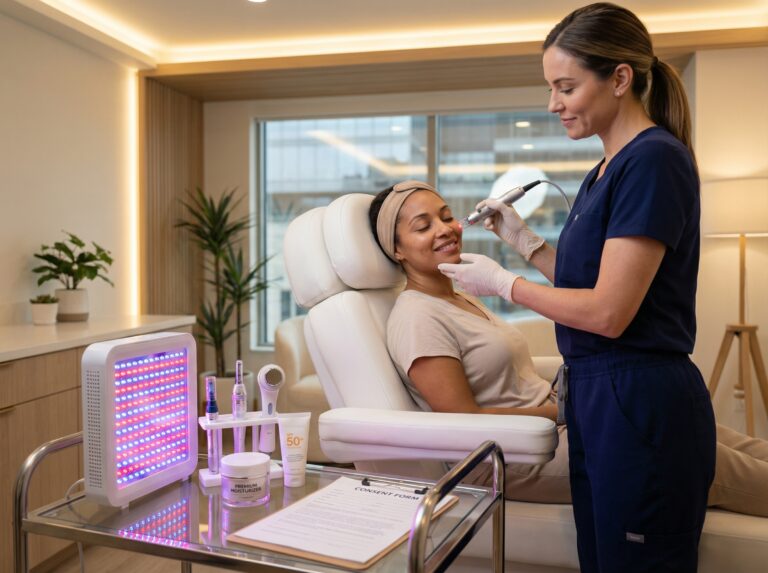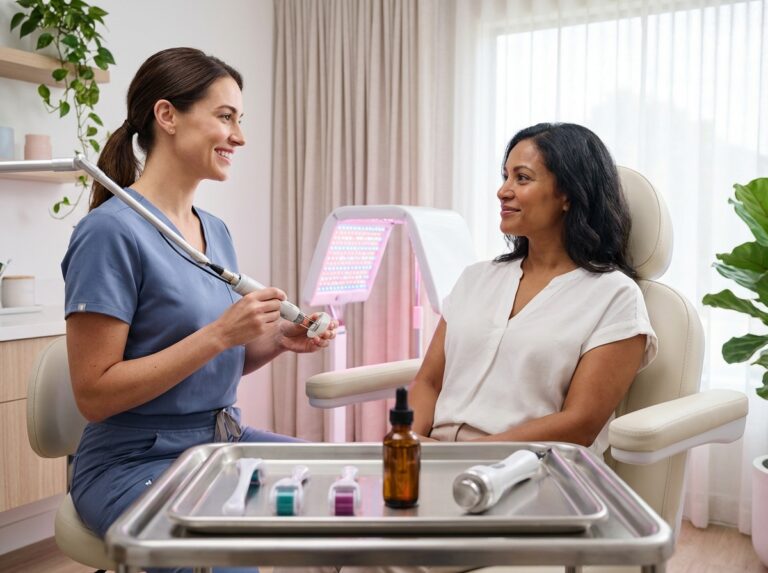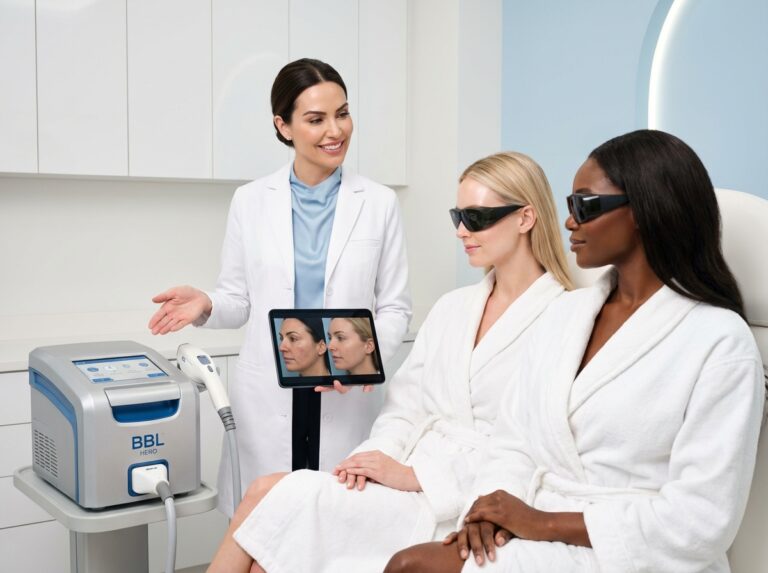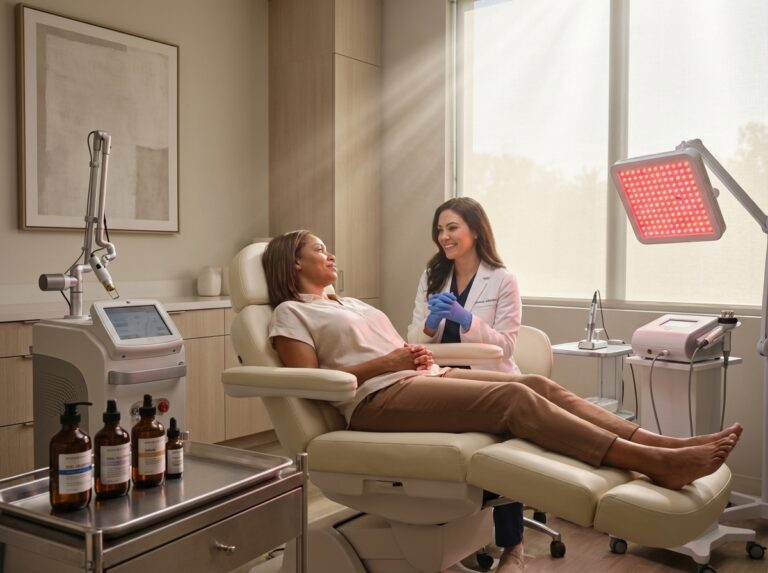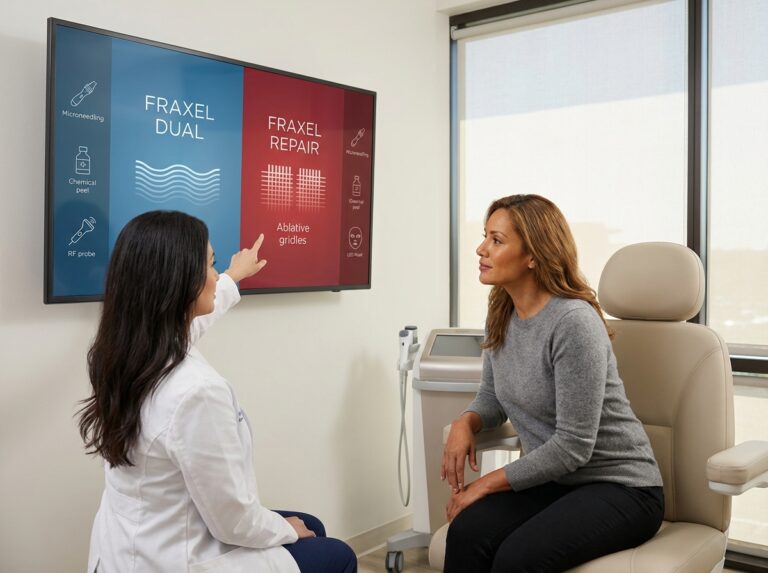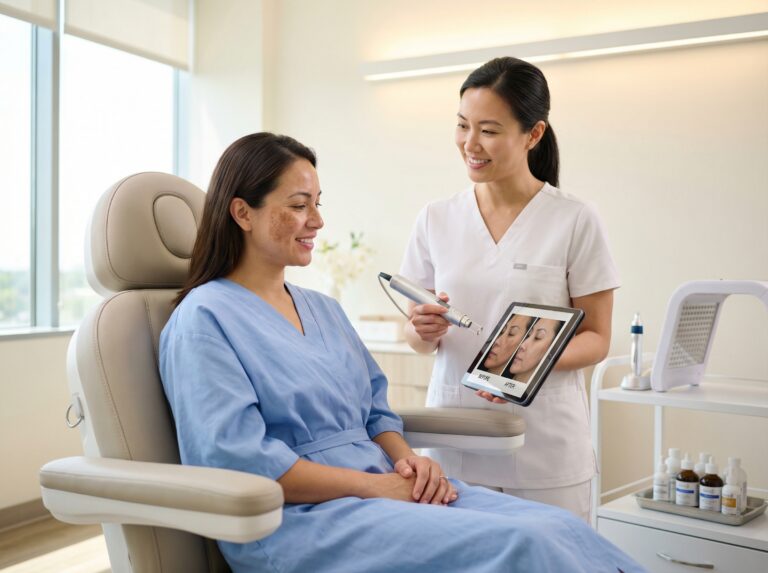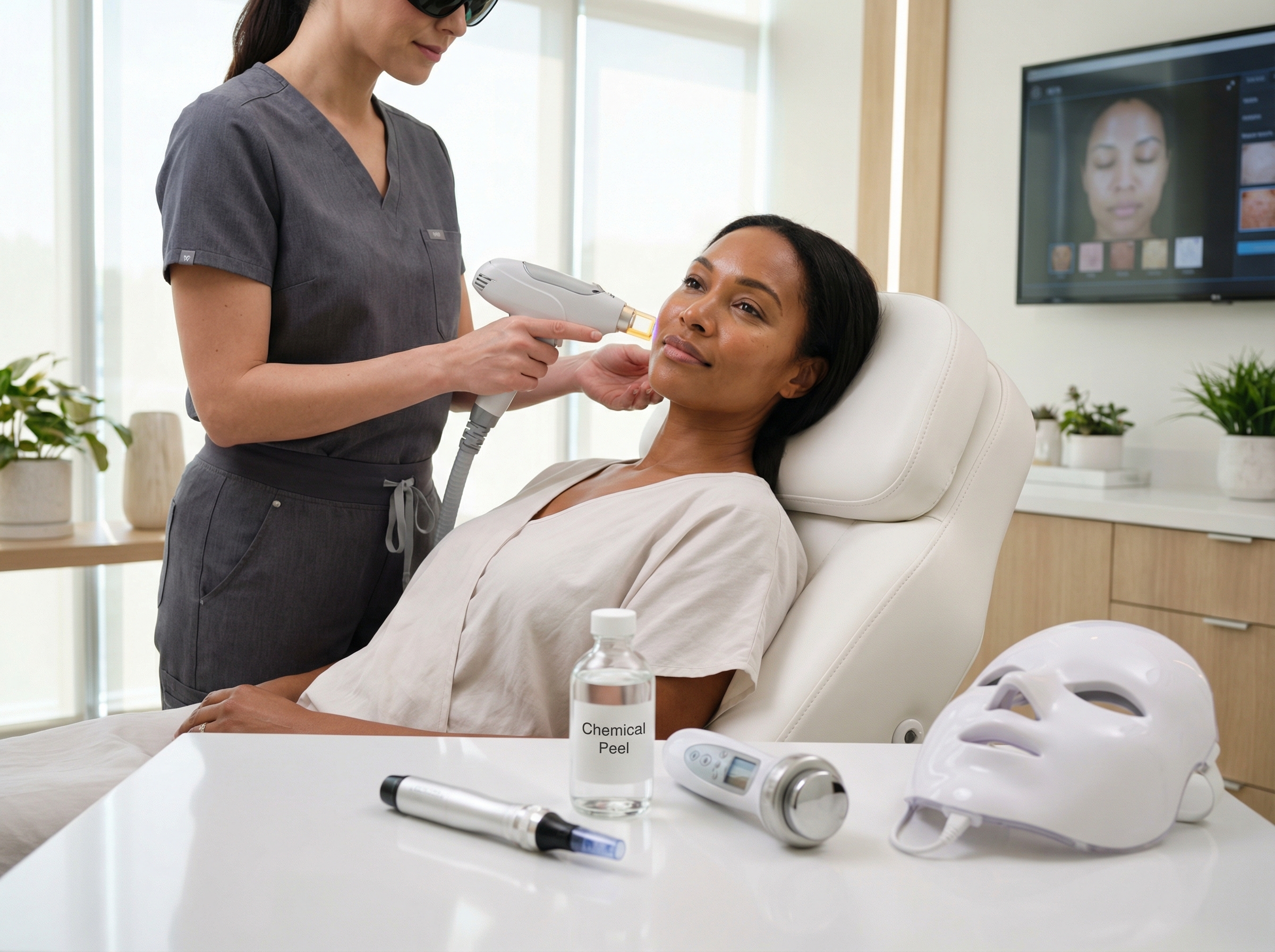
Explore Laser Genesis and other non-invasive skin rejuvenation options that refresh skin with minimal downtime. This guide explains how Laser Genesis works as a “lunchtime facial” for glow and redness and compares it with microneedling, chemical peels, radiofrequency, and LED therapy. Learn indications, expected results, downtime, safety tips, and how to choose treatments that suit your skin type and schedule.
How Non-Invasive Skin Rejuvenation Works and Who Benefits
We have covered the biological mechanisms of how skin heals and regenerates. Now we need to look at the specific tools that trigger these processes. You have likely seen these treatments on social media or clinic menus. Understanding the practical differences between them helps you spend your money wisely and avoid unnecessary downtime.
Laser Genesis
This treatment is often called a “lunchtime facial” because you can return to work immediately. It remains a staple in U.S. clinics because it bridges the gap between standard facials and aggressive laser resurfacing. It uses a non-ablative 1064 nm Nd:YAG laser. The device delivers micro-pulses of energy to the skin, safely heating the upper dermis. This bulk heating shrinks small capillaries, which reduces diffuse redness and rosacea. It also kills the bacteria that causes acne. The thermal effect stimulates fibroblasts to produce new collagen over time.
The sensation is very distinct but manageable. Most patients describe it as warm rain droplets falling on the face. It gets hot but rarely painful. The provider keeps the handpiece moving constantly to avoid burning any single spot, monitoring skin temperature to ensure it stays in the therapeutic range. You do not need numbing cream for this.
You typically need a series of treatments to see real changes in texture or redness. The standard protocol is 3 to 6 sessions spaced 2 to 4 weeks apart. The results are cumulative. You might see an immediate glow due to increased circulation, but structural changes take months to appear. Laser Genesis remains a favorite in late 2025 because it fits into busy schedules without disrupting daily life.
Downtime is minimal. You will look pink or experience “transient erythema” (flushing) for a few hours. Side effects are rare but can include temporary swelling or a hive-like reaction in sensitive skin. It is generally safe for all skin types, including darker skin tones, when performed correctly. Prices in the United States have risen slightly over the last few years. Expect to pay between $350 and $600 per session depending on your location.
Microneedling
Microneedling, technically known as collagen induction therapy, relies on mechanical stimulation rather than heat. An electric pen with sterile needles creates thousands of tiny channels in the skin. The depth varies from 0.5 mm to 2.5 mm depending on the area and the goal. These controlled micro-injuries trigger a wound healing cascade. The body rushes to repair the channels by laying down new collagen and elastin.
Providers often apply topical serums during the procedure. The channels allow these products to penetrate much deeper than usual. Platelet-rich plasma (PRP) is a common add-on. This involves drawing your blood and spinning it to isolate growth factors. Applying PRP speeds up healing and boosts collagen production.
The recovery is more visible than Laser Genesis. You will look like you have a moderate sunburn for 24 to 48 hours. Your skin may feel tight and dry. Some microscopic crusting or flaking is normal after a few days. You must avoid makeup and sweating for at least 24 hours. Sun protection is non-negotiable.
A typical series involves 3 to 4 sessions spaced 4 to 8 weeks apart. Acne scarring often requires more sessions. Risks include infection if the equipment is not sterile or if you touch your face with dirty hands. Transient hyperpigmentation can occur. This is a higher risk for Fitzpatrick skin types IV through VI. Pre-treatment with tyrosinase inhibitors is often recommended for darker skin. Costs typically range from $400 to $700 per session.
Chemical Peels
Peels use chemical solutions to dissolve the bonds between skin cells, forcing the old layers to shed. We categorize them by depth.
- Superficial Peels: These use Alpha Hydroxy Acids (AHA) or Beta Hydroxy Acids (BHA). They target the outermost layer of the epidermis. They brighten tone and help with active acne. Visible shedding is minimal; you might have mild flaking for 2 to 3 days.
- Medium Peels: These often use Trichloroacetic Acid (TCA). They penetrate the papillary dermis to treat pigment issues, actinic keratosis, and fine lines. You will experience significant peeling. Sheets of skin may shed for 5 to 7 days, often accompanied by brown crusting. You need to plan this around your social calendar.
- Deep Peels: These use phenol and reach the reticular dermis. They are serious medical procedures requiring sedation and have long recovery times. They offer dramatic restructuring but are less common now due to the rise of laser technology.
The main risk with peels is post-inflammatory hyperpigmentation (PIH). This happens if the peel is too strong or if you pick at the peeling skin. Never pull off the loose skin; you must let it fall off naturally to avoid scarring. Contraindications include active cold sores, pregnancy, and recent use of photosensitizing medications.
Radiofrequency (RF) Treatments
Radiofrequency (RF) uses electrical current to generate heat in the deep dermis. The resistance of your tissue to the current creates this heat, usually targeting 40 to 42 degrees Celsius. This causes existing collagen fibers to contract immediately, creating a tightening effect, while also triggering neocollagenesis (new collagen production).
Devices come in different forms. Monopolar RF travels through the body to a grounding pad (deep contouring). Bipolar RF travels between two electrodes on the handpiece (superficial). Microneedling RF delivers the energy directly into the dermis through insulated needles. This hybrid approach is the gold standard for acne scarring and skin tightening in 2025.
RF treatments can be uncomfortable. Microneedling RF usually requires strong topical numbing. You might see grid marks on the skin for 3 to 5 days. The tightening results take time; you usually see the full effect 3 to 6 months after the final session. The U.S. aesthetic market continues to see high demand for these tightening technologies as patients seek alternatives to surgery. Expect to pay between $800 and $1,500 per session for RF Microneedling.
LED Therapy
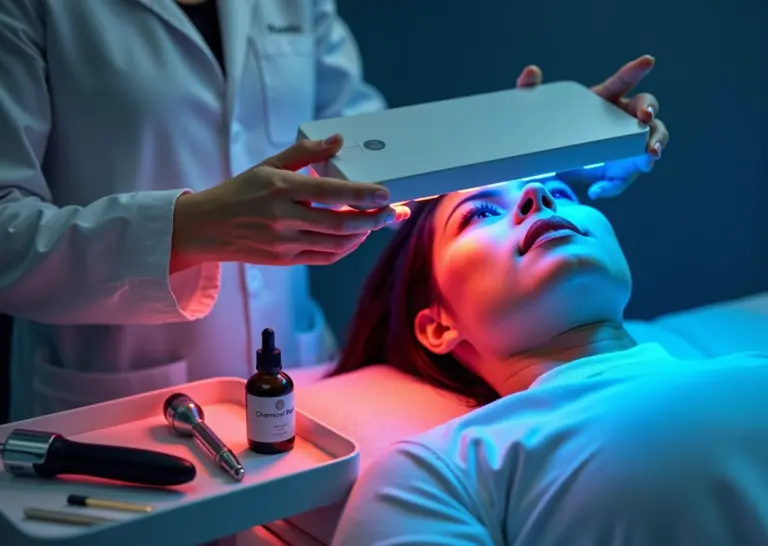
Light Emitting Diode (LED) therapy, or photobiomodulation, is the gentlest option. It uses specific wavelengths of light to modulate cell activity without heat. Red light (633 nm) reduces inflammation and stimulates fibroblast activity. Near-infrared light (830 nm) penetrates deeper to help with healing and circulation. Blue light targets acne bacteria.
This is often an add-on treatment. It calms the skin after a laser session or microneedling. It has zero downtime. You just lie under a curved panel for 10 to 20 minutes. It is safe for everyone and does not burn or damage tissue. The results are subtle and require consistent use.
Making the Right Choice: A Comparative Guide
Selecting the right modality depends on your primary concern, your budget, and how much downtime you can tolerate. Combining treatments often yields superior results, but safety requires correct sequencing.
For Redness and Rosacea: Laser Genesis is the superior choice here. The heat targets the vascular component directly. LED therapy is a good supportive treatment to keep inflammation down between sessions.
For Acne Scarring: Texture issues need physical remodeling. Microneedling is the standard starting point. If the scars are deep or you also have skin laxity, RF microneedling is more effective as it tightens while it smooths.
For Pigmentation: Chemical peels are often the most cost-effective way to lift surface pigment. Lasers can also work but require careful selection to avoid making melasma worse.
| Modality | Primary Indication | Downtime | Session Cost (Avg) | Typical Series |
|---|---|---|---|---|
| Laser Genesis | Redness, Glow, Fine Lines | None to 2 hours | $350 – $600 | 3 – 6 |
| Microneedling | Texture, Scars, Pore Size | 2 – 4 days | $400 – $700 | 3 – 4 |
| RF Microneedling | Laxity, Deep Scars | 3 – 5 days | $800 – $1,500 | 3 |
| Chemical Peel (Medium) | Pigment, Sun Damage | 5 – 10 days | $250 – $600 | 1 – 3 |
| LED Therapy | Inflammation, Healing | None | $50 – $100 (add-on) | Ongoing |
Safety and Provider Qualifications
The technology is only as good as the person using it. In the United States, regulations vary by state. Some states allow estheticians to fire lasers while others require a nurse or physician. You should always verify the credentials of your provider. Ask how many times they have performed the specific procedure you are booking.
FDA clearance is important. It means the device has been proven safe for its intended use. Be wary of unbranded devices or machines that look like cheap imports. They may not deliver stable energy levels, which increases the risk of burns.
Patients with darker skin need to be extra cautious. Heat and trauma can trigger the melanocytes to overproduce pigment. This leads to dark spots that last for months. If you have Fitzpatrick skin type IV, V, or VI, ask your provider about their experience with your skin tone. Laser Genesis (Nd:YAG) and RF microneedling are generally safer than broad-spectrum light devices (IPL) or deep chemical peels for these skin types. Providers might suggest lower energy settings, longer intervals between treatments, or a bleaching cream to use for a few weeks before the procedure to suppress the pigment cells.
Combining treatments can improve results but requires a conservative approach. A common protocol involves alternating microneedling with chemical peels every 4 weeks. This allows the skin barrier to fully recover between sessions. Never stack aggressive treatments in the same session unless your provider has a specific, proven protocol. The skin needs time to heal. Rushing the process often leads to complications rather than faster results.
Frequently Asked Questions
Patients often arrive at the consultation chair with a mix of excitement and anxiety. They have seen the before and after photos. They understand the science of collagen stimulation. Yet practical concerns remain. You need to know how these treatments fit into your actual life, your budget, and your pain tolerance. The following answers address the most common uncertainties regarding Laser Genesis and complementary non-invasive procedures.
Is Laser Genesis painful and what does it feel like?
Fear of pain is the primary barrier for many first-time laser patients. Laser Genesis is unique because the handpiece does not touch your skin. The provider holds it about an inch above the surface. You will feel a rapid warming sensation. Many patients compare it to warm rain droplets falling on the face or sitting near a campfire. The heat builds up gradually. It should never feel like burning. The procedure requires no numbing cream. This lack of anesthesia allows you to give feedback on the heat levels.
Action Step: Tell your provider immediately if the heat feels sharp or uncomfortable. They can adjust the distance or speed of the pass to maintain comfort without losing efficacy.
How many Laser Genesis sessions are usually needed?
One session provides a temporary glow and some skin tightening. Long-term correction of diffuse redness or fine lines requires repetition. The heat must stimulate the dermis repeatedly to trigger substantial new collagen production. Most clinical protocols recommend a series of four to six treatments. You should space these appointments two to four weeks apart. Maintenance sessions are usually scheduled every three to six months after the initial series.
Action Step: Commit to the full series before you start. Buying a package often reduces the cost per session and ensures you stick to the schedule required for visible results.
How long is the downtime after Laser Genesis?
This modality is defined by its lack of downtime. You can return to work or social activities immediately. Your skin may look slightly pink for an hour or two. This erythema resembles a post-workout flush. It typically subsides before you leave the clinic or shortly after. Swelling is rare. Peeling does not occur because the laser is non-ablative. It bypasses the surface layer to heat the tissue underneath.
Action Step: Schedule this treatment on your lunch break or before an event. You do not need to clear your calendar for recovery.
Can Laser Genesis treat rosacea and broken capillaries?
Laser Genesis is highly effective for diffuse redness and background flushing associated with rosacea. The heat collapses tiny micro-vessels that cause the red appearance. It is less effective for distinct, thick broken capillaries or spider veins around the nose. Those specific targets often require a vascular laser like the Excel V or V-Beam which delivers energy differently. Laser Genesis works best for general tone improvement and calming active inflammation.
Action Step: Use a mirror to examine your redness. If you see a general pink flush, request Genesis. If you can trace individual purple or red lines, ask for a targeted vascular laser consultation.
Is Laser Genesis safe for darker skin types?
Safety in skin of color is a critical advantage of this treatment. The 1064 nm Nd:YAG wavelength is weakly absorbed by melanin in the epidermis. This allows the heat to pass through the surface without burning the pigment. It is considered safe for all Fitzpatrick skin types, including type VI. This distinguishes it from IPL (Intense Pulsed Light) which carries a higher risk of burns or hyperpigmentation on darker skin tones.
Action Step: Verify the device being used is a 1064 nm Nd:YAG laser. Ask the provider specifically about their experience treating your skin type to ensure they understand proper energy settings.
What are the risks of microneedling and who should avoid it?
Microneedling creates thousands of physical channels in the skin. The primary risks are infection and scarring if done improperly. Using a needle depth that is too aggressive can cause tracking marks or scratching. Patients with active acne should avoid this procedure as it spreads bacteria. Those with a history of keloid scarring should also proceed with extreme caution. Reactivation of the herpes simplex virus is another potential side effect for those prone to cold sores.
Action Step: Inspect the device tip before treatment to ensure a new, sterile cartridge is opened in front of you. If you have a history of cold sores, request a prophylactic antiviral prescription to take two days before your appointment.
How soon after isotretinoin can I get microneedling or a medium peel?
Historical guidelines mandated a six-month to one-year wait after stopping isotretinoin (Accutane). Recent consensus in 2025 suggests this window may be shorter for superficial treatments. However, the skin remains fragile and healing capacity is altered. Deep microneedling and medium-depth chemical peels still carry a risk of scarring if performed too soon. Most conservative board-certified dermatologists still advise waiting six months for these specific modalities to ensure safety.
Action Step: Consult the dermatologist who prescribed your medication. Do not rely on a medspa esthetician for this clearance. Obtain written approval from your physician before booking.
Can chemical peels and lasers be combined in the same treatment plan?
Combination therapy is a dominant trend in aesthetic medicine. Laser Genesis remains a favourite among patients and is frequently paired with superficial chemical peels. A common protocol involves a light peel to remove dead surface cells followed by Laser Genesis to stimulate the dermis. This “stacking” can enhance radiance. However, combining these treatments in a single visit increases the intensity. It is not suitable for sensitive skin or first-time patients.
Action Step: Start with each treatment individually. Once you know how your skin reacts to both, ask your provider if a same-day combination would yield better results for your specific concerns.
How long until I see results and how long do they last?
Immediate results from Laser Genesis or a “Cinderella peel” are often just temporary swelling or hydration. True collagen remodeling takes time. You will typically see changes in texture and pore size about three to four months after your first session. This lag occurs because the body needs time to produce new collagen fibers. Results can last six to twelve months. They are not permanent. The aging process continues.
Action Step: Take baseline photos in natural light before your first session. Compare them to photos taken four months later. Do not rely on daily mirror checks to track gradual improvements.
Will my insurance cover these procedures?
Insurance companies classify Laser Genesis, microneedling, and chemical peels as cosmetic procedures. They are elective and rarely covered. Exceptions are extremely limited. Sometimes treatment for severe rosacea or acne scarring might be partially covered if deemed medically necessary, but this usually applies to different laser types or surgical interventions. You should expect to pay out of pocket.
Action Step: Check if your Health Savings Account (HSA) or Flexible Spending Account (FSA) allows reimbursement for treatments related to a diagnosed medical condition like acne or rosacea. This varies by plan and requires a letter of medical necessity.
How to choose a qualified clinic and what questions to ask during consultation?
The device matters less than the hands operating it. In many states, regulations regarding who can fire a laser are loose. You might encounter a doctor, a nurse, or an esthetician. A board-certified dermatologist or plastic surgeon offers the highest level of oversight. If a non-physician treats you, ensure a doctor is on-site or directly supervising the protocol.
Action Step: Ask these three specific questions during your consultation.
- Who will be performing the procedure and what are their specific credentials?
- How many times has this provider performed this specific treatment in the last month?
- Do you own the laser or do you rent it? (Ownership often implies more frequent use and familiarity).
What should I do if I have a reaction after treatment?
Post-procedure anxiety is common. Normal reactions include redness, mild stinging, or slight dryness. Abnormal reactions include blistering, intense itching, white pustules, or dark streaks. Immediate communication is vital to prevent long-term damage like hyperpigmentation or scarring.
Action Step: Call the clinic immediately if you see blisters or feel increasing pain hours after the treatment. Do not wait for the office to open the next day. Use the emergency line if provided. Take clear photos of the reaction to send to the provider.
Conclusions and Practical Next Steps
We have examined the mechanics of non-invasive skin rejuvenation. You now understand how Laser Genesis gently heats the dermis to reduce redness. You know how microneedling creates controlled injuries to stimulate collagen. We also discussed how chemical peels exfoliate surface layers and how LED therapy manages inflammation. These treatments offer meaningful improvements without the heavy recovery of surgery. The challenge lies in selecting the right tool for your specific skin concerns.
Laser Genesis remains a standout option in late 2025. It addresses diffuse redness and promotes a general glow with almost zero downtime. It fits into a busy schedule easily. Other modalities serve different purposes. Microneedling and Radiofrequency (RF) target texture issues like acne scars or deep lines. Chemical peels focus on surface tone and pigmentation irregularities. LED light therapy acts as a support system to speed up healing.
Your choice depends on a balance of three factors. You must weigh your primary skin goal against your tolerance for downtime and your budget. Marketing materials often blur these lines. We will clarify them here.
Decision Framework for Treatment Selection
You need a logical way to filter these options. Use this framework to match your current situation with the most appropriate technology.
| Primary Goal | Best Candidate | Downtime Expectation | Ideal For |
|---|---|---|---|
| Redness & Glow | Laser Genesis | None to 2 hours | Rosacea, diffuse redness, event prep |
| Texture & Scars | Microneedling / RF | 2 to 5 days | Acne scars, enlarged pores, fine lines |
| Pigment & Tone | Chemical Peels | 3 to 7 days | Sun spots, melasma, dullness |
| Recovery Support | LED Therapy | None | Post-procedure healing, active acne |
This table simplifies the landscape. Laser Genesis is the clear winner for those who cannot afford visible peeling or redness. It is consistent with current industry shifts. Laser Genesis remains a favourite among patients and is set to be a major part of the 2025 aesthetic trends because it delivers results without interrupting daily life. Patients with deeper structural concerns like pitted scarring will find microneedling more effective despite the longer recovery.
The Pre-Consultation Checklist
A consultation is a medical appointment. You should treat it with the same seriousness as a visit to a specialist. Providers rely on the information you give them to ensure safety. Arriving prepared saves time and prevents adverse reactions. Bring this checklist to your appointment.
- Complete Medical History. Include all chronic conditions. Autoimmune disorders or history of keloid scarring change the treatment plan.
- Current Medication List. Write down everything. This includes antibiotics, blood thinners, and supplements. Mention isotretinoin use within the last six months specifically.
- Skincare Routine. List your active ingredients. Retinoids, glycolic acid, and salicylic acid affect skin sensitivity.
- Photos of Concerns. Lighting in clinics varies. Bring photos of your skin in natural light to show the redness or texture that bothers you.
- Budget Parameters. Be honest about what you can spend. This helps the provider design a realistic package.
- Downtime Constraints. State clearly if you cannot have visible peeling or redness due to work or social commitments.
Ask specific questions during the conversation. Ask about the specific device they use. Ask how many sessions typical patients with your skin type require. Ask to see before and after photos of their own patients rather than manufacturer stock images. This reveals the skill level of the specific provider.
Safety Protocols and Risk Mitigation
Non-invasive does not mean risk-free. Lasers and medical-grade peels involve energy and acids. Safety is the priority. The aesthetic market is expanding rapidly. The U.S. aesthetic lasers market generated a revenue of USD 584.7 million in 2024 and continues to grow. This growth means more clinics offer these services. It also means you must be more vigilant about provider credentials.
Verify that your provider is licensed. In the United States, regulations vary by state regarding who can fire a laser. A board-certified dermatologist or a plastic surgeon offers the highest level of oversight. Registered nurses and physician assistants with specialized training are also common providers.
The Importance of Test Spots
Never skip a test spot if you have a darker skin tone or sensitive skin. A test spot involves treating a small, inconspicuous area near the jawline. The provider waits 24 to 48 hours to observe the reaction. This confirms the settings are safe for your specific melanin levels. It prevents hyperpigmentation or burns on the full face.
Sun Exposure and Lifestyle
Strict sun avoidance is mandatory. You cannot treat tanned skin with most lasers. The excess melanin in a tan competes for the laser energy. This increases the risk of burns. Stop tanning or using self-tanner two to four weeks before your session. Apply broad-spectrum sunscreen with SPF 30 or higher every morning. This applies even on cloudy days or when you are indoors near windows.
Actionable First Steps
Reading about treatments is only the preparation. The next step is clinical assessment. You cannot diagnose your own skin needs accurately in a mirror. Professional lighting and magnification reveal details the naked eye misses.
Schedule a consultation with a board-certified specialist today. Do not book a full treatment package online without being seen first. Look for clinics that specialize in laser dermatology. When you call, ask if they offer Laser Genesis or similar 1064 nm Nd:YAG laser treatments. This confirms they have the hardware discussed in this article.
Expect the consultation to last about 30 minutes. The provider will cleanse a small area of your skin. They may use a UV camera or a dermatoscope to look at subsurface pigment and vascularity. They will outline a treatment plan. This plan usually consists of a series of four to six sessions spaced two to four weeks apart. They will provide a quote and pre-treatment instructions.
You are now equipped with the knowledge to navigate the clinic environment confidently. You understand the science. You have a safety checklist. You know what to expect. The path to clearer, calmer skin begins with that first professional evaluation.
Sources
- Laser Therapy Devices Market Growth 2025 to 2035 — The Laser Therapy Devices market is expected to reach approximately USD 3.6 billion in 2025 and expand to around USD 8.3 billion by 2035.
- Latest Laser Treatment Trends 2025: Innovations & Market Insights — Market Growth and Projections ; Aesthetic Lasers, $1.58 billion (2025), $4.0 billion (2030), 16.9% ; Laser Hair Removal (Alt.) $1.33 billion (2024) …
- The United States Aesthetic Lasers Market Size & Outlook, 2030 — The U.S. aesthetic lasers market generated a revenue of USD 584.7 million in 2024 and is expected to reach USD 1,462.4 million by 2030. The U.S. market is …
- Aesthetic Trends in 2025 – Laser Service Solutions — Discover 2025 aesthetic trends creating new revenue streams. Learn laser combination therapies, hair cloning advances, and preventative care …
- Dermatology Lasers Market Size To Reach USD 7.23 Bn By 2034 — The global dermatology lasers market size is calculated USD 3.77 billion in 2025 and is forecasted to reach around USD 7.23 billion by 2034, …
- Laser Resurfacing Market Size, Share, Growth, Trends, Demand … — Laser Resurfacing Market size is estimated to reach over USD 511.91 Million by 2032 from a value of USD 268.52 Million in 2024 and is projected to grow by USD …
- Exploring Emerging Dermatology Devices and Treatments in 2025 — Dr Stephen Lewellis provides an insightful overview of the evolving landscape of dermatology devices and treatments to watch in 2025.
- Aesthetic Treatments To Try In 2025 and Which Ones You … – MediZen — Laser Genesis remains a favourite among our patients and is set to be a major part of the 2025 aesthetic trends. Laser Genesis is a laser facial …
Legal Disclaimers & Brand Notices
The information provided in this article is for informational and educational purposes only and does not constitute professional medical advice, diagnosis, or treatment. Always seek the advice of a board-certified dermatologist, plastic surgeon, or other qualified healthcare provider with any questions you may have regarding a medical condition or specific aesthetic procedure. Never disregard professional medical advice or delay in seeking it because of something you have read in this content.
All product names, logos, brands, and registered trademarks mentioned in this text are the property of their respective owners. All company, product, and service names used in this article are for identification purposes only. Use of these names, trademarks, and brands does not imply endorsement or affiliation.