Explore RF microneedling versus traditional microneedling within the broader landscape of non-invasive skin rejuvenation—microneedling, laser facials, chemical peels, RF, and LED. This article explains mechanisms, indications, downtime, efficacy, safety tips, and real-world decision factors so readers in the USA can make informed choices with clinicians about achieving smoother, firmer, healthier skin. It reviews evidence, recovery timelines, costs, and practical pre- and post-care advice.
Why choose non-invasive skin rejuvenation now
Non-invasive skin rejuvenation defines a category of procedures that improve skin quality without surgical incisions or general anesthesia. These treatments bridge the gap between topical skincare and plastic surgery. They appeal to individuals noticing early to moderate signs of aging who are not candidates for a facelift or simply wish to avoid the recovery time associated with surgery. The primary goal is stimulating the body’s natural healing processes to repair structural damage.
Patients usually seek these interventions for specific concerns that over-the-counter creams cannot resolve. Common indications include static fine lines, textural irregularities, enlarged pores, acne scarring, and mild skin laxity. Pigmentation issues such as sun spots or melasma also drive high demand for these therapies.
Goals by Modality
Different devices target specific layers of the skin to achieve distinct outcomes. Understanding the primary strength of each tool helps in setting realistic treatment plans.
- Texture and Pores: Traditional microneedling remains the standard for surface-level refinement. It physically disrupts the epidermis and upper dermis to smooth roughness.
- Deep Wrinkles and Laxity: Radiofrequency (RF) microneedling adds thermal energy to the mechanical action. This heat tightens existing collagen fibers and stimulates new production deeper in the dermis.
- Pigmentation and Resurfacing: Lasers are categorized by their wavelength and target. They are generally superior for lifting pigment and addressing severe sun damage.
- Acne Scarring: Both traditional and RF microneedling work well here. RF microneedling is more able than traditional microneedling in addressing scars because the heat helps break down fibrous scar tissue more effectively.
- General Radiance: Chemical peels remove the outermost layer of dead skin cells. They reveal fresher skin underneath and improve light reflection.
- Cellular Health: LED phototherapy is a non-thermal option. It uses specific light wavelengths to reduce inflammation or kill acne-causing bacteria.
Managing Patient Expectations
Clinical guidance in the United States emphasizes that non-invasive does not mean instant. Patients must understand that collagen remodeling is a biological process that takes weeks to months. A single session rarely provides the final result.
Most protocols require a series of treatments. Three to six sessions spaced four to six weeks apart is a common standard for microneedling and RF devices. Maintenance is also necessary. Skin continues to age, so follow-up treatments once or twice a year preserve the investment.
Results are typically modest to moderate. These procedures improve skin quality and firmness but do not replicate the structural lifting of surgery.
Comparison of Common Modalities
The following table outlines the practical differences regarding recovery and procedure intensity. Note that “downtime” refers to social downtime, meaning how long visible redness or peeling persists.
| Modality | Typical Downtime | Typical Sessions | Pain Level |
|---|---|---|---|
| Traditional Microneedling | 24 to 48 hours (redness) | 3 to 6 | Mild (numbing cream used) |
| RF Microneedling | 2 to 5 days (redness, minor swelling) | 3 to 4 | Moderate (numbing cream required) |
| Fractional Laser (Non-Ablative) | 1 to 3 days (redness, rough texture) | 3 to 5 | Moderate (warm, prickling sensation) |
| Fractional Laser (Ablative) | 5 to 10+ days (peeling, oozing) | 1 to 2 | High (requires strong anesthesia) |
| Medium-Depth Chemical Peel | 5 to 7 days (visible peeling) | 1 to 3 | Moderate (stinging, burning) |
| LED Phototherapy | None | 6 to 12 (often weekly) | None |
Key Decision Factors
Selecting the right treatment involves balancing clinical needs with lifestyle constraints.
Skin Type (Fitzpatrick Scale)
This is the most critical safety factor. Darker skin types (Fitzpatrick IV-VI) are at higher risk for post-inflammatory hyperpigmentation. RF microneedling is often safer than certain lasers for these skin types because the energy is delivered deep into the dermis, bypassing the melanin-rich surface. Traditional microneedling is also generally safe for all skin tones as it does not use heat.
Primary Concern
If the main issue is sagging or deep acne scars, the thermal effect of RF is necessary for significant remodeling. If the concern is superficial dullness or fine lines, traditional microneedling or a chemical peel may suffice.
Tolerance for Downtime
Patients who cannot take time off work often prefer non-ablative lasers or RF microneedling. The redness can usually be covered with makeup after 24 to 48 hours. Ablative lasers or deep peels require staying home for several days.
Budget
RF microneedling and laser treatments involve expensive consumable tips and complex machinery. Consequently, RF microneedling sessions typically range from $800 to $1,500, whereas traditional microneedling is generally $300 to $700 per session. Insurance classifies these as cosmetic procedures, meaning patients pay out of pocket.
Risk Tolerance
Every procedure carries risk. Aggressive treatments yield more dramatic results but carry higher risks of scarring or pigment changes. Patients must verify that their provider uses FDA-cleared devices appropriate for their specific skin indications. This is distinct from at-home “dermarollers,” which use shorter needles (0.25mm–0.5mm) and lack the sterility or depth required for structural change, often leading to infection rather than rejuvenation.
Choosing between these options requires a clear understanding of the trade-offs between cost, recovery time, and potential results. The next section examines the specific technical differences between the two most popular needle-based options.
How RF microneedling differs from traditional microneedling
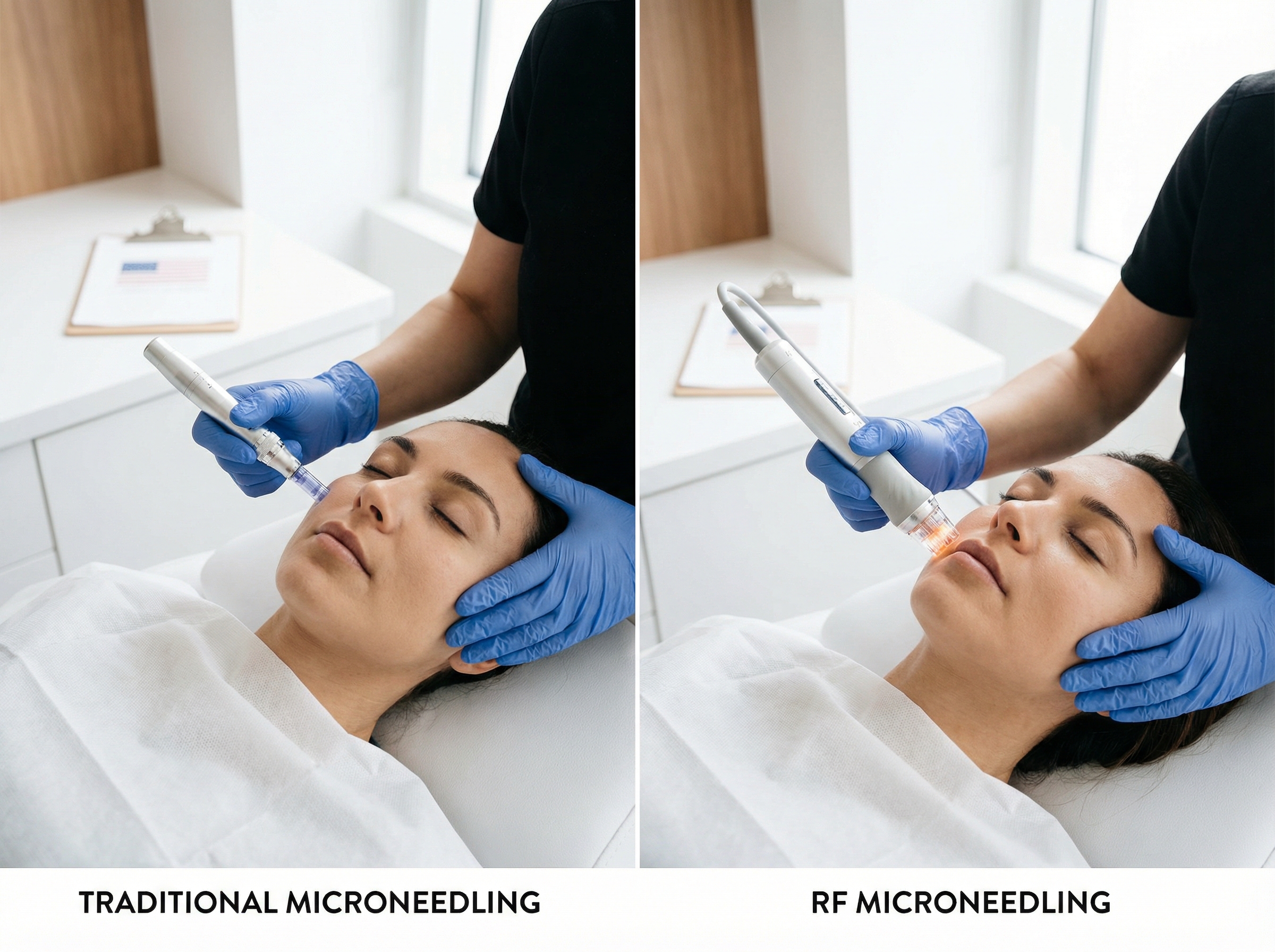
The core difference between these two modalities comes down to physics. Traditional microneedling relies strictly on mechanical trauma to trigger a biological response. Radiofrequency (RF) microneedling combines that mechanical action with thermal energy. This distinction changes how the skin repairs itself and determines which concerns each device can effectively treat.
The Mechanics of Traditional Microneedling
Traditional microneedling is often referred to as collagen induction therapy. The mechanism is purely physical. A motorized pen containing a sterile cartridge of fine needles creates thousands of vertical channels in the skin. These are controlled micro-injuries.
The body perceives these punctures as wounds. This triggers a healing cascade. Platelets release growth factors. Fibroblasts rush to the site to produce new collagen and elastin. The goal is to replace damaged tissue with fresh, organized structural proteins.
Most in-office devices allow providers to adjust needle depth from 0.25 mm up to 2.5 mm or even 3.5 mm depending on the area being treated. Shallow depths target the epidermis to improve texture and pore size. Deeper settings reach the reticular dermis to address acne scarring.
A secondary benefit is the creation of micro-channels. These temporary pathways allow topical agents to bypass the skin’s barrier. This is why providers often apply hyaluronic acid, peptides, or platelet-rich plasma (PRP) during the procedure. The absorption rate increases significantly compared to topical application on intact skin.
Standard protocols usually involve a series of three sessions spaced four to six weeks apart. The cumulative effect of these mechanical injuries gradually smooths surface irregularities.
How RF Microneedling Adds Thermal Energy
RF microneedling takes the mechanical puncture and adds a thermal component. The device still uses needles to penetrate the skin. However, once the needles reach the target depth, they emit radiofrequency energy directly into the dermis.
This energy converts to heat. The goal is to raise the tissue temperature to a specific range, typically between 60 and 70 degrees Celsius. This temperature causes controlled thermal coagulation. The key difference is the addition of radiofrequency energy. While traditional needling creates a physical wound, RF creates a zone of thermal damage around the needle tip.
Heat does two things that mechanical needling cannot do alone. First, it causes immediate contraction of existing collagen fibers. This provides a tightening effect. Second, the thermal injury stimulates a more robust neocollagenesis (new collagen production) response than mechanical trauma alone. The heat denatures the proteins in the dermis, forcing the body to remodel the tissue more aggressively.
Device Variations and Electrode Types
Not all RF devices work the same way. The delivery of energy depends on the type of needles used.
Insulated Needles
These needles have a coating along the shaft. Only the very tip is conductive. This protects the epidermis from heat. The energy is delivered solely at the bottom of the needle. This design is crucial for treating darker skin types (Fitzpatrick IV-VI) because it bypasses the melanin-rich surface layer, reducing the risk of post-inflammatory hyperpigmentation.
Non-Insulated Needles
These needles emit energy along the entire length of the shaft. This heats the full column of tissue from the surface down to the deep dermis. This creates more coagulation and bleeding is often reduced due to the hemostatic effect of the heat. These are typically used for aggressive resurfacing in lighter skin types where surface heating is less risky.
Devices also vary in how they deliver the current. Bipolar RF keeps the energy contained between the needles (electrodes). Monopolar RF pushes the energy deeper through the body to a grounding pad. Bipolar is more common for skin texture and tightening, while monopolar options are sometimes used for deeper fat remodeling.
Clinical Implications: Which Tool for Which Job?
The addition of heat changes the ideal patient profile. RF microneedling is more able than traditional microneedling in addressing scars and laxity. The thermal coagulation breaks down tough scar tissue more effectively than simple mechanical puncture. It is the preferred choice for deep acne scars, surgical scars, and skin that has lost elasticity.
Traditional microneedling remains a strong option for superficial concerns. If the primary goal is simply to refresh the skin, improve mild texture issues, or enhance the delivery of topical serums, the mechanical approach is often sufficient. It is also generally less expensive than RF treatments.
Regarding combinations, pairing microneedling with Platelet-Rich Plasma (PRP) is common and safe, as the channels allow PRP to penetrate deeply. However, combining ablative lasers with RF microneedling in the same visit is generally discouraged unless the provider follows a specific protocol, as the cumulative trauma can be excessive.
Pain Management and Sensation
The sensory experience differs between the two. Traditional microneedling feels like a vibration or a scratching sensation. Most patients tolerate it well with a topical numbing cream applied 30 to 45 minutes prior.
RF microneedling involves heat. Patients feel the prick of the needle followed by a warm or hot zap. The intensity depends on the energy settings. Higher energy levels required for scar remodeling can be uncomfortable. Topical anesthesia is mandatory. Some providers also use forced cold air (chillers) during the treatment to distract nerve endings. For aggressive treatments, oral anxiolytics or analgesics might be offered.
Safety and Provider Training
Safety relies heavily on the operator. Modern devices are sophisticated, but the settings must match the patient’s physiology.
With traditional microneedling, the main risk is tearing the skin if the provider moves the pen too quickly or reuses dull needles. Cross-contamination is a risk if sterile protocols are ignored.
RF microneedling carries a risk of thermal burns if the energy is too high or if the handpiece is not in full contact with the skin. If the needles do not fully penetrate before the energy fires, the heat can discharge on the surface. This can cause grid-pattern scarring.
Provider training is critical. The operator must know how to adjust the pulse duration and power level based on the thickness of the skin in different areas of the face. The forehead requires different settings than the cheeks.
Practical Summary
Choosing between the two depends on the severity of the condition and the desired outcome.
Choose Traditional Microneedling if:
- You want to improve general skin tone and superficial texture.
- You are looking for a “pre-juvenation” maintenance treatment.
- Budget is a primary constraint.
- You want to boost the absorption of topical skincare ingredients.
Choose RF Microneedling if:
- You have moderate to severe acne scarring.
- You are concerned with skin laxity or “crepey” skin.
- You want to address deeper wrinkles.
- You have darker skin and need a treatment that bypasses the epidermis (using insulated needles).
Outcomes, downtime, risks, and evidence summary
Knowing the mechanics of how needles and heat interact with the dermis is only half the equation. The practical reality of recovery, safety, and visible results determines which treatment fits your life. We need to look at the evidence regarding what actually happens after you leave the clinic.
Timeline of Results
Patience is necessary for collagen induction therapy. While marketing often promises instant gratification, the biological process of neocollagenesis follows a strict physiological schedule.
You might see an immediate plumpness right after the procedure. This is usually due to transient edema rather than new tissue formation. The skin looks tighter because it is swollen. This effect subsides within a few days.
True structural changes occur later. The collagen remodeling cascade begins around the third week. Visible improvements in skin texture and firmness typically appear between three and six months after the initial session. The body needs time to produce new collagen and elastin fibers.
Most clinical protocols recommend a series of treatments rather than a single visit. Three to six sessions are standard for significant correction. These are usually spaced four to six weeks apart to allow the skin to heal and respond.
Downtime Expectations
Recovery varies significantly between traditional methods and energy-based devices. Your social calendar should account for these differences.
- Traditional Microneedling: The recovery is relatively quick. You can expect erythema similar to a moderate sunburn. This redness typically lasts 24 to 72 hours. Minor swelling may occur but usually resolves within the first day.
- RF Microneedling: The addition of thermal energy changes the healing profile. Swelling is often more pronounced because of the heat delivered to the deep dermis. Redness can persist for up to a week depending on the intensity settings. You might see tiny grid marks or micro-crusting on the skin surface as it heals.
- Makeup and Skincare: You should avoid makeup for at least 24 to 48 hours. The micro-channels remain open for a short period, and applying cosmetics too soon can lead to infection or granulomas.
Side Effects and Risks
Sterile technique is non-negotiable. The risk of infection is low when performed by a qualified provider in a clean environment. It increases significantly with at-home devices or improper aftercare.
Common side effects include transient bruising and pinpoint bleeding. These are expected parts of the mechanical injury process. Prolonged erythema is possible if the treatment was aggressive or if the skin is sensitive. If redness worsens after 48 hours, or if you notice pus, excessive heat, or throbbing pain, contact your provider immediately. Do not try to treat it yourself with over-the-counter creams, as some ingredients can irritate open channels.
Pigmentary changes require attention. Post-inflammatory hyperpigmentation is a risk for darker skin types (Fitzpatrick IV-VI). RF microneedling is more able than traditional microneedling in addressing scars without damaging the epidermis, making it safer for melanin-rich skin than many lasers. However, improper heat settings can still cause burns or pigment issues. Hypopigmentation is rare but possible if the melanocytes are damaged.
Contraindications and Special Populations
Certain conditions require deferring treatment to prevent complications. Safety protocols are strict regarding active systemic issues.
- Pregnancy: No elective cosmetic procedures should be performed during pregnancy. The risk of infection or stress on the body is not worth it.
- Isotretinoin (Accutane): Recent use of oral isotretinoin is a major consideration. Old guidelines suggested a six-month wait. Newer consensus sometimes allows earlier treatment, but many clinicians still prefer a waiting period of several months to ensure proper wound healing. Always consult your prescribing physician.
- Active Skin Conditions: You cannot treat over active acne cysts, eczema patches, or cold sores. This spreads bacteria and worsens the condition.
- Keloids: A history of keloid scarring is a significant contraindication. Creating injuries in prone individuals can trigger new keloid formation.
Safety Measures and Preparation
Preparation begins days before the appointment. You should avoid sun exposure and tanning. Sunburned skin cannot be treated. Providers often advise stopping blood-thinning supplements like fish oil or vitamin E to minimize bruising, provided your doctor agrees.
Antibiotic prophylaxis is rarely needed unless you have a specific medical history requiring it. The focus is on aseptic technique during the procedure.
Post-care is critical for preventing complications. You must use a gentle cleanser and avoid active ingredients like retinoids, vitamin C, or exfoliating acids for several days. Sun protection is mandatory. The skin barrier is compromised. UV exposure during this window causes damage and pigmentation.
Evidence Snapshot
Clinical literature supports both modalities, but they excel in different areas. Traditional microneedling has a long track record for improving surface texture and facilitating transdermal drug delivery. It is effective for superficial concerns and fine lines.
Data indicates that radiofrequency adds a distinct advantage for volume and structure. Radiofrequency microneedling is a safe adjunctive tool that demonstrates superior outcomes for skin tightening and acne scar remodeling. The thermal coagulation points stimulate a stronger wound healing response in the reticular dermis compared to mechanical needling alone.
You should ask your provider for evidence related to their specific device. Not all machines deliver energy the same way. Published data for the specific technology being used is the best indicator of safety and efficacy.
Results summary and practical recommendations
You have the background information and the answers to common questions. Now you need a strategy. Choosing between traditional microneedling and radiofrequency (RF) microneedling often comes down to specific skin goals and budget. Understanding where each technology excels helps you build a treatment plan that actually works.
Rules of Thumb for Selection
Use these guidelines to decide which path fits your situation.
- Primary Concern: If you want to fix dullness or superficial fine lines then traditional microneedling is sufficient. If you have sagging skin, deep acne scars, or jowls then RF is necessary.
- Skin Type: Both treatments can be safe for darker skin tones. RF microneedling with insulated needles is often safer for melanin-rich skin because it delivers heat below the surface without burning the top layer.
- Downtime Tolerance: Traditional microneedling usually leaves the skin red and raw for 24 to 48 hours. RF microneedling can cause swelling that lasts 3 to 5 days, but the surface redness often fades faster.
- Budget: Traditional sessions typically cost between $300 and $700. RF sessions usually range from $800 to $1,500 or more.
Recommended Treatment Courses
A single session rarely delivers the full result. Here are standard protocols for common issues.
Scenario A: Early Aging and Dullness
The goal here is prevention and glow. A standard plan involves traditional microneedling. You would schedule 3 sessions spaced 4 weeks apart. Maintenance involves a single session every 6 months.
Scenario B: Acne Scarring or Moderate Laxity
This requires structural remodeling. The plan involves RF microneedling. You would schedule 3 to 4 sessions spaced 6 to 8 weeks apart. Combining this with LED light therapy immediately after treatment helps reduce inflammation and speeds up recovery.
The Pre and Post-Care Checklist
Success depends heavily on how you treat your skin before and after the appointment. Follow these steps to minimize risks.
Before the Appointment
- Avoid direct sun exposure for at least two weeks. Tanned skin is more prone to burns and hyperpigmentation.
- Stop using retinoids, glycolic acid, and salicylic acid 3 to 5 days prior.
- Inform your provider if you have a history of cold sores. They may prescribe an antiviral medication.
- Wait at least 6 months after finishing isotretinoin (Accutane) before undergoing any needling procedure.
Day of Treatment
- Arrive with a clean face.
- Ensure your provider applies a strong topical numbing cream for at least 45 minutes, especially for RF treatments.
- Confirm the device settings and tip type with your clinician.
Aftercare Protocol
- Do not wear makeup for 24 hours.
- Use a fresh pillowcase the first night to prevent infection.
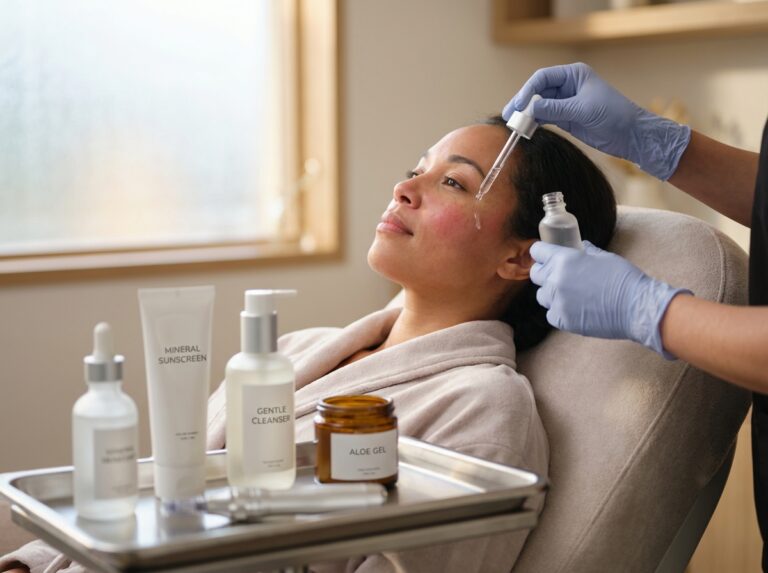
- Apply only the products recommended by your provider. This usually includes a gentle cleanser and a hyaluronic acid serum.
- Avoid sweating, saunas, and swimming pools for 72 hours.
- Apply mineral sunscreen strictly once the skin has closed, usually after 24 hours.
Evaluating Your Results
Patience is essential with collagen induction therapy. You will not see the final result immediately. Microneedling results can last anywhere from 6 to 18 months, but the peak improvement usually becomes visible around 3 to 6 months after the final session.
Take photos to track progress. Lighting conditions must be identical in before and after pictures. Do not rely on your bathroom mirror day to day. Look for changes in skin firmness and the depth of shadows in acne scars.
If you complete a full course of RF microneedling and see minimal improvement in laxity, surgical options like a facelift or neck lift might be the next logical step. If surface texture remains uneven, a chemical peel or laser resurfacing could be a better escalation than more needling.
Talking to Your Clinician
Clear communication prevents disappointment. Ask specific questions during your consultation.
Ask to see before and after photos of patients with your specific skin type and concern. Generic manufacturer photos do not prove the provider’s skill.
Verify the device being used. FDA-cleared devices have safety mechanisms that cheaper knock-offs lack. Ask about their infection control protocol. Confirm they have an emergency line or contact method if you experience an adverse reaction like blistering or extreme swelling.
You are paying for their expertise as much as the technology. A skilled provider will tell you if you are not a good candidate. They will prioritize your safety over selling a package.
Sources
- RF Microneedling vs. Traditional Microneedling: Which One is Better? — This guide provides a clear microneedling comparison to help you understand why radiofrequency technology often delivers superior outcomes.
- How Long Do Microneedling Results Last? Comparing RF vs … — Microneedling results can last anywhere from 6 to 18 months, depending on the type of treatment and individual factors.
- Traditional Microneedling vs. RF Microneedling: What's the … — RF microneedling is more able than traditional microneedling in addressing scars as the added RF energy breaks up scar matter better than just needle punctures …
- Traditional vs RF Microneedling: What's the Difference? | Fulton — RF Microneedling is better at addressing scars. RF microneedling also brings better results compared to traditional microneedling when it comes to scars.
- RF Microneedling vs Microneedling – The Complete Guide – Texas … — The key difference is the addition of radiofrequency energy. Traditional microneedling uses mechanical micro-injuries, while RF microneedling delivers heat …
- What's the Difference Between RF Microneedling and Regular … — Because RF microneedling uses advanced techniques, it's more potent than traditional microneedling and thus requires fewer sessions. This means you'll achieve …
- What is RF Microneedling? – Wisconsin Vein Center & MediSpa — RF microneedling is a more advanced form of traditional microneedling. Normally, microneedling treatments involve creating controlled micro-wounds in the skin.
- Traditional vs. Virtue RF Microneedling: Which is Best? — Virtue RF microneedling goes beyond the surface, while traditional microneedling can only affect the skin's epidermis. Virtual RF addresses the root causes of …
- Radiofrequency Microneedling: Technology, Devices, and … – NIH — Radiofrequency microneedling is a safe adjunctive tool to surgical aesthetic procedures. The addition of radiofrequency poses an advance over traditional …
Legal Disclaimers & Brand Notices
The information provided in this article is for educational and informational purposes only and does not constitute medical advice, diagnosis, or treatment. Always seek the advice of a licensed physician or qualified healthcare provider with any questions you may have regarding a medical condition or specific aesthetic procedure. Never disregard professional medical advice or delay in seeking it because of something you have read in this content.
All product names, logos, and brands mentioned in this article are the property of their respective owners. All company, product, and service names used in this website are for identification purposes only. Use of these names, logos, and brands does not imply endorsement or affiliation.