Morpheus8 has become one of the most talked-about minimally invasive skin-rejuvenation options. This article explains how Morpheus8 compares to microneedling, laser facials, chemical peels, RF, and LED therapies, reviewing indications, expected downtime, typical results, and safety tips. Read on for evidence-based guidance to decide whether the discomfort and investment match the outcome you want before booking.
Non-invasive skin rejuvenation overview
The landscape of aesthetic medicine in late 2025 feels crowded. If you walk into a clinic today, you aren’t just choosing between a facelift and a facial anymore. There is a massive middle ground of devices and chemical agents designed to delay aging without the operating room. Understanding where each technology sits on the spectrum of “downtime vs. results” is the only way to make an informed decision.
Here is how the major non-invasive and minimally invasive categories stack up right now.
Traditional Microneedling (Collagen Induction Therapy)
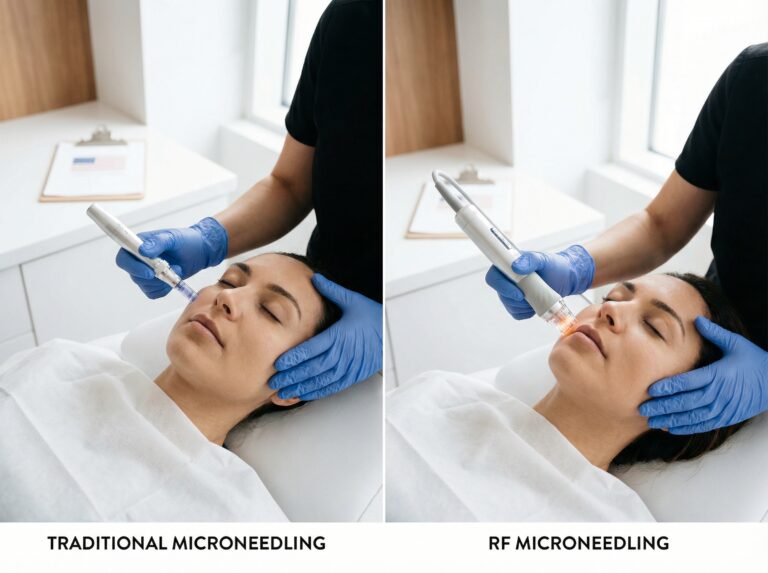
This remains the baseline for mechanical skin remodeling. Whether using a manual roller (rare in clinics now) or an automated pen device (like SkinPen), the mechanism is simple: sterile needles create thousands of microscopic channels in the dermis. This controlled injury triggers a wound-healing cascade, releasing growth factors and stimulating new collagen and elastin.
Best Candidates: Almost anyone looking to improve skin texture, mild acne scarring, or large pores. It is color-blind, meaning it is safe for Fitzpatrick skin types I-VI because it doesn’t use heat.
Recovery & Results:
Expect 24 to 48 hours of redness, similar to a sunburn. You typically need a series of 3 to 6 treatments spaced 4 weeks apart. Results are cumulative but subtle compared to energy-based devices. It improves the “fabric” of the skin but won’t do much for sagging.
Laser Resurfacing: Ablative and Non-Ablative
Lasers work by using light energy to target water or chromophores (pigment) in the skin.
Ablative Lasers (CO2, Er:YAG):
These vaporize the outer layers of skin. They are the heavy lifters for deep wrinkles and severe sun damage. In 2025, fractional CO2 is still the gold standard for resurfacing, but it comes at a cost.
- Downtime: Significant. Expect 1 to 2 weeks of oozing, peeling, and redness.
- Risk: High risk of hyperpigmentation in darker skin tones. It requires strict pre-conditioning and sun avoidance.
Non-Ablative & Picosecond Lasers:
These heat the underlying tissue without breaking the surface. Picosecond lasers deliver energy so fast (in trillionths of a second) that they shatter pigment acoustically rather than thermally.
- Indications: Melasma, sun spots, and mild texture issues.
- Pros/Cons: Minimal downtime (often just a few hours of pinkness), but you need more sessions to see results. Picosecond technology is generally safer for darker skin tones than older heat-based lasers.
Chemical Peels
Chemical exfoliation uses acids to dissolve the bonds between skin cells.
Superficial Peels (Glycolic, Salicylic, Lactic):
These target the stratum corneum. They brighten the skin and help with active acne but offer zero structural change. Zero downtime.
Medium to Deep Peels (TCA, Phenol):
Trichloroacetic acid (TCA) penetrates the papillary dermis to treat pigment and moderate wrinkles. Phenol peels are the deepest, capable of erasing deep lines, but they require sedation and have a difficult recovery period involving significant swelling and peeling for weeks. While effective, deep peels have largely been replaced by lasers and RF devices due to safety profiles.
Radiofrequency (RF) Procedures
Standard RF devices (monopolar or bipolar) use electrical current to generate heat in the dermis (aiming for 40-42°C) without damaging the epidermis. This heat contracts existing collagen fibers and stimulates fibroblasts to produce new collagen.
Indications: Mild skin laxity and “crepey” skin.
The Reality: It is excellent for maintenance or “pre-juvenation” in patients aged 30-45. It is generally painless (feels like a hot stone massage) and has no downtime. However, it cannot address surface texture or pigmentation.
Microneedling Radiofrequency (RF Microneedling)
This is the category where Morpheus8 lives. These devices combine the mechanical injury of microneedling with the thermal energy of radiofrequency. Insulated or non-insulated needles penetrate the skin and release RF energy directly into the dermis (and sometimes the subdermal fat).
Most popular aesthetic treatments in 2025 consistently highlight this modality because it bypasses the epidermis. This allows for higher energy delivery to deeper layers without burning the surface, making it safer for darker skin types than many lasers.
Typical Protocol: 3 sessions spaced 4-6 weeks apart.
Recovery: 2 to 5 days of social downtime (redness, potential grid marks).
LED Phototherapy
Light Emitting Diode therapy is non-thermal. Red light (633nm) stimulates cell repair and reduces inflammation; blue light (415nm) kills acne bacteria.
The Verdict: It is an excellent adjunct therapy to speed up healing after more aggressive procedures, but as a standalone treatment for anti-aging, the results are very mild and require consistent, frequent application.
Comparative Summary: Where Morpheus8 Fits
To understand why a patient might choose Morpheus8 over a CO2 laser or a standard microneedling pen, look at the depth and the energy source.
| Modality | Primary Action | Best For | Downtime |
|---|---|---|---|
| Traditional Microneedling | Mechanical | Surface texture, pores | 1-2 Days |
| Ablative Laser (CO2) | Thermal (Surface + Deep) | Deep wrinkles, severe damage | 7-14 Days |
| Standard RF | Thermal (Bulk Heating) | Mild tightening | None |
| Morpheus8 (RF Microneedling) | Mechanical + Thermal (Deep) | Contouring, tightening, scars | 2-5 Days |
Morpheus8 occupies a unique aggressive-but-safe niche. It goes deeper than traditional microneedling (up to 4mm-7mm depending on the body area) and delivers energy that standard RF wands cannot focus. While lasers are superior for surface polishing and pigment, Morpheus8 is structurally focused—remodeling the scaffolding of the skin rather than just painting the house.
Skincare trends for 2025 indicate a move toward these “hybrid” treatments because they offer significant structural improvement without the two-week hibernation required by aggressive lasers. However, this depth and intensity come with a specific set of sensations and recovery nuances, which we will examine next.
How Morpheus8 technology works and clinical indications
Understanding Morpheus8 requires looking past the hype and focusing on the engineering. While the previous section covered the broad spectrum of non-invasive tools, Morpheus8 sits in a specific hybrid category. It combines two distinct modalities: fractional microneedling and bipolar radiofrequency (RF) energy. This is not just about poking holes in the skin or heating the surface. It is about delivering thermal energy precisely where the skin’s structural support system lives.
The device uses a matrix of 24 coated pins that penetrate the skin. Once these needles reach the set depth, the tips emit radiofrequency energy. This energy travels between the positive and negative electrodes, generating heat. The heat creates what we call thermal coagulation zones. Imagine a three-dimensional lattice of heat deep within the dermis. This thermal injury is controlled. It forces the body to initiate a wound-healing response. The immediate effect is the contraction of existing collagen fibers, which provides that initial tightening feel. The longer-term effect, happening over months, is the production of new collagen and elastin.
What makes this technology distinct in late 2025 is the adjustability. We are not treating the forehead the same way we treat the abdomen. The penetration depth ranges from 0.5 millimeters up to 4 millimeters for the face, and with the newer Burst Deep technology introduced recently, body treatments can reach depths of 7 to 8 millimeters. This allows practitioners to target different layers of tissue. Superficial settings target skin texture and pore size. Deeper settings target the fibroseptal network, which is the connective tissue that holds fat pads in place. This ability to remodel subdermal fat while tightening the skin is why the device holds FDA clearance specifically for soft tissue contraction, distinguishing it from standard microneedling devices.
Anatomical Tailoring and The Pigment Advantage
The depth is tailored to the anatomical zone. On the forehead or bony areas around the eyes, the depth is kept shallow, typically 1 to 2 millimeters, to avoid nerve interaction. On the cheeks, jawline, or neck, providers often go deeper, hitting that 3 to 4-millimeter mark to address laxity and jowls. The energy levels are also customizable. Higher energy is used in areas with thicker skin or more subcutaneous fat.
A major technical advantage of this mechanism involves safety for darker skin tones. Many lasers rely on chromophores. They seek out pigment (melanin) to deliver heat. This makes them risky for Fitzpatrick skin types IV through VI, as the laser might burn the surface pigment while trying to reach deeper targets. Morpheus8 is “colorblind” in this regard. The needles are insulated, meaning the shaft does not emit heat. Energy is delivered only from the uncapped tips deep inside the tissue. The surface of the skin remains relatively cool and protected. This bypasses the melanin-rich epidermis, significantly reducing the risk of post-inflammatory hyperpigmentation compared to fractional lasers.
Clinical Indications and Regulatory Status
As of December 2025, the clinical indications for Morpheus8 have expanded beyond simple wrinkle reduction. The most evidence-supported uses include:
- Facial and Subdermal Tightening: This is the primary use case. It addresses mild to moderate laxity in the lower face and neck. A 2024 randomized controlled trial with 260 participants showed a 67.6% improvement in wrinkle severity at 52 weeks.
- Acne Scarring: The combination of physical needle penetration and RF heat breaks down the fibrous bands of scar tissue better than microneedling alone.
- Skin Texture and Pore Size: Superficial treatments improve general irregularity and crepey skin.
- Submental Fat and Jowls: The heat can coagulate and remodel fat in the double chin area, contouring the jawline.
- Body Treatments: Treating stretch marks and laxity on the abdomen or knees, often using the 40-pin body tip.
In practice, we also see off-label uses. Some providers use it for hyperhidrosis (excessive sweating) by targeting sweat glands with heat, or for active acne to shrink sebaceous glands. There is also emerging data from 2024 and 2025 regarding combination therapies. For instance, Low-energy Morpheus8 and Nanofat Grafting for Compartment studies suggest that combining the treatment with fat grafting enhances volume retention and skin quality more than either procedure alone.
Differentiation from Other Modalities
Understanding where Morpheus8 fits requires comparing it to the single-modality options discussed in the previous chapter.
Versus Microneedling-Only: Traditional microneedling (like SkinPen) relies solely on mechanical trauma. It is excellent for superficial texture and product absorption. However, it lacks the thermal component needed for significant tissue tightening. Morpheus8 adds the RF energy, which creates a much stronger collagen stimulation response and can actually contour tissue, not just resurface it.
Versus Non-Ablative Lasers: Lasers like Fraxel use light energy. They are fantastic for surface pigmentation and fine lines. But lasers generally struggle to reach the depths of 4 millimeters where the structural remodeling happens. Morpheus8 works from the inside out, while lasers work from the outside in.
Versus RF-Only Devices: Devices like Thermage or Exilis use bulk heating from the surface. They push heat through the top layer of skin to get to the bottom. This can be painful and less precise. Morpheus8 bypasses the surface entirely, delivering the energy directly to the target depth. This allows for higher temperatures at the target tissue without burning the skin surface.
The technology essentially bridges the gap between surface-level facials and surgical intervention. It offers structural changes that creams or standard needling cannot achieve, yet it avoids the scalpel. While Collagen Stimulation Treatments: Comparing Sculptra, Morpheus8 and others show different pathways to rejuvenation, the mechanical-thermal hybrid of Morpheus8 remains unique in its ability to remodel adipose tissue and tighten skin simultaneously.
Pain management downtime and expected results
Most patients want to know two things before booking Morpheus8. Does it hurt and does it actually work. The answer to both is yes, though the degree varies significantly based on the provider and the settings used. We need to look at the reality of the procedure without the marketing gloss.
The Reality of Pain and Sensation
Morpheus8 is deeper and more intense than standard microneedling. Standard microneedling feels like sandpaper moving across the skin. Morpheus8 delivers bipolar radiofrequency energy deep into the dermis and subdermal fat. This creates a sensation often described as a hot stamp or a staple gun. The heat is simultaneous with the needle penetration.
Pain levels are subjective but generally correlate with treatment depth. Treating the forehead or jawline where skin is thinner tends to be more painful than the cheeks. Body treatments on the abdomen or thighs often require higher energy settings to be effective. This increases the discomfort.
Recent 2025 patient reviews indicate that pain is the primary complaint for the 34% of users who rated the treatment “Not Worth It.” However, 66% of patients still rate it as “Worth It” because the results justify the temporary discomfort.
Pain Management Protocols
Clinics use a ladder of pain management strategies to keep patients comfortable.
- Topical Anesthetics High-strength numbing cream is the baseline. This is typically a mix of lidocaine and tetracaine applied 45 to 60 minutes before the session. It dulls the needle prick but does not fully block the heat sensation.
- Nerve Blocks For aggressive facial treatments, providers may inject lidocaine into the nerve pathways. This numbs the entire sensory field and significantly reduces discomfort.
- Oral Analgesia and Anxiolytics Some providers prescribe medication to take one hour prior. This helps with anxiety and raises the pain threshold.
- Cooling Devices Cold air chillers like the Zimmer are used during the procedure. The cold air distracts nerve endings and mitigates the heat sensation.
- Pro-Nox This is a self-administered nitrous oxide system available in many medical offices. It does not stop pain but makes the patient care less about it.
Comparison to Other Modalities
Understanding where Morpheus8 sits on the pain spectrum helps manage expectations.
| Treatment | Sensation Profile | Pain Level (1-10) |
|---|---|---|
| Chemical Peels | Stinging or burning sensation on the surface. | 2-4 |
| Standard Microneedling | Scratching or vibration. Minimal heat. | 3-5 |
| Laser Facials (Non-Ablative) | Rubber band snapping with heat. | 4-6 |
| Morpheus8 | Deep pressure, sharp prick, and intense internal heat. | 5-8 |
Immediate Recovery and Downtime
Recovery is technically faster than surgical options, but “no downtime” is a myth. You will not look ready for a dinner party immediately after leaving the clinic.
The First 24 Hours
Expect significant erythema. The skin will look like it has a moderate to severe sunburn. It will feel tight and hot. Swelling (edema) usually begins within hours and peaks the next morning. Pinpoint bleeding is common immediately after the procedure but usually stops before you leave the office.
Days 2 to 5
Redness subsides to a pink hue. Swelling may persist, especially around the eyes and jawline. Some patients experience “grid marks.” These are tiny textural patterns from the needle array. They are temporary and typically fade within a week. Minor crusting or flaking can occur as the skin heals.
Activity Restrictions
You should avoid makeup for at least 24 to 48 hours to prevent infection and pore clogging. Gym workouts, saunas, and swimming are off-limits for 72 hours to avoid sweat and bacteria entering the micro-channels.
Timeline of Results
Patience is necessary with collagen induction therapy. While some immediate tightening occurs due to thermal contraction, the real structural changes happen later.
- Week 1 to 4 Skin texture improves. The complexion looks brighter as the epidermis renews.
- Month 3 This is the peak for visible results. New collagen and elastin have formed. The FDA clearance for soft tissue contraction highlights this phase. Patients see tighter contours and reduced laxity.
- Month 6 Improvements can continue up to this point. Deep dermal remodeling finalizes.
Clinical Outcomes and Benchmarks
Clinical studies from 2024 and 2025 provide concrete data on efficacy. A randomized controlled trial with 260 participants showed a 67.6% improvement in wrinkle severity at 52 weeks. Patient satisfaction in this trial exceeded 90%.
Another study focusing on Morpheus8 combined with nanofat grafting used the Global Aesthetic Improvement Scale (GAIS). The mean GAIS score improved from 3.35 pre-treatment to 1.76 post-treatment. A lower score on this scale indicates better aesthetic appearance. This suggests that the combination yields statistically significant improvements.
Morpheus8 Reviews: Worth It in 2025? Find Your Beautiful highlights that while results are impressive, provider technique is critical.
Session Frequency and Longevity
One session is rarely enough for significant correction. The standard protocol involves a series of three treatments spaced 4 to 6 weeks apart. This stacking effect builds collagen layers over time.
Results typically last 12 to 18 months. Maintenance is required because the aging process does not stop. Most providers recommend a single maintenance session once a year to sustain the collagen levels.
The longevity also depends on lifestyle. Sun exposure and smoking will degrade the new collagen faster. Patients with higher skin laxity or older patients may require more initial sessions to achieve their desired baseline.
Photographic Benchmarks
When reviewing before and after photos, look for specific changes. In the neck area, look for a sharper cervicomental angle. On the cheeks, look for a reduction in accordion lines. For acne scars, look for shallower depression depths and smoother texture.
Realistic expectations are vital. Morpheus8 provides significant improvement but it does not replicate the mechanical lift of surgery. It improves skin quality and tightness, not muscle position.
Safety considerations contraindications and aftercare best practices
Safety is the part of the conversation that often gets glossed over in social media clips showing immediate snatching effects. But when we are talking about driving gold-plated needles into your dermis and heating them up to 185°F (85°C), the margin for error matters. While Morpheus8 is FDA-cleared and generally considered safe for all skin types, complications usually happen due to user error or poor patient selection rather than the device itself.
Known Risks and Complications
Most adverse events are mild and temporary, but you need to know the difference between a normal healing response and a medical emergency.
Common, expected side effects:
- Transient redness and swelling: This is the inflammatory response we actually want to trigger collagen production. It usually subsides within 24 to 72 hours.
- Crusting and pinpoint bleeding: Tiny scabs may form where the needles entered. This is normal.
- Grid marks: This is a specific Morpheus8 signature. You might see a faint texture pattern on the skin. In most cases, this fades in a few weeks, but for some, it can persist longer if the energy settings were too high for the surface layer.
Serious complications (rare but possible):
- Infection: Bacteria entering the micro-channels can cause cellulitis or abscesses.
- Burns: If the handpiece isn’t fully flush with the skin, the radiofrequency energy can arc, causing surface burns.
- Scarring: Overlapping passes too aggressively or treating infected skin can lead to permanent textural damage.
- Hyperpigmentation (PIH): Dark spots developing after inflammation, common in darker skin tones if heat is mismanaged.
- Neurosensory changes: Temporary numbness or tingling can occur if a nerve branch is irritated, particularly along the jawline. This typically resolves on its own but can take weeks.
Morpheus8 Reviews: Worth It in 2025? Find Your Beautiful analysis shows that among the minority of patients who rated the treatment “Not Worth It,” persistent grid marks and unexpected scarring were cited alongside pain as primary reasons. This highlights why your provider’s skill level is the single most important safety variable.
Contraindications and Risk Factors
Not everyone is a candidate right now. Ignoring these factors increases the risk of delayed healing or permanent damage.
Absolute Contraindications:
- Pregnancy and breastfeeding: There is no ethical way to test these devices on pregnant women, so it is strictly avoided.
- Implantable electronic devices: Pacemakers or internal defibrillators can be disrupted by the RF energy.
- Active infection: Cold sores (HSV), cystic acne, or any open wound in the treatment area.
- Metal implants: Metal plates or screws in the direct treatment zone (dental implants are usually fine, but you may feel more sensitivity).
High-Risk Factors requiring clearance:
- Recent Isotretinoin (Accutane) use: This medication impairs wound healing. While guidelines are evolving, most conservative providers still require a 6-month waiting period after stopping the medication. Always verify the latest guidance with your prescribing physician.
- Autoimmune disorders: Conditions like Lupus or Scleroderma can affect how your skin heals and reacts to inflammation.
- Keloid scarring: If you have a history of keloids, the trauma from microneedling could trigger a new scar.
Special Considerations for Fitzpatrick Skin Types IV–VI
One of the main selling points of Morpheus8 is its safety profile for darker skin tones compared to certain lasers. Because the RF energy is delivered deep into the dermis through insulated needles, it bypasses the melanin-rich surface layer. However, “safe” does not mean “risk-free.”
To minimize the risk of Post-Inflammatory Hyperpigmentation (PIH):
- Pre-treatment conditioning: Providers may prescribe a tyrosinase inhibitor (like hydroquinone or non-hydroquinone alternatives) for 2–4 weeks before the procedure to suppress pigment production.
- Conservative settings: It is better to do an extra session at lower energy than to burn the skin with aggressive settings in one go.
- Cooling: Ensuring the skin is properly cooled before and after can help manage inflammation.
Pre-Treatment Screening Checklist
Before you step into the clinic, run through this list. If your provider doesn’t ask about these, that is a red flag.
- Medication Review: Are you taking blood thinners (aspirin, fish oil, vitamin E)? These increase bruising. Stop them 7–10 days prior if medically cleared.
- Skincare Audit: Stop retinoids, glycolic acid, and salicylic acid 3–5 days before treatment.
- Sun Exposure: You cannot treat sunburned or recently tanned skin.
- History of Cold Sores: If you are prone to oral herpes, you need a prophylactic antiviral prescription to start 1–2 days before treatment.
Evidence-Based Post-Treatment Care Protocol
The micro-channels remain open for a short period, and the skin barrier is compromised. Your goal is to prevent infection and support repair.
Immediate Aftercare (First 24–48 Hours):
- Keep it clean: Do not touch your face. Wash with lukewarm water and a very gentle, non-acidic cleanser.
- No makeup: Wait at least 24 to 48 hours before applying makeup. When you do, use clean brushes.
- Topical agents: Use only what your provider gives you (often a medical-grade healing ointment or hyaluronic acid). Avoid heavy occlusives like Vaseline unless specifically instructed, as they can trap heat.
- Sleep elevated: This helps reduce swelling.
Ongoing Care (Days 3–7):
- Sun Protection: This is non-negotiable. Physical sunscreen (zinc/titanium) is preferred once the skin has closed.
- Moisturize: The skin will feel tight and dry. Keep it hydrated.
- Avoid heat: No saunas, hot tubs, or intense cardio that causes sweating for 3 days. Sweat contains bacteria that can irritate the healing skin.
When to call the doctor: If you experience increasing pain after 24 hours, yellow discharge, fever, or skin that feels hot to the touch, seek medical attention immediately. These are signs of infection.
Combining Morpheus8 with Other Modalities
Multimodal treatments are a massive trend in 2025, but timing is everything. You cannot throw everything at the skin at once without risking complications.
| Treatment Type | Timing Relative to Morpheus8 | Reasoning |
|---|---|---|
| Neurotoxins (Botox/Dysport) | Same day (after RF) or wait 2 weeks | Morpheus8 can be done before Botox. If Botox is done first, wait 14 days to avoid spreading the toxin. |
| Dermal Fillers | Wait 2–4 weeks after Morpheus8 | Heat can potentially degrade fillers or migrate them if done too soon. Treat the skin quality first, then volume. |
| Chemical Peels | 2–4 weeks apart | Do not exfoliate compromised skin. Let the barrier fully heal before peeling. |
| PRP (Platelet-Rich Plasma) | Same appointment | Highly recommended. Applying PRP immediately after microneedling speeds up healing and boosts collagen. |
| Sculptra | Same day or staggered | Collagen Stimulation Treatments suggest these work synergistically, but many providers prefer spacing them to monitor swelling. |
Choosing the Right Provider
In the USA, regulations on who can operate these devices vary by state. In some places, a medical assistant can do it; in others, it must be a nurse or doctor.
Safety Checklist for Provider Selection:
- Accreditation: Look for a board-certified dermatologist or plastic surgeon, or a medical spa directly supervised by one.
- Experience: Ask how many Morpheus8 treatments they perform weekly. You want someone who does this daily, not once a month.
- Before/After Photos: Look for results on skin types similar to yours.
- Consultation: If they don’t assess your medical history or discuss risks, walk away.
The technology is powerful, but it is only as safe as the hands holding the device. Prioritize safety over Groupon deals every time.
Frequently asked questions about Morpheus8 and alternatives
We have covered the clinical risks and safety protocols, but I know what you are actually thinking about while sitting in the consultation chair. You want to know if it hurts, how much it costs, and if you can go to dinner the next night. Since this article is not a rigid Q&A transcript, I have compiled the most pressing questions readers sent in throughout 2025 regarding Morpheus8 and its competitors.
These answers bridge the gap between the medical safety data we just discussed and the practical reality of booking an appointment.
How painful is Morpheus8 really, and what relief is available?
Let’s be honest: this is not a relaxing spa facial. You are having needles inserted into your skin while radiofrequency energy heats the tissue. Most patients rate the pain between a 4 and 6 out of 10, depending on their tolerance and the area treated. However, 2025 brought some improvements. The newer Morpheus8 Burst technology delivers energy in a way that many find more tolerable than the older single-pulse protocols. Standard pain relief includes high-strength topical numbing cream, with many providers offering Pro-Nox (laughing gas) or air cooling devices (Zimmer) for added comfort.
How many sessions will I need, and when do results appear?
One session is rarely enough for significant remodeling. The standard protocol is a series of 3 sessions spaced 4 to 6 weeks apart. While you might see a “glow” or tighter texture within a few weeks of the first treatment, collagen production is a slow biological process. Real structural changes—like jawline tightening or acne scar reduction—typically peak around 3 to 6 months after your final session.
What is the typical downtime, and when can I wear makeup?
Social downtime is usually 1 to 5 days. Immediately after treatment, you will look like you have a moderate sunburn. You might see a grid pattern from the needles, which is a common complaint but usually temporary. Swelling can last 24 to 72 hours. You should avoid makeup for at least 24 to 48 hours to prevent clogging the open micro-channels and causing infection.
Is Morpheus8 safe for darker skin tones (Fitzpatrick IV-VI)?
Yes, this is one of its main advantages over certain lasers. Because the needles penetrate the skin and release RF energy only at the tip (deep in the dermis), it bypasses the melanin-rich surface layer. This significantly reduces the risk of hyperpigmentation compared to fully ablative lasers. However, the provider must use coated needles and correct energy settings. Always ask to see before-and-after photos of patients with your specific skin tone.
How does Morpheus8 compare to other treatments?
Choosing between devices can be confusing. As detailed in the “Comparative Summary” table earlier, the primary difference is depth and heat. Morpheus8 treats deeper (up to 4mm-7mm) than standard microneedling or lasers, making it superior for deep laxity and fat remodeling. Conversely, CO2 lasers are better for heavy surface sun damage, while standard microneedling is a more affordable option for surface texture without the tightening benefits of RF heat.
Can I combine it with PRP or fillers?
Absolutely, but timing is everything. Collagen stimulation treatments work well together. Platelet-Rich Plasma (PRP) is often applied immediately during or after Morpheus8 to speed up healing and boost collagen. It is a popular “add-on” that can reduce downtime.
For fillers, you generally want to wait. The heat from Morpheus8 could theoretically affect the longevity of hyaluronic acid fillers if done too soon. Most providers recommend doing Morpheus8 first, waiting 2-4 weeks, and then placing fillers. If you already have filler, tell your provider so they can adjust the depth to avoid that layer.
What does it cost in the USA?
Prices vary wildly based on location and provider expertise. In 2025, a single face session typically ranges from $1,000 to $1,500. Treating the body (like the abdomen) is more expensive, often reaching $4,000 per session. Most clinics offer package deals for a series of three, which lowers the per-session rate. You can check a detailed Morpheus8 treatment cost breakdown to see how factors like location affect the price.
Who is NOT a candidate?
You should avoid this treatment if you have:
- Active acne or skin infections (wait for it to clear).
- A pacemaker or internal defibrillator (RF energy interferes with these).
- Permanent metal implants in the treatment area.
- Unrealistic expectations (it is not a facelift).
- Pregnancy or are breastfeeding.
What are the red flags to watch out for?
With the popularity of this treatment, many medspas are jumping on the bandwagon. Be wary of:
- Prices that seem too good to be true: If it’s $300 on a coupon site, run. The consumables (tips) are expensive, and low prices often mean inexperienced staff or reused tips (which is dangerous).
- No consultation: If they don’t assess your medical history or skin type before booking, they are prioritizing profit over safety.
- Dirty facilities: This is an invasive procedure that breaks the skin barrier. The room should be clinical and sterile.
Will insurance cover this?
No. Morpheus8 is considered an elective cosmetic procedure. Even if you are treating acne scars, insurance companies view this as aesthetic. You should not expect coverage, though some clinics offer financing plans like CareCredit.
Always verify the latest FDA safety communications or regulatory notices if you have specific medical concerns, as guidelines can update. For many, the decision comes down to whether the potential for positive results outweighs the temporary discomfort and cost.
Final conclusions and practical recommendations
Deciding on a medical aesthetic treatment often feels like navigating a maze of marketing claims and technical jargon. We have looked at the mechanics of Morpheus8, the downtime realities and the costs involved. Now we need to distill that information into a practical strategy for your skin. The goal is not just to choose a popular treatment but to select the one that aligns with your specific anatomy, budget and pain tolerance.
Balancing the Strengths and Trade-offs
Morpheus8 remains a dominant force in 2025 for a reason. Its ability to remodel collagen at depths of up to 4 millimeters sets it apart from superficial treatments. The introduction of Burst technology and the FDA clearance for soft tissue contraction confirm its efficacy for treating deep texture issues and laxity. Clinical trials have shown a 67.6% improvement in wrinkle severity over a year. This is significant for a non-surgical option.
However, efficacy comes at a price. I am not just referring to the financial cost, which averages between $1,000 and $1,500 per facial session. The physical cost involves genuine discomfort. As discussed, while the majority of patients rate the treatment as “Worth It,” a significant minority cite pain and the intensity of the recovery as their primary regrets. You must accept that this is a medical procedure involving needles and heat. It is not a relaxing spa facial.
Identifying the Ideal Candidate
Not everyone needs the intensity of radiofrequency microneedling. You are likely a strong candidate if you have specific structural concerns.
- Deep Texture Issues: Patients with acne scarring or deep pores often see results that lasers alone cannot achieve because the remodeling happens in the dermis.
- Mild to Moderate Laxity: If you have early jowling or neck laxity but are not ready for a facelift, the tissue contraction from Morpheus8 is a viable middle ground.
- Resilient Skin: While safe for all skin tones, healthy skin with a good healing response tends to tolerate the heat and physical trauma better.
Conversely, if your primary concern is surface dullness or very fine dehydration lines, you might be over-treating. Gentler options like chemical peels or standard microneedling often suffice for surface-level radiance without the downtime or price tag.
Decision Framework Checklist
Use this checklist before you step into a clinic. It helps clarify your priorities and ensures you ask the right questions during your consultation.
1. Define Your Primary Concern
If you want to lift and tighten, Morpheus8 is appropriate. If you want to remove pigmentation or redness, you likely need a laser or IPL instead.
2. Assess Your Pain Tolerance
Be honest with yourself. If you have a low threshold for pain, discuss nitrous oxide or prescription management with your provider beforehand. Relying solely on topical numbing cream is often insufficient for higher energy settings.
3. Check Your Calendar
Social downtime is real. You will likely have redness and potential swelling for 1 to 5 days. Do not book this less than two weeks before a major event like a wedding or photoshoot.
4. Review Your Budget
A single session rarely delivers the full result. You need to budget for a series of three treatments. Morpheus8 treatment cost for a full series can range from $3,000 to $6,000 depending on your location and the provider’s expertise.
Safety and Provider Selection
The device is only as safe as the hands operating it. In 2025, we see a rise in complications stemming from inexperienced providers using aggressive settings on delicate areas.
Red Flags to Watch For:
- Suspiciously Low Pricing: If a clinic offers full-face Morpheus8 for $600, be wary. This often indicates older equipment or a lack of experience.
- One-Size-Fits-All Protocols: Your provider should adjust the depth and energy levels for different parts of your face. The skin on your forehead is much thinner than the skin on your cheeks.
- Lack of Medical History Review: Your provider must know about any medications you take. Accutane use within the last six months is a strict contraindication.
Maintenance and Long-Term Strategy
Collagen production is a biological process that takes time. You will see initial tightening within a few weeks, but the peak results typically appear around the three-month mark and can improve up to six months.
To maintain these results, you cannot neglect your skin at home. Sun protection is non-negotiable. Using medical-grade skincare that supports collagen synthesis will prolong the effects. Most patients find that a single maintenance session once a year is sufficient to keep the results fresh after their initial series.
Final Recommendation
Morpheus8 is likely worth the investment and temporary discomfort if you are fighting gravity and texture simultaneously. It bridges the gap between surface treatments and surgery effectively. Morpheus8 reviews consistently highlight its ability to sharpen the jawline and smooth acne scars when other methods fail.
However, if your skin concerns are purely superficial or if you cannot tolerate a few days of social downtime, gentler alternatives are preferable. LED therapy, superficial chemical peels, and standard microneedling offer gradual improvements with minimal disruption to your daily life.
The most effective plan always starts with an in-person evaluation. Your skin is unique. A skilled provider will look at your tissue thickness, bone structure, and aging pattern to build a personalized roadmap. Do not be afraid to ask about alternatives or to start with a less invasive treatment if you are unsure. The goal is healthy, confident skin, and there are many paths to get there.
References
- Morpheus8 Reviews: Worth It in 2025? Find Your Beautiful — Now for the other side: the 34% of patients who rated it “Not Worth It.” These experiences highlight what can go wrong and why provider choice is critical.
- Morpheus8 Treatment Cost: A 2025 Price Guide – Novuskin Med Spa — Get the facts on Morpheus8 treatment cost, including average prices, what affects your total, and tips to make this skin-tightening procedure more …
- Collagen Stimulation Treatments: Comparing Sculptra, Morpheus8 … — Morpheus8 achieved a significant milestone in 2024 as the first and only fractional radiofrequency microneedling device to receive FDA clearance …
- Low-energy Morpheus8 and Nanofat Grafting for Compartment … – NIH — This study evaluated a novel approach combining low-energy Morpheus8 radiofrequency (RF) microneedling and nanofat grafting for facial …
- Skincare Trends for 2025 – What's Hot in Aesthetic Dermatology — With the rise of non-surgical options for skin rejuvenation, treatments like Morpheus8 for fine lines and wrinkles have become game changers.
- 2025 Trends in Aesthetic Treatments: What's Next? – InMode Australia — In 2025, the Morpheus8 Burst and Burst Deep will be seen as the next-generation solution for individuals looking for a more dramatic skin …
- Morpheus8 Newton MA | Tighten Skin This June 2025 — According to June 2025 industry data, the biggest aesthetic trend is personalization. … Newton patients frequently report improved mood, posture, and energy …
- Morpheus8 Leading in Skin Rejuvenation Treatments | 3D Lifestyle — Why Morpheus8 is Leading the 2025 Medical Aesthetics Trends · It's minimally invasive. · It's highly effective. · It's suitable for all skin types.
- Most Popular Aesthetic Treatments in 2025 – Dr Tanja Phillips Clinic — A standout favorite is radiofrequency (RF) microneedling devices like Morpheus8 use tiny needles plus RF energy to stimulate collagen deep in …