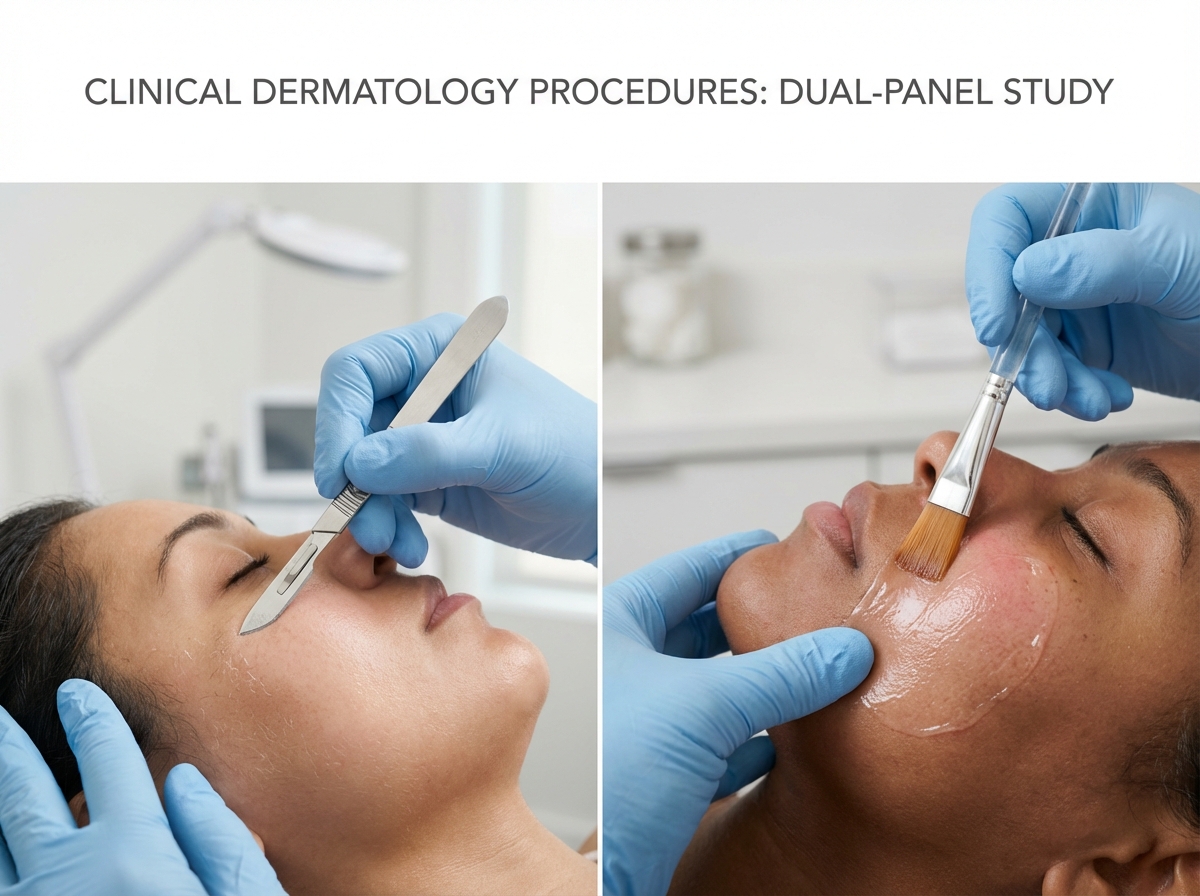
Dermaplaning and chemical peels are two popular non‑invasive exfoliation methods used to refresh skin texture, reduce fine lines, and treat acne or pigmentation. This article compares how each works, who benefits most, expected downtime and safety, and where treatments like microneedling, lasers, RF, and LED fit into a comprehensive rejuvenation plan so you can choose the right option.
How non invasive exfoliation fits into modern skin rejuvenation
Skin health relies on a biological process called desquamation. This is the natural shedding of dead cells from the surface. In a healthy young adult, this cycle happens roughly every twenty-eight days. As we age, this process slows down significantly. Dead cells accumulate on the surface. This buildup leads to a dull complexion, rough texture, and clogged pores. Exfoliation serves as a manual or chemical intervention to mimic this youthful cycle. It clears the path for active ingredients in serums to reach deeper layers. Without regular exfoliation, expensive topical treatments often sit on top of dead skin without providing any real benefit.
The Landscape of Non-Invasive Rejuvenation in 2025
Modern clinics in the United States now offer a wide range of tools to address skin concerns. These treatments vary in depth and mechanism. Understanding how they differ is the first step in choosing the right path for your skin.
| Modality | Primary Indications | Typical Downtime | Course of Results |
| Dermaplaning | Dullness, peach fuzz, rough texture | None | Immediate glow |
| Superficial Peels | Mild acne, pigment, fine lines | Minimal (0 to 3 days) | Progressive over 3 to 6 sessions |
| Medium Peels | Sun damage, deeper wrinkles | Moderate (4 to 14 days) | Significant after one session |
| Microneedling | Scars, texture, collagen loss | Minimal (1 to 3 days) | Progressive over months |
| Non-Ablative Laser | Redness, brown spots, tone | Minimal (0 to 2 days) | Multiple sessions required |
| Ablative Laser | Deep wrinkles, severe laxity | Extended (over 14 days) | Dramatic after one session |
| RF Tightening | Skin laxity, jawline contour | None to minimal | Progressive over 3 to 6 months |
| LED Therapy | Inflammation, mild acne, healing | None | Cumulative with frequent use |
Dermaplaning and chemical peels remain the foundation of most treatment plans. Dermaplaning uses a sterile blade to physically scrape away the stratum corneum. It also removes vellus hair. This creates an incredibly smooth surface. Chemical peels use acids like glycolic, salicylic, or trichloroacetic acid to dissolve the bonds between skin cells. While dermaplaning is purely mechanical, peels can target specific issues like acne or deep pigmentation through chemical action.
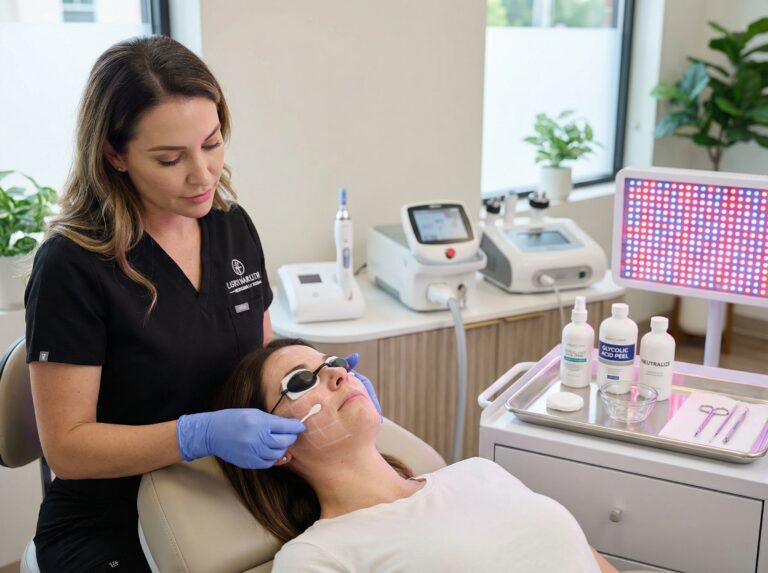
Microneedling has evolved in 2025. Many providers now use automated devices that offer precise depth control. Some combine this with Platelet-Rich Plasma or PRP. This uses the growth factors from your own blood to speed up healing. Laser facials have also become more specialized. Non-ablative options like Clear and Brilliant or Moxi target the early signs of aging with very little recovery time. Ablative lasers like CO2 are reserved for more significant structural changes. Radiofrequency or RF treatments focus on heat. They stimulate collagen in the deeper dermis without damaging the surface. LED phototherapy is often used as a finishing touch to reduce redness after more aggressive procedures.
How Exfoliation Enhances Other Treatments
Exfoliation is rarely a standalone solution in a modern skincare regimen. It acts as a primer. By removing the top layer of dead skin, dermaplaning or a light peel allows lasers to penetrate more evenly. It prevents the laser energy from being scattered by rough patches. When paired with microneedling, exfoliation ensures that the needles are entering clean, refreshed skin. However, timing is critical. Performing a deep chemical peel on the same day as a laser treatment can cause excessive trauma. Most practitioners recommend waiting at least two weeks between aggressive exfoliation and energy-based devices. You can find more details on these timelines in this Microdermabrasion vs Chemical Peels in Portland – VIP MediSpa guide. Proper sequencing prevents complications like scarring or persistent redness.
Safety and Special Considerations
Not every treatment is safe for every person. The American Academy of Dermatology emphasizes the importance of identifying your Fitzpatrick skin type. Individuals with Fitzpatrick types IV through VI have more active melanocytes. Aggressive peels or certain lasers can trigger post-inflammatory hyperpigmentation. For these skin types, a slow approach with superficial peels is often safer than one deep treatment.
Pregnancy is another major factor. Many chemical peels contain salicylic acid or retinoids which are generally avoided during pregnancy. Dermaplaning is often the preferred exfoliation method for expectant mothers because it involves no chemicals. Active infections, such as a cold sore outbreak or inflamed rosacea, are absolute contraindications for most resurfacing. You must also wait at least six to twelve months after finishing isotretinoin before undergoing medium peels or lasers. This medication changes how the skin heals. Ignoring this window can lead to permanent scarring. Always consult with a board-certified professional to ensure your chosen method aligns with your medical history and skin goals.
Dermaplaning explained: what it is, who benefits, and what to expect
Dermaplaning is a precise physical exfoliation method. It is technically known as manual epidermal debridement. A trained provider uses a sterile surgical blade to gently scrape the surface of the skin. This blade is usually a #10 or #14 stainless steel surgical blade. The primary goal is the removal of the stratum corneum. This is the outermost layer of dead skin cells. The process removes vellus hair as well. People often call this hair peach fuzz. Unlike traditional shaving, this procedure focuses on deep exfoliation. It is a staple in modern skincare routines because it provides immediate results without the need for chemicals.
The procedure follows a specific set of clinical steps. First, the provider cleans the skin with a gentle cleanser. The skin must be free of all oils and debris. A degreasing solution is then applied to ensure the surface is completely dry. The provider holds the skin taut with one hand. They hold the surgical blade at a 45 degree angle with the other hand. They use short, feathering strokes across the entire face. The provider avoids the eyelids and the nose. A full session usually lasts between 30 and 45 minutes.
Patients notice the results immediately after the treatment. The skin surface feels much smoother to the touch. It looks more radiant. This happens because the blade removes the debris that makes skin look dull. Light reflects more evenly off a smooth surface. Skincare products work better after a session. Serums and moisturizers can penetrate deeper without the barrier of dead cells. Makeup application is also much easier. Foundations and powders do not get caught in fine hairs or dry patches.
There are several primary indications for this treatment. It is an excellent choice for people with dull skin texture. It is the most effective way to remove vellus hair. It can help with very light scarring. It clears away superficial dead cell buildup. Many people choose it before big events because it creates a perfect canvas for photography.
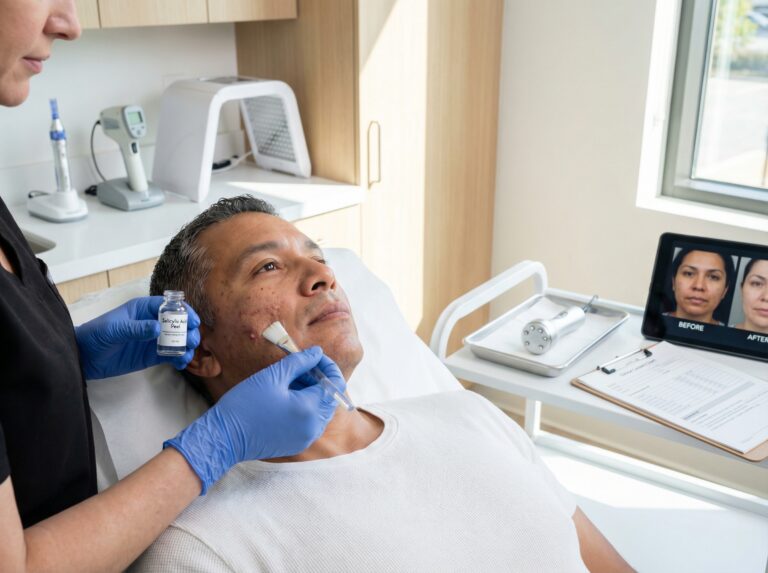
Not everyone is a good candidate for dermaplaning. Active acne is a major contraindication. If a blade moves over an open lesion, it can spread bacteria. This might lead to more breakouts or infection. Severe rosacea is another concern. The skin is often too sensitive or vascular for manual scraping. People who have used isotretinoin recently must wait. Clinical consensus in 2025 suggests a waiting period of six to twelve months after finishing the medication. Open wounds or active cold sores are also reasons to postpone the session.
Safety is a priority for licensed providers. They must follow strict infection control protocols. They use a new sterile blade for every patient. There is a small risk of nicks or tiny cuts. These usually heal very quickly with proper care. Another risk is microabrasions. These can happen if the provider uses too much pressure. People with darker skin tones need to be careful. This includes Fitzpatrick skin types IV, V, and VI. Aggressive treatment can cause irritation. This irritation might lead to post-inflammatory hyperpigmentation. Trained professionals mitigate this risk by using a very light touch. They also monitor the skin for any signs of excessive redness.
The results of dermaplaning are not permanent. The skin naturally builds up new dead cells over time. Vellus hair will eventually grow back. It is a biological myth that this hair grows back thicker or darker. The hair is cut at the surface, which may give it a blunt edge as it emerges, making it feel slightly different for a day or two. However, the hair remains the same color and texture as before and will return to its original state within a few weeks. Most people schedule a session every three to six weeks. This timeline matches the natural skin cell turnover cycle. There is usually no downtime associated with the procedure. Some people experience slight redness. This typically fades within 24 to 48 hours. According to Top Skincare Trends in 2025, the lack of recovery time makes it a preferred choice for busy clients.
Dermaplaning works well when combined with other treatments. It is often paired with LED phototherapy to calm the skin. It can also be done immediately before a superficial chemical peel. This allows the peel to work more effectively. However, you should avoid aggressive peels or deep laser procedures on the same day. The skin barrier is already thinned. Doing too much at once increases the risk of complications. Your provider will recommend the best timing for your specific needs. Dermaplaning vs. Chemical Peels: Which Is Best for You? explains that while dermaplaning is surface level, it is ideal for mild texture concerns.
Aftercare is simple but vital for maintaining results. You must use a gentle cleanser for a few days. Avoid harsh scrubs or mechanical exfoliants. Sun protection is the most important step. The fresh skin is more vulnerable to UV damage. You should also avoid retinoids for at least three to five days. This includes active acids like glycolic or salicylic acid.
The cost of dermaplaning varies across the United States. A single session usually ranges from 75 to 250 dollars. Prices are often higher in major cities like New York or Los Angeles. Many clinics offer it as an add-on to other facials for a lower price. It remains a popular and accessible option for noninvasive skin rejuvenation.
Chemical peels demystified: types, benefits, risks, and patient selection
Chemical peels represent a cornerstone of clinical skin rejuvenation. These treatments use specific chemical solutions to induce a controlled injury to the skin layers. This process forces the skin to shed damaged cells and regenerate healthier tissue. Practitioners categorize these treatments by how deep they penetrate the skin. This classification determines the clinical goals and the expected recovery time.
Classification by Depth and Chemistry
Superficial peels are the most common choice for regular maintenance. These target the epidermis only. They often utilize alpha hydroxy acids like glycolic acid or lactic acid. Glycolic acid is popular for its small molecular size. It penetrates quickly to address fine lines. Lactic acid is gentler and provides hydration. Salicylic acid is a beta hydroxy acid that works well for oily or acne prone skin. It is oil soluble, meaning it can get deep into the pores to break up clogs and reduce inflammation. Trichloroacetic acid at concentrations of 10 to 15 percent also provides a superficial exfoliation. These peels aim to improve skin radiance and minor texture issues.
Medium depth peels reach the papillary dermis. These treatments usually involve TCA at concentrations between 20 and 35 percent. Some providers use a combination of Jessner’s solution followed by TCA to achieve more uniform penetration. The goal here is to treat more significant sun damage or pigmentary changes.
Deep peels are the most intensive option. They reach the reticular dermis. These typically use phenol or full strength TCA. Deep peels are reserved for severe photoaging or deep wrinkles. They require significant medical supervision and often involve a long recovery.
Mechanisms of Action
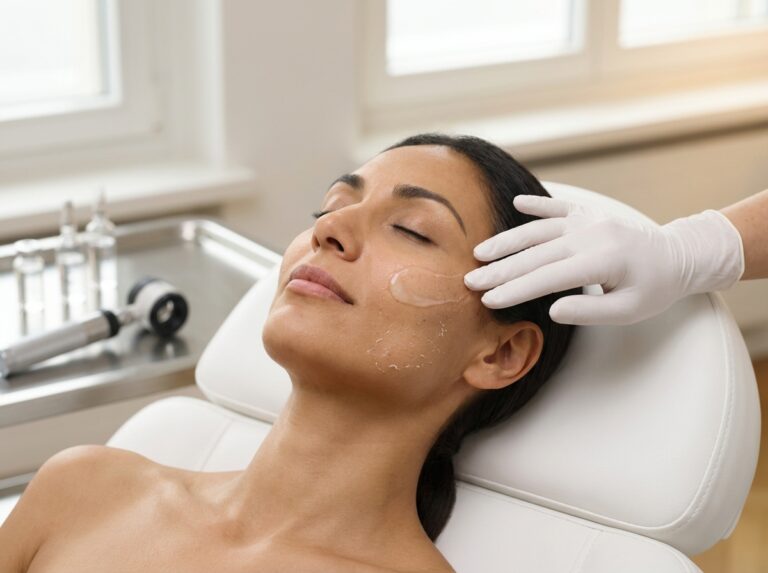
Chemical peels work through keratocoagulation or protein denaturation. When the acid touches the skin, it causes the proteins in the cells to clump together. This creates a visible white effect known as frosting. This controlled damage triggers epidermal and dermal remodeling. The body responds by producing new collagen and elastin. This leads to firmer skin and a more even tone over time.
Indications and Contraindications
Clinicians recommend peels for various skin concerns. They are highly effective for photoaging and melasma. Peels help manage acne by reducing oil and clearing debris. They also address actinic keratoses and superficial scarring. While dermaplaning only removes the top layer of dead skin, chemical peels use ingredients like glycolic acid or TCA to speed up cell turnover and inhibit the production of melanin. This deeper action is necessary to fade sun spots or melasma over time.
Patient selection is critical for safety. Certain contraindications prevent treatment. Anyone who has used isotretinoin in the last six to twelve months should avoid peels. This medication affects how the skin heals and increases the risk of scarring. Pregnancy is a contraindication for specific agents like salicylic acid or phenol. Active herpes simplex infections are a major concern. Patients with a history of cold sores need antiviral prophylaxis before the procedure. Open wounds or active skin infections also mean the treatment must be postponed.
Downtime and Healing Timelines
The recovery process depends entirely on the depth of the peel. Superficial peels involve minimal downtime. Patients might see light flaking for two to seven days. Most people continue their daily activities without interruption.
Medium peels require more patience. The skin will often turn brown and feel tight before it begins to peel. Crusting is common. Downtime typically lasts seven to fourteen days. Patients must avoid picking at the skin to prevent scarring.
Deep peels involve an extended healing period. The skin is often raw and requires specialized dressings. Healing can take more than two weeks. There is a significant risk of permanent pigment changes or scarring if aftercare is not followed perfectly.
Managing Darker Skin Tones
Patients with Fitzpatrick skin types IV through VI require a specialized approach. These individuals have a higher risk of postinflammatory hyperpigmentation. Medium and deep peels are often too risky for these skin types.
Safety strategies include preconditioning the skin. This involves using topical depigmenting agents like hydroquinone or kojic acid for several weeks before the peel. This suppresses melanin production. Sun avoidance is mandatory. Priming protocols help ensure the skin reacts predictably to the acid. Practitioners often choose gentler acids like mandelic acid or lower strength salicylic acid for these patients.
Safety Best Practices
Professional results require professional oversight. Choosing an experienced provider is the first step in safety. A thorough consultation should include a patch test to check for adverse reactions. Pre peel skin preparation is vital for even penetration.
Clinicians must monitor the skin closely during the application. They look for specific endpoints like erythema or frosting. If a patient experiences unexpected pain or rapid frosting, the peel must be neutralized immediately. Referral to a dermatologist is necessary if a patient develops signs of infection or abnormal scarring after the visit.
Combining Treatments
Many practices combine peels with other modalities for better results. Dermaplaning is a frequent partner for superficial peels. Removing the top layer of dead skin and vellus hair allows the chemical solution to penetrate more deeply. This combination is often discussed when patients ask Dermaplaning vs. Peels: Which Exfoliation Method Suits You. The dermaplaning happens first. The peel follows immediately after.
Combining peels with microneedling or lasers requires more caution. Most providers recommend waiting two to four weeks between these sessions. This allows the skin barrier to recover fully. Using aggressive peels on the same day as deep laser treatments increases the risk of complications.
Expected Outcomes and Costs
Results are rarely immediate with superficial peels. Most patients need a series of three to six sessions to see a major difference in pigmentation or acne. These are usually spaced three to four weeks apart. Medium peels offer more dramatic changes after a single session. However, the increased downtime is a trade off. Realistic expectations are essential. Peels improve the skin but they do not replace surgical procedures for sagging tissue. Consistent sun protection after any peel is the only way to maintain the results.
Regarding investment, chemical peels have a wider price range than dermaplaning. A light peel might cost 150 dollars while a medium depth peel can cost 600 dollars or more. You can check this Complete 2025 Cost Guide for more pricing data. These treatments are considered cosmetic so insurance almost never covers them. The only exception might be if a peel is used to treat a medical condition like precancerous actinic keratoses.
Choosing the right exfoliation and safety checklist
Selecting the right exfoliation method requires a clear understanding of your skin goals and your tolerance for recovery time. If your primary concern is a rough texture caused by fine facial hair and dead skin buildup, dermaplaning is the most effective starting point. This manual method uses a sterile blade to shave away the top layer of the epidermis. It is the preferred choice for patients who want an immediate glow without any peeling or redness. Many people choose this before major events because dermaplaning delivers immediate smoothness and allows makeup to sit perfectly on the skin.
For those dealing with mild photoaging or uneven skin tone, a superficial chemical peel is a better first line option. These peels use alpha hydroxy acids like glycolic or lactic acid to dissolve the bonds between skin cells. If you have superficial acne scarring or deeper pigmentary disorders, a medium depth peel using trichloroacetic acid might be necessary. These treatments reach the middle layers of the skin to trigger more significant collagen production. Patients with active inflammatory acne should avoid dermaplaning because the blade can cause injury to existing blemishes. Instead, a salicylic acid peel is often recommended to clear pores and reduce inflammation. If you are struggling with deep wrinkles, you might need to look beyond simple exfoliation toward alternative modalities like microneedling, radiofrequency, or fractional lasers.
Safety Evaluation and Preconditioning
Safety begins with a thorough evaluation of your medical history and current skin state. You must inform your provider if you have used isotretinoin within the last six to twelve months. This medication significantly alters how your skin heals and can lead to permanent scarring if you undergo aggressive exfoliation too soon. A history of keloid scarring or frequent cold sores is also a critical factor. Providers often prescribe a prophylactic antiviral medication before a chemical peel to prevent a viral flare up. Recent sun exposure or tanning is a major contraindication for both dermaplaning and peels. Treating skin that has been recently exposed to UV rays increases the risk of post inflammatory hyperpigmentation.
Effective preconditioning can improve your results and minimize complications. You should use a broad spectrum sunscreen every day for at least two weeks before your appointment. Many professionals suggest stopping the use of topical retinoids, benzoyl peroxide, or strong exfoliating acids three to five days before the procedure. If you have a darker skin tone or a history of melasma, your provider might recommend using a pigment inhibitor like hydroquinone for several weeks prior to a peel. This step helps to stabilize the melanocytes and prevents the skin from darkening in response to the treatment.
Post Care Timeline and Red Flags
The days following your treatment are vital for maintaining the integrity of the skin barrier. Immediate aftercare focuses on hydration and protection. You must avoid direct sun exposure for at least one week. Apply a physical sunscreen with an SPF of 30 to 50 every morning even if you stay indoors. Use a gentle, non foaming cleanser and a bland moisturizer to support the healing process. Do not use any physical scrubs or chemical exfoliants for five to seven days after dermaplaning or a light peel. For medium peels, this window may extend to two weeks.
You need to monitor your skin for red flag symptoms that require urgent medical attention. While some redness and a tight sensation are normal, intense pain is not. If you notice spreading redness, a fever, or yellow purulent drainage, contact your provider immediately. These can be signs of a bacterial or viral infection. Persistent swelling or the appearance of small white bumps called milia should also be reported to your specialist.
Specifically, you should contact your provider immediately if you experience any of the following:
- Intense or worsening pain that does not stop after the first few hours.
- Redness that begins to spread or looks like red streaks moving away from the treated area.
- A fever or general feeling of being unwell.
- Yellow or green drainage plus crusting that looks like honey.
- Extreme swelling or the appearance of blisters that were not expected.
If you notice these signs, do not wait. Early intervention is the best way to prevent complications.
Investment and Maintenance
Cost and frequency are practical factors in your decision. Dermaplaning is generally cheaper than chemical peels per session, typically ranging from 75 to 250 dollars. To maintain the results, you should schedule a session every three to four weeks as the skin naturally regenerates. Chemical peels are a larger investment. Prices vary based on the depth of the peel and the geographic location of the clinic. A series of three to six peels is often required to see significant changes in pigmentation or fine lines. Chemical peels provide deeper exfoliation and longer lasting benefits compared to manual methods.
Combining treatments is a common practice in 2025 to maximize efficiency. Performing dermaplaning immediately before a superficial chemical peel allows the acids to penetrate more evenly and deeply. Using LED light therapy after a peel can help soothe the skin and reduce the duration of post treatment redness. However, these combinations should only be performed by experienced professionals who can assess the sensitivity of your skin in real time.
Choosing a Qualified Provider
The success of your exfoliation depends heavily on the person performing it. Always seek out a board certified dermatologist or a licensed medical esthetician who operates under direct medical supervision. Ask to see before and after photos of previous patients who have similar skin concerns and tones to your own. Verify that the facility follows strict sterile techniques and uses single use blades for every dermaplaning session. A reputable provider will always insist on a personalized consultation to discuss your goals and perform a patch test if you have sensitive skin.
Choosing between dermaplaning and chemical peels depends on whether you need surface smoothing or structural skin improvement. Dermaplaning is the best choice for removing peach fuzz and achieving an instant glow with zero downtime. Chemical peels are superior for treating pigment, fine lines, and acne by working beneath the surface. Safety requires a thorough pre treatment evaluation and strict sun protection afterward. Always consult a licensed professional to create a plan that respects your skin barrier while meeting your aesthetic goals.
References
- Dermaplaning vs. Peels: Which Exfoliation Method Suits You — Cost and maintenance Dermaplaning is generally cheaper than chemical peels per session. But it has to be repeated every 3 to 4 weeks to …
- Dermaplaning vs. Chemical Peels: Which Is Best for You? — Dermaplaning, while more surface-level, delivers immediate smoothness and helps makeup sit better, ideal for mild texture concerns.
- How Much Is a Chemical Peel? Complete 2025 Cost Guide — Chemical peels provide deeper exfoliation and longer-lasting benefits. Microdermabrasion sessions range from $75−$200 each. Chemical peels …
- A perspective on what's new in chemical peels – Cosmoderma — In a comparative study, 20% glycolic acid peeling was more effective than 15% lactic acid and 12% ferulic acid performed at 3 weekly intervals, …
- Dermabrasion, Chemical Peels, and Acne Surgery – Aetna — They evaluated 14 comparisons of 7 interventions and 4 combinations of interventions; 9 studies provided no usable data on the outcomes and did not contribute …
- Top Skincare Trends in 2025: Why Dermaplaning is Here to Stay — Unlike chemical peels or lasers, there's no prolonged redness or peeling, making it the go-to choice for clients who want results without the recovery time.
- Medical-Grade Peels vs. Spa Peels: Expert Insights from Knott Street … — Discover the differences between medical-grade and spa peels with expert insights from Knott Street Dermatology in Portland and Milwaukie.
- HydraFacial vs Other Facial Treatments in 2025: Which One Is Right … — Let's take you through the most talked-about facial treatments in 2025 – HydraFacial vs Chemical Peel vs Microdermabrasion vs Dermaplaning, so
- Microdermabrasion vs Chemical Peels in Portland – VIP MediSpa — This comprehensive guide examines 2025 research data comparing both treatments' effectiveness for specific skin concerns, recovery times, and …