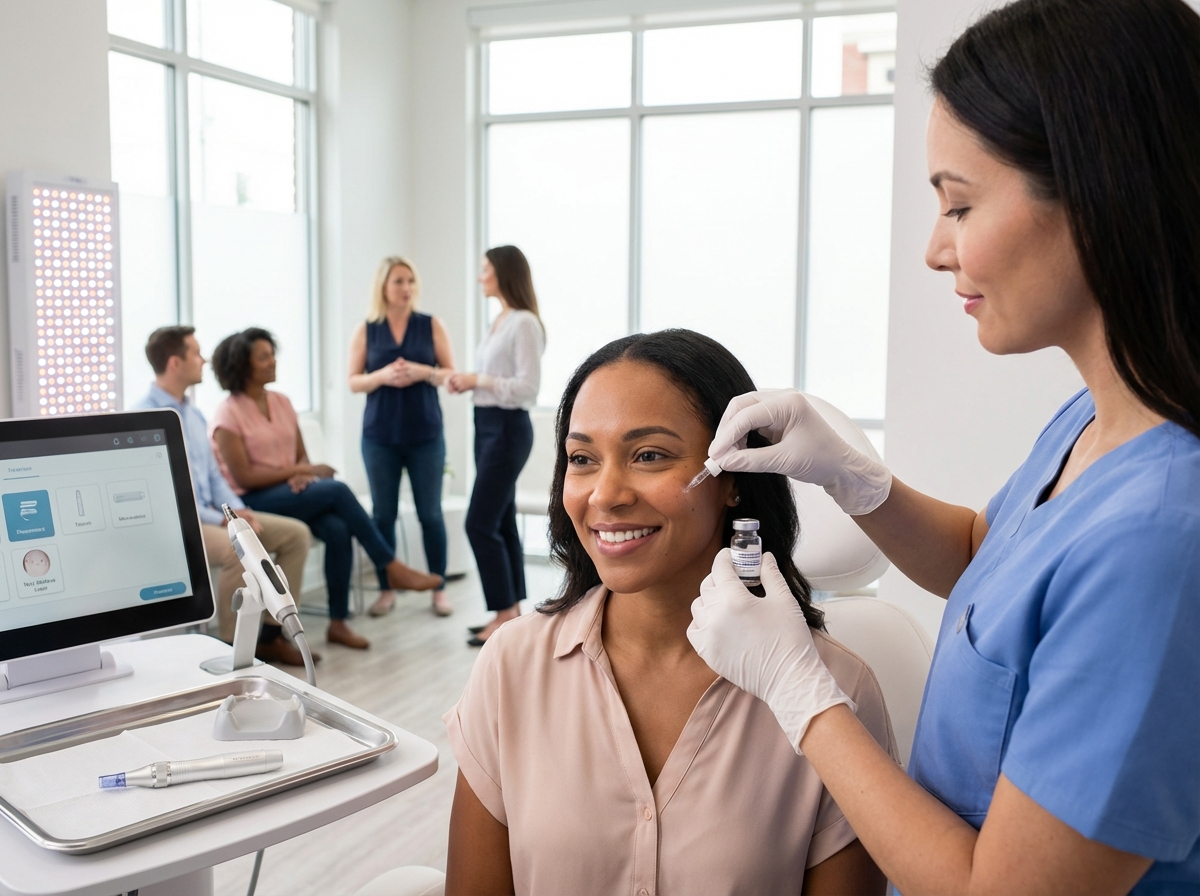
VI Peel has become a cult favorite because it delivers reliable, pigment-friendly results across many skin tones. This article places the VI Peel in the wider landscape of non-invasive skin rejuvenation—microneedling, laser facials, chemical peels, RF, and LED—covering indications, expected downtime, realistic results, and practical safety tips patients and clinicians need to decide wisely.
Why the VI Peel Became So Popular
The VI Peel has earned its status in non-invasive skin rejuvenation for a simple reason: it delivers reliable, visible results across a wide range of skin concerns safely for nearly all skin tones. This peel system was one of the first medium-depth peels to be widely marketed as pigment-safe, making it a revolutionary option for patients with Fitzpatrick skin types IV, V, and VI. Historically, these patients faced high risks of post-inflammatory hyperpigmentation (PIH) from traditional single-acid peels or ablative lasers.
What Makes the VI Peel Formula Unique
The VI Peel is a branded, proprietary medium-depth chemical peel system developed by the Vitality Institute. Unlike single-acid peels, the VI Peel uses a synergistic blend of active ingredients. The foundation is Trichloroacetic Acid (TCA), which provides the primary exfoliating action and depth control. This is combined with powerful agents like retinoic acid, which boosts cell turnover and collagen production over several days. Salicylic acid is included to penetrate oil glands and clear pores, making it excellent for acne.
Crucially, the formula incorporates phenol. Phenol serves two purposes: it aids in deeper penetration and acts as a topical anesthetic. Upon application, patients typically feel a brief stinging or intense tingling sensation that lasts for about 30 to 60 seconds. However, as the phenol takes effect, the skin quickly becomes numb, making the remainder of the application comfortable. Vitamin C is also included as an antioxidant to protect the skin during the peeling process. This combination allows the peel to reach the papillary dermis in a controlled manner, achieving significant resurfacing without the severe downtime associated with high-concentration TCA peels.
The mechanism of action is controlled injury. By inducing rapid, controlled turnover of the epidermal and superficial dermal layers, the peel forces the skin to regenerate. This process stimulates fibroblasts to produce new collagen and elastin, improving texture and fine lines. Simultaneously, the shedding action removes excess melanin, effectively treating sun damage, stubborn hyperpigmentation, and melasma.
Indications and Ideal Candidates
The VI Peel family includes several variants tailored for specific concerns, such as VI Peel Precision Plus for advanced pigmentation and VI Peel Purify for active acne and scarring. Ideal candidates are those seeking improvement in:
- Hyperpigmentation and sun damage
- Melasma (often requiring a series of treatments)
- Active inflammatory acne and cystic breakouts
- Post-acne marks (PIH and mild scarring)
- Fine lines and overall skin texture
The peel is highly valued for its safety profile in darker skin tones (Fitzpatrick IV–VI). While these skin types are prone to PIH, the VI Peel’s blend of ingredients and specific application protocol minimizes this risk when performed by an experienced provider.
Demographic Considerations: The treatment is suitable for both men and women. However, men require special attention regarding facial hair; shaving should be avoided for at least 24 hours prior to application to prevent micro-abrasions that could lead to uneven penetration. Regarding age, while there is no strict upper limit, older patients with fragile skin require careful assessment. The peel is generally recommended for adults (18+), though it is occasionally performed on teenagers (typically 14+) with parental consent for severe, persistent acne under strict dermatological supervision.
Contraindications: Certain conditions are absolute contraindications. These include pregnancy or breastfeeding (due to retinoic acid and phenol), active cold sores or infections, a history of keloid formation, and use of oral isotretinoin (Accutane) within the last six to twelve months. Isotretinoin severely compromises the skin’s healing capacity, increasing the risk of scarring.
The Protocol and Downtime Timeline
The VI Peel protocol is straightforward but requires strict adherence to homecare. Pre-treatment often involves a skin assessment and preconditioning with topical retinoids or hydroquinone for two to four weeks, especially for patients with darker skin or severe melasma. This preconditioning helps stabilize melanocytes and prepares the skin for optimal results.
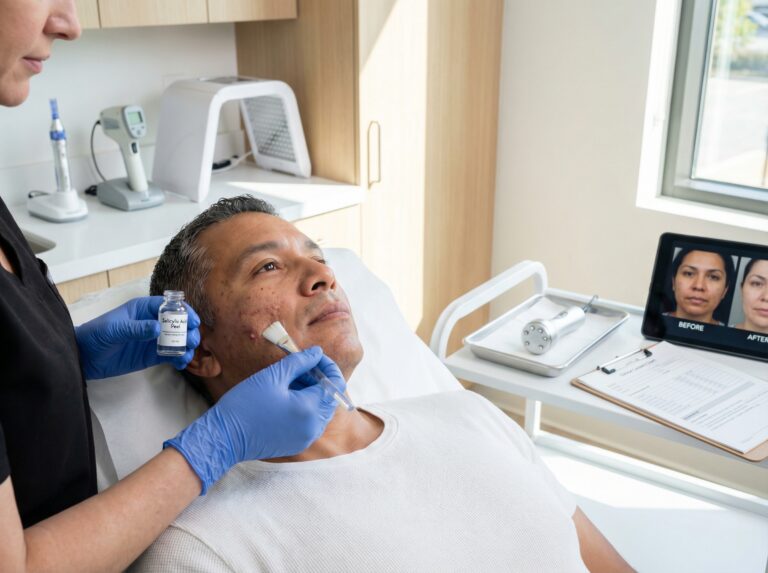
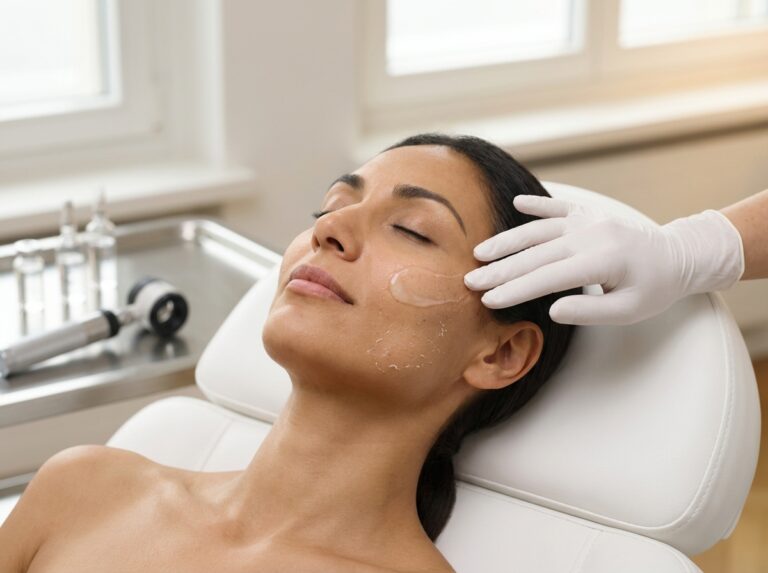
The in-clinic application takes about 30 minutes. The provider cleanses the skin and applies the peel solution in layers until a light white coating, known as “frosting,” appears. The peel is self-neutralizing, meaning the patient leaves the clinic with the solution still on. They are instructed to wash it off several hours later or the next morning, depending on the specific formula used.
The visible downtime follows a predictable timeline:
- Days 0–2: Skin feels tight, looks slightly red or tan, and may feel sensitive. This phase is generally comfortable, though the skin may feel warm.
- Days 3–4: Peeling begins, typically starting around the mouth and nose before moving outward. This is moderate, visible sheet peeling, not just flaking.
- Days 5–7: Peeling continues across the face and often finishes by day seven.
Post-Care Management: During the peeling phase, patients use a specialized homecare kit provided by the manufacturer. It is imperative to avoid all active ingredients—including AHAs, BHAs, physical exfoliants, retinoids, and high-concentration Vitamin C serums—until the peeling is completely finished. Reintroducing these too soon can cause severe irritation and PIH. Patients must avoid picking or manually exfoliating the peeling skin to prevent scarring. While mild redness is expected, symptoms such as severe swelling, intense pain, yellow discharge, or fever are abnormal and require immediate medical attention, as they may indicate infection.
Results, Durability, and Safety in Dark Skin
Measurable improvements in texture and tone are usually seen within one to two weeks after the peeling process is complete, with optimal collagen remodeling visible at four to six weeks. For significant concerns like melasma or moderate acne scarring, a single peel is rarely sufficient; a series of three to four peels spaced four to six weeks apart is commonly recommended. The results are durable, often lasting six months to a year, provided the patient maintains daily sunscreen use and a consistent medical-grade skincare regimen.
Safety in darker skin tones is paramount. Evidence-based strategies to minimize PIH include the mandatory preconditioning phase, conservative application techniques, and rigorous post-peel sun protection. Clinicians must be highly trained in assessing Fitzpatrick skin types and adjusting application depth accordingly. Patients should always select a board-certified dermatologist or an experienced medical aesthetician working under medical supervision to ensure proper technique and management of potential side effects.
A typical patient outcome involves significant clearing of pigmentation. For example, a patient with moderate facial melasma might see a 50 percent reduction in pigment intensity after two VI Peel Precision Plus treatments, allowing them to manage the remaining pigment with topical agents alone.
Practical Considerations and Cost
In the U.S., the average cost for a single VI Peel session ranges from $300 to $600. This price varies based on geographic location, the specific formula used (e.g., Precision Plus is often higher priced than the Original), and the provider’s expertise. Since this is an elective cosmetic procedure, it is not covered by insurance.
When considering this treatment, patients should ask their provider about their experience level with Fitzpatrick types IV–VI and the exact pre- and post-care instructions. Informed consent must cover the risk of PIH, especially if sun exposure is anticipated during the recovery phase.
Comparing Non-Invasive Options: Microneedling, Laser, RF, LED, and Chemical Peels
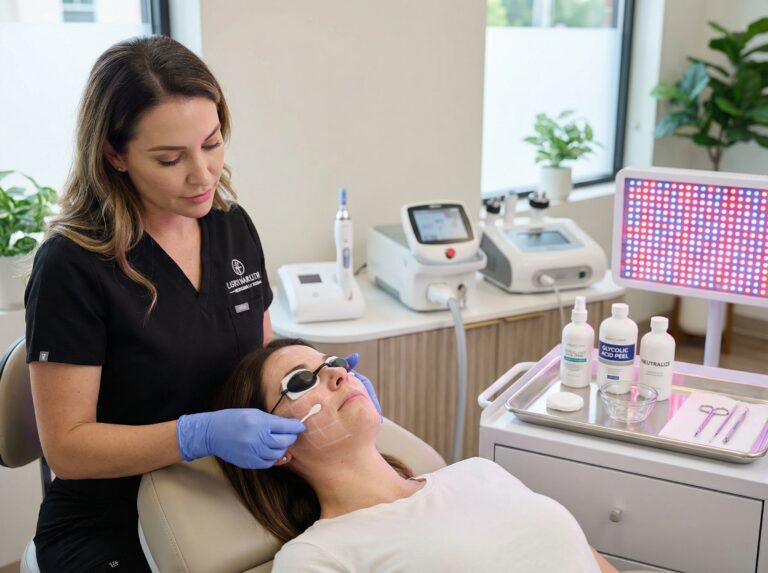
Choosing the right skin treatment often feels like a balancing act between results and recovery time. While the VI Peel has gained a massive following for its ability to treat all skin tones safely, it exists within a larger ecosystem of professional treatments. Understanding how it compares to other tools like microneedling or lasers helps in building a long-term skin strategy.
Microneedling and Collagen Induction Therapy
Microneedling uses fine needles to create controlled micro-injuries in the skin. This process triggers the natural wound healing response, stimulating the production of collagen and elastin. When practitioners add Platelet Rich Plasma (PRP) or specialized serums, the results for texture and scarring improve significantly. Needle depths usually range from 0.5mm for glow to 2.5mm for deep acne scars. Most patients experience two days of redness. The risk for post-inflammatory hyperpigmentation is lower than with some lasers; however, aggressive depth on darker skin still requires caution. It is often best to wait four weeks between a VI Peel and a microneedling session to ensure the skin barrier has fully recovered.
Non-Ablative Lasers and Intense Pulsed Light
Non-ablative fractional lasers and picosecond technology target specific concerns without removing the top layer of skin. Picosecond lasers are particularly effective for pigment issues in darker phototypes because they use pressure (acoustic energy) rather than heat, reducing the risk of burning the skin. Intense Pulsed Light (IPL) works well for redness and sun spots on lighter skin but is generally avoided for Fitzpatrick types IV through VI because the broad-spectrum light can cause unintended burns. These treatments usually require three to five sessions and are excellent for maintenance after a series of VI Peels has cleared initial surface pigment.
Ablative Lasers and Risk Factors
Ablative lasers like CO2 or Erbium YAG remove the entire outer layer of skin. They offer dramatic results for deep wrinkles but carry the highest risk of scarring and permanent pigment changes. These are rarely the first choice for patients with deeper skin tones unless performed by a specialist with extensive experience. The downtime can last two weeks or more. For most people seeking rejuvenation, a medium-depth chemical peel provides a safer middle ground with significantly less risk.
The Chemical Peel Spectrum
Chemical peels are categorized by their depth of penetration. Superficial peels use Alpha Hydroxy Acids (AHAs) or Beta Hydroxy Acids (BHAs) to exfoliate the very top layer; they have almost no downtime but require many sessions for visible change. Deep peels using phenol provide permanent results for severe aging but involve significant medical risks and cardiac monitoring. The VI Peel sits in the medium-depth category. It reaches the papillary dermis to lift stubborn pigment and smooth fine lines, offering the results of a stronger acid with the manageable downtime of a lighter treatment.
Radiofrequency and Microneedle RF
Radiofrequency (RF) treatments use heat to tighten the skin. Microneedle RF combines this heat with physical needles to reach deeper layers, making it the gold standard for skin laxity and sagging. Because the energy is delivered under the skin surface, it is very safe for all skin tones. Patients might see swelling for a few days. It is a perfect companion to the VI Peel: the peel handles the surface color and texture, while the RF handles the structural tightening.
LED Phototherapy and Blue Light
LED therapy is a non-invasive adjunct that uses specific wavelengths of light. Red light helps with inflammation and healing, while blue light kills the bacteria that cause acne. There is no downtime and no pain. Many clinics use LED immediately after a VI Peel to calm the skin. It is a safe way to support the results of more intensive treatments without adding any irritation.
Treatment Selection and Combination Protocols
The best treatment depends on the primary skin concern. For active acne, a combination of VI Peel Purify and blue light LED is highly effective. For melasma, a series of VI Peels followed by picosecond laser sessions often yields the best clearance. If the goal is deep texture improvement, alternating microneedling with peels every six weeks can transform the skin surface.
| Concern | Primary Recommendation | Secondary Support |
|---|---|---|
| Pigment and Melasma | VI Peel Precision Plus | Picosecond Laser |
| Acne and Scars | VI Peel Purify | Microneedling |
| Skin Laxity | Microneedle RF | VI Peel for Glow |
| Fine Lines | VI Peel Advanced | Red Light LED |
Sample 12-Month Treatment Plans
Planning long-term ensures the skin is never over-processed. Here are three common pathways.
Acne Control Plan
- Months 1 to 3: One VI Peel Purify every 4 weeks.
- Months 4 to 6: Monthly Blue Light LED and superficial salicylic peels.
- Months 7 to 12: Quarterly VI Peel maintenance and daily medical-grade skincare.
Pigment and Melasma Plan
- Months 1 to 4: Three sessions of VI Peel Precision Plus spaced 4 weeks apart.
- Months 5 to 8: Monthly non-ablative laser or LED to maintain clarity.
- Months 9 to 12: One VI Peel every 6 months and strict SPF 50 usage.
Texture and Fine Lines Plan
- Months 1 to 3: Alternating VI Peel and Microneedling every 4 weeks.
- Months 4 to 9: Two sessions of Microneedle RF for tightening.
- Months 10 to 12: One VI Peel Advanced to refresh the surface.
Always consult with a provider to adjust these intervals based on how your skin heals. Combining treatments can maximize outcomes but requires a healthy skin barrier and professional guidance.
Conclusions and Practical Next Steps
The VI Peel has earned its reputation as a cult favorite because it successfully bridges the gap between superficial peels and aggressive laser resurfacing. It delivers significant corrective power, especially for pigment issues and texture, while maintaining a manageable downtime that is far less severe than deep chemical peels or ablative lasers. Its greatest strength remains its validated safety profile across all Fitzpatrick skin types, minimizing the risk of Post-Inflammatory Hyperpigmentation (PIH) when proper preconditioning is followed.
When we look back at the non-invasive landscape, the VI Peel offers a unique balance. Microneedling and RF treatments are excellent for deep textural issues and scarring, but they often require more sessions and carry a higher risk of PIH if the technique is too aggressive on darker skin. Laser facials, particularly fractional non-ablative lasers, are great for overall tone but can be expensive and sometimes require longer recovery periods depending on the depth. LED therapy is a fantastic maintenance tool for calming inflammation and boosting collagen but lacks the immediate, dramatic corrective power needed for established melasma or deep sun damage. The VI Peel provides rapid, visible results for pigment correction and overall skin clarity, making it a highly efficient component of any non-invasive skin rejuvenation plan.
Decision Flow: Choosing Your Path
Choosing the right treatment depends entirely on your specific goals, how much downtime you can tolerate, and your budget. Use this simplified flow as a starting point:
- If your primary issue is pigment and tone correction (melasma, sun spots), consider preconditioning for two to eight weeks, followed by a VI Peel (Precision Plus variation) or a series of superficial peels combined with non-ablative laser treatments.
- If your primary issue is texture and deep scarring (acne scars, deep wrinkles), consider staged treatments using microneedle radiofrequency (RF) or fractional lasers, often followed by a VI Peel to refine the surface.
- If you require minimal downtime and gentle maintenance, consider LED phototherapy, very low-depth peels (like glycolic acid), or light microneedling sessions.
Practical Next Steps: A Checklist Approach
For Patients Considering the VI Peel
- Schedule a comprehensive skin evaluation with a board-certified provider.
- Provide a complete medical history, including all current medications and supplements.
- Commit to the required preconditioning plan, which often involves 2 to 8 weeks of specific topical agents, especially if you have darker skin or stubborn pigment.
- Request a patch test if you have highly sensitive skin or a history of severe allergic reactions to new products.
- Stock up on broad-spectrum SPF 30+ sunscreen and gentle post-care moisturizers before your appointment.
- Plan your social calendar carefully, allowing for 5 to 7 days of visible peeling and sensitivity.
For Clinicians Offering the VI Peel
- Obtain detailed informed consent, clearly outlining expected downtime and potential risks like PIH or prolonged redness.
- Take high-quality standardized clinical photography (before and after) for tracking progress and managing patient expectations accurately.
- Thoroughly screen for contraindications, including pregnancy, breastfeeding, active cold sores, or recent use of oral isotretinoin.
- Ensure the patient understands and commits to the specific pre- and post-peel protocols, emphasizing strict sun avoidance during the healing phase.
The next step is not research; it is consultation. Schedule a detailed assessment with a board-certified dermatologist or licensed aesthetician who specializes in advanced non-invasive treatments. They can create a customized treatment roadmap that aligns with your skin’s unique needs and your lifestyle.
Recommended Reading and Professional Resources
- American Academy of Dermatology (AAD): Guidelines on chemical peel safety and sun protection. AAD Official Site
- American Society for Dermatologic Surgery (ASDS): Peer-reviewed protocols for treating hyperpigmentation and scarring. ASDS Official Site
- Relevant Peer-Reviewed Reviews on Chemical Peels and Skin of Color: Search for recent clinical studies detailing safety profiles and efficacy in Fitzpatrick IV-VI skin types.
References
- The History of VI Chemical Peels: A Journey of Innovation and Skin … — The 19th and 20th Centuries: The Development of Chemical Peel Techniques. The development of chemical peels took a significant leap in the 19th century when …
- The Vitality Institute – VI Peel — The Vitality Institute was founded by Dr. Abdala Khalil, an emergency room doctor who created a custom chemical peel for his eldest daughter, Marya, as a …
- VI Peel Explained: Benefits, Recovery, And Results From Miami Skin … — Understanding the recovery timeline is key to maximizing your peel's benefits: 1. Days 0–2: Prep & Application. Your provider cleanses and …
- VI Peel Before and After: A Visual Timeline – Ultimate Image MedSpa — The actual peeling typically starts around day two or three after your appointment and lasts for a few days. This shedding process is essential …
- The Inspiring Story of the VI PEEL – YouTube — VI PRECISION PLUS CHEMICAL PEEL diary days 1-7 application schedule yours (913) 258-5494 in KC❣️. Beyond Skin Deep w/Sara K•2.7K views.
- WHAT IS A VI PEEL? | COMPLETE GUIDE – Aglow Dermatology — Is it right for you? VI PEEL HISTORY. The Vi Peel was one of the first chemical peel brands to promote itself as being safe in patients of all skin types – …
- Skin Health with VI Peel: Insights from Dermatology | Clinikally — VI Peel is a revolutionary technique for skincare in the realm of dermatology. This unique chemical peel is intended to rejuvenate and revitalize the skin.
- The VI Peel: A Comprehensive Guide to This Popular Chemical Peel — Developed by Dr. Abdala Khalil through the Vitality Institute, the VI Peel originally addressed his daughter's cystic acne with a gentle yet …