Non-invasive skin rejuvenation has surged as celebrities and patients seek facelift‑level results without surgery. This article demystifies popular options — including the RF‑based Forma facial — and explains how microneedling, laser facials, chemical peels, radiofrequency, and LED work, who benefits, expected downtime and results, plus practitioner selection and safety measures to get reliable outcomes.
Why non‑invasive rejuvenation works and why Forma is trending
To understand why a machine rubbing against your face can actually tighten skin, we must look at the biology of the dermis. It is not magic; it is a biological response to stress. The skin is a complex organ held together by an extracellular matrix. This matrix is the scaffolding, consisting of collagen fibers for strength, elastin fibers for snap-back elasticity, and glycosaminoglycans like hyaluronic acid that hold moisture and volume.
As we age, this factory slows down. We lose approximately 1% of our collagen every year after our mid-20s. The scaffolding weakens, gravity takes over, and the skin becomes lax. Non-invasive rejuvenation works by reactivating this factory through controlled injury.
The scientific principle is simple: create a controlled trauma, and the body perceives a threat. It rushes to repair the damage via the wound healing cascade.
The Mechanisms of Action
Different devices trigger this cascade in different ways.
Thermal Injury: This is the primary mechanism for radiofrequency (RF) and ultrasound. We heat the dermis to a specific temperature range, usually between 40°C and 43°C. At this heat, existing collagen fibers contract immediately, providing a temporary tightened look. However, the substantial work happens later. The heat stimulates fibroblasts—the cells responsible for building new collagen—in a process called neocollagenesis.
Microinjury: This is mechanical. Microneedling creates thousands of tiny physical channels in the skin, breaking old collagen strands. The body responds by laying down new, organized collagen and elastin to close the wounds.
Photobiomodulation: This is less about injury and more about energy. LED therapy uses specific wavelengths of light to stimulate cellular energy (ATP), instructing cells to function more efficiently. It is a gentler approach compared to thermal or mechanical injury.
Forma: The Radiofrequency Approach
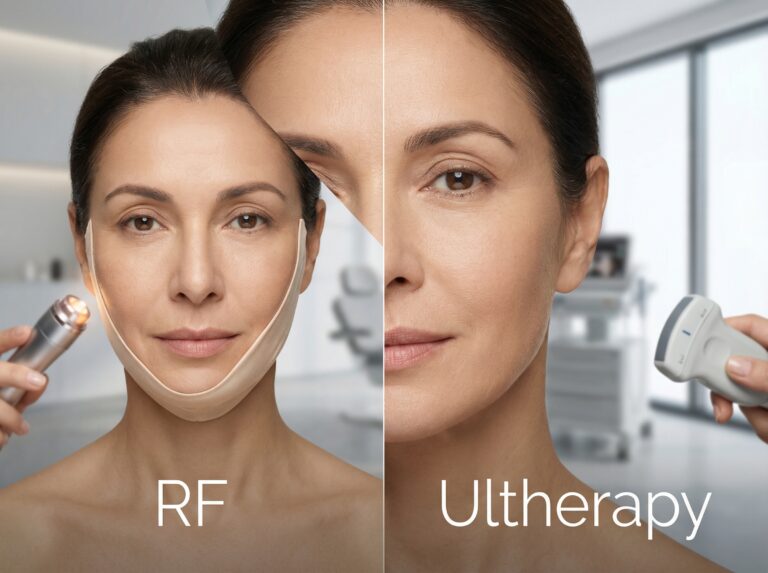
Forma by InMode has dominated conversations in aesthetic clinics recently. While often marketed as a “non-surgical facelift,” the technology behind it is bipolar radiofrequency.
The device works by delivering current between two electrodes on the handpiece. This current flows through the skin and meets resistance, creating heat. The goal is to heat the deeper layers of the skin without burning the surface.
What distinguishes Forma from older RF devices is its A.C.E. (Acquire, Control, Extend) technology. The handpiece contains sensors that read skin temperature 1,000 times per second. Once the skin reaches the target temperature of 41°C to 43°C, the device automatically cuts the energy to maintain that therapeutic temperature. This allows for prolonged thermal exposure without the risk of overheating.
Older RF devices often relied on the operator to manually check temperatures, leading to inconsistent results or burns. Forma removes that variable.
Immediate vs. Delayed Results
Patients often see a “snatched” look immediately after a Forma treatment due to the immediate denaturation of collagen fibers—heat makes them shrink, similar to fabric in a hot dryer. Additionally, mild edema (swelling) temporarily plumps the skin and smooths fine lines.
The real structural change takes time. The thermal stress triggers the production of heat shock proteins, signaling the body to produce new collagen. Peer-reviewed clinical data supports this, showing that consistent RF treatments increase dermal thickness and collagen density. The full benefit of this remodeling typically becomes visible 6 to 12 weeks after the treatment series ends.
Candidacy and Limitations
Forma is not a replacement for a surgical facelift. Managing expectations is crucial.
Good Candidates:
- People with mild to moderate skin laxity.
- Individuals noticing early jowls or a softening jawline.
- Patients with good skin quality who want to delay surgery.
- Anyone looking for a “red carpet” treatment before an event.
Poor Candidates:
- Patients with severe laxity or significant hanging skin.
- People with heavy fat deposits in the lower face (RF alone will not remove fat).
- Those expecting surgical results from a non-invasive machine.
If you have significant sagging, a surgical referral is the ethical answer. Radiofrequency cannot remove inches of excess skin.
Comparing Forma to Alternatives
The market is crowded. Here is how Forma stacks up against other common options.
Forma vs. Monopolar RF (like Thermage):
Monopolar RF penetrates deeper and is often a single, more painful treatment. Forma is bipolar, shallower, and much more comfortable—often described as feeling like a hot stone massage. The trade-off is that Forma requires a series of treatments, whereas monopolar is often “one and done.”
Forma vs. RF Microneedling (like Morpheus8):
RF microneedling punches holes in the skin while delivering heat. It is more aggressive, treating texture and laxity with associated downtime and discomfort. Forma is non-invasive (no needles), treats laxity, but will not significantly improve acne scars or rough texture. Forma has zero downtime.
Practical Consultation Points
When considering this treatment in late 2025, plan for both time and budget.
The Protocol: One session will not yield permanent results. The standard protocol is a series of 6 to 8 weekly sessions. Consistency is key to training the skin. After the initial series, maintenance is required, typically a single session every 3 to 4 months.
Cost Expectations (2025):
Prices vary by location. In major hubs like New York or Los Angeles, a single session ranges from $400 to $700. A package of six can run between $2,000 and $4,000. In smaller markets, sessions typically range from $300 to $400.
The US Skin Treatment market is projected to generate significant revenue in 2025, and non-invasive procedures drive a large portion of that spending.
Maintenance:
Results are not permanent as aging continues. To protect your investment, high-quality skincare is essential. Sunscreen is non-negotiable. Using a retinol or retinoid at home helps maintain collagen stimulation between visits.
Safety and Contraindications
Forma is generally safe, but it is a medical procedure.
Contraindications:
- Pacemakers or internal defibrillators (RF interferes with electronics).
- Permanent metal implants in the treatment area.
- Current active cancer or history of skin cancer in the area.
- Pregnancy and nursing (safety has not been established).
- Autoimmune disorders stimulated by heat (like Lupus).
- Active cold sores or skin infections.
Risks:
The main risk is a burn. Forma’s temperature cutoff makes this rare, but it can occur if the operator loses contact with the skin or stops moving the handpiece.
Darker Skin Tones:
Radiofrequency is “colorblind.” Unlike lasers, it does not target melanin, making Forma a safe option for Fitzpatrick skin types IV-VI. The risk of Post-Inflammatory Hyperpigmentation (PIH) is very low compared to light-based therapies, though extreme heat can still trigger pigment issues in sensitive skin. An experienced operator will monitor the skin’s response closely.
Evidence and Efficacy
The efficacy of radiofrequency for skin tightening is well-documented. A 2023 systematic review in the Journal of Cosmetic Dermatology analyzed multiple studies on bipolar RF, concluding that these treatments result in statistically significant improvements in skin laxity and wrinkle reduction. Another study published in 2024 found that maintaining the dermis at 41-43°C for at least 15 minutes is the critical factor for neocollagenesis.
Always verify that the specific device is FDA-cleared. Forma is cleared via the 510(k) pathway for the temporary relief of minor muscle aches, pain, and muscle spasms, and temporary improvement of local blood circulation. In aesthetics, the “skin tightening” effect is the cosmetic application of these physiological changes.
Forma works because it respects the biology of the skin. It persuades the body to repair itself rather than forcing a change overnight.
Treatment breakdown and practical guidance for microneedling laser facials chemical peels RF and LED
Knowing how these treatments work on a cellular level is one thing, but understanding the appointment logistics—and the days following—is vital. Here is a practical breakdown of the primary non-invasive modalities available in late 2025.
Microneedling and RF Microneedling
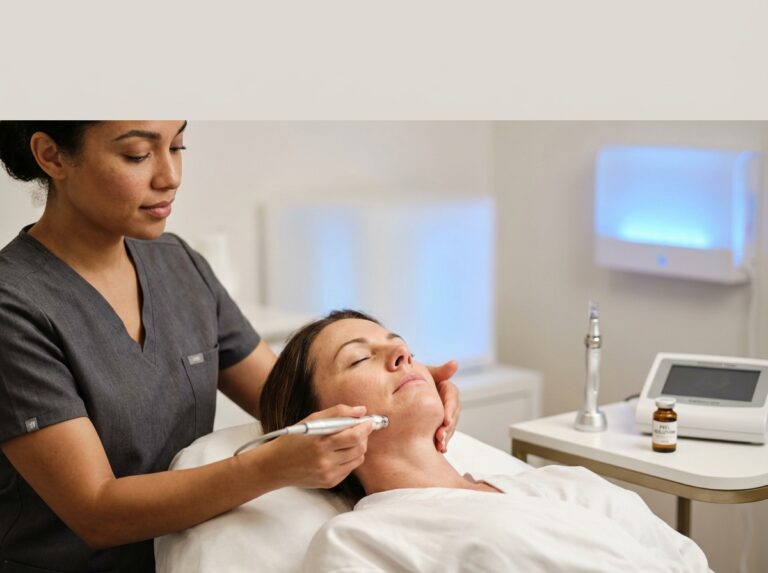
Microneedling remains a staple because the premise is simple and effective.
Manual and Automated Microneedling (Pens/Rollers)
Mechanism: A device with fine needles creates microscopic channels, triggering a wound-healing cascade and releasing growth factors.
Best For: Acne scarring, pore size reduction, fine lines, and texture.
Evidence: Systematic reviews from 2020–2024 consistently rank it as a top-tier intervention for atrophic acne scars.
Downtime: 24 to 72 hours of redness (like a sunburn) and minor swelling. Pinpoint bleeding is normal during the procedure.
Results Timeline: Initial glow after a week; structural changes take 4–6 weeks.
Cost (2025 USA): $300–$600 per session.
Protocol: 3–6 sessions spaced 4 weeks apart.
Radiofrequency (RF) Microneedling
Mechanism: Combines physical puncture with heat. Insulated needles deliver RF energy directly into the dermis, bypassing the epidermis to minimize surface damage while maximizing deep tissue tightening.
Best For: Deeper acne scars, skin laxity (sagging), and neck tightening.
Downtime: 2–5 days of redness, swelling, and potential grid marks or rough texture.
Cost (2025 USA): $800–$2,000 per session.
Protocol: 3 sessions spaced 4–6 weeks apart.
Laser Facials
Lasers are categorized by whether they remove the top layer of skin (ablative) or pass through it (non-ablative).
Non-Ablative Fractional Lasers
Mechanism: Creates columns of heat without breaking the surface, stimulating collagen without open wounds.
Best For: Early signs of aging, fine lines, and maintenance.
Fitzpatrick Considerations: Generally safer for darker skin types than ablative lasers, but lower energy settings are required for types IV–VI.
Downtime: Minimal. 1–3 days of mild redness and a “sandpaper” texture as microscopic debris sheds.
Cost (2025 USA): $500–$1,000 per session.
Ablative Fractional Lasers (CO2, Erbium)
Mechanism: Vaporizes columns of tissue, removing old skin and forcing rapid regeneration.
Best For: Deep wrinkles, severe sun damage, and significant scarring.
Evidence: The gold standard for resurfacing.
Downtime: Significant. 5–14 days of peeling, oozing, redness, and social downtime.
Cost (2025 USA): $1,500–$4,000 per session.
Picosecond Lasers
Mechanism: Uses ultra-short pulses (trillionths of a second) to shatter pigment particles acoustically rather than thermally.
Best For: Melasma, sun spots, and tattoo removal.
Downtime: Very low. Redness usually subsides within 24 hours.
Chemical Peels
Peels use chemical exfoliation to remove damaged skin layers.
- Superficial (Glycolic, Lactic, Salicylic): Targets the epidermis. Good for brightness and mild acne. 0–2 days of flaking. Cost: $150–$350.
- Medium (TCA, Jessner’s): Reaches the upper dermis. Good for pigment and moderate wrinkles. 5–7 days of peeling (brown crusting). Cost: $400–$900.
- Deep (Phenol): Rarely performed now due to cardiac risks and long recovery; mostly replaced by lasers.
Radiofrequency (Non-Invasive)
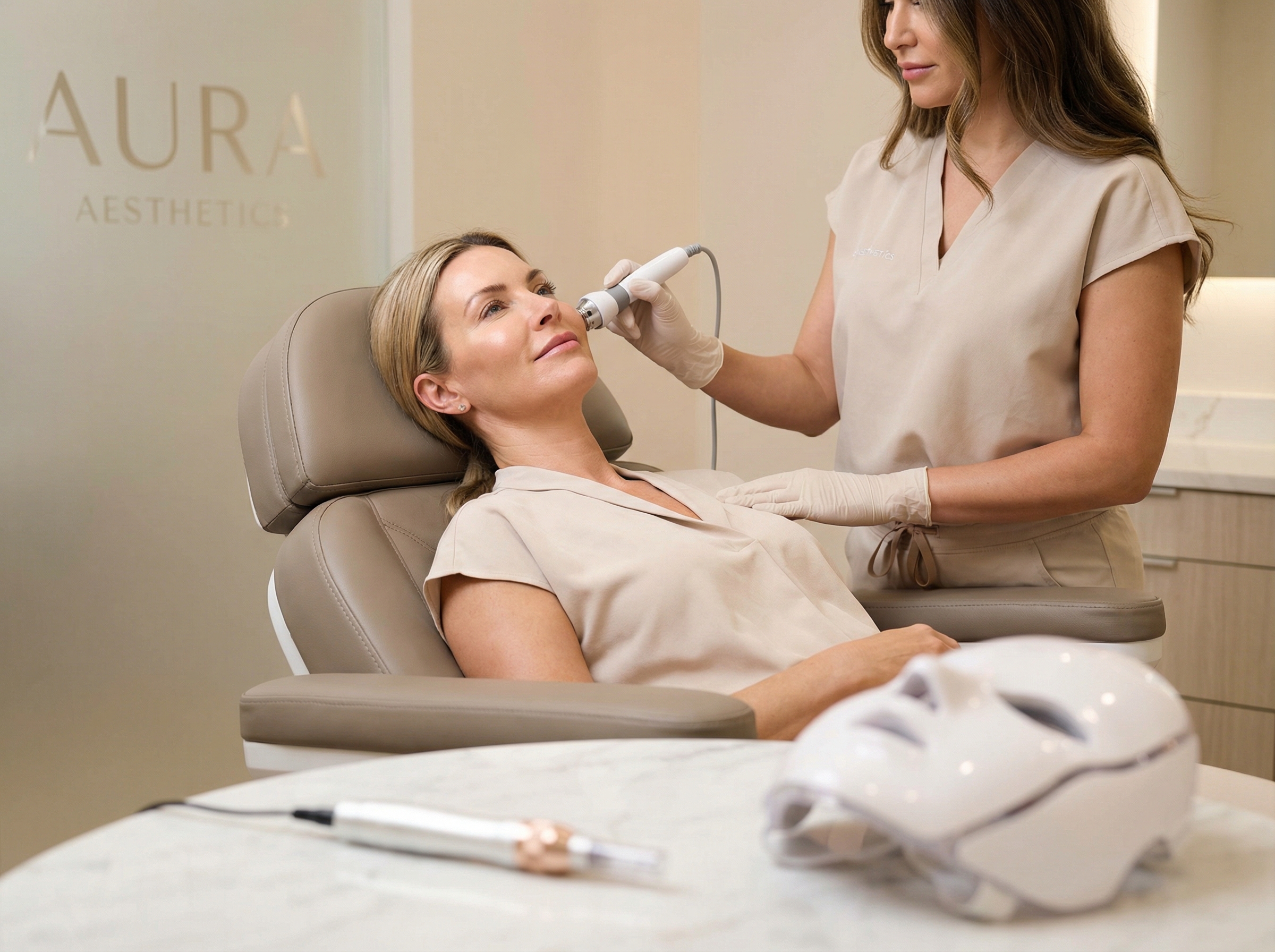
This category includes treatments like Forma. Unlike RF microneedling, these do not puncture the skin.
Mechanism: Surface electrodes heat the dermis to 41°C–43°C. Thermal stress causes immediate collagen contraction and long-term remodeling.
Best For: “Event prep,” mild skin laxity, and maintenance.
Evidence: Clinical studies (2021–2024) highlight safety and efficacy in improving dermal thickness, though results are subtler than surgery.
Downtime: None. Skin may be flushed for 1–2 hours.
Results Timeline: Immediate temporary lift; lasting results require a series.
Cost (2025 USA): $300–$700 per session.
Protocol: Weekly sessions for 6–8 weeks.
LED Phototherapy
Mechanism: Photobiomodulation uses light wavelengths to influence cellular activity.
- Red (633nm) & Near-Infrared (830nm): Stimulates fibroblast activity and reduces inflammation. Emerging evidence suggests it speeds recovery from other procedures.
- Blue (415nm): Kills C. acnes bacteria.
Best For: Acne (blue), recovery and mild rejuvenation (red).
Downtime: None.
Cost (2025 USA): $50–$150 as an add-on; home devices vary.
Safety Protocols and Pre-Treatment Care
Safety is largely determined by preparation.
Medication and Health History
Isotretinoin (Accutane): Current consensus guidelines (2024 update) suggest a conservative approach. Wait at least 6 months after stopping isotretinoin before undergoing ablative lasers or deep peels. Always confirm with your prescribing clinician.
Blood Thinners: For microneedling or treatments causing bleeding, stop blood thinners 3–5 days prior if medically safe.
Active Infections: Never treat over active cold sores (HSV) or bacterial infections. Prophylactic antivirals are recommended for patients with a history of cold sores undergoing laser or deep peels.
Pigment Management (Fitzpatrick IV–VI)
Darker skin types are prone to Post-Inflammatory Hyperpigmentation (PIH).
- Pre-conditioning: Start a tyrosinase inhibitor (like hydroquinone, tranexamic acid, or cysteamine) 2–4 weeks before heat or injury-based treatments.
- Patch Testing: Mandatory for lasers and medium-depth peels.
- Settings: Experienced providers use lower fluence (energy) and longer pulse durations to protect the epidermis.
Post-Treatment Care
- Cooling: Use cool air or ice packs immediately post-treatment to reduce thermal retention.
- Barrier Repair: Switch to gentle, non-foaming cleansers and bland moisturizers (containing ceramides or petrolatum) until the barrier heals.
- Sun Protection: Strict avoidance of direct sun. Apply broad-spectrum SPF 30+ (mineral preferred) daily.
Combining Procedures Safely
Stacking treatments can enhance results but requires strategic timing.
Same Day Combinations:
- Microneedling + PRP: Platelet-rich plasma is applied during or immediately after microneedling to speed healing.
- Laser + LED: Red light therapy immediately after laser resurfacing helps reduce redness and inflammation.
Sequencing with Injectables:
- Botox/Neuromodulators: Wait 2 weeks after injection before having RF or laser treatments in the same area to avoid displacing the product.
- Fillers: Wait 4 weeks after filler placement before doing deep heat treatments over the filled area to prevent potential degradation, although recent 2025 data suggests this risk is lower than previously thought.
Quick Reference Guide
| Modality | Primary Indication | Downtime | Sessions (Initial) | Est. Cost (USA 2025) | Key Caveat |
|---|---|---|---|---|---|
| Forma (RF) | Mild Laxity, “Glow” | None (Redness <2 hrs) | 6–8 (Weekly) | $300–$700 | Requires maintenance; subtle lift. |
| Microneedling | Texture, Acne Scars | 1–3 Days | 3–6 (Monthly) | $300–$600 | Not for active acne. |
| RF Microneedling | Deep Scars, Tightening | 2–5 Days | 3 (Monthly) | $800–$2,000 | Pain management needed (numbing). |
| Non-Ablative Laser | Fine Lines, Tone | 1–3 Days | 3–5 (Monthly) | $500–$1,000 | Texture feels like sandpaper briefly. |
| Chemical Peel (Med) | Pigment, Sun Damage | 5–7 Days | 1–3 (Seasonal) | $400–$900 | Visible peeling; strict sun avoidance. |
| LED Therapy | Inflammation, Acne | None | 10+ (2x Weekly) | $50–$150 | Results are cumulative and slow. |
For more data on market trends and costs, you can refer to the Face Treatment Market Industry Analysis and Forecast (2025-2032).
Frequently Asked Questions about non‑invasive rejuvenation
Navigating non-invasive aesthetics requires understanding how these treatments fit into a real schedule and budget. The answers below rely on current clinical standards and data from 2024 and 2025.
What is the difference between Forma and a surgical facelift and who should choose each?
A surgical facelift physically removes excess skin and tightens the underlying muscle structure (SMAS), remaining the gold standard for moderate to severe sagging. Forma uses radiofrequency to heat the dermis, stimulating collagen and providing mild tightening without removing skin. Patients with significant jowling or “turkey neck” will likely find Forma results underwhelming.
Action Step: Stand before a mirror and lift the skin at your jawline upwards by one centimeter. If this achieves your goal, non-invasive RF is likely sufficient. If you need to lift more than two centimeters, consult a plastic surgeon.
Practical Takeaway: Choose Forma for skin quality and early prevention; reserve surgery for structural correction.
How many sessions will I need and when will I see results?
Collagen remodeling takes time. While some patients notice an immediate “glow” due to edema, real structural change happens later. Clinical protocols for Forma typically require 6 to 8 weekly sessions. Peak results usually appear 3 to 4 months after the final session.
Action Step: Review your calendar before booking to ensure you can commit to a weekly appointment for two months without interruption.
Practical Takeaway: Commit to the full series to see lasting changes rather than judging success by the first visit.
What is the downtime for Forma compared with microneedling, RF microneedling, fractional laser, and chemical peels?
Forma involves no needles and no ablation, with mild redness subsiding within 1–2 hours. Standard microneedling causes redness for 24–48 hours. RF microneedling (e.g., Morpheus8) can cause swelling and grid marks for 3–5 days. Fractional lasers and medium-depth peels involve significant epidermal injury, leading to bronzing and peeling for 5–10 days.
Action Step: Ask the provider to show you photos of a patient immediately post-procedure to gauge social downtime realistically.
Practical Takeaway: Forma offers the least downtime, allowing for immediate return to social activities.
Are these treatments safe for darker skin tones and what extra precautions are needed?
Radiofrequency is generally color-blind and does not target melanin, making it safer for Fitzpatrick skin types IV–VI than many lasers. However, safety depends on technique; overheating can still cause burns or pigment changes. Providers should use lower energy settings initially and ensure real-time temperature monitoring.
Action Step: Request a patch test on an inconspicuous area (like behind the ear) at least 48 hours before a full face treatment.
Practical Takeaway: RF is safer than most lasers for melanin-rich skin, but experienced providers are non-negotiable.
Can I get these treatments if I have fillers or Botox and how long must I wait?
Heat can theoretically accelerate the breakdown of fresh fillers or cause migration. Wait two weeks after Botox/Dysport and 2–4 weeks after fillers before undergoing energy treatments. Conversely, you can have Forma or laser treatments immediately before injectables in the same visit.
Action Step: Disclose your injection history during the consultation, including dates and products used.
Practical Takeaway: Schedule energy device treatments first or wait a full two weeks after receiving injectables.
What are the top risks and how are complications treated?
The primary risk with heat-based devices is a thermal burn (blistering/crusting). Infection is a risk if the barrier is compromised. Post-inflammatory hyperpigmentation (PIH) is a common complication in darker skin tones. Burns are treated with topical antibiotics; PIH is managed with tyrosinase inhibitors and sun avoidance.
Action Step: Confirm the clinic has a 24-hour emergency line in case you experience unexpected pain or blistering after hours.
Practical Takeaway: Strict adherence to aftercare significantly reduces the risk of permanent scarring.
How do I select a trustworthy provider and what questions should I ask at my consultation?
Regulation varies by state. Board-certified dermatologists and plastic surgeons offer the highest oversight. When choosing a med spa, investigate who owns the facility and who handles complications. Ask specifically about the provider’s experience with the exact device being used.
Action Step: Ask the provider: “How do you handle complications like burns or pigment changes if they occur?”
Practical Takeaway: Prioritize providers who can articulate a clear safety protocol.
How much do these treatments typically cost in the USA and does insurance ever cover them?
These elective procedures are not covered by insurance. In 2025, a single Forma session typically ranges from $300 to $700 depending on location. A package of six can cost between $1,500 and $3,500. RF microneedling is more expensive, often $800–$2,000 per session. The US Skin Treatment market is projected to generate significant revenue in 2025, reflecting these price points.
Action Step: Ask for a written quote that includes the full series cost and post-procedure skincare.
Practical Takeaway: Budget for the entire series upfront; single sessions rarely provide sufficient ROI.
Can I combine treatments in one visit and what is a safe sequencing strategy?
Treatment stacking maximizes results. The general rule is to proceed from the deepest modality to the most superficial (e.g., RF microneedling first, then LED). However, combining aggressive heat (laser) with aggressive chemical exfoliation (peels) in one visit is generally unsafe.
Action Step: Ask your provider to outline a “treatment plan” that sequences these modalities over several months.
Practical Takeaway: Safe stacking enhances results, but aggressive heat and chemicals should be separated by at least two weeks.
Is LED worth it and which LED color does what?
LED phototherapy is effective if the device delivers sufficient energy. Red light (633 nm) and near-infrared (830 nm) reduce inflammation and stimulate collagen. Blue light (415 nm) targets acne bacteria. Evidence supports LED particularly for speeding recovery after aggressive procedures.
Action Step: Verify that the clinic uses a medical-grade LED panel rather than a consumer-grade device.
Practical Takeaway: LED is an excellent add-on to reduce downtime but is rarely a standalone solution for significant aging.
Additional Common Questions
Can I get these treatments while pregnant or breastfeeding?
Safety data is non-existent for pregnancy. Most providers consider pregnancy a strict contraindication for energy-based devices and chemical peels. Breastfeeding is generally safe for non-chemical treatments like LED, but caution is needed with numbing creams.
Practical Takeaway: Pause all energy treatments during pregnancy.
How does isotretinoin (Accutane) affect my eligibility?
Traditional guidance required waiting 6–12 months after stopping isotretinoin. Recent consensus suggests superficial treatments may be safe earlier, but deep resurfacing and lasers still require a waiting period of at least 6 months to avoid scarring.
Practical Takeaway: Wait at least six months after your last dose before booking laser or aggressive RF treatments.
Can I treat over tattoos or permanent makeup?
Lasers must never be used directly over tattoos or microblading, as the energy can cause ink to explode or blister. Radiofrequency is generally safe over tattoos but avoiding the area is common practice to prevent thermal distortion.
Practical Takeaway: Remind your provider to cover or avoid any tattooed areas.
Will this help with active acne?
Microneedling should not be done over active, inflamed cysts. Blue LED light and salicylic acid peels are better options for active acne. Forma and RF can be used once active inflammation has subsided to treat scarring.
Practical Takeaway: Treat active breakouts with peels or blue light first; address scarring later.
Conclusions and next steps
We have walked through the mechanics of radiofrequency, the specific thermal action of Forma, and how it stacks up against microneedling and lasers. Knowing the science is useful, but knowing how to navigate a consultation and manage your skin afterward is what protects your investment.
The reality of the aesthetic market in late 2025 is that options are abundant, but regulation can be loose. The “non-surgical facelift” is a marketing term describing a result, not a single procedure. Achieving that result requires a strategy that matches the technology to your anatomy.
Synthesizing the Options: Matching the Tool to the Tissue
Before booking, be honest about what you see in the mirror. The biggest source of dissatisfaction is not technology failure, but poor candidate selection.
If you have significant volume loss or heavy sagging, non-invasive energy devices will likely disappoint you. Forma excels at tightening the “envelope” of the skin—improving tone and mild laxity—but does not reposition muscle.
Top Aesthetic Medicine Trends to Watch in 2025 indicate a shift toward “prejuvenation” and maintenance. These devices are best viewed as collagen banking—stimulating your body to repair itself to slow the visible clock.
Here is the bottom line on selection:
- Choose Forma (Non-Invasive RF) if: You have mild laxity, want zero downtime, are preparing for an event, or want to maintain surgical results. It is safe for all skin tones.
- Choose RF Microneedling (Morpheus8, etc.) if: You have textural issues, acne scars, or laxity requiring deeper remodeling. Expect social downtime.
- Choose Surgery if: You have moderate-to-severe laxity, significant loose skin on the neck, or want a structural change. Energy devices cannot replicate the mechanical lift of a facelift.
Preparing for Your Consultation
A consultation is an interview. Do your homework first.
1. Know Your Medical History
Conditions affect safety. Pacemakers/defibrillators are generally contraindicated for RF. Metal implants in the facial area must be disclosed, as heat builds up around metal differently than tissue.
2. Timing Matters
If you are on isotretinoin (Accutane) or have been in the last six months, reputable dermatologists will likely refuse energy treatments due to scarring risks. Pregnancy is a strict contraindication.
3. The “Ozempic Effect” Factor
With the widespread use of GLP-1 agonists for weight loss continuing through 2025, many patients experience rapid facial volume loss (“Ozempic face”). Skin tightening alone might look stark; you may need a combination approach: fillers/biostimulators to replace volume, followed by Forma/RF to tighten the skin envelope.
The Provider Checklist: Questions You Must Ask
Use this checklist to filter sales pitches from medical advice.
| Category | Question to Ask | Why It Matters |
|---|---|---|
| Device Verification | “Is this the actual InMode Forma device, or a different RF machine?” | “Forma” is often used generically. Genuine Forma has specific safety sensors. |
| Training | “How long has the specific person performing my treatment been using this device?” | Skill determines safety. You want years of experience, not days. |
| Outcomes | “Can I see before-and-after photos of your patients with my skin type?” | Stock photos show best-case scenarios; provider photos show actual skill. |
| Protocol | “How many sessions are in a standard series, and what is the maintenance schedule?” | Standard is 6–8 weekly sessions. Be skeptical of “one-and-done” promises. |
| Safety | “What is your protocol if a burn or adverse reaction occurs?” | They should have a medical protocol for immediate complication management. |
Actionable Next Steps: The Treatment Plan
Once you select a provider, the process involves three phases.
Phase 1: Pre-Treatment (2 Weeks Before)
Avoid direct sun; tanned skin is inflamed skin. Stop strong retinoids or exfoliating acids 3–5 days before your appointment. For darker skin tones (Fitzpatrick IV-VI), ask about using a tyrosinase inhibitor prior to treatment to lower PIH risk.
Phase 2: The Series (6 to 8 Weeks)
Consistency is non-negotiable. Forma works by cumulative heating. Skipping weeks loses momentum. Keep skin hydrated, as RF travels better through hydrated tissue. Avoid anti-inflammatory medications (NSAIDs) immediately post-treatment if possible, as mild inflammation stimulates collagen.
Phase 3: Maintenance and Longevity
The Facial Treatment Market is growing because maintenance is a lifestyle.
- Sun Protection: UV radiation breaks down collagen. Use broad-spectrum SPF 30+ daily.
- Topical Support: Resume retinoids 3–5 days post-treatment to support collagen production.
- Maintenance Sessions: Collagen degrades naturally. Plan for a maintenance treatment every 1–3 months after your initial series.
Final Thoughts on Safety and Standards
The barrier to entry for buying aesthetic machines is low. In some states, technicians with minimal medical training operate powerful devices. Your face is not the place to hunt for a bargain. The safety of radiofrequency depends entirely on the operator’s skill in maintaining therapeutic temperature without burning.
We strongly encourage seeking a consultation with a board-certified dermatologist, plastic surgeon, or a licensed provider under their supervision. Non-surgical skin rejuvenation has come a long way; with realistic expectations and a qualified provider, treatments like Forma can offer a refreshed appearance that keeps you looking like yourself—just more rested.
References
- Face Treatment Market Industry Analysis and Forecast (2025-2032) — The Face Treatment Market size was valued at USD 1344.88 Mn. in 2024 and the total market revenue is expected to grow at a CAGR of 7.8 % from 2025 to 2032, …
- US Facial Skincare Market Report 2025 – Mintel Store — The US facial skincare market is projected to reach $12107 billion by 2025, growing at 3.4%. A projected slowdown of growth is due to market …
- Facial Treatment Market Size, Share & Growth Report, 2033 — The global facial treatment market size was valued at USD 1230.54 million in 2024 and is expected to grow at 7.27% CAGR from 2025 to 2033.
- Top Aesthetic Medicine Trends to Watch in 2025 – IAPAM — This guide will outline the top eight non-invasive treatments that are expected to lead in 2025, providing insight into why these options are flourishing.
- Skin Treatment – United States | Statista Market Forecast — United States: In the year 2025, the Skin Treatment market market in the United States is projected to generate a revenue of US$4.64bn.
- Non-Surgical Skin Tightening Market Size & Forecast 2033 — The global non-surgical skin tightening market size reached USD 1.5 Billion in 2024 and grow at a CAGR of 4.98% to reach USD 2.3 Billion by 2033.
- Top 7 Skincare Trends Every Esthetician Should Know in 2025 — The U.S. beauty industry alone is expected to generate $104.7 billion in revenue in 2025 (2), with a significant portion attributed to …
- Will Skin Care Survive Economic Belt-Tightening This Time? — NewBeauty's State of Aesthetics Summer 2025 reveals exactly how consumers are cutting back spending across the board.
- These 2025 Beauty Trends Are Predicted to Soar – NewBeauty — At number one on the list of 2025 beauty trends is the 'Ozempic effect.' This trend refers to the impact of rapid weight loss drugs on all areas of beauty.
- Energy Skin Treatments: Forma Facials vs. HIFU vs. Ultherapy — Forma stimulates collagen through radio-frequency heat, helping lift and tighten skin. It's effective for any skin condition, but its prevention …
Legal Disclaimers & Brand Notices
The information provided in this article is for informational and educational purposes only and does not constitute medical advice, diagnosis, or treatment. Always seek the advice of a physician or other qualified health provider with any questions you may have regarding a medical condition or specific aesthetic procedure. Never disregard professional medical advice or delay in seeking it because of something you have read in this content.
All product names, logos, and brands mentioned in this text are the property of their respective owners. This includes, but is not limited to:
- Botox and Juvederm (trademarks of Allergan Aesthetics/AbbVie)
- Dysport and Restylane (trademarks of Galderma)
- Sculptra (trademark of Galderma)
- Radiesse (trademark of Merz North America, Inc.)
- SkinPen (trademark of Crown Aesthetics)
- HydraFacial (trademark of BeautyHealth)
- CoolSculpting (trademark of Zeltiq Aesthetics/Allergan)
- PicoSure (trademark of Cynosure)
The use of these names, logos, and brands does not imply endorsement, affiliation, or certification by the trademark owners.