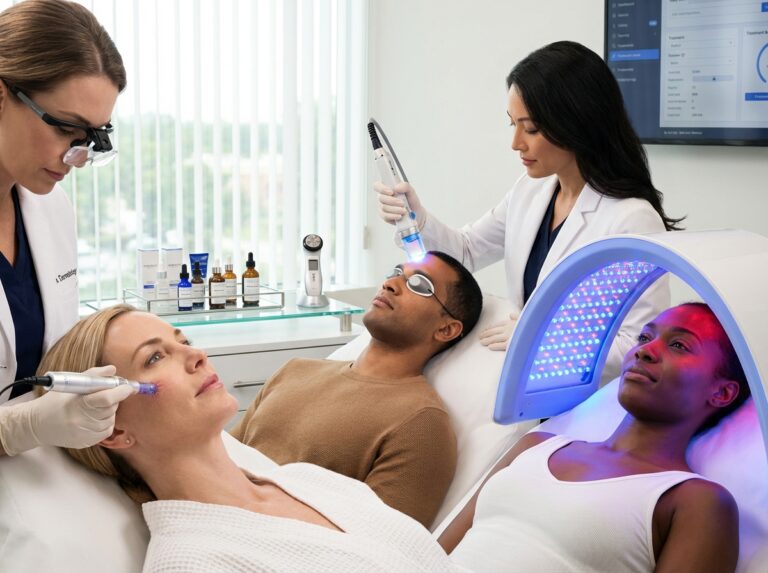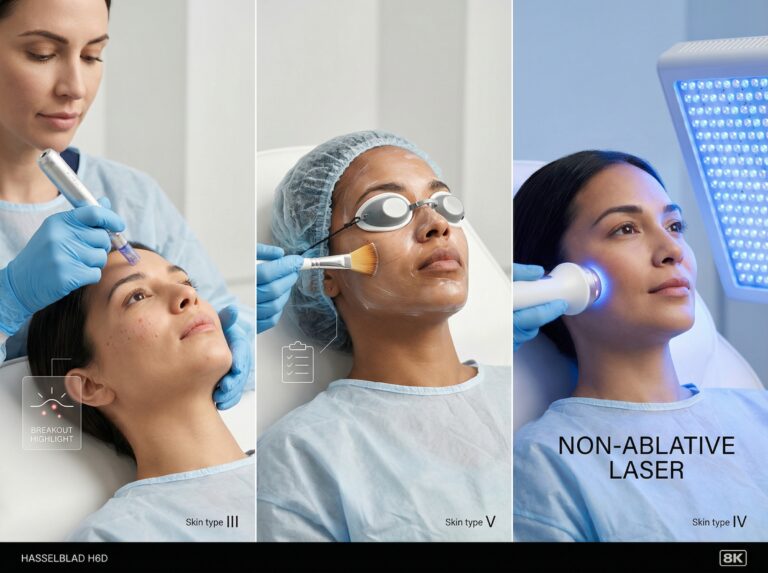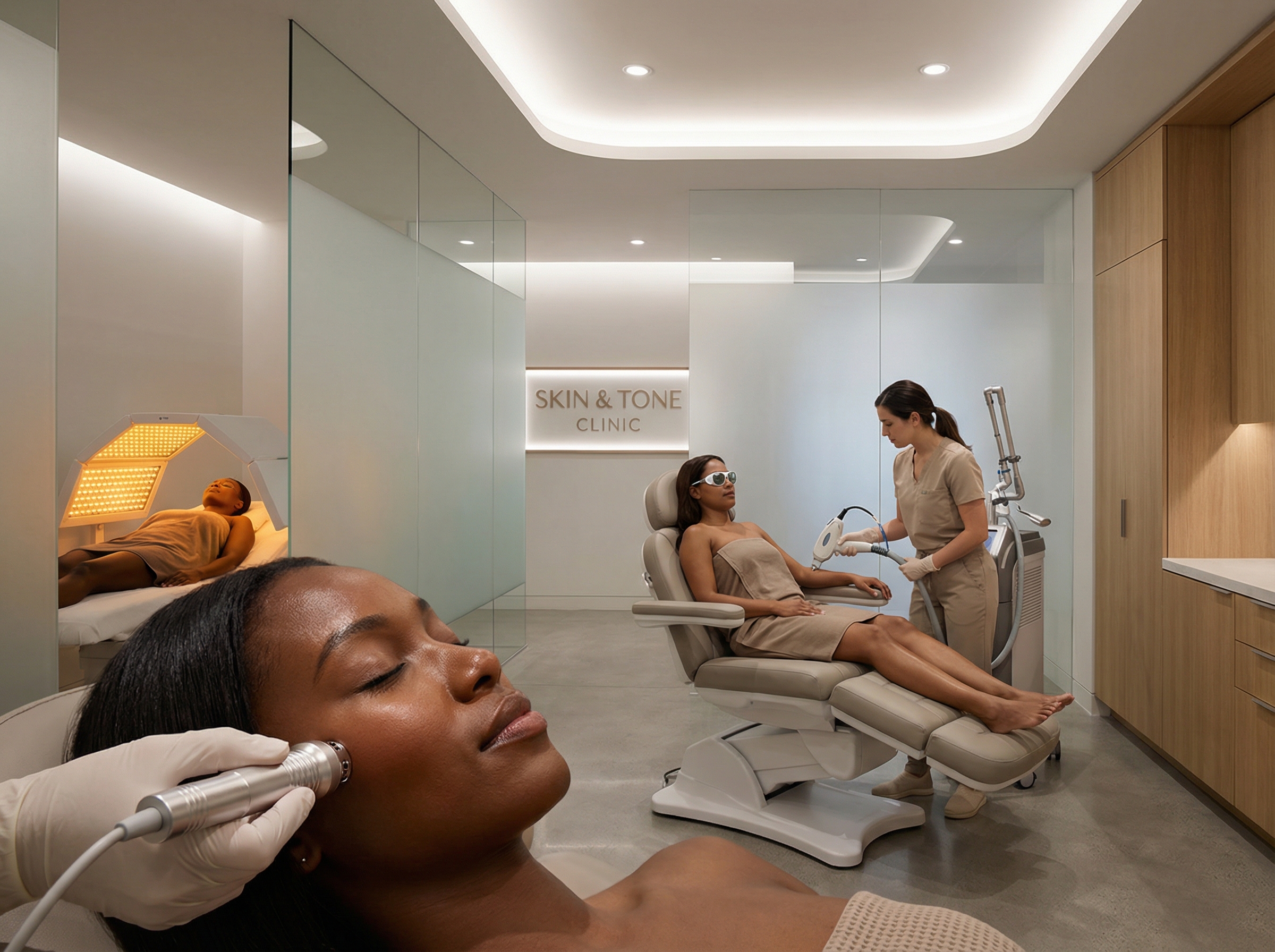
Treating Fitzpatrick IV–VI skin requires tailored, conservative approaches to avoid post‑inflammatory hyperpigmentation and other complications. This article explains which non‑invasive options — microneedling, laser facials, chemical peels, radiofrequency, and LED — are safest, when to choose each method, expected downtime, results, and practical pre/post care to maximize outcomes for Black and brown skin.
Why darker skin needs a tailored approach
Treating Fitzpatrick skin types IV through VI requires us to fundamentally rethink how energy interacts with tissue. It is not simply a matter of turning down the dial on a device built for lighter skin. The biological reality of melanin-rich skin demands a specific understanding of photobiology, thermal relaxation, and wound healing responses. When we ignore these biological differences, we move from rejuvenation to injury.
The Role of Melanin as a Competitive Chromophore
The primary challenge in treating darker skin tones is the density and packaging of melanin. In laser physics, “chromophores” are the targets that absorb laser energy (usually water, hemoglobin, or melanin). In hair removal or pigment treatment, melanin is the target. However, in Fitzpatrick IV–VI, melanin is not just located in the hair follicle or the age spot; it is abundant throughout the epidermis.
The Competition for Energy
When a laser beam hits the skin, epidermal melanin acts as a “competitive chromophore.” It competes with the intended target for absorption. If the laser wavelength is too short (like 755 nm Alexandrite or intense pulsed light), the epidermal melanin absorbs that energy instantly. This creates surface heat before the energy can even reach the deeper target, leading to burns, blisters, or immediate dyspigmentation. This is why the risk of dyschromia is greater in Fitzpatrick IV–VI patients. The window between effective treatment and epidermal injury is much narrower than in lighter skin types.
The Inflammation-Pigment Cycle
Beyond the immediate absorption of heat, darker skin has a more reactive inflammatory response. Melanocytes in darker skin are genetically programmed to be more reactive to inflammation. This is a protective mechanism, but in aesthetic medicine, it is a liability.
Post-Inflammatory Hyperpigmentation (PIH)
Any form of heat or trauma can trigger melanocytes to dump pigment into the surrounding cells. In lighter skin, a laser burn might result in prolonged redness (erythema). In darker skin, that same inflammation almost invariably turns brown or gray-blue. This is Post-Inflammatory Hyperpigmentation (PIH). It can last for months or even years. The risk is not just from burning; even “safe” inflammation from aggressive non-ablative treatments can trigger this response if the heat is not managed correctly.
Hypopigmentation Risks
Conversely, if the thermal injury is too severe, we risk destroying the melanocytes entirely. This leads to hypopigmentation—white spots where the skin has lost its ability to produce color. Unlike hyperpigmentation, which often fades with time and topicals, hypopigmentation is frequently permanent. This is a common outcome when ablative lasers (like CO2) are used without extreme caution, as they vaporize the tissue where melanocytes reside.
Structural Differences and Scarring
The differences go beyond color. The stratum corneum (the outermost layer of skin) in darker skin types is often more compact. While this provides a stronger barrier function, it also affects how chemicals and light penetrate. Furthermore, fibroblast activity—the cells responsible for collagen production—can be more robust.
Keloid and Hypertrophic Scarring
There is a well-documented genetic predisposition in many Fitzpatrick V and VI individuals toward fibroproliferative disorders. The skin heals “too well,” producing excess collagen that results in keloids or hypertrophic scars. This makes deep dermal injury, such as fully ablative resurfacing or deep microneedling with RF, higher risk. We have to stimulate collagen remodeling without triggering the cascade that leads to uncontrolled scar tissue formation.
Adapting the Physics: Wavelength and Pulse Duration
To navigate these risks, we adjust the physics of the device. The goal is to bypass the epidermis and deliver energy slowly enough that the skin can cool down.
Wavelength Selection
Longer wavelengths are safer because they have a lower absorption coefficient for melanin. They penetrate deeper, bypassing the pigment-rich surface to hit targets in the dermis. The 1064 nm Nd:YAG laser is the workhorse for this reason. It is essentially “colorblind” enough to pass through the epidermis safely while still being effective for vascular lesions, hair removal, and collagen stimulation. Studies have shown that long-pulsed Nd:YAG laser-assisted hair removal in Fitzpatrick skin types IV–VI is highly safe, with 86% of patients experiencing zero complications.
Pulse Duration and Thermal Relaxation
We also manipulate time. The “pulse duration” is how long the laser beam stays on the skin. For darker skin, we extend the pulse duration. This allows heat to dissipate from the melanin-rich epidermis into the surrounding tissue, preventing a thermal buildup that causes burns. Short, aggressive snaps of energy are dangerous; long, slow deliveries of heat are safe.
Clinical Protocols: Priming and Testing
Safety is not just about the machine; it is about the preparation. We rarely treat Fitzpatrick IV–VI skin on the first visit without groundwork.
The Importance of Priming
Priming involves using topical tyrosinase inhibitors (like hydroquinone, azelaic acid, or tranexamic acid) for 2 to 4 weeks before a heat-based procedure. This suppresses the melanocytes, putting them in a “sleepy” state so they are less likely to flare up with pigment when stimulated by the laser.
Test Spots
A test spot is a non-negotiable standard of care. We treat a small, inconspicuous area and wait—sometimes 48 to 72 hours—to see how the skin responds. Delayed blistering or PIH is common, and a test spot is the only way to predict this individual reaction. What works for one patient with Fitzpatrick V skin might burn another with the exact same tone.
Setting Realistic Expectations
Finally, the approach to results must be adjusted. Because we must use lower fluences (energy levels) and longer intervals between treatments to ensure safety, results take longer to achieve. A patient with Fitzpatrick II skin might clear acne scars in three aggressive sessions. A patient with Fitzpatrick V skin might need six conservative sessions to achieve the same result safely.
Consent forms must explicitly address the risk of PIH. Patients need to know that while we can treat the PIH if it occurs, preventing it requires patience and adherence to a strict sun-protection and skincare protocol. The goal is always improvement without trading one cosmetic issue (like acne scars) for another (like permanent dyspigmentation).
Overview of non‑invasive options and when to use them
Understanding the biological differences in darker skin is only the first step. The practical challenge lies in selecting the right modality to address concerns without triggering the very pigmentary issues we want to avoid. We categorize the available non-invasive options into five distinct families. Each has a specific mechanism of action and a distinct safety profile for Fitzpatrick skin types IV through VI.
Conceptual Overview of Treatment Families
We need to look at these modalities side-by-side to understand where they fit in a treatment plan. The following comparison highlights the trade-offs between invasiveness and results for melanin-rich skin.
| Modality | Primary Indications | Invasiveness | Typical Downtime | Sessions Needed | Primary Safety Concern (Fitz IV–VI) |
|---|---|---|---|---|---|
| Microneedling (Manual & Device) |
Texture, acne scars, pore size, mild laxity | Low to Medium | 24 to 72 hours | 3 to 6 | Mechanical trauma leading to PIH if depth is excessive or technique is aggressive. |
| Laser & Light (Non-ablative, Long-pulse) |
Pigment, hair removal, vascular lesions, texture | Medium | 3 to 7 days | 3 to 10 | Epidermal heating causing burns or permanent dyspigmentation. |
| Chemical Peels (Superficial to Medium) |
Active acne, superficial pigment, texture, glow | Low to Medium | 0 to 7 days | 3 to 6 | Uncontrolled penetration causing frosting and subsequent hyperpigmentation. |
| Radiofrequency (RF & RF Microneedling) |
Skin laxity, deep acne scars, contouring | Medium | 2 to 5 days | 3 to 4 | Poor needle insulation causing surface burns; bulk heating triggering pigment. |
| LED Phototherapy (Red, Blue, Near-IR) |
Inflammation, acne bacteria, post-procedure healing | Non-invasive | None | 6 to 12+ | Negligible risk; primary concern is lack of efficacy if power is too low. |
Microneedling
Mechanism and Safety
Microneedling remains a cornerstone for treating darker skin because it is “colorblind.” It relies on mechanical injury rather than thermal energy. This bypasses the chromophore absorption issues inherent in light-based therapies. The needles create controlled micro-channels that stimulate collagen production without significantly heating the epidermis.
Clinical Application
We use this primarily for textural issues. It is effective for atrophic acne scarring and improving overall skin quality. For Fitzpatrick IV–VI, we avoid aggressive “stamping” techniques or excessive depths that cause pinpoint bleeding which lasts longer than a few minutes. The goal is erythema, not trauma.
Laser and Light Facials
Mechanism and Safety
This category requires the most caution. Light targets chromophores like melanin, hemoglobin, and water. In darker skin, the abundant epidermal melanin competes with the target, creating a high risk of surface burns. We prioritize long-wavelength lasers (like 1064 nm) that bypass the epidermis or fractional non-ablative devices that leave bridges of healthy tissue intact. Nonablative Fractional Laser Resurfacing in Skin of Color has shown a favorable safety profile when settings are conservative.
Clinical Application
These devices address specific targets. We use them for hair reduction, treating vascular lesions that contribute to dark spots, and deep collagen remodeling. The approach is always “low and slow.” We accept that more sessions are necessary to achieve the same result safely compared to lighter skin types.
Chemical Peels
Mechanism and Safety
Chemical exfoliation dissolves the bonds between skin cells. The safety profile depends entirely on the agent and the depth. Superficial peels using salicylic, lactic, or mandelic acid are generally safe and effective. Deep phenol peels are contraindicated due to the high risk of hypopigmentation (permanent pigment loss).
Clinical Application
Peels are often the first line of defense for active acne and superficial hyperpigmentation. They help normalize cell turnover. We often start with very low concentrations to assess skin tolerance before moving to medium-depth peels like TCA, which require strict pre-treatment preparation.
Radiofrequency (RF) and RF Microneedling
Mechanism and Safety
Radiofrequency uses electrical current to generate heat. Like standard microneedling, RF is largely colorblind because electricity does not target melanin. RF microneedling delivers this energy directly into the dermis through insulated needles, sparing the epidermis from heat exposure.
Clinical Application
This is the modality of choice for skin laxity and deeper acne scars in darker skin. It provides the heat needed for significant collagen tightening that manual microneedling cannot offer, but without the surface risks of ablative lasers. The insulation of the needles is the critical safety feature here.
LED Phototherapy
Mechanism and Safety
Light Emitting Diode (LED) therapy is non-thermal. It uses specific wavelengths to modulate cellular activity. Blue light targets acne bacteria, while red and near-infrared light reduce inflammation and speed up healing. It is safe for all Fitzpatrick types as it generates no heat.
Clinical Application
We rarely use LED as a standalone treatment for structural changes. It serves as an essential adjunctive therapy. We use it immediately after microneedling or peels to reduce redness and prevent the inflammatory cascade that leads to PIH.
The Logic of Staged Therapy
Combining treatments yields better results, but simultaneous application increases risk. We use a staged approach for Fitzpatrick IV–VI to maintain the integrity of the epidermal barrier.
Phase 1: Control Inflammation
We never perform energy treatments on inflamed skin. Active acne or dermatitis must be controlled first. We use superficial chemical peels and LED therapy in this phase. Treating through inflammation guarantees post-inflammatory hyperpigmentation.
Phase 2: Pigment Priming
Before introducing heat or needles, we stabilize the melanocytes. Patients start a topical regimen including tyrosinase inhibitors (non-hydroquinone or hydroquinone based) 2 to 4 weeks prior to the procedure. This suppresses the skin’s ability to overproduce pigment in response to the upcoming injury.
Phase 3: Corrective Treatment
Once the skin is calm and primed, we introduce the corrective device. We might alternate modalities. For example, we may perform microneedling one month, followed by a chemical peel four weeks later. This allows the skin to fully recover its barrier function between sessions.
Evidence-Based Decision Pathways
The decision to treat follows a strict hierarchy of safety. We prioritize epidermal protection above all else.
- Is there active infection or inflammation? If yes, defer device treatment. Use LED or medical management.
- Is the patient compliant with sun protection? If no, refuse laser and deep peel treatments. The risk of adverse events is too high.
- Is the concern pigment or texture? For pigment, start with chemical agents. For texture, start with microneedling. Introduce heat (laser/RF) only if these modalities fail to deliver sufficient results.
We treat the patient in front of us, not the textbook setting. Test spots are mandatory for any heat-based device, regardless of the manufacturer’s “safe” presets. We wait 48 to 72 hours after a test spot to check for delayed blistering or pigmentary changes before proceeding with a full treatment.
Laser and energy device selection and safety for Fitzpatrick IV‑VI
Selecting the right energy device for Fitzpatrick skin types IV through VI comes down to physics. The goal is simple but strict. We need to bypass the melanin in the upper layer of the skin to hit a target deeper down. That target might be a hair follicle, a blood vessel, or collagen. If the energy gets absorbed by the epidermal melanin instead, it causes a burn. This injury almost always leads to post-inflammatory hyperpigmentation or permanent hypopigmentation.
To treat darker skin safely, we rely on two main principles. The first is wavelength. Longer wavelengths penetrate deeper and scatter less. They are less attracted to melanin than shorter wavelengths. The second is pulse duration. This is how long the laser beam stays on the skin. Longer pulse durations allow the skin to cool down between hits of energy. This prevents the rapid heating that destroys melanocytes.
The Gold Standard: Long-Pulse Nd:YAG 1064 nm
The long-pulse Nd:YAG 1064 nm laser is the safest workhorse for darker skin. Its wavelength is long enough to ignore much of the surface melanin. It travels down to the dermis to target vascular lesions or hair bulbs.
Vascular Lesions and Flushing
For patients with facial flushing or visible telangiectasias, the Nd:YAG is the primary choice. It targets the hemoglobin in the blood. Because it goes deep, it avoids the surface burn risk associated with shorter wavelengths like the 532 nm KTP or 585 nm dye lasers. The results take time. You might see the vessel darken or disappear immediately, but full clearance often requires multiple sessions.
Hair Reduction
This is the most common use for this laser in skin of color. It is effective because it heats the hair follicle slowly. Long-pulsed Nd:YAG laser-assisted hair removal in Fitzpatrick skin studies show high safety profiles when settings are correct. The trade-off is pain. This wavelength goes deep, so patients feel it more. Cooling is essential here.
Diode Lasers and Conservative Settings
Diode lasers (800–810 nm) occupy a middle ground. They are widely used for hair removal. They are safe for Fitzpatrick IV if used carefully. For Fitzpatrick V and VI, the margin for error shrinks.
Safety with Diodes
The key is using a longer pulse width and lower fluence. Many modern devices mix wavelengths or use suction to distract pain receptors. If a practitioner uses a diode on type VI skin, they must extend the pulse duration significantly. This allows the epidermis to dissipate heat. If the settings are too aggressive, the risk of blistering is high.
Pigment Control: Picosecond vs. Q-Switched
Treating pigment in darker skin is tricky. You are trying to destroy excess pigment without angering the background pigment.
Picosecond Lasers
These deliver energy in trillionths of a second. They rely on a photoacoustic effect. They shatter pigment with sound waves rather than heat. This makes them safer than older lasers for melasma or sun spots in darker skin. The lack of heat reduces the risk of triggering more pigment.
Q-Switched Lasers
These are the older nanosecond devices. They are still useful but generate more heat than picosecond devices. They carry a higher risk of PIH if the energy is too high. They are often used for tattoo removal or specific lentigines.
Resurfacing and Texture: Fractional Non-Ablative
When patients want to treat acne scars or rough texture, we look at fractional non-ablative lasers. These devices, like the 1550 nm Erbium-glass, create microscopic columns of heat in the skin. They leave the surface layer intact.
Why It Works
Leaving the stratum corneum intact acts as a natural bandage. It reduces infection risk and speeds up healing. Nonablative Fractional Laser Resurfacing in Skin of Color reviews indicate that while safe, density settings must be kept low. High density creates too much bulk heat. This heat can trigger a pigment response.
Acne Scarring
For rolling or boxcar scars, this is a solid option. It stimulates collagen remodeling over months. It is not a quick fix. Patients usually need a series of treatments.
High-Risk Zones: Ablative Lasers and IPL
Some devices require extreme caution or should be avoided entirely by most providers.
Ablative Fractional CO2 and Er:YAG
These lasers vaporize skin. They remove the epidermis. In Fitzpatrick IV–VI, this injury is massive. The immune system responds with inflammation. This almost guarantees hyperpigmentation. Only specialists with strict pre-treatment and post-treatment protocols should attempt this. For most patients, the risk outweighs the benefit.
Intense Pulsed Light (IPL)
IPL is not a laser. It is a broad spectrum of light. It hits many targets at once, including melanin. It is notoriously difficult to control in darker skin. It is a leading cause of laser-induced burns in skin of color. It is generally safer to avoid IPL for facial rejuvenation in types V and VI.
Safety Protocols and Real-World Application
Safety is not just about the machine. It is about the technique.
Test Spots
A test spot is non-negotiable. Treat a small area near the ear or jawline. Wait 48 to 72 hours. Pigment reactions in darker skin can be delayed. If the skin looks normal after three days, proceed.
Cooling
Epidermal protection is vital. Contact cooling tips, cryogen spray, or cold air cooling must be used before, during, and after the pulse. This keeps the melanin cold while the laser energy passes through.
Incremental Fluence
Start low. Increase energy only when the skin shows it can handle it. There is no rush. It is better to have an ineffective session than a damaging one.
Interval Spacing
Darker skin holds onto inflammation longer. Space treatments out further than you would for lighter skin. Give the melanocytes time to settle down.
Patient Selection Criteria
If a patient has active inflammation, tan, or unrealistic expectations, wait. If the risk of PIH is too high, suggest alternatives. RF microneedling is often a safer alternative for acne scars because the needles bypass the epidermis before releasing heat.
When to Refer
If a patient needs ablative resurfacing or has complex melasma, refer them to a board-certified dermatologist specializing in ethnic skin. In-office laser treatment should be avoided if the clinic does not own the specific wavelength required for dark skin. One laser does not fit all.
Practical protocols pre and post treatment downtime and expected results
Success with darker skin tones relies heavily on what happens before the device even touches the skin. The margin for error is smaller in Fitzpatrick types IV through VI because melanin competes for the energy intended for the target. A strict protocol is the only way to mitigate the risk of post-inflammatory hyperpigmentation (PIH) and burns.
Pre-Treatment Priming and Safety
Preparation should start weeks before the actual appointment. The goal is to calm the melanocytes so they are less reactive to the heat or trauma of the procedure.
Topical Priming Agents
For patients with a history of PIH or those undergoing heat-intensive treatments, start a tyrosinase inhibitor 2 to 4 weeks prior. Hydroquinone (2–4%) remains the gold standard for short-course priming. However, many clinicians now prefer non-hydroquinone alternatives to avoid irritation. Effective options include azelaic acid, kojic acid, tranexamic acid, and cysteamine. These agents inhibit pigment production without the same risk of rebound hyperpigmentation associated with long-term hydroquinone use.
Retinoids and Irritants
Discontinue strong actives like tretinoin, retinol, and glycolic acid 5 to 7 days before treatment. These thin the stratum corneum and increase sensitivity. The skin barrier needs to be intact to handle laser energy safely.
Sun Protection
Strict sun avoidance is mandatory for at least 4 weeks pre-treatment. Even a slight tan increases the risk of surface burns. Patients should use a broad-spectrum mineral sunscreen (zinc oxide or titanium dioxide) daily. Chemical filters can sometimes cause heat accumulation in the skin, so physical blockers are often preferred.
Medical History Screening
Check for active infections. If the patient has a history of herpes simplex (cold sores), prescribe prophylactic antiviral medication to start one day before treatment. Verify the timing of isotretinoin use. While old guidelines suggested waiting 6 months, newer consensus suggests that non-ablative lasers and microneedling may be safe earlier, but a conservative 6-month wash-out period is still the safest legal and clinical route for most providers.
Protocols During Treatment
Visual endpoints in darker skin differ from lighter skin. Erythema (redness) is often difficult to see. Clinicians must rely on other signs like perifollicular edema (swelling around hair follicles) or immediate darkening of the lesion.
The Test Spot
Perform a test spot in an inconspicuous area like the pre-auricular region or under the jawline. Wait at least 15 minutes to observe immediate tissue response. Ideally, evaluate the test spot 48 to 72 hours later, as delayed blistering or pigment changes are common in melanin-rich skin.
Conservative Settings
Start with lower fluences and longer pulse durations. It is better to require an extra treatment session than to be too aggressive in the first round. Aggressive heating is the primary cause of PIH.
Epidermal Cooling
Protecting the epidermis is critical. Use contact cooling, cryogen spray, or cold air cooling before, during, and immediately after the pulse. This keeps the melanin in the upper layers of the skin from absorbing too much heat while the energy penetrates deeper.
Post-Treatment Care and Recovery
The heat from the laser can continue to traumatize the skin after the session ends. Immediate care focuses on cooling and inflammation control.
Immediate Cooling and Anti-Inflammatories
Apply cold packs or a cooling mask immediately post-procedure until the skin feels neutral to the touch. If the skin shows signs of excessive edema or urticaria, a topical corticosteroid (like hydrocortisone or a stronger class if prescribed) can be applied immediately to suppress the inflammatory response.
Barrier Repair and Cleansing
Use only gentle, non-foaming cleansers and bland moisturizers for the first 3 to 5 days. Ingredients like ceramides, hyaluronic acid, and squalane help repair the barrier. Avoid hot water, saunas, and heavy exercise for 48 hours to prevent internal heating of the tissue.
Sun Avoidance
The skin is extremely vulnerable to UV damage during healing. Direct sun exposure must be avoided. If the patient cannot avoid the sun, they must wear a wide-brimmed hat and apply SPF 50+ strictly.
Downtime and Expected Results by Modality
Patients need to know that “non-invasive” does not always mean “zero downtime.” Setting realistic timelines prevents anxiety and ensures compliance.
| Treatment Modality | Typical Downtime | Expected Results Timeline |
|---|---|---|
| Microneedling | 24–72 hours of mild erythema and sensitivity. Skin may feel tight. | Visible texture improvement after 3–6 sessions spaced 4–6 weeks apart. Collagen remodeling continues for months. |
| RF Microneedling | Moderate swelling and redness for 2–4 days. Tiny grid marks may be visible for up to a week. | Tightening and scar reduction become visible after the second session. Full results appear 3 months after the final treatment. |
| Non-Ablative Fractional (1550 nm) | 3–7 days of “sandpaper” texture and bronzing. Minimal social downtime but makeup may look uneven. | Gradual improvement in texture and pigment over 3–6 months. Requires a series of 3–5 treatments. Studies support efficacy with proper settings. |
| Superficial Chemical Peels | 0–2 days of visible peeling. Often just dryness or flaking. | Brighter skin tone within 1 week. Pigment correction requires a series of 4–6 peels. |
| LED Light Therapy | No downtime. | Cumulative benefits. Requires frequent sessions (1–2 times weekly) for 4–8 weeks for noticeable inflammation reduction or glow. |
Managing Complications and PIH
Even with perfect technique, PIH can happen. It is the skin’s natural protective response to injury.
Early Intervention
If a patient reports burning or unusual darkening, see them immediately. Start a potent topical steroid twice daily for 3 to 5 days to halt inflammation. Do not use steroids long-term on the face.
Pigment Suppression
Once the skin has re-epithelialized (healed over), resume the tyrosinase inhibitors (azelaic acid, tranexamic acid, or hydroquinone). Chemical peels or low-energy toning lasers can help clear residual PIH, but wait until the skin is fully stable.
Patient Counseling and Realistic Outcomes
Honesty builds trust. Explain that darker skin often requires more sessions at lower energy settings to achieve the same results as lighter skin treated aggressively.
Setting Expectations
Tell the patient that safety is the priority over speed. A slow and steady approach yields the best long-term results without compromising the skin’s integrity. Improvement is often cumulative.
Maintenance
Pigmentary conditions like melasma are chronic. Maintenance treatments every 3 to 6 months are often necessary. Acne scars are permanent, but their appearance can be improved by 50–70% with a full treatment course.
When to Refer
If a patient presents with keloid scarring history or active vitiligo, standard laser treatments may be contraindicated. Refer these cases to a board-certified dermatologist who specializes in ethnic skin for a medical assessment before proceeding with any aesthetic devices.
Frequently Asked Questions about non‑invasive rejuvenation for darker skin
We include this Frequently Asked Questions section because anxiety about safety is the primary barrier for patients with Fitzpatrick skin types IV through VI. Many people have heard horror stories about burns or lasting dark spots. These questions address those specific fears directly.
Is laser treatment actually safe for brown or Black skin?
Yes, laser treatment is safe when the provider uses the correct wavelength and settings. The main risk for darker skin comes from devices that target melanin too aggressively. Lasers like the 1064 nm Nd:YAG bypass the surface pigment and target the deeper structures. This avoids burning the epidermis. You should avoid Intense Pulsed Light or IPL devices in most cases because they carry a high risk of burns for darker skin tones. Always ask your provider if they own specific devices for Fitzpatrick skin types IV through VI before booking an appointment.
Why does Post-Inflammatory Hyperpigmentation (PIH) happen?
PIH is a protective response from your skin. When darker skin senses heat or inflammation, the melanocytes produce extra pigment to defend the area. This is the same mechanism that causes a tan after sun exposure. In aesthetic treatments, uncontrolled heat or aggressive abrasion triggers this response. It results in dark patches that can last for months. The goal of any treatment plan is to stimulate the skin without triggering this panic response from the pigment cells.
How can I reduce the risk of PIH before my appointment?
Preparation is your best defense. You should prime your skin for two to four weeks before any heat-based or abrasive treatment. Use a tyrosinase inhibitor like hydroquinone, azelaic acid, or tranexamic acid to calm the pigment cells down. Avoid sun exposure completely for two weeks prior. Ask your provider for a test spot on a discreet area like the jawline or behind the ear. Wait 48 to 72 hours to see how your skin reacts before proceeding with the full treatment.
What are the safest chemical peels for my skin type?
Superficial peels are generally safe and effective. Look for ingredients like mandelic acid, lactic acid, and salicylic acid. Mandelic acid is particularly good because its large molecule size penetrates the skin slowly and reduces irritation. You should avoid deep phenol peels or high-concentration TCA peels unless you are under the care of a highly specialized dermatologist. These penetrate too deeply and pose a significant risk of scarring or permanent pigment loss.
Which lasers are preferred for hair reduction or vascular concerns?
For hair reduction, the long-pulsed 1064 nm Nd:YAG laser is the gold standard. It has a proven safety profile for darker skin because it targets the hair follicle blood supply rather than the surface pigment. Diode lasers can also be safe if used with extended pulse durations and proper cooling. Research confirms that long-pulsed Nd:YAG laser-assisted hair removal is effective and safe for these skin types. For vascular issues like spider veins, the Nd:YAG is again the preferred choice over pulsed dye lasers which may cause bruising and pigmentation.
Can microneedling be combined with PRP safely?
Microneedling with Platelet-Rich Plasma or PRP is one of the safest rejuvenation methods for Fitzpatrick IV through VI. It relies on mechanical stimulation rather than heat. This removes the risk of thermal burns. The addition of PRP speeds up healing and reduces the duration of inflammation. This lowers the chance of PIH. Ensure your provider uses a sterile, medical-grade device and not a roller to prevent tearing the skin.
Are ablative lasers ever appropriate?
Ablative lasers like CO2 remove the top layer of skin and generate high heat. This creates a very high risk for scarring and pigmentation issues in darker skin. Most experts recommend avoiding fully ablative resurfacing. Fractional ablative lasers or non-ablative fractional lasers are safer alternatives. They leave bridges of healthy skin intact to speed up healing. If you must undergo an ablative procedure, it should only be performed by a board-certified dermatologist with extensive experience in treating skin of color.
What should I use at home before and after treatment?
Stop all active ingredients like retinoids, glycolic acid, and benzoyl peroxide five days before treatment. Post-treatment care should focus on hydration and protection. Use a gentle, non-foaming cleanser and a barrier-repair moisturizer containing ceramides or hyaluronic acid. Sunscreen is mandatory. Use a mineral or chemical SPF 30 or higher every single day. Even indoor light can trigger pigment activity in inflamed skin.
When should I seek urgent care for complications?
Some side effects are normal but others require immediate attention.
Normal signs
Mild heat, redness, tight skin, and slight swelling.
Warning signs
Blistering, crusting with yellow fluid, intense pain that does not subside, or darkening of the skin that looks like a bruise.
If you see blisters or suspect an infection, contact your provider immediately. Early intervention with topical steroids or antivirals can prevent permanent scarring.
When should I choose a dermatologist instead of a spa provider?
You should see a board-certified dermatologist for any laser treatment, deep peel, or if you have a history of keloid scarring. Medical spas are often excellent for maintenance facials and light peels. But lasers require a deep understanding of skin physics and pathology. A dermatologist can manage complications instantly if they arise. Always ask to see before and after photos of patients with your specific skin tone to verify their experience.
Takeaways and practical conclusions
We have reached the point where science meets the mirror. After analyzing the mechanisms of lasers, radiofrequency, and chemical agents, the conclusion for treating Fitzpatrick skin types IV through VI is clear: safety is not about avoiding treatment, but about respecting biology. The melanin that protects darker skin from UV damage is the same target that makes it vulnerable to thermal injury. Success lies in bypassing that target or heating it so gently that it doesn’t react with inflammation.
The Safest Tools in the Box
Not all devices are created equal, and for darker skin, the wavelength matters more than the brand name. We can narrow down the most reliable options based on the evidence we reviewed.
Long-Pulsed Nd:YAG (1064 nm)
This remains the heavy lifter for hair removal and vascular issues in darker skin. Its longer wavelength penetrates deeper, largely bypassing the epidermal melanin that shorter wavelengths (like the 755 nm Alexandrite) might burn. It is the safest laser option for hair reduction in type VI skin, though it requires a skilled operator to manage the heat. You can read more about the efficacy of this wavelength in studies regarding Long-pulsed Nd:YAG laser-assisted hair removal in Fitzpatrick skin.
Radiofrequency (RF) and Microneedling
These are “color-blind” technologies. Because they rely on electrical energy or mechanical stimulation rather than light absorption, they don’t see pigment. RF microneedling is particularly effective for texture and scarring because it delivers heat directly into the dermis, sparing the surface layer where the pigment lives.
Pico and Nano Lasers
For pigment issues like melasma or acne scars, photoacoustic energy (sound/vibration) is safer than photothermal energy (heat). Picosecond lasers shatter pigment particles without generating the bulk heat that triggers post-inflammatory hyperpigmentation (PIH).
The Non-Negotiable Safety Protocols
The device is only 50% of the safety equation. The other 50% is the protocol used before, during, and after the session. If a clinic skips these steps, they are gambling with your skin.
Mandatory Pre-Treatment Priming
For chemical peels and ablative treatments, priming is essential. This involves using tyrosinase inhibitors (like hydroquinone, azelaic acid, or tranexamic acid) for 2 to 4 weeks before the procedure. This puts the pigment-producing cells to sleep, making them less likely to flare up when irritated by the heat or acid.
The Test Spot Rule
Never do a full face treatment with a new device or setting without a test spot. This spot should be done in an inconspicuous area, like under the jawline. For Fitzpatrick IV–VI, the reaction might not show up immediately. You need to wait 48 to 72 hours to see if there is a delayed burn or pigment response.
Aggressive Cooling
Cooling is the guardian of the epidermis. Whether it is contact cooling (a chilled sapphire tip), cryogen spray, or cold air, keeping the surface skin temperature down while the laser heats the deeper layers is critical to preventing burns.
Managing the Timeline and Downtime
Patience is the price of safety. In 2025, we have faster lasers, but skin physiology hasn’t changed. Aggressive treatments that promise “one and done” results are usually too risky for darker skin tones.
Low and Slow Approach
It is always better to do six gentle sessions than one aggressive session. High-energy treatments significantly increase the risk of PIH. We accept that results will accumulate over months, not days. This “stair-step” approach builds collagen or clears pigment without triggering an inflammatory alarm response.
Realistic Recovery
Downtime for darker skin often looks different. You might not see bright red erythema. Instead, look for darkening of the treated area, mild swelling (edema), or a gray/ashy tone immediately after treatment. True “social downtime” for non-ablative treatments is usually 24 to 48 hours, but complete internal healing takes weeks.
An Action Plan for Patients
Finding a provider is the most stressful part of this process. You need to vet them specifically for their experience with melanin-rich skin. Do not rely on Yelp reviews alone; look at the clinical evidence they present to you.
Verify the Technology
Ask specifically: “What wavelength will you use?” If you are Fitzpatrick VI and they suggest an IPL (Intense Pulsed Light) for hair removal, that is a red flag. IPL is generally too broad and risky for the darkest skin tones. Ensure they have the specific hardware mentioned above, like the Nd:YAG or a Picosecond device.
Request Specific Photos
Don’t just ask for “before and afters.” Ask for photos of patients with your skin tone. A portfolio full of Fitzpatrick I-III results tells you nothing about how they handle Fitzpatrick V or VI. You need to see proof that they understand the nuances of darker skin response.
Discuss the “What If” Plan
Ask them: “If I develop hyperpigmentation, what is your protocol?” A good provider will have a plan ready, usually involving immediate sun avoidance, topical corticosteroids to reduce inflammation, and a switch to pigment-inhibiting creams. If they say “that won’t happen,” be skeptical.
A Note for Clinicians
If you are treating these skin types, your documentation must be impeccable. The Laser Fitzpatrick Skin Type Recommendations suggest that misidentifying a skin type is a primary cause of adverse events. Always grade skin type not just by eye, but by history of tanning and burning.
Prioritize Pigment Control
Treat inflammation as the enemy. Use lower fluences and longer pulse durations to allow for thermal relaxation. If you see any sign of unexpected graying or whitening of the tissue (blanching) during treatment, stop immediately. That is the endpoint for a burn, not a successful treatment.
We are in a golden age of aesthetic technology where having dark skin no longer excludes you from effective rejuvenation. The tools exist to treat acne scars, wrinkles, and hyperpigmentation safely. However, these tools are only as good as the hands holding them. By sticking to longer wavelengths, respecting the need for priming, and accepting a slower timeline for results, we can achieve profound improvements without compromising the integrity of the skin.
References
- Long-pulsed Nd:YAG laser-assisted hair removal in Fitzpatrick skin … — The most common phototype was type IV (94%). The most frequently treated area was the face (84.7%) followed by the underarms and legs. Among the facial areas, …
- Laser Fitzpatrick Skin Type Recommendations – StatPearls – NCBI — The most common skin type in the United States is type III (48%), with types I and II comprising the second largest group (35% in total).[2] See Table.
- Safety and Efficacy of 1550nm Fractional Laser Treatment for Acne … — Objective: To determine the efficacy and safety of an erbium 1,550-nm fractional laser in the treatment of facial acne scars in Fitzpatrick skin types IV to VI.
- Aesthetic treatments and clinical differences in different Fitzpatrick … — Many traditional lasers have been tested and designed for these skin types. Skin types IV to VI tend to burn less but are more prone to developing post- …
- Nonablative Fractional Laser Resurfacing in Skin of Color — Lasers and light-based therapies in ethnic skin: treatment options and recommendations for Fitzpatrick skin types V and VI. Br J Dermatol. 2013;169(Suppl 3): …
- Systematic review confirms laser efficacy for acne vulgaris across … — Researchers conducted a retrospective analysis on 10 patients with Fitzpatrick skin types IV to V who received treatment with a 755-nm …
- A Retrospective Chart Review to Assess the Safety of Nonablative … — BACKGROUND: Laser resurfacing in patients with Fitzpatrick skin phototypes (SPT) IV to VI is associated with a higher risk of pigmentary alteration.
Legal Disclaimers & Brand Notices
This content is for informational and educational purposes only and does not constitute medical advice, diagnosis, or treatment. Always seek the advice of a board-certified dermatologist, plastic surgeon, or other qualified healthcare provider with any questions you may have regarding a medical condition or specific aesthetic procedure. Never disregard professional medical advice or delay in seeking it because of something you have read in this article.
The discussion of medical procedures, including but not limited to microneedling, laser treatments, chemical peels, and radiofrequency, includes potential risks and recovery protocols that are general in nature. Individual results and safety profiles may vary significantly based on personal medical history and skin physiology.
All product names, logos, and brands mentioned in this article are the property of their respective owners. All company, product, and service names used in this text are for identification purposes only. Use of these names, logos, and brands does not imply endorsement, affiliation, or sponsorship by the trademark holders.