Non-invasive skin rejuvenation lets patients improve texture, tone, and laxity without surgery. This article compares Thermage FLX radiofrequency tightening with microneedling, laser facials, chemical peels, and LED therapies. You’ll learn how each works, who is a good candidate, expected downtime and results, safety considerations, and practical tips to choose and combine treatments for reliable, lasting improvements.
Understanding Thermage FLX and non-invasive tightening
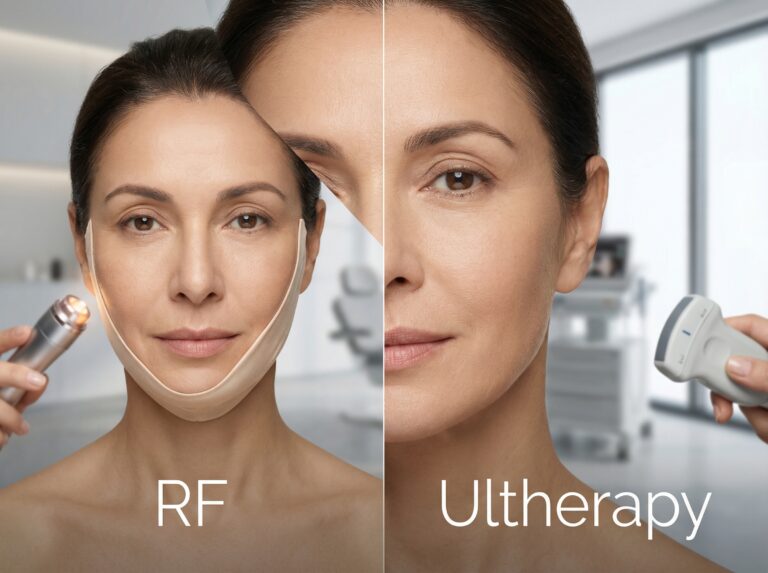
Thermage FLX stands as a prominent example of non-surgical skin tightening using monopolar radiofrequency (RF) energy. Unlike treatments that work solely on the surface, this technology delivers controlled heat deep into the dermis and the underlying web of collagen-rich connective tissue. The device sends radiofrequency energy through the skin, following a path to a grounding pad placed on the patient’s back or abdomen. This monopolar setup allows the heat to penetrate much deeper than bipolar devices, which confine energy between two nearby electrodes. This deep, uniform heating causes two simultaneous reactions. First, the existing collagen fibers immediately contract, providing a subtle, initial lift. Second, the heat creates a controlled thermal injury that triggers the body’s natural wound-healing process.
This healing response is the engine of long-term results. Over the following months, the body stimulates specialized cells called fibroblasts to produce new, healthy collagen. This process, known as neocollagenesis, gradually remodels the skin’s structural foundation from the inside out. The result is firmer, smoother skin with improved contours. The “FLX” designation signifies the fourth generation of this technology, manufactured by Solta Medical, which incorporates key upgrades for a better patient experience. It features a larger treatment tip that covers more surface area, reducing procedure time by about 25% compared to older versions. It also includes a vibrating handpiece to distract the nervous system and increase comfort, alongside an automated energy calibration system called AccuREP technology. This algorithm measures tissue impedance before each pulse to fine-tune energy delivery for consistent, precise heating.
Clinical evidence and extensive practitioner experience show that Thermage FLX is most effective for individuals with mild-to-moderate skin laxity. While some patients notice a temporary tightening effect immediately after the procedure, the most significant changes appear gradually. Visible improvements in skin tightness and contour typically emerge between two and six months post-treatment as new collagen forms. These improvements can continue to develop for up to a year. Beyond the face, jawline, and neck, the device is cleared for use on the body, with studies showing modest improvements in skin laxity on the abdomen, arms, thighs, and knees. However, body contouring results are generally less dramatic than surgical alternatives.
The safety profile of Thermage FLX is well-established. Common side effects are mild and temporary, including:
- Redness (erythema)
- Minor swelling (edema)
- A tingling or tender sensation
These typically resolve within a few hours to a couple of days. Less common risks include transient numbness or, in rare cases, blisters, burns, or surface irregularities if the treatment is performed incorrectly. There have been isolated reports of paradoxical fat atrophy, a rare contour change involving unintended volume loss.
This treatment is not suitable for everyone. Absolute contraindications include having an implanted electronic device like a pacemaker or defibrillator, being pregnant, or having an active skin infection or open wound in the treatment area. A relative contraindication is the recent use of systemic isotretinoin; many providers recommend a waiting period of at least six months to ensure proper healing.
A typical session for the full face lasts between 45 and 90 minutes. Most patients find the procedure tolerable with just the built-in vibration and cooling, but topical numbing cream is routinely applied about an hour beforehand for added comfort. In some cases, a provider may offer oral analgesics or a local nerve block for sensitive areas. The cost in the United States varies widely by location and provider expertise, generally ranging from $1,500 to $4,000 for the face and $2,000 to $6,000 or more for larger body areas. The ideal candidate has early signs of sagging and realistic expectations about the degree of improvement. Those with significant skin laxity are often better candidates for surgical procedures like a facelift. The results from a single Thermage FLX treatment are long-lasting but not permanent, as the aging process continues. Many clinicians recommend maintenance treatments every one to two years to preserve the benefits. You can learn more about the procedure from the official Thermage website.
Comparing microneedling, laser facials, chemical peels, and LED therapies
While Thermage FLX excels at tightening the foundational layers of your skin, a different set of tools is required to address concerns on the surface. Issues like texture, scarring, fine lines, and pigmentation require treatments that work on the epidermis and upper dermis. Let’s explore the most effective non-invasive options that focus on resurfacing and revitalizing skin quality.
Microneedling
Microneedling, also known as collagen induction therapy, uses a device with fine, sterile needles to create thousands of tiny, controlled punctures in the skin. This process triggers the body’s natural wound-healing response, which stimulates the production of new collagen and elastin.
It is primarily used for improving atrophic acne scars, fine lines, and overall skin texture. A typical treatment plan involves 3 to 6 sessions, spaced about 4 to 6 weeks apart, to allow for proper healing and collagen synthesis. After a session, patients can expect 1 to 3 days of redness and mild swelling, similar to a sunburn. One of the key advantages of microneedling is its safety across all Fitzpatrick skin types, as it carries a lower risk of causing post-inflammatory hyperpigmentation (PIH) compared to many heat-based laser treatments.
For enhanced results, especially for scarring, microneedling is often paired with platelet-rich plasma (PRP). Several randomized trials have shown this combination can offer a modest but significant improvement over microneedling alone. Results appear gradually over several months as new collagen forms, and the effects can be long-lasting with proper maintenance. Safety is paramount; always ensure your provider uses a sterile, single-use needle cartridge and performs a thorough pre-treatment evaluation, checking for any history of keloid scarring or active skin infections.
Laser and Light Therapies
Laser and light-based treatments use focused energy to target specific skin concerns with precision. They are generally categorized by how they interact with the skin tissue.
Non-Ablative Fractional Lasers
These lasers work by heating columns of tissue deep in the dermis without removing the top layer of skin. This heat stimulates collagen remodeling from within. They are effective for mild to moderate wrinkles, textural irregularities, and some types of scarring. A series of 3 to 5 treatments every 4 to 6 weeks is standard. Downtime is manageable, usually involving 2 to 7 days of redness and swelling. While safer for darker skin tones than their ablative counterparts, a skilled provider is essential to minimize the risk of pigmentation changes.
Ablative Fractional Lasers
Ablative lasers are more aggressive. They work by vaporizing microscopic columns of skin tissue, which prompts a powerful collagen-building response. This makes them highly effective for deep wrinkles, significant sun damage, and severe scars. Results can be dramatic, often after just 1 or 2 sessions spaced several months apart. However, this intensity comes with significant downtime, typically 1 to 3 weeks of healing followed by prolonged redness. These lasers carry a high risk of PIH in individuals with Fitzpatrick skin types IV through VI and require careful patient selection and pre-treatment skin priming.
Intense Pulsed Light (IPL)
IPL is not technically a laser but a device that delivers broad-spectrum light in powerful pulses. It is excellent for treating pigment-related issues, such as sun spots and freckles, and vascular concerns like broken capillaries and rosacea. A series of 3 to 5 sessions is common. Downtime is minimal; pigmented spots may darken for a few days before flaking off (“peppering”). IPL is best suited for lighter skin types (Fitzpatrick I-III), as the light can be absorbed by melanin in darker skin, increasing the risk of burns or pigmentation problems.
For all laser and light therapies, a pre-treatment consultation is critical. If you have a history of cold sores, your doctor will likely prescribe an antiviral medication to prevent an outbreak, especially with ablative treatments. Strict sun avoidance and diligent use of sunscreen are non-negotiable both before and after treatment to ensure safety and protect your results.
Chemical Peels
Chemical peels use an acidic solution to remove the outer layers of the skin, promoting regeneration and a smoother, more even complexion. Their strength and depth determine their effects and downtime.
- Superficial Peels use mild acids like glycolic or salicylic acid to gently exfoliate the outermost layer. They are great for improving dullness and mild acne, often requiring a series of treatments for best results with little to no downtime.
- Medium Peels, typically using trichloroacetic acid (TCA), penetrate deeper to address fine lines and moderate sun damage. They require about 3 to 7 days of downtime as the skin peels and renews.
- Deep Peels, using phenol, are the most aggressive option for deep wrinkles and severe photoaging. They offer dramatic results but involve a lengthy recovery of 2 to 3 weeks or more and carry significant risks, making them less common in modern practice.
The risk of PIH increases with peel depth, making superficial peels the safest option for darker skin tones. For medium or deep peels, pre-treating the skin for several weeks with a retinoid or a bleaching agent can help reduce this risk.
LED Phototherapy
Light Emitting Diode (LED) therapy is a gentle treatment that uses specific wavelengths of light to trigger cellular responses. Red light is known to reduce inflammation and stimulate collagen, while blue light targets acne-causing bacteria. It is used to calm inflammation, treat acne, and improve overall skin health. A typical course involves 8 to 12 sessions scheduled two or three times a week. There is no downtime, making it a convenient option. LED therapy is safe for all skin types and is an excellent complementary treatment to enhance recovery after procedures like microneedling, lasers, or peels. The results are subtle and cumulative, requiring ongoing sessions for maintenance.
Choosing treatments: Downtime, costs, and realistic results
Navigating the world of non-invasive treatments can feel like trying to choose from a menu with dozens of options, all promising great results. The key is to match the right treatment to your specific goals, lifestyle, and budget. This guide breaks down the decision-making process into four key areas: your primary concern, how much downtime you can handle, what you are prepared to invest, and how long you want the results to last.
First, let’s align treatments with your main objective. Your skin concerns will point you toward the most effective category of procedures.
- For Skin Laxity and Tightening: If your primary issue is loose, sagging skin on the face, around the eyes, or on the body, your best options are technologies that heat the deep layers of the skin. Monopolar radiofrequency, specifically Thermage FLX, is a leading choice here. It excels at stimulating collagen production deep within the dermis to create a subtle lift and improve contours over time.
- For Texture, Fine Lines, and Scars: When the goal is to smooth the skin’s surface, improve texture, or reduce the appearance of acne scars, you will want a resurfacing treatment. This category includes microneedling, which creates micro-injuries to trigger collagen repair, and fractional lasers (both ablative and non-ablative), which create microscopic thermal zones to remodel the skin. Medium-depth chemical peels also fall into this group, removing damaged outer layers of skin.
- For Pigmentation, Redness, and Overall Tone: To address sun spots, uneven skin tone, or redness, the focus is on more superficial treatments. Superficial chemical peels, light laser facials, and Intense Pulsed Light (IPL) are effective at targeting pigment and vascular issues with minimal disruption to the skin’s surface.
Once you have identified the right category, downtime becomes the next practical filter. Your ability to take time off for recovery will significantly narrow your choices.
- No Downtime: LED therapy is the only treatment with virtually zero recovery time. You can have a session and go right back to your day.
- Minimal Downtime (0–3 days): This group is perfect for a long weekend recovery. It includes Thermage FLX, which typically involves mild redness and swelling for a day or two. Superficial chemical peels and light laser facials also fit here, often resulting in only minor pinkness or light flaking.
- Moderate Downtime (3–7 days): If you can take a week to recover, your options expand. Microneedling and medium-depth chemical peels fall into this category, usually causing redness, swelling, and noticeable peeling that resolves within five to seven days.
- Significant Downtime (7–21+ days): The most transformative results often require the longest recovery. Fractional ablative lasers and deep chemical peels demand a commitment of one to three weeks or more for initial healing, with residual redness that can last for months.
Budget and the longevity of results are closely linked. While some treatments have a lower per-session cost, they may require more frequent visits, potentially costing more in the long run. As noted, a single full-face Thermage FLX session can range from $1,500 to $4,000, but its results can last one to two years. In contrast, a series of six microneedling sessions might cost a similar total amount but deliver results that last for several months before maintenance is needed. Superficial peels and LED therapy are the most affordable per session (with LED sometimes as low as $25-$150), but their effects are more temporary, lasting weeks to a few months, making them better for ongoing maintenance or a pre-event glow.
If you have multiple concerns, the sequence of treatments matters. A cardinal rule in dermatology is to address active inflammation and pigmentation first. For example, if you have both sun damage and skin laxity, your provider will likely recommend treating the pigmentation with IPL or light peels first. Once your skin tone is more even and any inflammation is controlled, you can proceed with a tightening procedure like Thermage FLX. Staggering treatments is crucial for safety; a common approach is to wait at least four to six weeks between more intensive procedures to allow the skin to fully heal and avoid overwhelming its repair mechanisms.
For clinicians, ensuring patient satisfaction starts with a thorough consultation. Standardized baseline photography is non-negotiable for tracking progress objectively. Informed consent must be comprehensive, covering not just the expected outcomes and downtime but also potential complications, alternative treatments (including surgical options), and a transparent breakdown of all costs. This builds trust and helps manage expectations, which is the foundation of a successful outcome.
Frequently Asked Questions
To help clear up some common patient uncertainties, here are answers to frequently asked questions. Remember, this information is for guidance and does not replace a personalized consultation with your provider.
Is Thermage FLX painful and is anesthesia required?
Patient experiences vary, but Thermage FLX is designed to be more comfortable than older versions. It uses a vibrating handpiece and an integrated cooling system to manage discomfort during the treatment. Most providers apply a topical numbing cream about an hour before the procedure to the treatment area. While you will feel a deep heating sensation with each pulse of energy, it is generally described as tolerable and brief. Oral pain medication is sometimes offered beforehand for added comfort, but general anesthesia is not required for this non-invasive procedure.
How many Thermage treatments are typically needed?
For most people seeking treatment for mild to moderate skin laxity, a single Thermage FLX session is all that is needed to start the collagen-rebuilding process. The results appear gradually over two to six months as your body produces new collagen. To maintain the effects, some patients choose to have a follow-up treatment every 12 to 24 months, depending on their individual skin aging process and aesthetic goals. This approach helps preserve the initial improvements over the long term.
Can Thermage replace a facelift?
No, Thermage FLX cannot replace a surgical facelift. It is an excellent non-surgical option for individuals with mild to moderate skin laxity who want noticeable tightening and contouring without the downtime and risks of surgery. A facelift physically removes excess skin and repositions underlying tissues, providing a more dramatic and long-lasting result for significant sagging. Think of Thermage as a way to firm and rebuild collagen to improve skin quality, while a facelift is a structural reconstruction for more advanced signs of aging.
Is Thermage safe for darker skin types?
Yes, Thermage is generally considered safe for all skin types, including darker Fitzpatrick skin types (IV-VI). The radiofrequency energy used in Thermage targets deeper tissue layers based on their electrical resistance, not on pigment like many lasers do. This mechanism significantly lowers the risk of post-inflammatory hyperpigmentation (PIH), or dark spots, which can be a concern with some light-based therapies in skin of color. Clinical guidance through 2025 supports its use across diverse skin tones when performed by an experienced and properly trained provider.
How does microneedling compare to fractional lasers for acne scarring?
Both treatments can be effective, but they work differently and have distinct risk profiles. Fractional lasers often produce more significant improvement in fewer sessions by creating controlled thermal injury zones in the skin, which stimulates robust collagen remodeling. However, they typically come with longer downtime (up to three weeks for ablative types) and a higher risk of pigmentation changes, especially in darker skin. Microneedling offers a safer profile for skin of color, with less downtime (typically 3 to 7 days of redness). It may require more sessions, often 3 to 6, to achieve results comparable to a laser treatment. The best choice depends on your scar severity, skin type, and tolerance for downtime.
Can treatments be combined in one visit?
Generally, it is not recommended to combine aggressive treatments in the same area during a single visit. Stacking procedures like a chemical peel and a laser can increase the risk of inflammation and complications. However, you might be able to treat different concerns on the same day, such as having LED therapy after microneedling to help calm inflammation. Providers usually recommend staggering treatments, leaving several weeks to a month between sessions to allow the skin to heal properly and safely.
What are signs of complications and when to contact your provider?
While serious complications are rare with a skilled provider, you should contact their office immediately if you experience any of the following after a procedure:
- Pain that is severe or worsening instead of improving.
- Signs of infection, such as pus, yellow crusting, or a foul odor.
- Blistering, burns, or open sores in the treated area.
- Excessive or prolonged swelling and redness that lasts beyond the expected downtime.
- Any unexpected changes in skin color or texture, like scarring.
Your provider should give you an after-hours contact number for emergencies.
What pre-treatment medications or supplements should be stopped?
To reduce the risk of bruising, bleeding, and other complications, your provider will likely ask you to stop certain things about 7 to 14 days before your procedure. This commonly includes:
- Blood-thinning medications like aspirin and NSAIDs (ibuprofen, naproxen).
- Supplements known to increase bleeding risk, such as fish oil, vitamin E, ginkgo biloba, and garlic.
- Topical retinoids (like tretinoin) for a few days prior to treatment to reduce sensitivity.
- For more intensive procedures, you may need to have stopped systemic retinoids like isotretinoin for at least 6 months, based on clinical consensus through 2025.
Always disclose your full medical history and all medications and supplements you take during your consultation.
Final takeaways and guidance for patients
Navigating the world of non-invasive skin rejuvenation can feel overwhelming, but the power to make an informed decision is entirely in your hands. This journey is deeply personal. The right choice for you depends on your unique skin, your aesthetic goals, your budget, and your tolerance for downtime. The most successful outcomes begin with a clear understanding of what these technologies can and cannot do. Think of these treatments as ways to restore and refresh, not to completely transform. They work with your own biology to produce gradual, natural-looking improvements. A treatment like Thermage FLX can offer subtle tightening and contouring, but it will not deliver the dramatic lift of a surgical facelift. Setting realistic expectations is the first step toward satisfaction.
Your safety is the absolute priority. This begins with choosing the right provider. Look for a board-certified dermatologist or plastic surgeon, or a highly trained and credentialed practitioner working under direct physician supervision. An expert provider does more than just operate a machine; they perform a thorough pre-treatment screening, assess your skin anatomy, and understand the physics of each device. They know which modality is safest and most effective for your specific skin type, particularly for Fitzpatrick types IV through VI, where the risk of post-inflammatory hyperpigmentation is higher with certain lasers. A skilled practitioner will refuse to perform a procedure if you are not a suitable candidate, prioritizing your well-being over a sale. They will also emphasize the non-negotiable role of sun protection before and after any procedure to protect your investment and prevent complications.
Often, a single concern like skin laxity is accompanied by others, such as uneven texture or sun spots. For this reason, many patients achieve the best results through a staged or combined approach. You might start with Thermage FLX to build a foundation of tighter, firmer skin and then, several weeks later, address surface-level concerns with a series of light chemical peels or microneedling sessions. A comprehensive treatment plan, developed with your provider, can address multiple layers of the skin for a more harmonious and complete result. This strategic layering of treatments allows each modality to work to its full potential without overwhelming your skin’s healing capacity.
Before you commit to any procedure, use this simple checklist to ensure you are moving forward with confidence and clarity.
- Documented Consultation. Did you have a thorough consultation where your goals, medical history, and all options were discussed?
- Before-and-After Photos. Has the clinic committed to taking high-quality, standardized photos before your treatment to track your progress?
- Clear, Itemized Quote. Have you received a written quote that details all costs, including any follow-up appointments or potential touch-ups?
- Written Post-Care Instructions. Will you be provided with clear, written instructions for what to do and what to avoid after your treatment?
- Emergency Contact Information. Do you have a direct number to call if you experience unexpected side effects or have urgent questions after hours?
Finally, remember that achieving your initial results is just the beginning. Maintaining them requires a consistent commitment to skin health. The single most important thing you can do is practice diligent sun protection every single day. A broad-spectrum sunscreen with an SPF of 30 or higher is essential to prevent new sun damage and protect the collagen you’ve worked so hard to build. Incorporating a topical retinoid into your nightly routine, as recommended by your provider, can further support collagen production and improve skin texture. To preserve the improvements from treatments like Thermage FLX, plan for periodic touch-up sessions every 12 to 24 months. This proactive approach ensures your results last, keeping your skin looking its best for years to come.
References
- Solta Medical Receives FDA 510(k) Clearance for Thermage FLX … — (NYSE: VRX and TSX: VRX) ("Valeant"), announced today that its Thermage FLX™ System received 510(k) clearance from the U.S. Food and Drug …
- [PDF] K170758.pdf – accessdata.fda.gov — 0910-0120. Expiration Date: January 31, 2017. See PRA Statement below. 510(k) Number (if known). K170758. Device Name. Thermage FLX System.
- [PDF] December 20, 2023 Tentech Inc. Do Kim CEO BT Solutions, Inc. Unit … — Thermage FLX System are indicated for use in: • Dermatologic and general surgical procedures for electrocoagulation and hemostasis;. Output …
- Solta Medical Receives FDA 510(k) Clearance for Thermage FLX … — The new Thermage FLX system is expected to be commercially available during the last quarter of 2017. About Solta Medical Solta Medical, a …
- 510(k) Premarket Notification – FDA — Date Received, 03/13/2017. Decision Date, 09/22/2017. Decision, Substantially Equivalent (SESE). Regulation Medical Specialty, General …
- NCT07187297 | A Prospective Controlled Study to Evaluate the … — Approximately 6 months (26 weeks) Purpose is to demonstrate superiority of treatment with the Thermage FLX System compared to untreated control …
- Thermage | Skin Tightening Treatment — Thermage helps address the visible signs of aging skin. It helps smooth, tighten and contour skin without surgery or needles.
- The Non-Surgical Solution for Skin Tightening (Thermage FLX) — Since its approval by the US Food and Drug Administration for rhytids … FDA approved machine for tightening the upper and lower eyelids.] …
Legal Disclaimers & Brand Notices
The information provided in this article is for educational and informational purposes only and does not constitute medical advice. The content is not intended to be a substitute for professional medical advice, diagnosis, or treatment. Always seek the advice of your physician or other qualified health provider with any questions you may have regarding a medical condition. Never disregard professional medical advice or delay in seeking it because of something you have read in this article.
All product names, logos, and brands mentioned in this article are the property of their respective owners. All company, product, and service names used are for identification purposes only. Use of these names, logos, and brands does not imply endorsement.