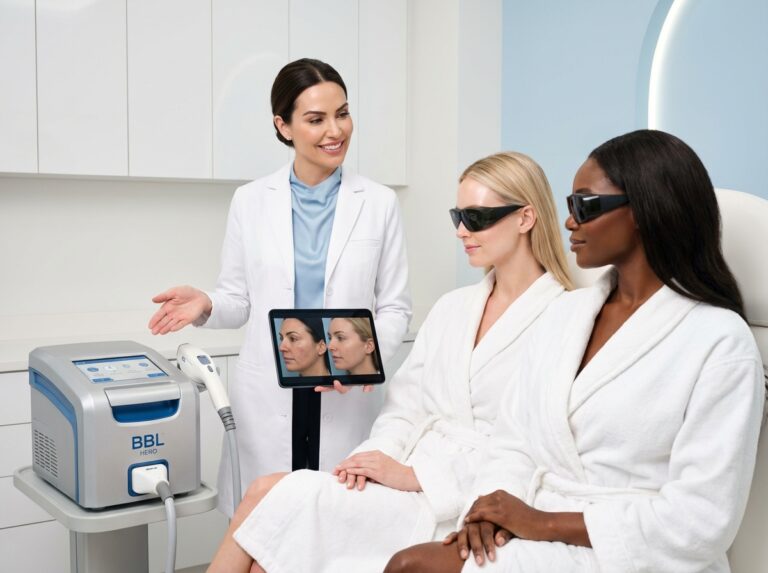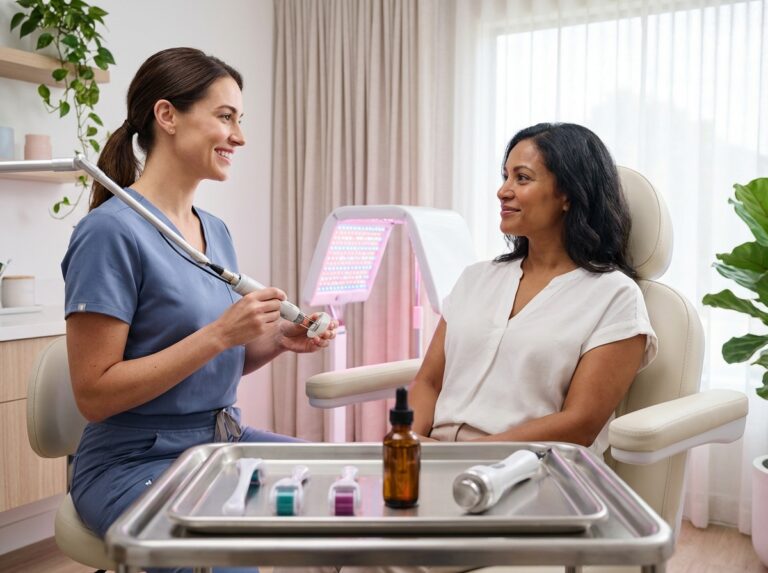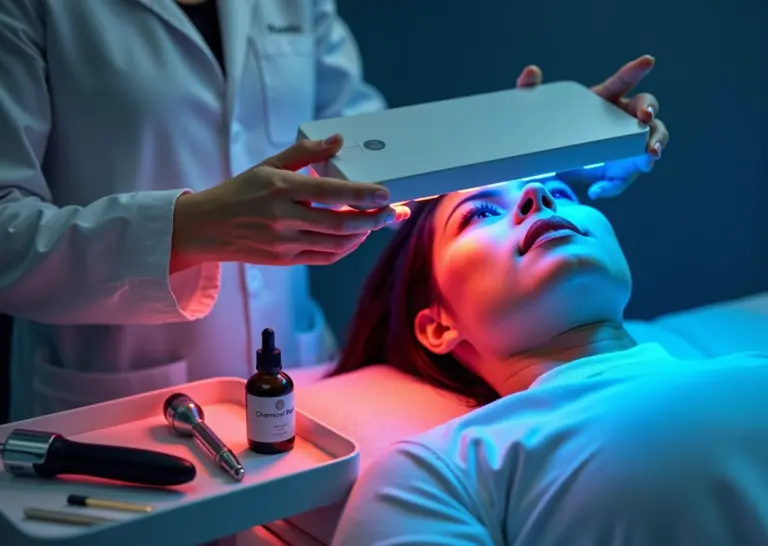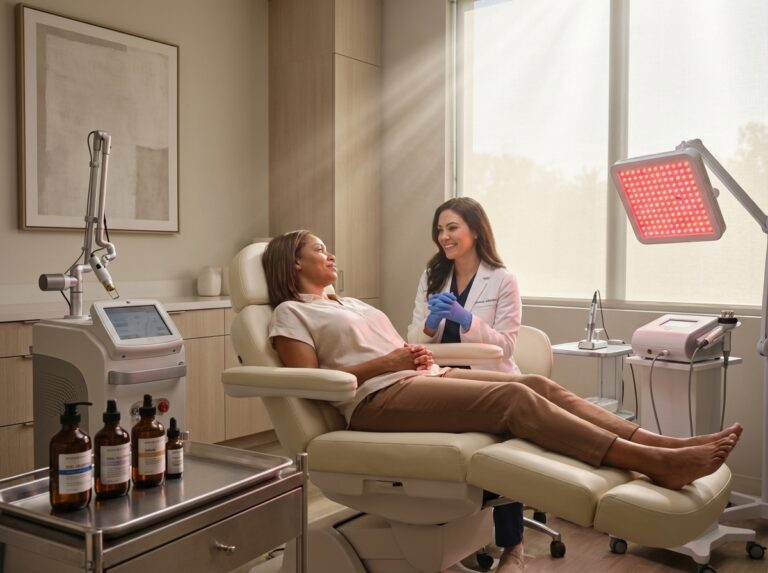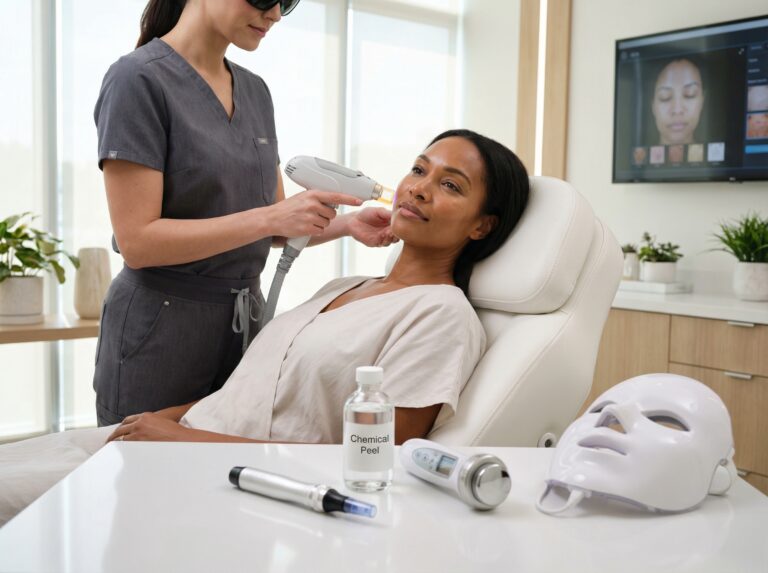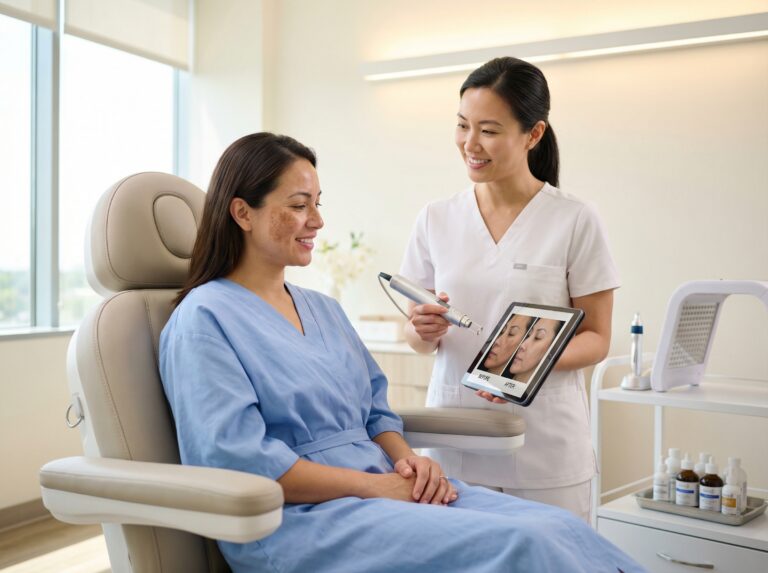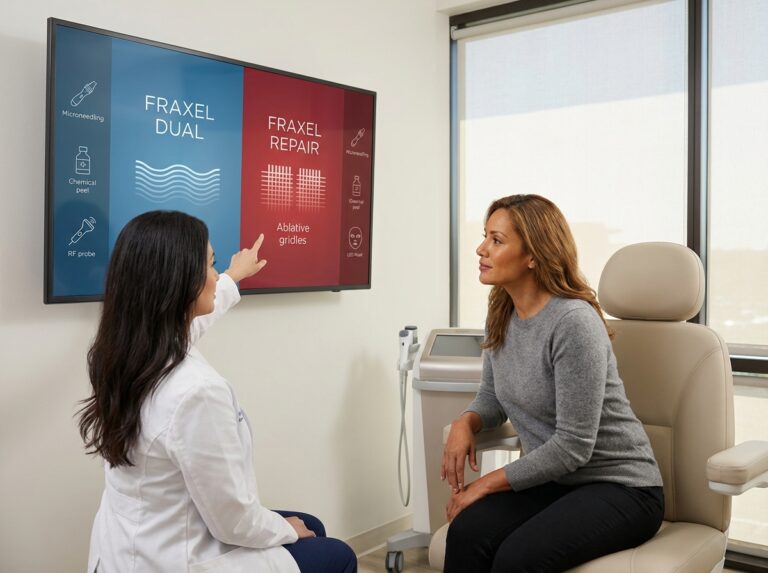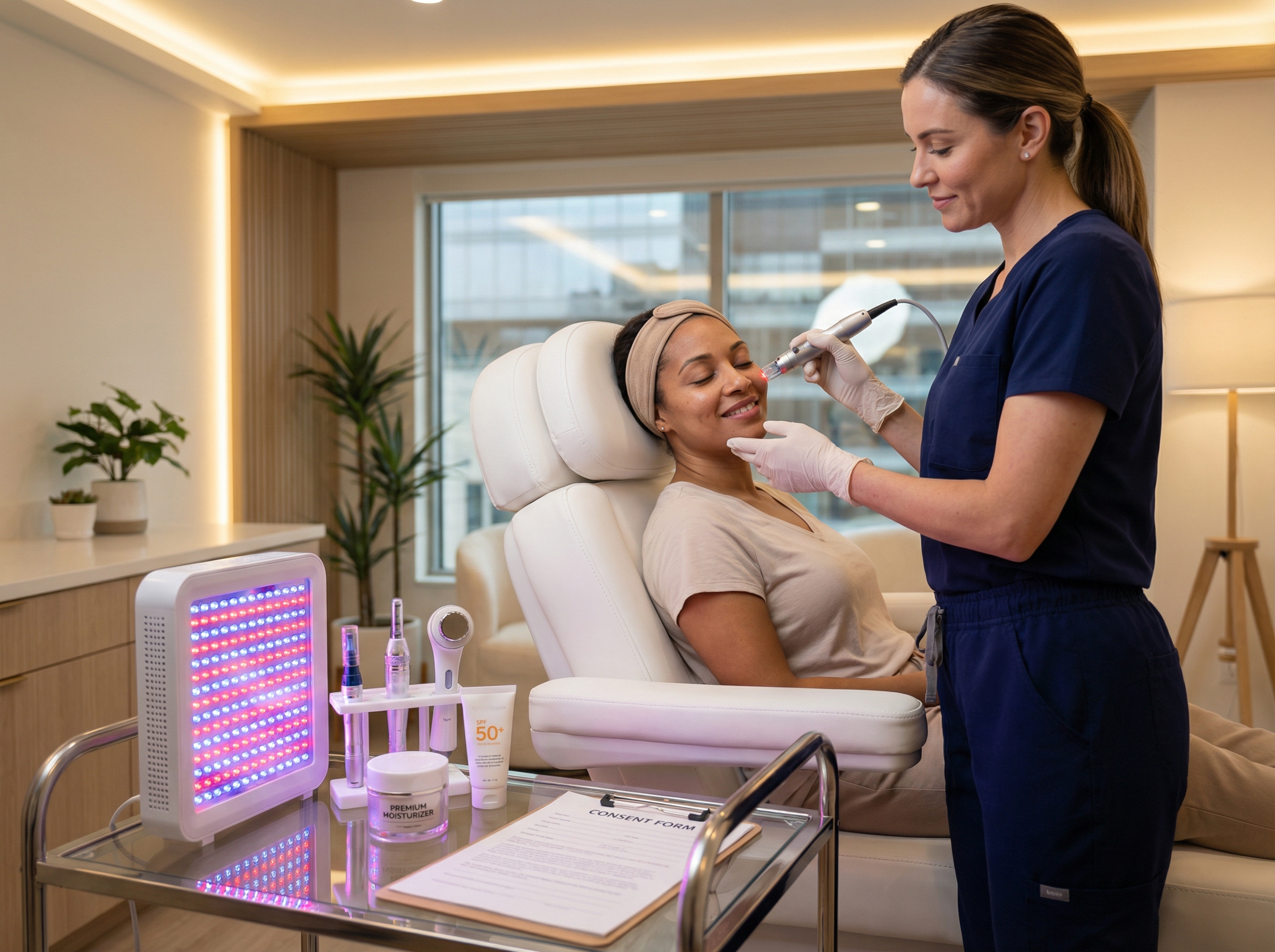
Non‑invasive skin rejuvenation offers prevention-focused options that smooth texture, boost collagen, and maintain a youthful complexion without surgery. This article explains Clear + Brilliant (the so‑called “baby Fraxel”) alongside microneedling, chemical peels, radiofrequency, and LED therapy — covering who benefits, expected downtime, clinical results, safety considerations, and practical pre/post‑care for U.S. patients.
How non‑invasive skin rejuvenation works and who is a candidate
To understand why treatments like Clear + Brilliant or microneedling work, you have to understand how your skin heals. The biological principle behind almost every effective rejuvenation procedure is controlled microinjury. We intentionally damage the tissue in a very specific, calculated way. This triggers the body’s natural wound-healing cascade.
When a laser beam or a needle penetrates the dermis, your body perceives an emergency. It rushes to repair the “wound” by releasing growth factors. This activity stimulates fibroblasts, the cells responsible for producing collagen and elastin. The result is a remodeling of the skin structure. Old, damaged collagen is replaced by fresh, organized fibers. This process improves texture and firmness over time.
Mechanisms of Action for Different Modalities
Different devices achieve this stimulation through different methods.
Fractional Lasers
These devices deliver energy in a pixelated pattern. They treat only a fraction of the skin surface at a time. This leaves small bridges of untreated tissue between the microscopic treatment zones. These intact bridges allow for rapid healing.
- Non-ablative fractional lasers: Devices like Clear + Brilliant heat the underlying tissue without destroying the surface layer of the skin. They create columns of thermal injury. The surface remains intact, which keeps downtime minimal. This is why it is often called a “baby Fraxel” or a starter laser.
- Ablative fractional lasers: These vaporize the tissue. They remove the top layer of the epidermis and heat the dermis. The results are more dramatic, but the recovery is significantly longer.
Microneedling and RF Microneedling
Standard microneedling uses physical needles to create tiny channels in the skin. It is a mechanical injury. This breaks up old scar tissue and stimulates collagen production. Radiofrequency (RF) microneedling adds a thermal element. The needles deliver heat energy directly into the dermis. This produces a stronger tightening effect than needles alone.
Chemical Peels
Peels use acids to dissolve the bonds between skin cells. This forces the skin to shed its outer layers.
- Superficial peels: These affect only the epidermis. They are used for brightness and minor texture issues.
- Medium and deep peels: These penetrate the papillary or reticular dermis. They cause significant protein coagulation and subsequent peeling. They are effective for deeper wrinkles and pigment but carry higher risks.
Radiofrequency (RF) Skin Tightening
Non-invasive RF devices use bulk heating. They do not puncture the skin. They heat the collagen fibers to a specific temperature where they contract. This provides an immediate tightening effect. Over the following months, the body produces new collagen in response to the thermal stress.
LED Phototherapy
This modality is different. It does not rely on injury. It uses photobiomodulation. Specific wavelengths of light, usually red or near-infrared, interact with the mitochondria in your cells. This increases ATP production. It gives cells more energy to function efficiently. It reduces inflammation and supports the collagen production process initiated by other treatments.
Ideal Candidates for Prevention versus Correction
Patient selection depends heavily on age and the severity of skin concerns. We generally divide candidates into two categories.
The Prevention Profile
These patients are typically in their late 20s to late 30s. They have early signs of aging. Concerns usually include dullness, minor textural irregularities, enlarged pores, and very fine lines. The goal is “prejuvenation.”
- Best options: Clear + Brilliant, superficial chemical peels, and standard microneedling.
- Why: These treatments maintain collagen levels. They prevent deep wrinkles from forming. The downtime is minimal, fitting into an active lifestyle.
The Correction Profile
These patients are typically in their 40s, 50s, or older. They present with static wrinkles, visible sun damage, laxity, or acne scarring.
- Best options: RF microneedling, stronger non-ablative lasers (like Fraxel Dual), or ablative resurfacing.
- Why: Prevention tools are too gentle to reverse established damage. Deeper structural remodeling is required to see visible changes.
Contraindications and Safety Considerations
Not everyone is a candidate for these procedures. Ignoring contraindications can lead to permanent damage.
Isotretinoin Use
Recent use of systemic isotretinoin (Accutane) is a major red flag. This medication alters wound healing. Most dermatologists and plastic surgeons require a washout period. The standard guidance is to wait 6 to 12 months after stopping the medication before undergoing any invasive resurfacing. Performing lasers or deep peels too soon can result in severe scarring.
Pregnancy and Breastfeeding
Hormonal changes during pregnancy can cause pigmentation issues like melasma. Energy devices can exacerbate this. There is also a lack of safety data on how anesthetics or stress from the procedure affect the fetus. Most providers will not treat pregnant or breastfeeding patients with lasers, chemical peels, or RF devices. LED therapy is sometimes permitted, but you must clear it with your OB-GYN.
Active Infections and Medical Conditions
You cannot treat skin with an active infection. This includes cold sores (herpes simplex), impetigo, or severe active acne. The procedure could spread the infection. Patients with a history of keloid scarring should avoid deep thermal or mechanical injuries. Uncontrolled diabetes can also impair healing and increase infection risk.
Treating Skin of Color Safely
Patients with higher Fitzpatrick skin types (IV-VI) have more melanin. Melanin absorbs light energy. This makes certain lasers risky. If the laser targets melanin or generates too much heat, it can cause burns or Post-Inflammatory Hyperpigmentation (PIH).
Safe Approaches for Darker Skin
- Avoid high-heat lasers: Aggressive ablative lasers are often unsafe.
- Use color-blind technologies: Radiofrequency and microneedling are generally safer. They bypass the melanin-rich epidermis and deliver energy directly to the dermis.
- Lower energy settings: When using lasers like non-ablative fractional diode lasers, providers often use lower energy settings. They may increase the number of passes to compensate.
- Test spots: A provider should always perform a test spot in an inconspicuous area. They wait 48 to 72 hours to see how the skin reacts before treating the full face.
- Pre-treatment protocols: It is common to prescribe a tyrosinase inhibitor or hydroquinone for several weeks before the treatment. This suppresses melanin production and reduces the risk of PIH.
Choosing a Qualified Provider in the USA
The regulatory landscape in the United States varies by state. In some states, only a doctor can fire a laser. In others, a technician can do it with minimal supervision. This lack of uniformity creates risk for the patient.
Credentials Matter
Look for a board-certified dermatologist or a board-certified plastic surgeon. These physicians have the deepest understanding of skin physiology. If you choose a medical spa, ensure there is a physician on-site who oversees protocols.
Device Authenticity
Ensure the facility uses FDA-cleared devices. There are many counterfeit machines on the market that do not deliver consistent energy. Ask about the specific device being used. A reputable provider will be transparent about their technology and their training.
Consultation is Key
A legitimate provider will always start with a consultation. They will review your medical history. They will assess your skin type. They will tell you “no” if a procedure is not right for you. Be wary of places that allow you to book a laser treatment without a prior assessment.
Internal links to specific procedure pages or before-and-after galleries on a clinic’s website help patients visualize realistic outcomes. Always verify that the information you are reading aligns with current FDA clearances and local medical regulations.
Comparing Clear + Brilliant microneedling chemical peels RF and LED for indications downtime and results
Choosing the right skin rejuvenation treatment often feels like navigating a maze of brand names and technical jargon. You might know you want to prevent aging or correct texture, but the gap between a gentle laser and a deep chemical peel is massive in terms of recovery and risk. We will break down exactly how Clear + Brilliant compares to microneedling, radiofrequency, and other modalities so you can match your skin concerns to the right technology.
Clear + Brilliant for Prevention and Early Maintenance
Clear + Brilliant is frequently marketed as a starter laser or “baby Fraxel” because it bridges the gap between facials and aggressive resurfacing. It uses a fractional diode laser to create microscopic treatment zones in the upper layers of the skin. This stimulates the body to replace damaged tissue with healthier tissue without the heavy downtime associated with stronger lasers.
This device is ideal for patients in their late 20s to 40s who want to address early fine lines, pore size, and uneven tone. It is a prevention strategy rather than a major correction tool. A standard series involves 3 to 6 treatments spaced 2 to 4 weeks apart. The social downtime is minimal. You will look red and feel like you have a mild sunburn for about 4 to 6 hours. By the next day, the redness usually fades, and you can wear makeup. Your skin will feel like sandpaper for a few days as the microscopic debris exfoliates, revealing a glow within one to two weeks.
Cost in the United States typically ranges from $300 to $800 per session. Since it is less aggressive, results are cumulative. You need to stick to the schedule to see the payoff. Clear + Brilliant Ideal Age Group data suggests it works best for those proactive about preventing early signs of aging before deep wrinkles set in.
Comparing Modalities Indications and Downtime
To make an informed choice, you must understand how other treatments stack up against Clear + Brilliant regarding recovery time and intensity.
| Treatment | Primary Indications | Social Downtime | Typical Series |
|---|---|---|---|
| Clear + Brilliant | Early aging, pores, tone maintenance | 0 to 24 hours (redness) | 3 to 6 sessions |
| Microneedling | Acne scars, texture, fine lines | 2 to 4 days (redness, mild swelling) | 3 to 6 sessions |
| RF Microneedling | Skin laxity, deep scars, contouring | 3 to 7 days (grid marks, swelling) | 1 to 3 sessions |
| Non-Ablative Laser (Fraxel) | Sun damage, moderate wrinkles, melasma | 3 to 5 days (redness, bronzing, flaking) | 3 to 5 sessions |
| Ablative Laser (CO2) | Deep wrinkles, severe scarring | 10 to 14 days (oozing, raw skin) | 1 session |
| Medium Chemical Peel | Pigmentation, sun spots | 5 to 10 days (visible peeling) | 1 to 3 sessions |
Microneedling and RF Microneedling
Standard microneedling creates physical micro-injuries to trigger collagen production. It is excellent for textural issues and acne scarring but does less for tightening. RF microneedling adds radiofrequency energy to the needles, delivering heat deep into the dermis. This heat causes collagen contraction and remodeling, making it superior for skin laxity and deeper acne scars.
The trade-off is pain and cost. RF microneedling is significantly more uncomfortable than standard microneedling and usually requires strong topical numbing or even nitrous oxide. Costs for RF microneedling in the US range from $800 to $3,000 per session, compared to $200 to $700 for standard microneedling. Results from RF treatments take longer to appear, typically 3 to 6 months, as new collagen forms.
Chemical Peels and LED Therapy
Chemical peels remain the gold standard for surface pigment. While lasers use heat, peels use acid to lift pigment chemically. A superficial peel has zero downtime but requires repetition. A medium-depth TCA peel will cause your skin to turn brown and peel off in sheets over a week. This is often more effective for widespread sun damage than a gentle laser but requires you to hide socially for several days.
LED phototherapy is a non-thermal, non-invasive adjunct. It does not injure the skin. Instead, it uses specific wavelengths of light to reduce inflammation or kill acne bacteria. It is best used to speed up healing after other procedures or as a weekly maintenance tool. Do not expect structural changes like lifting or deep wrinkle reduction from LED alone.
Safety and Pre-Post Care Protocols
Safety begins before you enter the clinic. For any heat or light-based treatment, sun avoidance is mandatory for 2 to 4 weeks prior. Tanned skin absorbs laser energy differently, drastically increasing the risk of burns and hyperpigmentation. You must stop using retinoids, glycolic acid, and salicylic acid 5 to 7 days before your appointment to prevent irritation.
If you have a history of cold sores, notify your provider. Lasers and peels can trigger a breakout, so antiviral prophylaxis is typically prescribed to start one day before treatment.
Immediate post-care focuses on cooling and protection. Use a gentle cleanser and a bland moisturizer or barrier repair cream. Avoid active ingredients like Vitamin C or retinol until the skin is fully healed. Broad-spectrum SPF 30 or higher is non-negotiable. If you experience prolonged redness, blistering, or signs of infection like pus or extreme heat, seek medical attention immediately.
Considerations for Darker Skin Tones
Patients with darker skin tones (Fitzpatrick types IV-VI) face a higher risk of Post-Inflammatory Hyperpigmentation (PIH). The heat from lasers can trigger melanin production, leaving dark spots behind.
Protocols must be adjusted. Clear + Brilliant is generally safe for darker skin when used at lower settings, but providers often prefer the Perméa handpiece which is less thermal. RF microneedling is often safer than lasers for darker skin because the energy is delivered deep in the dermis, bypassing the melanin-rich surface.
Pre-treatment with a tyrosinase inhibitor or hydroquinone for 4 to 8 weeks is common practice to suppress pigment production before the procedure. Always ask if your provider has specific experience treating skin of color and request a test spot if you are unsure.
Practical Decision Guide
Choosing the right treatment depends on your primary goal and your available downtime.
Choose Clear + Brilliant if you are looking for “prejuvenation.” You have early signs of aging, want to maintain a youthful glow, and cannot afford days of peeling or redness. It is the entry-level choice for long-term maintenance.
Choose Microneedling or RF Microneedling if your main concern is texture, acne scars, or mild laxity. If you have darker skin, RF microneedling is often a safer bet for deep remodeling than aggressive lasers.
Choose Chemical Peels if you have stubborn surface pigmentation or melasma. Peels often clear pigment better than heat-based devices which can sometimes flare melasma.
Choose LED Therapy if you want to boost skin health without any trauma, or to help calm the skin after a more aggressive treatment.
Insurance typically does not cover these cosmetic procedures. Costs vary based on provider expertise, geographic market, and the specific device model used. Always verify that your provider is using FDA-cleared devices and has the appropriate medical credentials.
Frequently Asked Questions about non‑invasive skin rejuvenation
We have covered the science, the comparisons, and the downtime realities in the previous sections. But when you are actually sitting in the waiting room or looking at your bank account, practical questions come up. I have compiled the most frequent questions I hear from readers and patients regarding Clear + Brilliant, microneedling, and other non-invasive options. These answers are based on current U.S. clinical standards as of late 2025.
What is Clear + Brilliant and how is it really different from Fraxel?
Think of Clear + Brilliant as the entry-level option in the fractional laser family. It is often called “baby Fraxel” for a reason. Both devices are made by Solta Medical, but they serve different purposes. The Clear + Brilliant Laser is a gentle and effective way to address and prevent early signs of skin aging by targeting roughly 20% of the skin’s surface area with lower energy. It creates microscopic treatment zones to replace damaged skin with healthy tissue, but it keeps the top layer of skin mostly intact.
Fraxel (specifically the re:store 1550nm or the Dual) is the big brother. It targets closer to 40% of the surface and penetrates deeper. While Fraxel is better for correcting established sun damage or deeper acne scars, it comes with significant swelling and peeling that lasts a week. Clear + Brilliant is for prevention and maintenance—you do it to keep the skin fresh without taking time off work.
How many sessions will I need and how long until I see results?
One session rarely cuts it. For Clear + Brilliant, the standard protocol is a series of 3 to 6 treatments spaced about 2 to 4 weeks apart. You might see a “glow” and softer texture about a week after your first session, but don’t mistake that for the final result. Real collagen remodeling is a slow biological process.
The structural changes—firmer skin and reduced pore size—typically become visible around 3 months after you start your series. For microneedling, the timeline is similar. If you are treating acne scars, you might need 3 to 6 sessions spaced 4 to 8 weeks apart, with results improving up to six months after your last visit.
What is the typical downtime and when can I wear makeup?
This is where the “non-invasive” label gets tricky. “No downtime” doesn’t mean you look perfect immediately.
- Clear + Brilliant: You will look like you have a moderate sunburn for 4 to 6 hours. By the next morning, the redness usually fades to a pinkish hue. You can wear mineral makeup the next day (24 hours post-treatment). Your skin will feel like sandpaper for about 3 to 5 days as the microscopic crusts shed, but this is invisible to others.
- Microneedling: Expect 24 to 72 hours of redness, depending on the needle depth. You should avoid makeup for at least 24 hours to keep the micro-channels clean and avoid infection.
- Chemical Peels: Superficial peels might just leave you dry. Medium peels will cause actual shedding starting around day 3 and lasting up to day 7 or 10. No makeup until the peeling stops.
How much pain should I expect?
It is not painless, but it is manageable. Most clinics in the U.S. apply a topical numbing cream (usually a lidocaine mix) for 20 to 30 minutes before the procedure. With numbing, Clear + Brilliant feels like increased heat or static electricity snapping against the skin. Without numbing, it is uncomfortable.
Microneedling feels like a vibration or scratching sensation. RF microneedling is more intense due to the heat component; some devices like Morpheus8 can be quite painful without adequate numbing or nitrous oxide (laughing gas). If you have a low pain threshold, discuss nerve blocks or stronger numbing options during your consultation.
Can treatments be combined?
Stacking treatments is standard practice in 2025 to maximize results. A very common and safe combination is performing Clear + Brilliant followed immediately by an LED light therapy session. The LED helps bring down inflammation and speeds up recovery.
Another common stack is microneedling with PRP (Platelet-Rich Plasma). The plasma is applied while the micro-channels are open to boost healing. However, be careful with chemical peels. You generally should not do a peel and a laser in the same session unless your provider is following a very specific, advanced protocol. Usually, you want to space these out by 2 to 4 weeks.
What are the main risks and how are complications treated?
Even with “gentle” lasers, things can happen. The most common risk is PIH (dark spots), which we treat with topical lighteners like hydroquinone or cysteamine. There is also a risk of triggering a herpes simplex (cold sore) outbreak if you carry the virus. If you have a history of cold sores, you must tell your doctor so they can prescribe prophylactic antiviral medication (like valacyclovir) to start the day before treatment.
Bacterial infections are rare but possible if tools aren’t sterile or if you touch your face with dirty hands post-treatment. If you see pus, spreading redness, or feel excessive heat after 24 hours, call your doctor immediately.
Are there home-use devices that match in-office efficacy?
Honest answer: No. Home devices (LED masks, home lasers) are regulated by the FDA to be much lower power than in-office devices to ensure consumer safety. A home laser might deliver a fraction of the energy of a professional Clear + Brilliant. They are excellent for maintenance and can support your results between professional visits, but they cannot replicate the depth or intensity of a medical-grade treatment. Use them as a supplement, not a replacement.
Conclusions and practical next steps for patients and providers
We have covered a significant amount of ground regarding the current landscape of non-invasive skin treatments. You now understand the mechanics behind fractional lasers, the collagen-stimulating power of microneedling, and the surface-level benefits of chemical peels. The sheer volume of options available in the United States in late 2025 can feel overwhelming. The goal of this final section is to organize that information into a usable strategy. We need to move from theory to practice so you can make decisions that protect your skin and your wallet.
Practical Checklist for Patients
Preparation determines the success of your consultation. You should not walk into a clinic without knowing your history and your limits. Use this checklist to prepare for your appointment.
- Medication List: Write down everything. Accutane (isotretinoin) usually requires a 6 to 12 month wait before laser treatments. Blood thinners or heavy NSAID use can increase bruising.
- Skin History: Be honest about cold sores (HSV). Lasers can trigger outbreaks, so you may need a prophylactic antiviral prescription. Mention any history of keloid scarring.
- Current Routine: Stop using retinoids, glycolic acid, and salicylic acid 3 to 7 days before your treatment. Bring a list of what you use so the provider can tell you when to restart.
- Lifestyle Constraints: Be clear about your downtime. If you cannot be red for 24 hours, say so. If you work outdoors, schedule your treatment during a time when you can stay inside.
- Budget and Timeline: Results take time. Collagen remodeling peaks at 3 to 6 months. Do not expect a miracle in one day. Plan for a series of 3 to 6 treatments for optimal results.
It is also helpful to know that this treatment is particularly ideal for adults in their 20s through 50s who are proactive about preventing aging, so framing your request around “prevention” helps the provider understand your mindset.
Practical Checklist for Providers
For the clinicians and providers reading this, building a prevention-focused plan requires a systematic approach. Safety and patient education are your primary tools.
- Assessment: accurate Fitzpatrick typing is non-negotiable. Assess the degree of photodamage and set realistic expectations. If the damage is severe, Clear + Brilliant might be too gentle.
- Consent Points: Explicitly discuss the risk of PIH, especially in darker skin types. Explain that “prevention” means maintaining the current state, not necessarily erasing decades of deep wrinkles.
- Sequencing: If combining treatments, order matters. Generally, perform the deepest energy delivery first. For example, RF microneedling followed by superficial laser, followed by LED.
- Follow-up Intervals: Schedule the next appointment before the patient leaves. For maintenance, a cadence of every 3 to 4 months keeps patient compliance high and results consistent.
- Documentation: Take standardized photos before every single session. Patients often forget what they looked like three months ago. Photos are your proof of efficacy.
Final Thoughts on Maintenance
The concept of “one and done” does not exist in non-invasive skin rejuvenation. Your skin is a living organ that is constantly aging. Treatments like Clear + Brilliant act as a reset button, but the clock starts ticking again the moment you leave the clinic. Maintenance is the only way to sustain results.
You might see home-use lasers and devices advertised online. While some FDA-cleared options exist, they operate at significantly lower power than in-office devices to ensure consumer safety. They can support professional treatments, but they rarely replace them. The heavy lifting happens in the chair.
If you are unsure where to start, or if you have specific medical concerns like rosacea or melasma, do not guess. Schedule a consultation with a board-certified dermatologist or plastic surgeon. They can assess your unique skin physiology and build a roadmap that balances safety, downtime, and results. Your skin is an investment. Treat it with the respect it deserves.
References
- 15 Age-Defying Beauty Investments That Actually Work in 2025 — Clear + Brilliant Ideal Age Group. This treatment is particularly ideal for adults in their 20s through 50s who are proactive about preventing …
- Cosmetic Lasers Market to Reach US$ 5.28 Billion by 2033 at 15.1% — ✓ August 2025: Cosmetic treatment … – Holds about 9.6% share, driven by demand for its Thermage, Fraxel, and Clear + Brilliant technologies in …
- Clear + Brilliant Laser | Schweiger Dermatology Group — The Clear + Brilliant Laser is a gentle and effective way to address and prevent early signs of skin aging, such as fine lines, enlarged pores, and irregular …
- Clear+Brilliant Laser Treatment — Clear+Brilliant is a very simple, no-downtime treatment suitable for most people seeking younger-looking, radiant skin.
- Clinically proven treatments Clear + Brilliant – Get Back the Glow — Clear + Brilliant laser treatments can help prevent the visible signs of ageing and address the overall effects time and the environment can have on your skin.
- Clear + Brilliant – New York Dermatology Group — Unlike other fractional lasers, however, Clear + Brilliant targets approximately 20 percent of the cells in the area rather than the typical 40 percent. This is …
- Does Clear and Brilliant Laser Really Work? — Clear + Brilliant is a non-invasive laser treatment designed to refresh and rejuvenate your skin without the need for surgery or lengthy …
- Nonablative Fractional Diode Laser Resurfacing (1440 nm … – NIH — Nonablative combination laser skin resurfacing treatment was well tolerated and significantly improved measures of photodamage in photoaged skin …
Legal Disclaimers & Brand Notices
The information provided in this article is for educational and informational purposes only and does not constitute professional medical advice, diagnosis, or treatment. Always seek the advice of a board-certified dermatologist, plastic surgeon, or other qualified healthcare provider with any questions you may have regarding a medical condition or specific aesthetic procedure. Never disregard professional medical advice or delay in seeking it because of something you have read in this content.
All product names, logos, and brands mentioned in this text are the property of their respective owners. All company, product, and service names used in this article are for identification purposes only. Use of these names, trademarks, and brands does not imply endorsement, affiliation, or certification by the trademark holders.