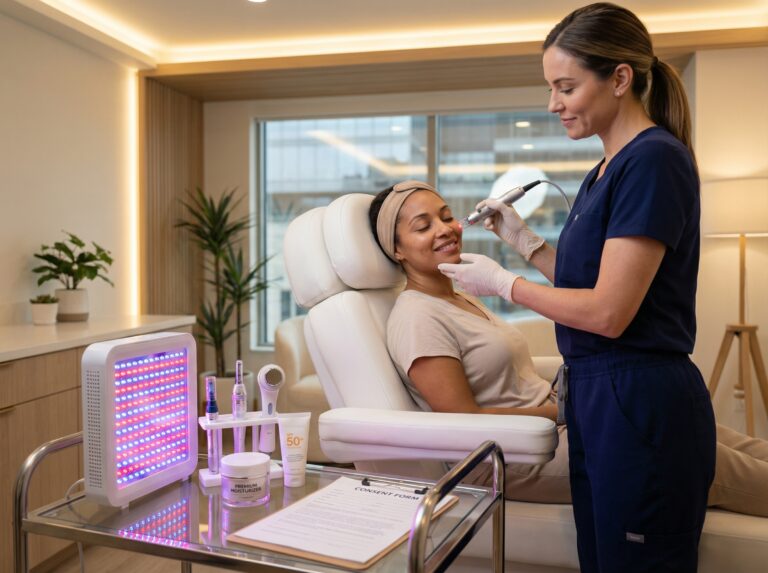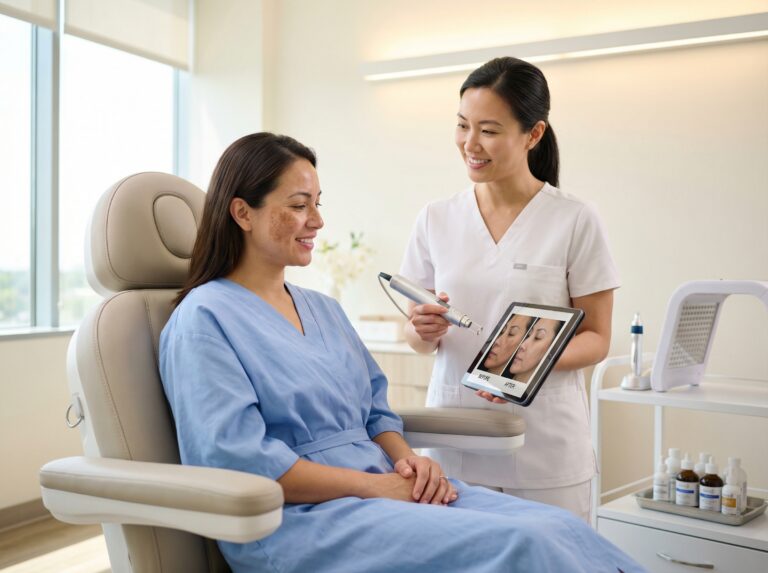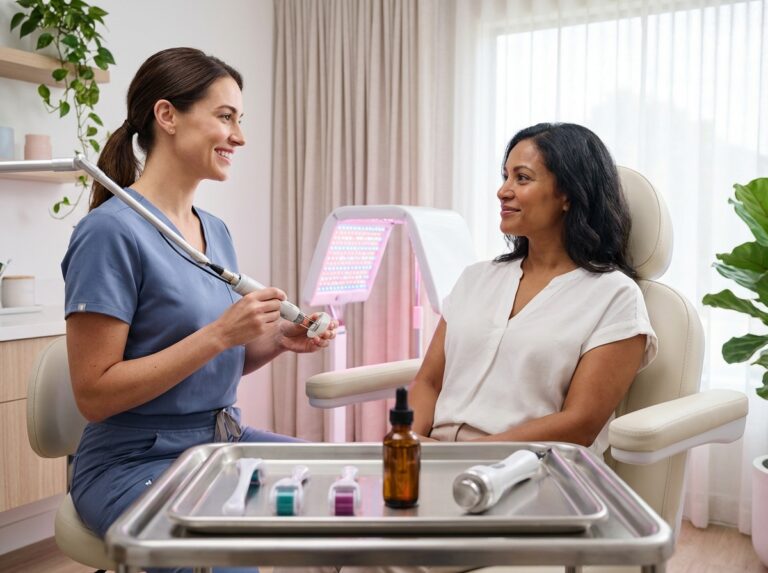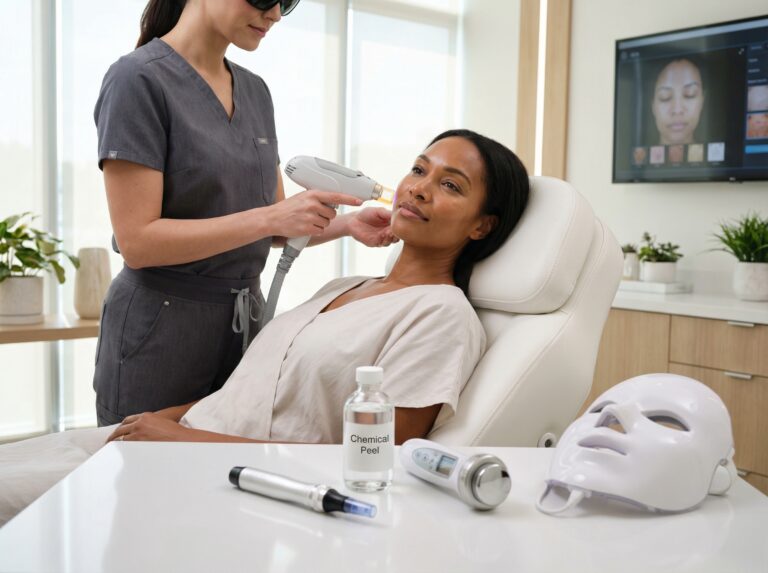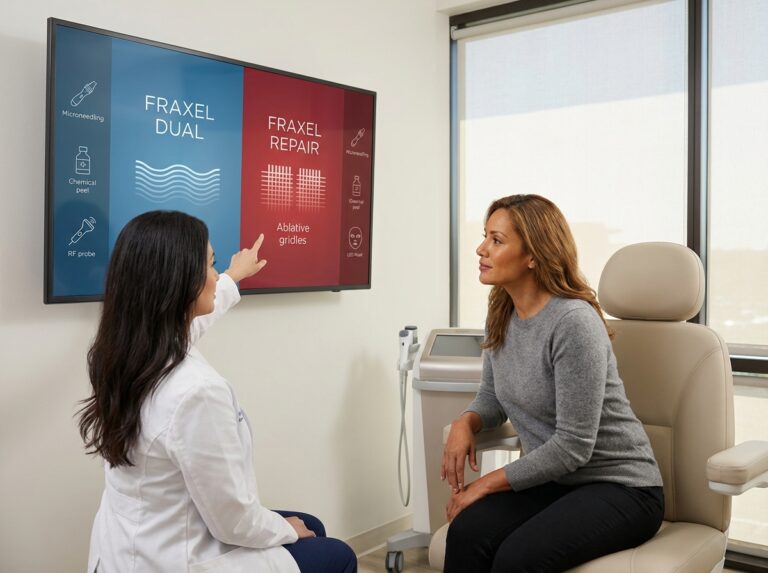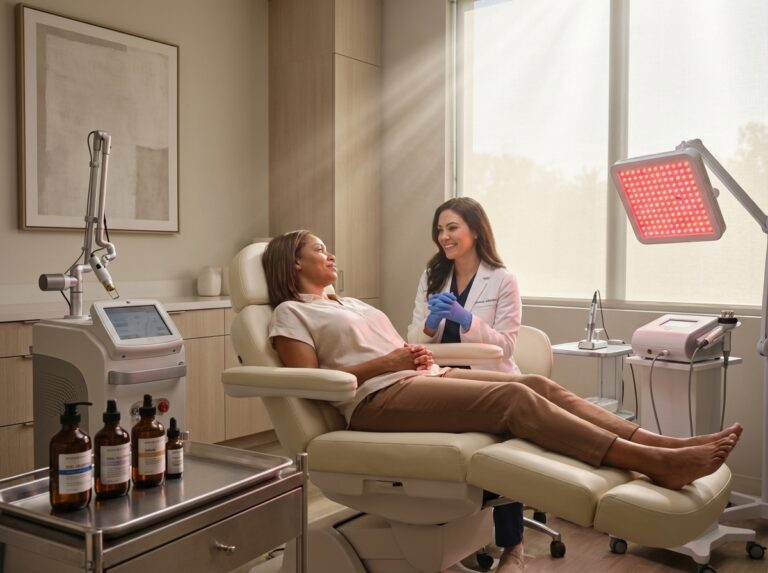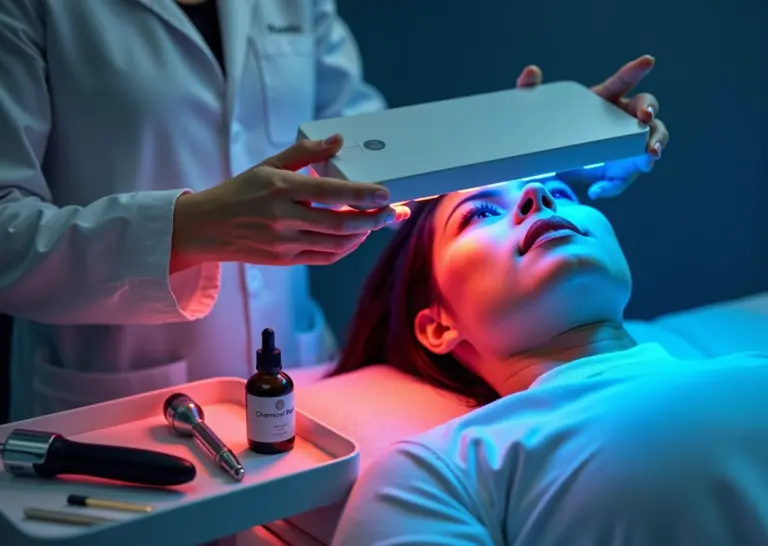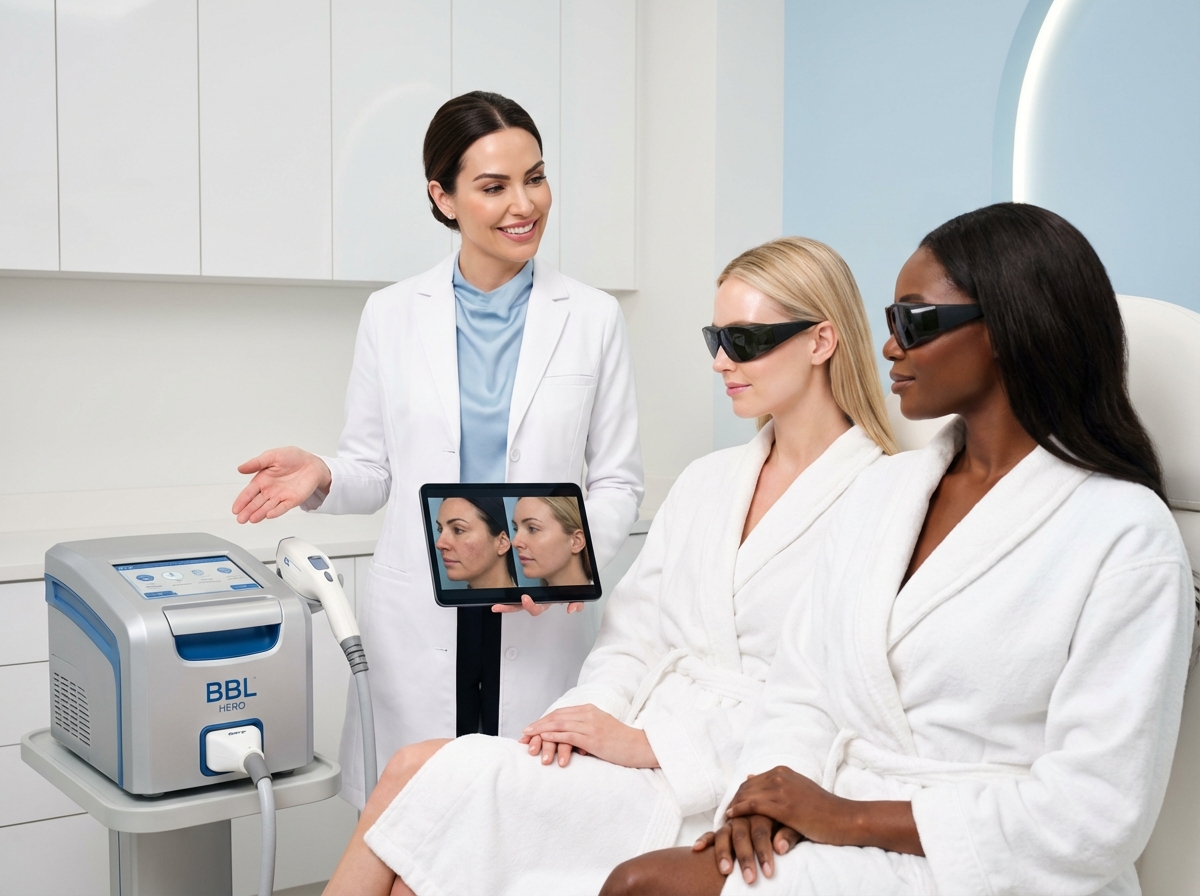
Non-invasive skin rejuvenation now offers targeted, low-downtime options from microneedling and chemical peels to RF, LED, IPL and the newer BBL Hero. This article compares these modalities, explains how Broadband Light differs from traditional IPL, and guides readers on indications, expected recovery, outcomes, and practical safety steps to choose the right treatment.
Overview of Non-Invasive Skin Rejuvenation Options
Broadband Light, specifically the BBL Hero iteration, represents the technical evolution of the intense pulsed light concepts. While the fundamental physics remains similar—using broad-spectrum light to target chromophores—the delivery system, energy output, and clinical application differ significantly from traditional IPL devices. In 2025, this technology has largely replaced standard IPL in many dermatology practices due to its ability to treat pigment and vascular issues with greater speed and precision.
Technological Advancements Over Traditional IPL
The core difference lies in the flashlamp technology and pulse delivery. Traditional IPL devices typically use a single flashlamp that delivers energy in a “stamping” method. You place the handpiece, fire a shot, move it to the adjacent spot, and fire again. This creates a risk of missed areas or, conversely, overlapping energy that can cause burns or striping.
High Energy Rapid Output (HERO)
BBL Hero utilizes a proprietary technology that allows for rapid-fire pulsing. Instead of a single high-energy stamp, the device delivers lower fluence energy at a very high repetition rate while the handpiece is in constant motion across the skin. This “in-motion” technique accumulates the necessary therapeutic target temperature in the skin more gradually but effectively. It eliminates the checkerboard pattern often associated with older IPL treatments and allows for a more uniform application of light energy.
Advanced Cooling Mechanisms
Safety in light-based procedures often depends on protecting the epidermis while heating the dermis. BBL systems employ a sapphire crystal cooling plate that maintains a precise temperature (adjustable from 0°C to 30°C). This continuous contact cooling allows providers to use effective energy levels without the immediate “rubber band snap” pain associated with older IPL units. The cooling is active before, during, and after the pulse, which significantly alters the patient experience and safety profile.
Clinical Indications and The “Body” Advantage
While facial rejuvenation remains a primary use, the most distinct advantage of BBL Hero is its application on the body. Treating a full back, legs, or arms with a traditional stamping IPL was historically tedious, taking upwards of an hour and often resulting in uneven outcomes. The rapid pulse rate of BBL Hero allows a provider to treat a full back in roughly five to ten minutes.
Primary Targets
The device effectively treats dyschromia (brown spots, sun damage, freckles) and vascular conditions (rosacea, telangiectasias, cherry angiomas). Because of the motion technology, it is particularly effective for large surface areas of sun damage on the décolletage, arms, and shoulders.
Skin Quality and Gene Expression
Beyond color correction, clinical evidence suggests that regular BBL treatments can alter gene expression in aging skin to resemble younger skin. This protocol, often termed “Forever Young BBL,” focuses on long-term maintenance to delay visible signs of aging, such as laxity and fine lines, rather than just correcting existing damage.
Comparative Analysis: BBL Hero vs. Standard IPL
When deciding between these modalities, the differences in treatment experience and outcomes are distinct.
Treatment Speed and Comfort
Standard IPL is often described as a sharp, hot snap. BBL Hero feels more like a warm stone massage with occasional prickly sensations. The motion technique distracts the nerves, making it more tolerable without topical numbing. IPL treats pigmentation with gradual results, often requiring more sessions to achieve what BBL can sometimes clear in one or two visits due to the higher peak power capabilities.
Safety Profile
The risk of adverse events like striping (tiger stripes) is lower with BBL Hero due to the sliding application. However, because BBL is powerful, the risk of burns remains if the settings are incorrect for the patient’s skin type. The integrated cooling offers a wider margin of safety compared to IPL devices that rely on air cooling or gel alone.
Results, Downtime, and Recovery
The post-treatment progression for BBL Hero mirrors IPL but often proceeds faster due to the precision of the energy.
Pigment Response
Immediately after treatment, pigmented lesions will darken. Over the next 24 to 48 hours, they turn a coffee-ground color. These micro-crusts surface and flake off within 5 to 7 days on the face and 10 to 14 days on the body. This is a critical distinction; body skin heals much slower than facial skin.
Vascular Response
Vascular lesions may bruise slightly (purpura) or simply disappear. General redness and mild swelling, particularly around the eyes, are common for 24 to 48 hours. Most patients can apply makeup and return to work immediately, provided they avoid direct sun exposure.
Safety Considerations and Contraindications
Despite the advanced technology, BBL is still a light-based treatment subject to the laws of physics and skin interaction.
Fitzpatrick Skin Types
BBL Hero is safer for a wider range of skin types than early IPL generations, but it is not universally safe for all. It is generally safe for Fitzpatrick types I-IV. Types V and VI remain at high risk for hyperpigmentation or burns because the melanin in the epidermis absorbs the light intended for the target. In these cases, specific filters and extremely cautious settings are required, or alternative modalities like radiofrequency microneedling should be chosen.
Strict Sun Avoidance
You cannot have this treatment if you are tanned. This includes spray tans and self-tanner. The device targets pigment; if your skin is artificially or naturally darkened from recent sun exposure, the light will target your healthy skin, leading to burns or hypopigmentation (white spots). A waiting period of 4 weeks post-sun exposure is the standard safety protocol.
Combinations and Maintenance
In modern aesthetics, BBL Hero is rarely a standalone treatment for complex skin issues. It serves as the “color correction” step in a broader treatment plan.
Laser Stacking
A common protocol in 2025 involves “stacking” treatments. For example, BBL Hero is performed first to clear pigment and redness, immediately followed by a non-ablative fractional laser (like Moxi) to target texture and pore size. This combination, often done in the same session, maximizes results with a singular recovery period.
Maintenance Schedule
For correction, a series of 3 treatments spaced 4 weeks apart is typical. Once the baseline is improved, maintenance treatments are recommended 2 to 4 times a year. This frequency aligns with the “pre-juvenation” approach, keeping the pigment load low and stimulating collagen consistently.
Understanding IPL Technology and Clinical Use
Intense Pulsed Light, or IPL, remains a foundational technology in aesthetic medicine, even as newer variations enter the market. To understand why newer iterations like BBL Hero are gaining traction, we first need to look at the mechanics of traditional IPL. It is not a laser, though it is often categorized with them. Lasers use a single, coherent wavelength of light to target a specific depth or structure. IPL uses a high-output flashlamp to emit a broad spectrum of light, typically ranging from 400 to 1200 nanometers.
The Mechanics of Broad-Spectrum Light
The versatility of IPL comes from this broad range, but control is required to make it safe and effective. The device uses cutoff filters to block lower wavelengths that might damage the epidermis, allowing only the therapeutic wavelengths to pass through.
Filters
These are glass pieces placed between the flashlamp and the skin. A 515nm filter, for example, allows light from 515nm upwards to pass. Lower filters target superficial pigment, while higher filters (like 695nm or 800nm) penetrate deeper for hair reduction or vascular concerns.
Pulse Duration
This measures how long the light is exposed to the skin, usually in milliseconds. Longer pulses heat the target more slowly, which is safer for darker skin or larger vessels. Shorter pulses deliver energy quickly, ideal for small, superficial targets but carrying a higher risk of surface burns.
Fluence
Fluence refers to the energy level delivered per unit area, measured in Joules per square centimeter (J/cm²). Higher fluence means more heat. The goal is to find the “clinical endpoint”—enough heat to destroy the target without damaging surrounding tissue.
Interaction with Skin Chromophores
IPL relies on selective photothermolysis. The light energy is absorbed by specific targets, known as chromophores, and converted into heat. In skin rejuvenation, we primarily target two chromophores: melanin and hemoglobin.
Melanin
This is the pigment responsible for brown spots, sun damage, and hair color. When IPL hits melanin, the heat shatters the pigment particles. In hair reduction, the heat travels down the hair shaft to damage the follicle.
Hemoglobin
Found in red blood cells, hemoglobin absorbs light energy to treat vascular lesions. The heat coagulates the blood inside the vessel, causing the vessel wall to collapse. The body then gradually reabsorbs the destroyed vessel.
Clinical Uses and Protocols
The most common application for IPL is the “photofacial” or photorejuvenation. This treats the visible signs of photoaging, specifically dyschromia—the combination of reds (broken capillaries, rosacea) and browns (solar lentigines, age spots).
Standard Session Protocol
A clear, cold ultrasound gel is applied to the skin to couple the device and protect the epidermis. Both the patient and provider wear protective eyewear. The handpiece is placed flush against the skin, and a pulse is triggered. Patients often describe the sensation as a rubber band snapping against the skin, accompanied by a bright flash.
Treatment Course
A single session rarely clears all damage. Most providers recommend a series of 3 to 5 treatments spaced 4 weeks apart. IPL treats pigmentation with gradual results, meaning you will see incremental fading of spots and reduction in redness with each visit rather than total clearance overnight.
Immediate Reactions
Post-treatment erythema (redness) and mild edema (swelling) are common and usually subside within 24 to 48 hours. For pigmented lesions, the hallmark sign of a successful treatment is the darkening of the spot. This is often called the “coffee ground” effect. The pigment rises to the surface and sloughs off naturally over 5 to 7 days.
Limitations and Safety Concerns
While effective, traditional IPL has distinct limitations compared to modern laser systems or advanced BBL technology. The primary issue is the stability of the energy delivery.
Variable Pulse Control
Older IPL systems often deliver energy in a “Gaussian” shape rather than a square wave. This means the energy spikes at the beginning of the pulse and tails off. That initial spike can cause excessive heating of the epidermis, increasing the risk of burns, while the tail end may be too weak to be effective.
Treatment Speed
Traditional IPL is a “stamping” procedure. The provider places the crystal, fires, moves to the next spot, and fires again. This makes treating large areas like the back or legs time-consuming and prone to “striping” or missed areas if the overlap is not precise.
Fitzpatrick Skin Type Risks
Because IPL uses a broad spectrum, it is difficult to isolate melanin absorption completely. This makes it risky for Fitzpatrick skin types IV through VI. The epidermal melanin in darker skin competes with the target, leading to potential hypopigmentation (white spots) or hyperpigmentation (dark patches) if settings are not aggressively lowered.
Pre- and Post-Care Guidance
Safety relies heavily on patient compliance. The most critical rule is sun avoidance.
Pre-Treatment
Patients must not have a tan (natural or artificial) for at least 4 weeks prior to treatment. Treating tanned skin confuses the device, as it cannot distinguish between the sun damage you want to remove and the tan you want to keep, leading to surface burns.
Post-Treatment
Strict sun protection is mandatory. The skin is photosensitive while healing. Patients should avoid hot showers, saunas, and heavy exercise for 24 hours to prevent increasing blood flow to the treated capillaries, which could cause them to reopen.
Comparison to Other Non-Ablative Options
When deciding between IPL and other modalities, the primary factor is the target. IPL is superior for surface color correction. Fractional non-ablative lasers (like 1550nm or 1927nm) are better suited for textural issues, fine lines, and acne scarring because they target water in the tissue to stimulate collagen remodeling rather than targeting pigment directly.
While fractional lasers create microscopic columns of thermal injury, IPL leaves the skin surface intact. This results in minimal downtime compared to lasers, but it also means IPL has limited impact on deep wrinkles or significant skin laxity. For patients seeking strictly color correction—removing the “reds and browns”—IPL remains a go-to option, provided the patient has a lighter skin type and can commit to the necessary downtime for the pigment to flake off.
Introducing Broadband Light and BBL Hero Advances
Broadband Light, often called BBL, represents a specific evolution of the Intense Pulsed Light technology. While the underlying physics remains similar—using a broad spectrum of light to target chromophores—the delivery system has changed significantly. BBL is a proprietary technology developed by Sciton, and the BBL Hero (High Energy Rapid Output) platform is the current iteration widely used in 2025.
The primary shift from traditional IPL to BBL Hero is the move from a “stamping” technique to a “motion” technique. Older systems required the provider to place the handpiece, fire a shot, lift, move, and fire again. This was slow and often created a “checkerboard” pattern if overlaps weren’t perfect. BBL Hero uses a rapid pulse rate that allows the handpiece to glide continuously over the skin. This motion delivery changes the clinical experience and the safety profile.
Technical Distinctions and Clinical Impact
The hardware improvements in BBL Hero address several limitations found in early generation IPL devices. These changes directly affect how the treatment feels and the results you see.
Pulse Repetition Rate
Standard IPL devices typically fire one pulse every second or two. BBL Hero fires up to four pulses per second. This rapid repetition allows for lower fluence (energy) per individual pulse, but a high accumulation of energy over the treatment area. This method, often called “in-motion,” heats the target tissue gradually rather than hitting it with a single, high-intensity spike of heat. This reduces the “rubber band snap” sensation common with older IPL.
Advanced Contact Cooling
Cooling is critical for protecting the epidermis (the top layer of skin) while heating the pigment or vessels below. BBL handpieces use a sapphire crystal with precise temperature control, adjustable from 0°C to 30°C. The system monitors the temperature of the crystal constantly. Because the cooling is continuous and the handpiece is always in motion, the risk of surface burns decreases, even when treating larger areas.
Smart Filters and Spot Sizes
The system uses interchangeable filters to narrow the light spectrum for specific targets. For example, a 420 nm filter targets acne bacteria, while 515 nm or 560 nm filters target surface pigment. The ability to switch these filters on the fly allows a provider to treat active acne, rosacea, and sun spots in a single session. The spot sizes are also adaptable, with magnetic adapters that can treat small areas like the nose or large areas like the back.
High Output Power
While the technology is essentially the same, BBL® HERO™ sends out three times the energy offered by IPL. This peak power allows the device to maintain efficacy even at high speeds. It ensures that the rapid pulses don’t lose strength as the device glides, which was a failure point in some earlier “gliding” IPL attempts.
Indications and Body Treatments
The speed of BBL Hero has expanded the practical indications for pulsed light. Treating a full back or legs with traditional IPL could take an hour and was often too painful for patients to tolerate. With the rapid-fire motion, a full back treatment can take less than 10 minutes. This has made “Body BBL” a standard request for treating sun damage on the arms, legs, chest, and shoulders.
Common conditions treated include:
- Lentigines (Sun Spots): Highly effective for clearing brown pigment on the face and body.
- Vascular Lesions: Treats rosacea, telangiectasias (broken capillaries), and cherry angiomas.
- Acne: Blue light filters target P. acnes bacteria, while red light filters reduce inflammation.
- Skin Quality: There is evidence suggesting long-term treatments can improve gene expression patterns associated with aging, leading to firmer, more elastic skin over time.
Safety and Skin Types
Safety remains a priority, especially regarding skin tone. Like traditional IPL, BBL targets melanin. This presents a risk for Fitzpatrick skin types IV through VI, as the device may not distinguish between the sun spot and the natural skin tone.
However, the motion technique and lower fluence per pulse offer a wider safety margin than static IPL. By heating the skin gradually, the provider can stop immediately if they observe an adverse reaction. Traditional high-energy stamping delivers the full energy load instantly, leaving no room for error.
Despite these advancements, caution is required. For darker skin types (Fitzpatrick IV and V), providers must use specific long-wavelength filters (like 640 nm or 690 nm) and lower energy settings. Pre-treatment with hydroquinone or other tyrosinase inhibitors may be recommended to prevent post-inflammatory hyperpigmentation (PIH). BBL is generally not the first-line choice for Fitzpatrick type VI; other modalities like Nd:YAG lasers or microneedling are often safer.
Downtime and Recovery
Recovery is generally milder than with older systems. Patients typically experience redness (erythema) for a few hours. Pigmented spots will darken and look like “coffee grounds” before flaking off over 5 to 7 days on the face, and 10 to 14 days on the body. Because the energy is delivered more evenly, there is less risk of the distinct “patterning” or striping that sometimes occurred with stamped IPL. Makeup can usually be applied immediately after the session.
Practical Considerations
Integrating BBL Hero into a skincare plan requires understanding the logistics.
Cost Differences
BBL Hero treatments are generally more expensive than standard IPL. The equipment cost is higher, and the sessions are marketed as a premium service. Expect to pay 20% to 40% more per session compared to a standard photofacial.
Session Frequency
An initial series of 3 to 4 treatments spaced 4 weeks apart is standard for corrective work. Maintenance is typically suggested 2 to 4 times a year. The “Forever Young” protocol implies regular maintenance treatments to maintain skin gene expression and elasticity.
Combination Therapies
BBL Hero pairs well with other non-invasive treatments. A common protocol involves performing BBL first to address color (reds and browns), followed immediately by microneedling or a non-ablative fractional laser (like Moxi) to address texture and pore size. This “stacking” approach maximizes results in a single appointment, though it increases temporary redness and swelling.
Realistic Expectations
While BBL Hero is powerful, it is not a facelift. It excels at color correction and skin quality. It will not remove deep wrinkles or fix significant sagging. For those concerns, it serves best as a complementary treatment to surgery or stronger energy-based devices.
Frequently Asked Questions About IPL BBL and Other Non-Invasive Treatments
Which technology handles brown spots and broken capillaries better?
Both IPL and BBL Hero target melanin (pigment) and hemoglobin (blood vessels), but the precision differs. Standard IPL uses a broad flash of light that hits everything in its path. It works well for general redness and diffuse sun damage. However, it often struggles with distinct, stubborn brown spots or very fine broken capillaries because the energy is less concentrated.
BBL Hero allows the provider to swap filters and adjust pulse width instantly. This means they can treat general redness on the cheeks and then immediately switch settings to target a specific dark sun spot on the forehead. For patients with distinct vascular issues like rosacea or spider veins, the ability to manipulate the pulse duration usually makes BBL Hero more effective at clearing the vessels with fewer sessions.
Is BBL Hero safer or faster than IPL?
Speed is the most noticeable difference for the patient. A traditional IPL full-face session involves a “stamp and wait” method, taking 20 to 30 minutes for a face and over an hour for a back or chest. BBL HERO delivers faster, more precise skin rejuvenation because it uses a rapid-motion technique. The handpiece glides across the skin like a roller, flashing continuously. A full face takes about 5 minutes, and a full back can be treated in under 10 minutes.
Safety improves with BBL Hero largely due to the cooling mechanism. The sapphire crystal tip keeps the surface of the skin cool even while high energy is delivered into the deeper layers. This reduces the risk of surface burns and makes the treatment significantly more comfortable. Older IPL machines often feel like a hot rubber band snapping against the skin, while the rapid pulses of BBL Hero feel more like a warm sensation.
How many sessions are needed and how long do results last?
Most providers recommend a corrective series followed by maintenance. With traditional IPL, patients typically need 4 to 6 treatments spaced a month apart to see significant clearance of pigment or redness. Because BBL Hero delivers more energy more efficiently, the corrective phase is often shorter. Many patients see substantial improvement after just 2 or 3 sessions.
Results are not permanent because your skin continues to age and accumulate sun damage. However, clinical studies suggest that regular maintenance treatments can actually alter the gene expression of the skin, keeping it looking younger. A realistic plan involves one corrective series initially, followed by a maintenance treatment every 4 to 6 months. If you stay out of the sun and wear SPF 50 daily, your results will last much longer.
What is the downtime and when can I use makeup?
These are “lunchtime” procedures, but you will not look perfect immediately after. You can expect your skin to look pink and feel like a mild sunburn for about 4 to 6 hours. You can apply makeup immediately after the treatment if necessary, but waiting until the next morning is better to let the heat dissipate.
For pigment treatment, you will see the “coffee ground” effect. The brown spots will darken significantly over the first 48 hours. They will then rise to the surface and flake off naturally over the next week. Do not pick or scrub them. If you treat the body, this process takes longer, usually 10 to 14 days. You must avoid direct sun exposure for at least 2 weeks before and 2 weeks after treatment to prevent burns or hyperpigmentation.
Can darker skin tones receive these treatments safely?
This requires extreme caution. Light-based devices target pigment. If your skin has a lot of natural pigment (Fitzpatrick types IV-VI), the machine may not distinguish between the sun spot and your natural skin color, leading to burns or permanent light spots (hypopigmentation). BBL HERO utilizes Quick Change Smart Filters which allow experienced providers to use lower energy settings and specific wavelengths that are safer for medium skin tones.
However, for darker skin tones, neither IPL nor BBL is usually the first choice. Microneedling or specific lasers like the Nd:YAG are generally safer options that bypass the surface pigment. Always ask your provider if they have specific experience treating your skin type and demand a patch test.
Choosing between microneedling, peels, RF, and photofacials
If your main concern is color (redness, brown spots), choose light therapy like BBL or IPL. If your main concern is texture (acne scars, large pores, wrinkles), light therapy will not be enough. You need treatments that physically remodel collagen.
- Microneedling is best for acne scarring and overall texture improvement.
- Chemical Peels are excellent for surface exfoliation and active acne.
- Radiofrequency (RF) Microneedling provides the deepest tightening and scar reduction.
For a patient with both sun damage and acne scars, a combination approach is best. You might do a series of BBL treatments to clear the color, followed by microneedling to smooth the texture.
Common side effects and when to seek help
Normal reactions include redness, mild swelling (especially under the eyes), and the darkening of brown spots. These resolve on their own. You should contact your provider immediately if you experience:
- Blistering or crusting that looks like a burn.
- Extreme pain that does not subside after a few hours.
- Signs of infection like pus or increasing heat in the area.
- White patches where pigment has been lost.
Practical Tips for Scheduling and Care
Patch Testing
Always request a test spot, especially if you have melasma or a darker skin tone. Wait 48 hours to see how your skin reacts before treating the full face.
Cost Expectations
In 2025, a single BBL Hero face treatment typically costs between $500 and $800. Traditional IPL is usually cheaper, ranging from $300 to $500. Buying a package of three often reduces the per-session price.
Verify Credentials
Check if your provider is a Certified Laser Technician or a medical professional. Ask specifically how many BBL Hero treatments they perform weekly. The technology is powerful, but the operator determines the safety.
Pre-Treatment Prep
Stop using retinol, glycolic acid, and salicylic acid 5 to 7 days before your appointment. Arrive with clean skin. If you have a history of cold sores, ask for an antiviral prescription beforehand, as the heat can trigger a flare-up.
Scheduling Combinations
You can often combine treatments in one visit. A common protocol is “BBL and Moxi” or “IPL and Microneedling.” The light treatment is done first to target pigment, followed by the texture treatment. This increases downtime but maximizes results.
Final Takeaways and Recommendations
Making a final decision between BBL Hero and traditional IPL often comes down to the specific problem you want to solve and the surface area involved. While both technologies rely on broad-spectrum light to target pigment and redness, the delivery methods create distinct experiences for the patient.
The Case for BBL Hero
This technology is generally the superior choice for treating large areas of the body. If you are looking to address sun damage on your back, arms, or legs, the “motion” technology of BBL Hero allows for a continuous gliding treatment rather than the slow, single-stamp method of older IPL devices. This significantly reduces treatment time and discomfort. The rapid pulse rate allows for lower fluence (energy) per pulse while maintaining high average power, which translates to less snapping sensation on the skin. For patients with busy schedules or low pain tolerance, this is often the deciding factor. IPL treats pigmentation with gradual results, while BBL HERO delivers faster, more precise skin rejuvenation, making it the preferred option for full-body rejuvenation protocols.
When Traditional IPL Makes Sense
Do not discount standard IPL entirely. It remains a reliable, cost-effective workhorse for focused facial concerns. If you have a single sunspot on your cheek or mild rosacea on the nose, a traditional IPL session can be just as effective as the newer BBL technology. The cost per session is often lower, and for small target areas, the speed advantage of BBL Hero is negligible. IPL is also widely available, meaning you might not need to travel to a specialized clinic to find a provider. However, you must accept that older IPL devices carry a higher risk of “striping” or uneven results if the provider is not meticulous with their overlapping technique.
Positioning Light Therapy Among Other Modalities
Light therapy is not a cure-all. Understanding where BBL and IPL sit in the hierarchy of non-invasive treatments prevents disappointment. These devices excel at color correction—specifically reds (hemoglobin) and browns (melanin). They do not structurally change the skin in the same way mechanical or thermal remodeling treatments do.
Texture and Scarring
If your primary concern is acne scarring, deep wrinkles, or rough skin texture, light therapy will likely underwhelm you. Microneedling remains the gold standard here because it physically breaks down scar tissue and stimulates deep collagen production through a wound-healing response. Radiofrequency (RF) microneedling takes this further by adding heat to tighten the dermis. While BBL Hero has skin tightening protocols (SkinTyte), it does not offer the same structural remodeling as RF or aggressive microneedling.
Active Acne and Maintenance
For active breakouts, LED therapy is a gentler, zero-downtime alternative that can be used more frequently than high-energy light devices. However, specific filters on BBL and IPL devices can target the bacteria causing acne more aggressively than home LED masks. Chemical peels serve a different function entirely, removing the dead superficial layer of skin to reveal brightness. A peel is often a better starting point for someone with a dull complexion who isn’t ready for the potential swelling or downtime of light energy.
Safety and Patient Selection
The most critical aspect of these treatments is safety regarding skin type. The risk of Paradoxical Hyperpigmentation (making dark spots worse) or burns is real, particularly with inexperienced providers.
The Melasma Caution
Heat is a trigger for melasma. While some providers treat melasma with low-energy BBL or IPL, it is risky. The heat generated can stimulate melanocytes to overproduce pigment weeks after the treatment. For melasma patients, chemical peels or pico-second lasers (which use sound/pressure rather than just heat) are often safer alternatives. If you have melasma, proceed with extreme caution and ensure your provider has a specific, low-heat protocol.
Skin Tone Limitations
Both IPL and BBL target contrast. They look for dark targets against a lighter background. This makes treating Fitzpatrick skin types IV-VI (darker skin) difficult and risky. IPL uses a broad-spectrum of light, while BBL uses a specific band of light, but both carry risks for darker skin tones. BBL Hero allows for more precise pulse adjustments, which can theoretically be safer, but the margin for error is slim. Patients with darker skin should prioritize Nd:YAG lasers or microneedling, which bypass the pigment in the upper layers of the skin to avoid burns.
Actionable Next Steps
If you decide to proceed with BBL Hero or IPL, preparation is the only variable you can fully control. Since it is currently late December, this is the ideal season for these treatments in the Northern Hemisphere, as sun exposure is naturally lower.
Pre-Consultation Checklist
Stop using retinoids, glycolic acid, and other active exfoliants 5 to 7 days before your appointment. These thin the skin barrier and increase sensitivity to light energy. Most importantly, you must not have a tan. This includes self-tanner. The device cannot distinguish between sun damage and a spray tan, and treating tanned skin can result in severe burns or hypopigmentation (white spots).
Questions to Ask Your Provider
Do not be afraid to interview the person holding the laser. Ask specifically: “How many BBL/IPL treatments have you performed on my specific skin type?” and “What is your protocol if I have a reaction?” A reputable provider will have a clear answer and will likely suggest a patch test. A patch test involves treating a small, inconspicuous area near the jawline and waiting 24 to 48 hours to see how the skin reacts. This is non-negotiable for anyone with sensitive skin or a history of hyperpigmentation.
Post-Treatment Reality
Plan your social calendar accordingly. While BBL Hero is marketed as “low downtime,” you will look red immediately after, and your brown spots will darken and look like coffee grounds for 5 to 7 days before flaking off. This is a normal part of the process. Do not pick at them. If you have a major event, schedule your treatment at least two weeks prior to ensure your skin has fully healed and the “glow” has emerged.
When to Seek a Dermatologist
If you have a spot that is changing shape, bleeding, or has multiple colors, do not treat it with a laser or light device at a medspa. You need a medical evaluation to rule out skin cancer. Light treatments can remove the pigment from a cancerous lesion, making it harder to diagnose later while the cancer continues to grow underneath. Always get a full skin check before starting a series of photorejuvenation treatments.
Sources
- What's the Difference Between IPL and BBL HERO Treatments? — IPL treats pigmentation with gradual results, while BBL HERO delivers faster, more precise skin rejuvenation with greater comfort and minimal downtime.
- BBL HERO® vs. Traditional BBL and IPL — Comparing Treatment Outcomes ; IPL. Best for mild rejuvenation of superficial concerns like pigmentation. It may require more sessions for visible improvements.
- The Difference Between BBL Hero™ and IPL: Which One Should … — While the technology is essentially the same, BBL® HERO™ sends out three times the energy offered by IPL. This makes the treatment faster and …
- BBL vs. IPL: What's the Difference? | BYM Sacramento — Both are gentle, but IPL treatment is often preferred for sensitive or lighter skin tones, while BBL therapy can be customized for a wider range …
- BBL® Hero™ vs. Traditional IPL | Coachlight Clinic — Compare BBL® HERO™ vs. traditional IPL ,learn key differences in results, speed, and downtime to find the best skin treatment for your needs.
- Difference Between IPL, BBL, & BBL HERO in Treating Photodamage — IPL uses a broad-spectrum of light, BBL uses a specific band of light, and BBL HERO is an advanced and faster method that uses a high-energy …
- BBL Hero in 2025: Next Gen Photofacials Explained – PUR Skin Clinic — It is the most advanced form of IPL phototherapy available today. While classic IPL devices deliver one pulse at a time, BBL Hero rapidly delivers light energy …
- IPL vs. BBL: Which Light-Based Treatment Is Right for You? — BBL HERO utilizes Quick Change Smart Filters™ and dual-lamp technology to deliver more precise, powerful treatments. Our team can adjust the …
- IPL vs. BBL® HEROic – Refine Laser & Skin Care — The reality is, BBL HEROic is just as versatile as IPL, but with even more power to treat concerns like pigmentation, vascular lesions, acne, …
Legal Disclaimers & Brand Notices
The information provided in this article is for informational and educational purposes only and does not constitute medical advice, diagnosis, or treatment. Always seek the advice of a qualified physician or other licensed healthcare provider with any questions you may have regarding a medical condition or specific aesthetic procedure. Never disregard professional medical advice or delay in seeking it because of something you have read in this content.
All product names, logos, brands, and registered trademarks mentioned in this article are the property of their respective owners. All company, product, and service names used in this text are for identification purposes only. Use of these names, trademarks, and brands does not imply endorsement or affiliation.