From microneedling to fractional CO2, non-invasive and minimally invasive skin rejuvenation options vary widely in effectiveness and recovery. This article compares CO2 laser resurfacing with microneedling, laser facials, chemical peels, radiofrequency and LED, detailing indications, expected downtime, likely results, risks and practical safety tips so readers can decide whether deeper resurfacing justifies longer recovery.
Non-invasive versus ablative approaches and how to choose
Navigating the world of skin rejuvenation can feel like choosing from an endless menu. To make sense of it all, it helps to think of treatments on a spectrum, from gentle tune-ups to major overhauls. The key difference lies in how they interact with your skin’s surface. Understanding this spectrum is the first step in deciding which path is right for you.
At one end, you have non-ablative treatments. These procedures work by heating the underlying skin tissue without injuring the surface. The goal is to trigger dermal remodeling, a process where the body produces new collagen and elastin deep within the dermis, leading to gradual firming and textural improvement.
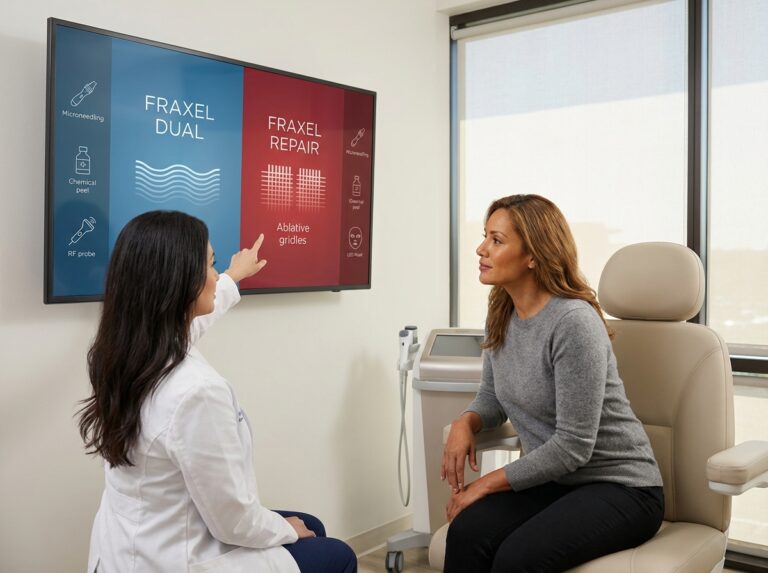
At the other end are ablative treatments. These are more aggressive, physically removing or vaporizing the outer layers of the skin to eliminate damaged cells and force a powerful healing response that builds a completely new, smoother surface. A popular middle ground is fractional technology, which applies the laser’s energy in a pixelated pattern, treating microscopic columns of skin while leaving the surrounding tissue untouched. This approach speeds up healing significantly compared to treating the entire surface at once.
Let’s walk through the options, from least to most invasive.
Gentle and Non-Invasive Modalities
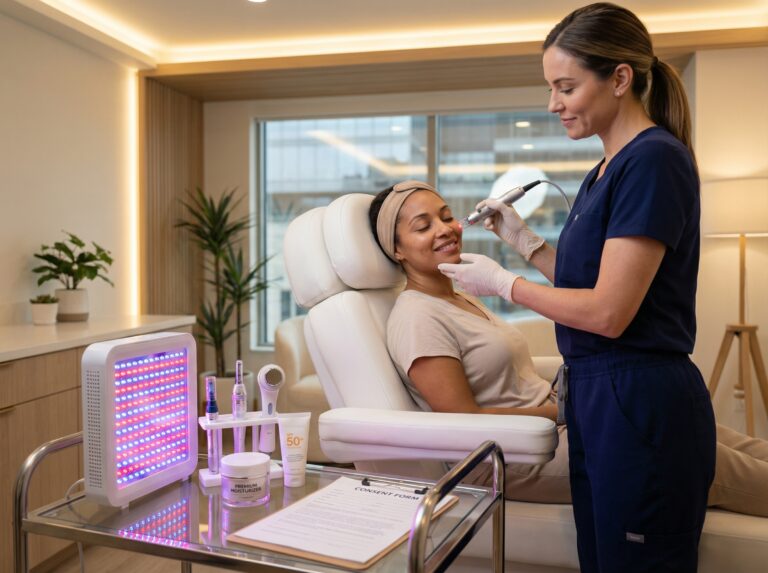
- LED Therapy: This uses specific wavelengths of light to reduce inflammation and stimulate cellular activity. It’s best for calming redness, managing mild acne, and achieving a subtle glow. It requires a series of 10 to 20 sessions with zero downtime, making it a great maintenance tool.
- Low-Energy Radiofrequency (RF): These devices gently heat the dermis to encourage collagen production. They are indicated for early signs of skin laxity and fine lines. A typical course involves 4 to 6 sessions with little to no downtime, offering modest tightening over time.
Minimally Invasive Options
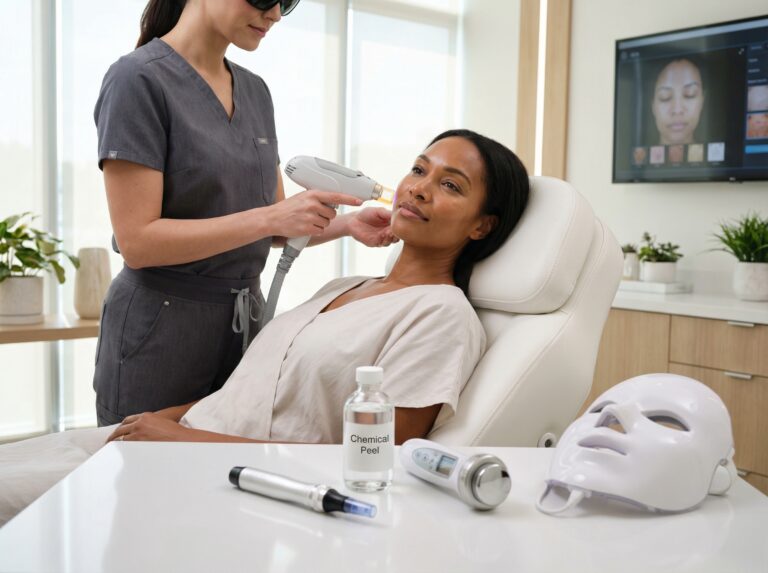
- Microneedling: By creating thousands of tiny punctures in the skin, microneedling triggers a natural wound-healing response. It’s effective for improving skin texture, fine lines, and mild to moderate acne scarring. You’ll likely need 3 to 6 sessions, with 1 to 3 days of redness afterward.
- Superficial Chemical Peels: Using acids like glycolic, salicylic, or low-concentration trichloroacetic acid (TCA), these peels exfoliate the top layer of skin. They are excellent for addressing dullness, uneven tone, and minor pigmentation. A series of 4 to 6 peels is common, with 2 to 5 days of light flaking.
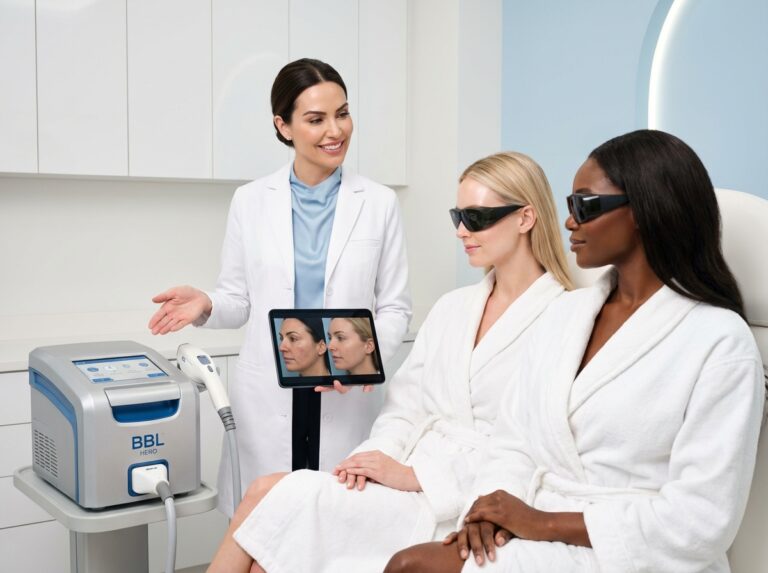
- Non-Ablative Laser Facials: Lasers like the Nd:YAG can heat the dermis to build collagen without damaging the epidermis. They are used for mild texture issues, pigmentation, and overall rejuvenation. Plan for 4 to 8 sessions, with 1 to 3 days of mild redness.
Ablative and Deep Resurfacing
- Medium-Depth Chemical Peels: These peels use a higher concentration of TCA (around 30-35%) to penetrate more deeply, targeting more significant sun damage and wrinkles. One to three treatments may be sufficient, but expect 7 to 10 days of significant peeling and social downtime.
- Fractional CO2 Laser Resurfacing: This is the gold standard for dramatic results. It addresses deep wrinkles, severe sun damage, extensive textural irregularities, and stubborn acne scars. While some patients see significant improvement after one session, 1 to 3 treatments may be needed for optimal correction. The trade-off is substantial downtime, typically 7 to 14 days of intensive healing.
How to Choose the Right Treatment for You
Your decision should be a careful calculation based on several key factors.
- Severity of Your Concern: For mild textural issues or preventative care, non-invasive options are a logical start. For moderate photoaging or scarring, minimally invasive treatments like microneedling or non-ablative lasers are appropriate. However, for deep, etched-in wrinkles (Glogau classification III-IV) or significant scarring that hasn’t responded to other treatments, an ablative laser like the CO2 is often the most effective and direct solution.
- Skin Type: Your Fitzpatrick skin type is a critical safety consideration. Lighter skin types (I-III) are generally safe candidates for all treatments, including aggressive CO2 lasers. Darker skin types (IV-VI) have a higher risk of post-inflammatory hyperpigmentation (PIH) with heat-based and ablative procedures. For these patients, non-ablative modalities or very conservative fractional laser settings with a dermatologist experienced in treating skin of color are essential.
- Downtime Tolerance: Be realistic about your lifestyle. If you cannot take a week or more away from work and social activities, a CO2 laser is not for you. In that case, a series of treatments with less downtime, like RF microneedling or non-ablative lasers, would be a more practical choice.
- Budget: While a single CO2 laser session is expensive, often ranging from $2,000 to $7,000 for a full face, it may be more cost-effective than a long series of less impactful treatments that ultimately don’t achieve your goals. Compare the total cost of a full treatment series to the one-time cost of a more powerful procedure.
- Risk Tolerance: All procedures carry risks, but they increase with intensity. Ablative lasers have a higher potential for complications like prolonged redness, infection, and pigmentary changes. If you are risk-averse, starting with lower-intensity treatments is a prudent approach.
Ultimately, a CO2 laser is often recommended when a patient desires a profound, single-session improvement or when a series of less invasive treatments has failed to deliver the desired outcome.
How CO2 laser resurfacing works and why its results differ
To understand why CO2 laser resurfacing delivers such dramatic results, we need to look at the powerful science behind it. This isn’t just a surface-level treatment. It’s a controlled injury that fundamentally rebuilds the skin from the inside out. The magic starts with the laser’s specific wavelength of light, approximately 10,600 nanometers. This wavelength is perfectly absorbed by water, which is the main component of our skin cells. When the laser energy hits the skin, it instantly vaporizes the water within the cells, a process called ablation. This removes thin layers of damaged skin with incredible precision. Simultaneously, the heat from the laser penetrates into the deeper layers of the dermis, causing thermal coagulation. This heat shrinks existing collagen fibers and, more importantly, triggers a powerful healing response.
Early CO2 lasers were “full-field,” meaning they removed 100% of the skin’s surface in the treated area. The results were remarkable, but the recovery was extensive. Today, most practitioners use fractional CO2 lasers. Instead of treating the entire surface, a fractional laser creates a grid of microscopic treatment columns, known as microthermal zones (MTZs), while leaving the surrounding skin completely untouched. These untreated “bridges” of healthy tissue act as a reservoir for healing, allowing new skin cells and collagen to grow much faster. This innovation drastically reduces downtime and risks compared to the older full-field approach.
This controlled injury kicks off the body’s natural wound healing cascade. The initial inflammatory phase is followed by a proliferative phase, where the body rushes to create new tissue. The final and most crucial stage is remodeling. Over the next three to six months, the body produces a significant amount of new, healthy collagen and elastin. Biopsy studies have shown up to a 157% increase in Type I collagen three months after a single treatment. This new collagen matrix is what smooths out deep wrinkles, tightens sagging skin, and fills in atrophic scars, creating results that are both profound and long-lasting.
The intensity of the treatment, and therefore the results and downtime, is controlled by the practitioner through several settings.
- Energy: Measured in millijoules (mJ), this determines the depth of ablation and the amount of heat delivered. Higher energy creates a deeper effect but also more downtime.
- Spot Size: This is the diameter of each microscopic laser beam.
- Density: This setting controls the percentage of skin treated, typically ranging from 5% to 30%. A higher density means more MTZs are created closer together, leading to a more aggressive treatment and more dramatic results, but also a longer recovery.
An experienced provider customizes these settings based on the patient’s specific concerns, skin type, and goals. This is why practitioner technique is paramount. An overly aggressive treatment can lead to complications like prolonged redness (erythema), post-inflammatory hyperpigmentation (PIH) especially in darker skin tones, infection, or even scarring. In skilled hands, the risk of scarring is less than 1%.
CO2 laser resurfacing truly shines where other treatments fall short. It is considered the gold standard for severe photodamage, deep static wrinkles (the lines that are visible when your face is at rest), and certain types of acne scars, particularly tethered or “ice pick” scars. Patients often see a 50% to 75% improvement in acne scarring after one to three sessions. For deep wrinkles, a 40% to 60% reduction is a realistic expectation.
It is important to understand the longevity of these results. For atrophic acne scars, the improvement is largely permanent as the laser stimulates structural collagen remodeling. For wrinkles, while the results are durable and often visible for five years or more, the treatment does not stop the natural aging process. New wrinkles will eventually form due to continued muscle movement and collagen loss, necessitating a maintenance strategy. While the downtime is a serious consideration, the transformative potential for the right candidate is undeniable.
Downtime and recovery timelines compared across treatments
When deciding on a skin rejuvenation treatment, the recovery period is often as important as the potential results. The downtime varies dramatically across different procedures, creating a spectrum from “lunchtime” fixes to significant commitments requiring time off work. Understanding these timelines is key to making an informed choice that fits your lifestyle.
At one end, you have treatments with virtually no social downtime. LED therapy stands alone here, requiring zero recovery time. You can walk out of the clinic and go about your day immediately. Next are low-energy radiofrequency (RF) treatments, which might leave you with mild redness for a few hours up to a day or two, but it’s easily manageable.
Moving up the scale, microneedling typically involves one to five days of redness and minor swelling, depending on the depth of the needles used. A superficial chemical peel, like one using glycolic or a low-concentration TCA, has a similar recovery profile, with about two to five days of light flaking or peeling. Non-ablative laser facials also fit in this category, with recovery ranging from one to seven days of redness and possible swelling.
The commitment increases significantly with more intensive treatments. A medium-depth chemical peel will require a solid week of social downtime, with peeling and redness lasting seven to fourteen days. But it’s fractional CO2 laser resurfacing that demands the most significant recovery period of the common non-surgical options. The initial healing phase, marked by swelling, weeping, and crusting, lasts from three to ten days. Full re-epithelialization, where the top layer of skin has healed over, typically occurs around the seven to fourteen-day mark. However, the journey doesn’t end there. A persistent redness, or erythema, is a normal part of the deeper healing and collagen remodeling process and can last for several months. Deep phenol peels represent the far end of the spectrum, with recovery taking many weeks to months.
The healing process after a fractional CO2 laser treatment unfolds in distinct stages. Immediately after the procedure, the skin is red, swollen, and feels intensely warm, similar to a severe sunburn. During the first week, the skin will ooze a serous fluid and then form a crust or a bronzed, flaky texture as the microscopic columns of ablated tissue heal. This is the most challenging phase and requires diligent aftercare with occlusive ointments. In the following two to four weeks, the crusting resolves, revealing a fresh, pink, and extremely smooth layer of new skin. This new skin is fragile and must be protected from the sun. Over the subsequent months, this pinkness gradually fades as the deeper collagen remodeling continues, tightening the skin and improving its texture. The final results mature over three to six months.
This intense recovery is balanced by the efficiency of the treatment. While you might need three to six sessions of microneedling or four to eight non-ablative laser treatments to see significant improvement in texture or mild scarring, a single fractional CO2 session can deliver more dramatic results for deep wrinkles, extensive sun damage, and atrophic acne scars. For many, one intensive recovery period is preferable to multiple smaller ones spread over several months.
Managing the visible downtime is crucial for a comfortable recovery. In the first 48 hours, cold compresses can significantly reduce swelling and soothe the skin. Your provider will recommend a specific gentle cleanser and an occlusive ointment, like a petrolatum-based product, to be applied frequently to keep the skin moist and protected. This prevents scabbing and promotes faster healing. Most patients feel comfortable returning to work or social activities after about seven to ten days, once the initial crusting has resolved. At this point, mineral makeup can usually be applied to camouflage the remaining redness. It’s important to have realistic expectations about this redness; it is a sign of robust healing and can persist for one to three months. For some, a pinkish hue may linger even longer, but it is a temporary phase on the way to healthier, rejuvenated skin.
Candidate selection risk factors and how to minimize complications
Deciding if CO2 laser resurfacing is right for you involves more than just wanting dramatic results. It requires a careful evaluation of your skin, health, and lifestyle to ensure the benefits outweigh the risks. This isn’t a treatment for everyone, and understanding who makes a good candidate is the first and most critical step toward a safe and successful outcome.
The most significant factor in patient selection is skin type, specifically where you fall on the Fitzpatrick scale. This scale classifies skin based on its reaction to UV light.
- Fitzpatrick types I–III (fair skin that burns easily) are generally considered ideal candidates. Their lower melanin content means a reduced risk of pigmentary changes after the procedure.
- Fitzpatrick types IV–VI (olive to dark brown skin) face a much higher risk of post-inflammatory hyperpigmentation, or PIH. This condition causes dark patches to form as the skin heals. Without proper preparation, the incidence of PIH in these skin types can be significant, making a thorough consultation and pre-treatment plan essential.
Beyond skin type, a detailed medical and dermatologic history is crucial. Certain conditions can severely complicate healing. Active acne, for instance, must be resolved before treatment, as the laser can spread bacteria and worsen breakouts. A history of keloids or hypertrophic scarring is often a contraindication, since the controlled injury of the laser could trigger abnormal scar formation. Similarly, anyone with a history of poor wound healing, perhaps due to a connective tissue disorder, should avoid this aggressive procedure.
Recent use of isotretinoin (formerly known as Accutane) is another major consideration. This powerful acne medication affects the skin’s oil glands and healing processes. It is standard practice to wait at least six to twelve months after your last dose before undergoing CO2 resurfacing to prevent the risk of atypical scarring. Other health factors like immunosuppression or uncontrolled diabetes can impair the body’s ability to heal and fight infection, making the recovery process far more hazardous. Lifestyle choices matter, too. Smoking is particularly detrimental, as nicotine constricts blood vessels, reducing blood flow and oxygen to the healing skin. Providers typically require patients to stop smoking for at least four to six weeks before and after the procedure. Recent sun exposure or tanning is also a no-go; tanned skin is more reactive and prone to complications.
A proper consultation is non-negotiable. This is where you and your provider will conduct a deep dive into your history. Expect a full review of all your medications and supplements, as some can affect bleeding or healing. If you have any history of cold sores (herpes simplex virus), even just once, it’s vital to tell your doctor. The laser treatment can reactivate the virus, so starting an antiviral medication beforehand is a standard safety measure. This is also the time to discuss your goals. A skilled provider will help you understand what the laser can realistically achieve for your specific concerns, ensuring your expectations are aligned with potential outcomes.
The person performing your procedure is just as important as the technology itself. Seek out a board-certified dermatologist or plastic surgeon with extensive, documented experience using fractional CO2 laser systems. Don’t be afraid to ask how many procedures they’ve performed, especially on patients with a skin type similar to yours. An experienced practitioner understands the nuances of adjusting laser settings, like energy and density, to match the patient’s skin, minimizing risk while maximizing results.
Finally, a good provider will employ evidence-based strategies to reduce complications. This often starts weeks before the actual laser session.
- Skin Priming For patients with Fitzpatrick skin types IV–VI, a “priming” regimen using topical bleaching agents like hydroquinone for four to six weeks can help suppress pigment-producing cells and lower the risk of PIH.
- Conservative Settings Your provider may opt for more conservative energy settings and a lower treatment density on your first session to see how your skin responds.
- Staged Treatments Instead of one aggressive treatment, your plan might involve two or three less intense sessions spaced several months apart. This approach is often safer for darker skin tones and can achieve excellent results with less risk per session.
- Prophylaxis As mentioned, antiviral medication is standard for anyone with a history of HSV to prevent an outbreak during the vulnerable healing phase.
By carefully selecting candidates and proactively managing risks, the power of CO2 laser resurfacing can be harnessed safely, making the significant downtime a worthwhile investment in your skin’s future.
Pre treatment and aftercare to shorten downtime and improve results
Proper preparation and diligent aftercare are just as important as the laser treatment itself. Following a strict protocol can significantly shorten your downtime, reduce the risk of complications like hyperpigmentation, and ultimately lead to better, more predictable results. Think of it as setting your skin up for success.
Preparing Your Skin for Treatment
Your journey begins about four to six weeks before your scheduled appointment. This is the skin priming phase. If you have a darker skin tone (Fitzpatrick type IV-VI), your provider will likely prescribe a topical regimen to suppress pigment-producing cells. This often includes hydroquinone 4% or other tyrosinase inhibitors to minimize the risk of post-inflammatory hyperpigmentation (PIH). During this time, you should also be using a topical retinoid to help condition the skin and promote faster healing, but you’ll need to stop using it about one to two weeks before your procedure to avoid excess irritation.
Sun protection is not optional; it’s a critical part of pre-treatment. Any tan or recent sun exposure increases your risk of complications. You must commit to avoiding direct sun and using a broad-spectrum SPF 50+ sunscreen daily for at least four weeks leading up to your laser session. If you are a smoker, you will be strongly advised to quit at least four weeks before and after the procedure. Smoking constricts blood vessels, which severely impairs your body’s ability to heal and increases infection risk.
In the final week, your provider will give you specific instructions on medications. You’ll need to stop taking any blood-thinning drugs or supplements, including aspirin, ibuprofen, fish oil, and vitamin E, to reduce the risk of bruising. If you have a history of cold sores, you will start an antiviral medication, like valacyclovir, a day or two before the treatment and continue it for about a week to prevent an outbreak.
If you are planning to combine CO2 resurfacing with other aesthetic treatments, timing is critical. Most practitioners recommend waiting at least 2 to 4 weeks after your laser treatment before receiving neuromodulators (like Botox) or dermal fillers. This allows post-procedure swelling to fully resolve, ensuring precise and accurate placement of the injectables. Some providers may prefer to administer injectables a few weeks before the laser, so discuss your full aesthetic plan early to establish a safe timeline.
The Day of the Procedure and Immediate Aftercare
On the day of your CO2 laser resurfacing, pain management is a priority. Patients typically rate the discomfort as moderate (5 to 7 out of 10) without assistance, often describing it as hot pinpricks. To ensure comfort, your provider will apply a potent topical numbing cream to your face for about an hour. For more aggressive treatments, oral sedatives or local nerve blocks might be used. During the procedure, a cooling device will blow cold air onto your skin to manage the heat.
Immediately after, your skin will feel intensely hot, similar to a severe sunburn. The first 48 to 72 hours are focused on intensive wound care. The protocol is simple but requires diligence.
- Gentle Cleansing. You will clean your face several times a day with a gentle cleanser or a prescribed solution like a diluted vinegar soak. This removes old ointment and cellular debris.
- Constant Occlusion. After each cleansing, you must apply a thick layer of a bland, occlusive emollient like petrolatum jelly or Aquaphor. Your skin should remain greasy and moist at all times. This prevents scabbing and creates an optimal environment for new skin cells to grow.
- Cooling. Use cold compresses or thermal water sprays to soothe the skin and help manage swelling, which typically peaks around day two or three. Sleeping with your head elevated can also minimize swelling.
Navigating the First Two Weeks of Healing
From day three to seven, you’ll experience the peeling and crusting phase. It’s crucial not to pick, scrub, or peel the flaking skin. Continue your gentle cleansing and ointment routine until the skin has fully re-epithelialized, which usually takes seven to ten days. Once the raw, weeping stage is over, you can transition from the thick ointment to a gentle, hydrating, barrier-repair moisturizer. Look for products with ceramides, hyaluronic acid, and niacinamide.
Strict sun avoidance remains paramount. Stay indoors as much as possible. When your skin is healed enough, around day seven to ten, you must start applying a broad-spectrum, mineral-based sunscreen with an SPF of 50 or higher every single day, even if you are indoors. Physical blockers containing zinc oxide or titanium dioxide are best as they are less likely to irritate your sensitive new skin.
Regarding cosmetics, makeup should only be applied after the skin surface has completely healed and closed over, typically by day 7 to 10. Applying cosmetics too early can trap bacteria, cause irritation, and lead to infection or scarring. Your provider will confirm when your skin is ready at your follow-up appointment.
Long-Term Care and Red Flags
For the first month, your skincare routine should be minimal. Avoid all active ingredients like retinoids, vitamin C, and exfoliating acids. Around week four, you can typically reintroduce a vitamin C serum to help with healing and antioxidant protection. Retinoids can usually be started again after four to six weeks, but begin slowly to see how your skin tolerates it. To support healing from the inside, focus on a high-protein diet and stay well-hydrated.
Be cautious with home remedies. Stick strictly to your provider’s instructions. Avoid applying vitamin E oil, essential oils, or any product not explicitly recommended by your doctor, as these can cause severe allergic reactions (contact dermatitis) and impede healing.
Be vigilant for signs of trouble. Contact your provider immediately if you experience any of the following red-flag symptoms.
- Increasing pain, redness, or swelling after the third day.
- Development of yellow or honey-colored crusts, which can signal a bacterial infection.
- Pus or any foul-smelling discharge.
- A fever higher than 101°F (38.3°C).
Conclusions and recommended decision framework for patients
After exploring the mechanics and recovery process of CO2 laser resurfacing, the ultimate question remains: is the significant downtime a fair price for the results? The answer isn’t a simple yes or no. It’s a calculated decision based on a fundamental trade-off. Less aggressive treatments like microneedling, light chemical peels, and LED therapy offer minimal downtime, but their results are often subtle and require multiple sessions to achieve noticeable improvement. They are excellent for maintenance and addressing mild concerns. CO2 laser resurfacing sits at the opposite end of the spectrum. It demands a serious commitment to recovery, but in return, it delivers a level of correction for deep-set skin concerns that other non-invasive options simply cannot match. The collagen remodeling is profound, and the results can last for years, not months.
The decision often becomes clear when we look at specific scenarios. For individuals with severe, long-term photodamage, deep-set wrinkles around the mouth and eyes (rhytids), or significant textural changes from atrophic acne scarring, CO2 resurfacing is frequently the most effective path forward. In these cases, the one to two weeks of social downtime is a strategic investment. The dramatic improvement, often achieving a 50-75% reduction in scar depth or wrinkle severity in a single session, makes the recovery period a worthwhile endeavor. For mature skin that has lost significant elasticity and volume, the skin-tightening effect of a CO2 laser can postpone or eliminate the need for more invasive surgical procedures.
Conversely, there are situations where less aggressive options are the smarter choice. If your primary concerns are mild photoaging, fine lines, or minor textural irregularities, the intensity of a CO2 laser is likely overkill. Treatments like a series of microneedling sessions or medium-depth chemical peels can provide excellent results with much more manageable recovery. Furthermore, for patients with darker skin tones (Fitzpatrick types IV-VI), the risks associated with CO2, particularly post-inflammatory hyperpigmentation (PIH), can be substantial. While a skilled practitioner can mitigate these risks with careful pre-treatment and conservative settings, the potential for complications often makes alternatives like radiofrequency (RF) microneedling a safer and more predictable choice.
To navigate this complex decision during your consultation, use this framework to guide the conversation with your clinician:
- Assess the Severity of Your Concern. Be specific about what you want to change. Are you targeting deep, etched-in lines or overall skin dullness? Ask your clinician: “Based on my specific skin concerns and the laser settings you plan to use, what is your honest estimate for my personal downtime?”
- Evaluate Your Skin Type and Medical History. Your Fitzpatrick skin type is a critical factor. You must also be transparent about your medical history, including any tendency for keloid scarring, history of cold sores, or recent use of medications like isotretinoin. Ask: “What is your specific protocol for treating my skin tone, and have you successfully treated patients with a similar complexion?”
- Set Realistic Expectations. Ask your provider what one CO2 treatment can realistically achieve. While results are dramatic, it will not erase every single flaw. Ask: “What is a realistic endpoint for my goals, and how many sessions do you anticipate it will take to get there?”
- Inquire About Provider Experience and Device Settings. Don’t hesitate to ask how many CO2 procedures your clinician has performed. An experienced provider will be able to explain exactly why they are choosing specific energy settings and treatment densities for your unique skin concerns and type. Ask to see before-and-after photos of their own patients, not stock images.
- Weigh the Cost Versus the Expected Improvement. A full-face CO2 treatment is a significant financial commitment, with costs in 2025 often ranging from $2,000 to $7,000. Compare this one-time cost to the cumulative cost of multiple sessions of a less intensive treatment. Ask: “Does your quoted price include all pre- and post-treatment appointments, or are there separate charges?” For more details, you can consult this CO2 laser resurfacing cost guide.
Finally, remember these non-negotiable safety rules. Your outcome depends as much on your choices as it does on the laser itself. First, choose an experienced, board-certified dermatologist or plastic surgeon. This is the single most important factor in minimizing risk. Second, follow all pre- and post-care instructions strictly. This regimen is designed to prepare your skin for the procedure and ensure proper healing to prevent infection and pigmentation issues. Third, and perhaps most importantly, prioritize sun protection. After investing time and money into resurfacing your skin, diligent, lifelong use of a broad-spectrum SPF 50+ sunscreen is essential to protect your results and prevent new damage.
Sources
- CO2 Medical Laser Systems Market Demand 2025 to 2035 — The CO2 Medical Laser Systems Market is projected to grow from USD 605.01 million in 2025 to USD 1,574.01 million by 2035, at a CAGR of …
- CO2 Laser Resurfacing Cost in 2025: A Complete Guide – WMedTour — In 2025, the cost of CO2 laser resurfacing can vary significantly. A full-face treatment can range from $2,000 to $7,000, while smaller, …
- CO2 Laser Market Size, Share & Trends Report 2025 – 2034 — CO2 laser market was valued at USD 3.2 billion in 2024 and is estimated to grow at a CAGR of over 5.4% from 2025 to 2034 driven by the increase in adoption …
- CO2 Ablative Lasers for Medical Strategic Insights for 2025 and … — Discover the booming Medical CO2 Laser market! This comprehensive analysis reveals a $500M (2025) market projected to reach $850M by 2033 at a 7 …
- Laser Resurfacing Market Research Report 2025 — Laser Resurfacing Market Size is valued at USD 457.6 Mn in 2025 and is predicted to reach USD 786.3 Mn by the year 2034 at a 6.2% CAGR during …
- Laser Resurfacing Market Size, Share, Growth, Trends, Demand … — Laser Resurfacing Market size is estimated to reach over USD 511.91 Million by 2032 from a value of USD 268.52 Million in 2024 and is projected to grow by USD …
- Laser Resurfacing Market Research on Hospitals Cosmetic — Laser Resurfacing Market Size is valued at USD 457.6 Mn in 2025 and is predicted to reach USD 786.3 Mn by the year 2034 at a 6.2% CAGR …
- What's In The Numbers? Current Stats on Non-Surgical Treatments! — Overall, non-surgical treatments saw a 7% increase from the previous year, and accounted for 25,442,640. Unsurprisingly, neuromodulator …
- Aesthetic Trends in 2025 – Laser Service Solutions — In 2025, the most significant demand for beauty trends leans towards non-invasive and combination therapies, such as laser resurfacing paired …
Legal Disclaimers & Brand Notices
This content is for informational purposes only and does not constitute medical advice. The information provided is not intended to be a substitute for professional medical advice, diagnosis, or treatment. Always seek the advice of your physician or other qualified health provider with any questions you may have regarding a medical condition. Never disregard professional medical advice or delay in seeking it because of something you have read in this article.
All product names, logos, and brands are property of their respective owners. All company, product and service names used in this article are for identification purposes only. The following trademarks are acknowledged:
- Botox® is a registered trademark of Allergan, Inc.