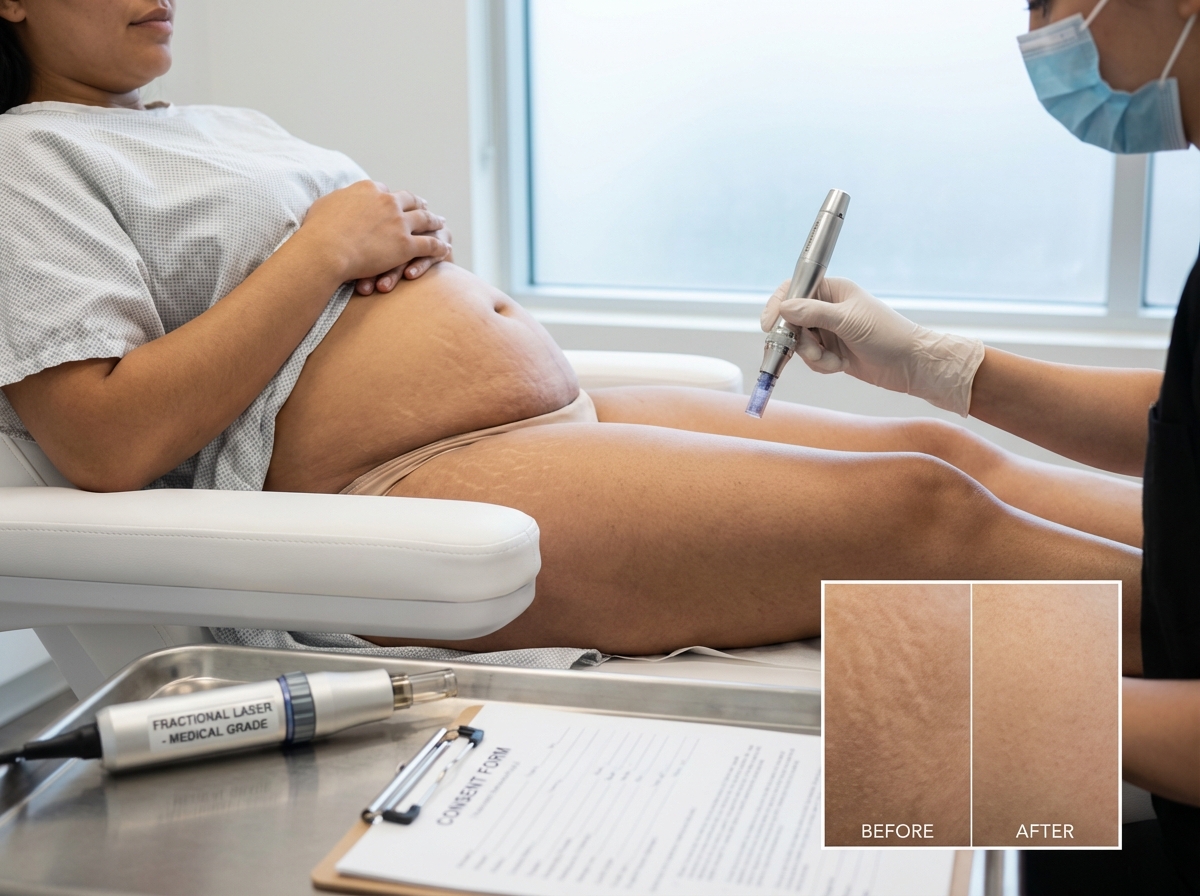
Stretch marks (striae) are a common cosmetic concern. This article evaluates whether microneedling and laser treatments can reduce stretch marks and compares those options with chemical peels, radiofrequency, and LED. Read on for how each treatment works, expected results and downtime, safety considerations for different skin tones, and practical guidance for choosing the right approach.
Why stretch marks form and what realistic goals look like
Stretch marks are a form of dermal scarring that occurs when the skin undergoes rapid expansion. This process is not merely a surface issue. It involves a structural failure within the reticular dermis, which is the thickest and deepest layer of the skin. When the skin stretches beyond its elastic limit, the network of collagen and elastin fibers tears. These fibers are responsible for the strength and elasticity of our skin. When they break, the body attempts to repair the damage through a process known as scar-like remodeling.
The biology of this process is complex. In the early stages, the skin shows signs of acute inflammation. This is when we see striae rubra. These marks appear red, purple, or pink because the blood vessels in the dermis are dilated. During this phase, which typically lasts between three and twelve months, the skin is still actively trying to heal. As the inflammation subsides, the marks transition into striae alba. These are the mature, white, or silver marks that many people find more difficult to treat. At this stage, the skin has become atrophic, meaning it is thinner than the surrounding tissue. There is a significant loss of collagen and elastin. Additionally, glycosaminoglycans, molecules that help the skin retain moisture, decrease by about 30 percent. This loss of hydration and structure leads to the characteristic crinkly or cigarette-paper texture of older stretch marks.
Several common triggers lead to this dermal tearing. Pregnancy is perhaps the most frequent cause. Data from the CDC noted approximately 3.6 million births in the United States in 2023, and research suggests that up to 90 percent of pregnant women develop marks on the abdomen. Puberty is another major factor. Rapid growth spurts during these years cause marks in 70 to 90 percent of adolescents. Weight changes also play a significant role. With the US adult obesity rate exceeding 40 percent in recent years, many individuals experience marks from rapid weight gain or even rapid weight loss. Corticosteroid use is a medical trigger that is often overlooked. Using high-potency topical steroids can increase the risk of developing striae by 2.5 times because these medications thin the skin. Genetics are also a powerful predictor. If a person has a family history of stretch marks, their own prevalence increases by 50 to 60 percent.
Anatomical locations for these marks vary based on the cause. In women, the abdomen, breasts, and thighs are the most common areas. In men, marks often appear on the lower back or the shoulders, especially if they are involved in intensive weightlifting. Post-pregnancy data shows the abdomen is affected in 70 percent of cases, followed by the thighs at 60 percent and the breasts at 50 percent.
Defining realistic goals is essential for anyone considering treatment. It is a clinical reality that stretch marks cannot be completely eradicated. No current technology can return the skin to its original, unmarked state. A successful outcome is generally defined as a 20 to 50 percent improvement in the appearance of the marks. This improvement focuses on three main areas: texture, where the skin becomes smoother and less indented; color, where the marks blend more naturally with the surrounding skin; and thickness, as treatments aim to rebuild the lost dermal volume. Patients should be wary of any provider promising 100 percent removal or using the word “permanent” in marketing. Always ask to see “before and after” photos of patients with your specific skin tone to gauge realistic results.
The Stretch Marks Treatment Market has grown significantly as more people seek professional help for these concerns. In 2025, the US market for these treatments was valued at over 831 million dollars. This growth is driven by a better understanding of what predicts a good response to therapy. The age of the lesions is the most critical factor. Clinical reviews from late 2024 and 2025 indicate that younger marks, specifically striae rubra that are less than six months old, respond about 40 percent better to treatment than older marks. Skin type is another major predictor. Individuals with Fitzpatrick skin types I through III tend to see 30 percent higher response rates than those with types IV through VI. This is partly because practitioners can use more aggressive settings on lighter skin without as much risk of pigment changes. Finally, the depth of the lesion matters. If a stretch mark is deeper than one millimeter, the response to non-invasive treatments typically drops by about 25 percent.
Clinical Decision Framework
Deciding when to use simple creams and when to seek professional help depends on the stage of the marks and your personal goals. This framework helps categorize the best approach.
| Condition | Recommended Approach | Expected Outcome |
|---|---|---|
| New, red marks (Striae Rubra) less than 6 months old | Conservative measures. Use topical retinoids, hyaluronic acid, and strict sun protection. | High chance of fading and preventing deep atrophy. |
| Mature, white marks (Striae Alba) with visible texture changes | Procedural therapy. Microneedling or fractional lasers are the gold standard here. | Moderate improvement in texture and blending. |
| Significant skin laxity or very deep dermal tearing | Referral to a plastic surgeon. Surgical options like a tummy tuck may be the only way to remove the marks. | Removal of affected skin rather than just improving the surface. |
| Darker skin tones (Fitzpatrick IV-VI) with any marks | Consult a board certified dermatologist. Specialized laser settings are required to avoid hyperpigmentation. | Safe improvement without causing dark spots or scarring. |
While topicals and camouflage techniques are useful for immediate needs, they do not change the underlying structure of the scar. If the goal is physical remodeling, professional intervention is usually necessary. The natural history of these marks shows that 95 percent of striae alba will persist for life without some form of medical treatment. Therefore, early intervention during the red phase offers the best statistical chance for significant improvement.
Microneedling and RF microneedling for stretch marks
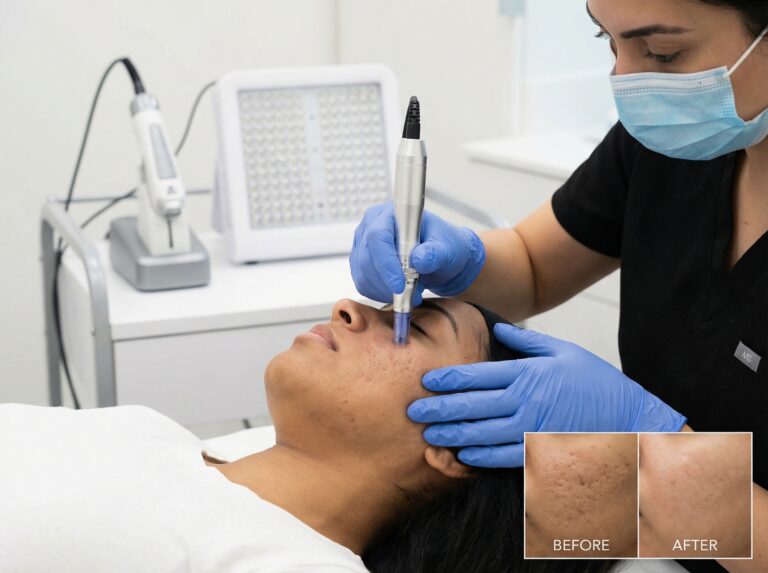
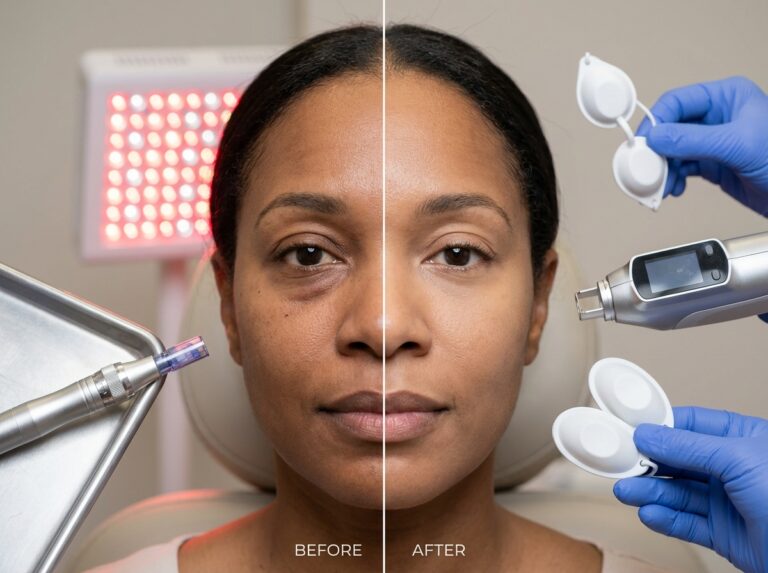
Microneedling relies on the natural ability of the skin to repair itself. This process involves creating thousands of tiny channels in the dermal layer, a process called controlled microinjury. When these small wounds occur, the body triggers a healing response leading to neocollagenesis. It stimulates the production of new elastin fibers, the specific components that break when stretch marks first appear. By forcing the skin to build new support structures, we can improve the texture of the scarred area.
There is a significant difference between home-use tools and professional equipment. Traditional needle rollers or manual pens often enter the skin at an angle, which can cause unnecessary tearing or tracking. Medical-grade fractional microneedling devices use a motorized vertical delivery system. These devices can reach depths of 2.5 to 3.0 millimeters. This is vital because stretch marks are deep dermal scars; manual rollers usually only reach the very top layers. Professional pens also create more channels per square inch. Some high-end devices create up to 576 channels in a small area, a density much higher than what a manual roller can achieve.
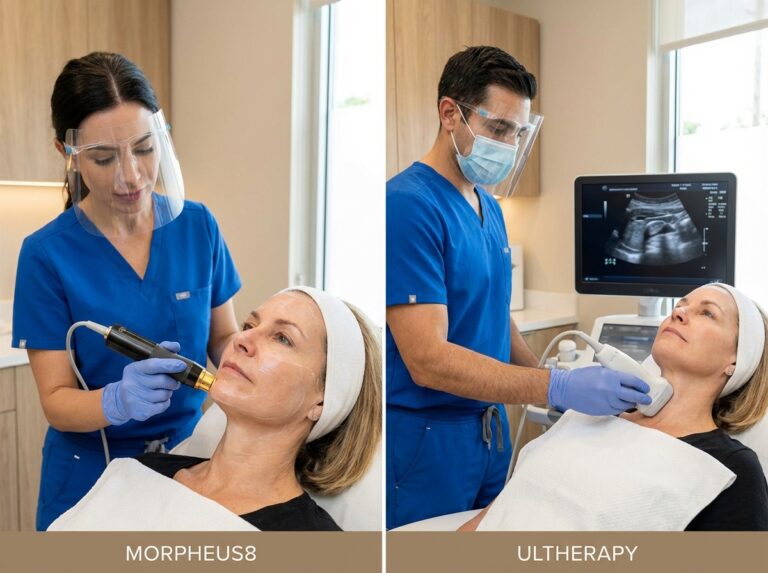
Radiofrequency or RF microneedling adds a thermal component to the treatment. It uses specialized needles to deliver heat energy directly into the dermis. There are two main types of needles used in these devices. Insulated needles only release heat at the very tip, protecting the epidermis from thermal damage and making the treatment safer for people with darker skin tones. Non-insulated needles heat the entire length of the needle, targeting the junction between the top and middle layers of the skin. The heat causes collagen to contract and remodel at temperatures between 55 and 60 degrees Celsius. This thermal effect leads to much deeper remodeling than standard needles alone.
Evidence for these treatments has grown significantly through late 2024 and 2025. A systematic review published in Lasers in Surgery and Medicine found that RF microneedling improved white stretch marks by 51 to 68 percent. Another randomized controlled trial from 2023 in the Journal of the American Academy of Dermatology reported a 47 percent improvement on the POSAS scale after four sessions. Observational studies from early 2025 show that patient satisfaction is highest when treatments are consistent. Most patients report better skin thickness and a reduction in the width of the marks. If a patient sees no change in texture after three sessions, the current settings or modality may need adjustment.
Typical treatment protocols vary by the part of the body being treated. The abdomen usually requires a needle depth of 1.0 to 1.5 millimeters. Areas with thicker skin like the thighs or buttocks often need 1.5 to 2.0 millimeters. A standard course involves 4 to 6 sessions spaced about four weeks apart. This interval allows the new collagen to mature before the next session begins.
Many providers now use combination approaches to get better results. Adding Platelet Rich Plasma (PRP) is a popular choice. A 2024 study showed that combining microneedling with PRP increased collagen levels by 400 percent compared to using needles alone. Some clinics also use topical growth factors or specialized serums during the procedure. Using topical retinoids for four weeks before the first session can prime the skin; however, these must be stopped a few days before the actual treatment to avoid irritation.
Safety is a major concern for patients with deeper skin tones. Those with Fitzpatrick skin types IV through VI have a higher risk of post-inflammatory hyperpigmentation. We manage this by using insulated needles and lower energy settings. Pre-treating the skin with hydroquinone for a month can reduce the risk of dark spots by 50 percent. It is also essential to use a high SPF sunscreen for at least two weeks after every session.
Downtime is usually manageable. Most people experience redness for two or three days, resembling a moderate sunburn. Pinpoint bleeding is common during the procedure but stops within an hour. Swelling happens in about half of all cases but usually fades in 24 hours. Complications are rare when the procedure is done in a medical setting. Infection rates are below one percent, but signs such as yellow crusting, increasing pain, or fever require immediate medical attention. Scarring is extremely rare and happens in less than 0.1 percent of cases.
Pain is managed with a strong topical lidocaine cream, which stays on the skin for 45 minutes before the procedure starts. The cost of these procedures in the United States varies. Basic microneedling usually costs between 300 and 600 dollars per session. RF microneedling is more expensive because of the technology involved, ranging from 800 to 1500 dollars per session. A full series can be a significant investment. The Stretch Marks Treatment Market continues to grow as more people seek out these non-invasive options.
Maintenance is also part of the process. After the initial series is finished, I recommend one or two sessions per year to maintain the collagen levels in the treated area. Following up with a good skincare routine at home is just as important as the office visits.
Comparison of Microneedling Technologies
| Feature | Manual Rollers | Medical Grade Pens | RF Microneedling |
| Needle Depth | 0.5 to 1.5 mm | Up to 3.0 mm | 0.5 to 3.5 mm |
| Mechanism | Mechanical only | Mechanical only | Mechanical and Thermal |
| Recovery Time | 1 to 2 days | 2 to 3 days | 3 to 5 days |
| Best For | Surface texture | Deep remodeling | Skin tightening |
Clinical guidelines suggest that the best candidates are those with realistic goals. If the stretch marks are less than a year old, they respond much better. Older white marks take more time and more sessions. We always check for contraindications like active infections or recent use of isotretinoin. If you have used that medication, you must wait at least six months before starting any needling treatment to ensure the skin can heal properly without a risk of abnormal scarring.
Laser and light based options plus complementary noninvasive modalities
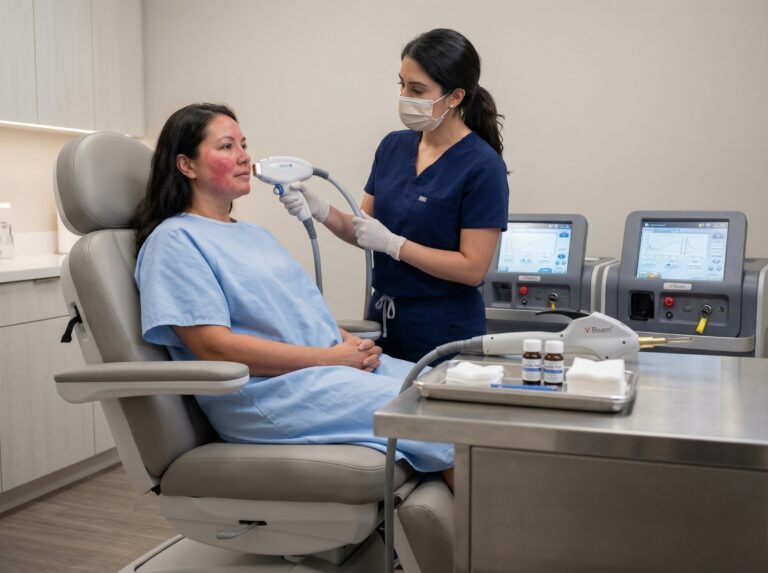
While microneedling focuses on mechanical injury, laser and light-based therapies use specific wavelengths of energy to target the structural changes in stretch marks. These options are often categorized by the color and age of the lesions. For early-stage stretch marks, known as striae rubra, the primary goal is to reduce redness and stop the inflammatory process. The pulsed dye laser (PDL) is the standard choice for these red marks. It operates at a 595 nm wavelength to target oxyhemoglobin in the blood vessels. By collapsing these vessels, the laser reduces the red appearance and stimulates a mild healing response in the dermis. A randomized controlled trial published in the Journal of Cosmetic Dermatology in 2024 showed that PDL improved striae rubra by 55 percent based on colorimetry measurements. Typical settings for this treatment involve a fluence of 5 to 7 J/cm² with a 7 mm spot size. Patients usually need 4 to 6 sessions spaced 2 weeks apart. Downtime is minimal, often involving just a few days of bruising or swelling.
As stretch marks mature into the white, atrophic stage called striae alba, the focus shifts to rebuilding lost collagen and elastin. Using a vascular laser like PDL on white marks is generally ineffective and a waste of resources, as there is no pigment or blood flow to target. Instead, fractional non-ablative lasers, such as the 1550 nm Erbium-glass laser, are used to create columns of heat called microthermal zones without breaking the skin surface. This triggers a deep remodeling process while leaving the epidermis intact. A comprehensive meta-analysis in the British Journal of Dermatology from early 2025 found that 1550 nm lasers resulted in a 42 percent improvement in the Patient and Observer Scar Assessment Scale after 4 sessions. Recommended energy ranges are 10 to 20 mJ per microbeam with roughly 15 to 20 percent coverage. This modality is particularly popular because the downtime is limited to 1 to 3 days of mild redness and swelling. It is also a safer choice for patients with higher Fitzpatrick skin types, though fluences are often reduced by 20 percent to prevent post-inflammatory hyperpigmentation.
For more severe or deep striae alba, fractional ablative lasers like CO2 and Er:YAG provide a more aggressive approach. These devices vaporize small columns of tissue to force the skin to regenerate entirely. A 2025 cohort study reported that CO2 lasers achieved 38 to 60 percent improvement in texture, though the recovery is more demanding. Settings for CO2 lasers typically involve 100 to 300 mJ with 10 to 30 percent density. The Er:YAG laser at 2940 nm is another option, using 5 to 20 J/cm² to reach ablation depths of 50 to 150 micrometers. Downtime for these treatments ranges from 7 to 14 days and involves significant crusting and peeling. While effective, the risk of scarring or pigment changes is higher, especially in darker skin tones.
When pigment issues are present within the stretch marks, picosecond lasers or Q-switched devices are utilized. These lasers use ultra-short pulses to shatter pigment particles without generating excessive heat. For pigmented striae, a 755 nm picosecond laser at 0.8 to 2.0 J/cm² can help even out the skin tone over 3 to 5 sessions. This is often necessary for patients who develop dark spots within their stretch marks due to sun exposure or hormonal changes.
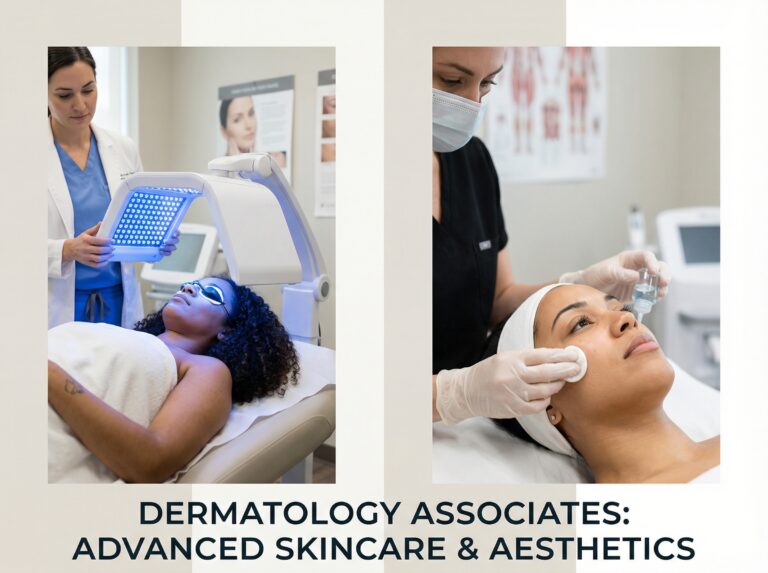
Complementary non-invasive options can further enhance these results. Chemical peels using 20 to 35 percent trichloroacetic acid (TCA) are used to improve surface texture. These peels are applied in 4 to 6 sessions every 4 weeks. While they do not reach the same depths as lasers, they are effective for mild cases or as a maintenance tool. Monopolar and dipolar radiofrequency devices provide non-ablative dermal heating to 40 or 60 degrees Celsius. These are often used as adjuncts to tighten the skin around the stretch marks. LED phototherapy, specifically red light in the 630 to 660 nm range, is frequently used immediately after laser sessions. Research from 2025 suggests that LED can reduce post-procedure inflammation by 25 percent and speed up the healing process.
Combining different modalities is becoming the preferred strategy to maximize outcomes. A 2024 randomized controlled trial demonstrated that combining fractional 1550 nm lasers with microneedling resulted in a 65 percent improvement compared to only 40 percent for laser monotherapy. In these protocols, the laser is typically performed first to target the deeper dermis, followed by microneedling to address surface irregularities. The global Stretch Marks Treatment Market reached US$2.92 billion in 2025, largely driven by the demand for these sophisticated combination therapies.
Safety remains a priority, particularly for those with darker skin. Fitzpatrick types IV through VI have a 10 to 20 percent risk of hyperpigmentation. To mitigate this, providers often prescribe 4 percent hydroquinone for 4 weeks before the first session. Contraindications for all these treatments include pregnancy, active skin infections, and the use of isotretinoin within the last 6 to 12 months.
The cost of these procedures in the United States varies by technology. PDL sessions range from $400 to $700, while fractional non-ablative lasers cost between $600 and $1,000. Ablative CO2 treatments are the most expensive, ranging from $1,000 to $2,500 per session. Most patients require a series of 3 to 6 treatments to see significant changes.
A standard pre-care protocol involves using topical retinoids for 4 weeks to prime the skin and strict sun avoidance with SPF 50 plus. Post-care focuses on hydration and protection. Patients are advised to apply occlusive ointments like Aquaphor for the first 48 hours and avoid direct sunlight for at least 2 weeks. If hyperpigmentation occurs, it is managed with topical lighteners and continued sun protection. These advanced light-based options offer a measurable way to fade stretch marks, even if total removal is not yet possible.
Conclusions and practical treatment roadmap
The journey to improving the appearance of stretch marks has shifted from hope to measurable science. We now understand that while these dermal tears are permanent, their visibility can be reduced by 20 to 60 percent through structured clinical intervention. The current Stretch Marks Treatment Market reflects this shift as more people move away from ineffective home remedies toward evidence-based procedures. Success depends on matching the right technology to the specific age and color of the lesions.
A Practical Treatment Roadmap
Following a logical progression ensures safety and maximizes the return on investment. The following steps outline the standard clinical path for 2025.
Step 1. Initial Assessment
The provider must first determine the age of the stretch marks and the patient’s Fitzpatrick skin type. Lesions less than six months old are in the inflammatory phase and respond much faster. The provider also checks for skin laxity. If the skin is sagging as well as scarred, radiofrequency-based treatments are prioritized to provide a tightening effect. Patients who are pregnant or breastfeeding should postpone procedural treatments until after this period, focusing instead on hydration and safe topicals.
Step 2. Conservative Management
For very new marks, topical retinoids or specialized silicones are often the first line of defense. These can be used for two to three months to see if the body can repair some of the damage naturally. However, if no change occurs by the three-month mark, procedural therapy is recommended. This is especially true for the Scar and Stretch Mark Treatment Market in the United States, where patients often seek faster results than topicals can provide.
Step 3. Procedural Escalation
If topicals fail, the patient moves to microneedling or laser therapy. A typical protocol involves four to six sessions spaced four weeks apart. For red marks (striae rubra), pulsed dye laser is the gold standard, as it targets hemoglobin to reduce redness. For white marks (striae alba), fractional non-ablative lasers or microneedling are the preferred starting points to rebuild collagen. The depth of the needles or laser beams is adjusted based on the body area; thicker skin on the thighs or buttocks requires deeper penetration than the skin on the breasts.
Step 4. Combination and Adjunct Strategies
To push results beyond the 40 percent mark, clinicians often add Platelet Rich Plasma (PRP) or LED therapy. PRP involves using the patient’s own growth factors to speed up collagen production. A 2025 trial showed that combining microneedling with PRP resulted in 62 percent patient satisfaction compared to 40 percent with microneedling alone. LED light therapy, specifically in the 633 nanometer range, is used immediately after procedures to reduce inflammation and cut down recovery time.
Step 5. Maintenance and Long Term Care
Once the desired improvement is reached, the results are generally long-lasting. However, the skin continues to age. One or two maintenance sessions per year can help preserve the new collagen. Patients are encouraged to maintain a stable weight to prevent new tears from forming, as rapid weight fluctuations can create new dermal damage even in treated areas.
Expected Outcomes and Costs
The following table summarizes the expected performance and financial commitment for common treatments based on 2025 data.
| Treatment Type | Target Lesion | Improvement Range | Average US Cost |
|---|---|---|---|
| Microneedling | Texture and Alba | 25 to 40 percent | $300 to $600 |
| RF Microneedling | Deep Alba and Laxity | 35 to 50 percent | $800 to $1500 |
| Pulsed Dye Laser | Red Rubra | 55 to 70 percent | $400 to $700 |
| Fractional CO2 | Severe Alba | 45 to 60 percent | $1000 to $2500 |
Final Safety Reminders
Safety is the most important factor in any cosmetic plan. Sun protection is mandatory for at least two weeks before and after any laser or microneedling session. Using a broad-spectrum SPF 50 plus prevents post-inflammatory hyperpigmentation, which is a common risk for darker skin tones. Timing is also critical. If a patient has taken isotretinoin for acne, they must wait six to twelve months before undergoing any resurfacing treatment to avoid abnormal scarring. Always verify that the provider is a board-certified dermatologist or plastic surgeon with specific experience in stretch mark revision. Their expertise in adjusting energy settings for different body areas is what prevents complications like burns or permanent pigment loss.
Sources
- Scar and Stretch Mark Treatment Market — The scar and stretch mark treatment market in the United States is projected at USD 1123.73 Million in 2025. Stretch mark fading contributes …
- Stretch Marks Treatment Market Size & Share Report, 2032 — Stretch Marks Treatment Market hit US$2.92B in 2025 and will reach US$4.34B by 2032, driven by demand for non-invasive, comfortable treatment options.
- Stretch Marks Treatment Market Size to Hit USD 6.41 Bn By 2034 — The U.S. stretch marks treatment market size is exhibited at USD 831.60 million in 2025 and is projected to be worth around USD 1830.22 million …
- Top 7 Companies in the Stretch Marks Treatment Market in 2025 — The market is expected to grow at a CAGR of 8.3% during the forecast period of 2025-2034, with the values likely to reach USD 5.90 Billion by 2034. The market …
- Stretch Marks Treatment Market Size | Industry Report, 2030 — The global stretch marks treatment market size was estimated at USD 315.0 million in 2024 and is projected to grow at a CAGR of 9.1% from 2025 to 2030.
- Stretch Marks Treatment Market to Reflect Impressive Growth Rate … — According to the report by TMR, the stretch marks treatment market is estimated to grab a value of US$1.99 bn by 2025-end. The market is …
- Beauty & Wellness Trends Power Stretch Marks Treatment Market — Stretch mark treatment market size is anticipated to reach USD 529.1 million by 2030 with a steady CAGR of 9.1% from 2025 to 2030.
- Stretch Mark Prevention Creams Market Valuation, ROI Potential — During 2025-2030, the market will add nearly USD 1,266 million, accounting for about 40% of decade growth, led by maternity-focused creams and …
- The global Stretch Marks Treatment market size will be USD 325.4 … — United State Stretch Marks Treatment market size is USD 94.99 million in 2025. According to Cognitive Market Research, the US had a major share in the Stretch …